On November 28, 1861, President Abraham Lincoln declared all government offices closed for a day of Thanksgiving. Magazine editor Sarah Josepha Hale suggested that Lincoln make the day a nationwide observance. On October 3, 1863, Lincoln issued the following proclamation, setting apart the last Thursday of November as “a day of Thanksgiving and praise.”
By the President of the United States of America.
A Proclamation.
The year that is drawing towards its close, has been filled with the blessings of fruitful fields and healthful skies. To these bounties, which are so constantly enjoyed that we are prone to forget the source from which they come, others have been added, which are of so extraordinary a nature, that they cannot fail to penetrate and soften even the heart which is habitually insensible to the ever watchful providence of Almighty God. In the midst of a civil war of unequaled magnitude and severity, which has sometimes seemed to foreign States to invite and to provoke their aggression, peace has been preserved with all nations, order has been maintained, the laws have been respected and obeyed, and harmony has prevailed everywhere except in the theatre of military conflict; while that theatre has been greatly contracted by the advancing armies and navies of the Union. Needful diversions of wealth and of strength from the fields of peaceful industry to the national defense, have not arrested the plough, the shuttle or the ship; the axe has enlarged the borders of our settlements, and the mines, as well of iron and coal as of the precious metals, have yielded even more abundantly than heretofore. Population has steadily increased, notwithstanding the waste that has been made in the camp, the siege and the battle-field; and the country, rejoicing in the consiousness of augmented strength and vigor, is permitted to expect continuance of years with large increase of freedom. No human counsel hath devised nor hath any mortal hand worked out these great things. They are the gracious gifts of the Most High God, who, while dealing with us in anger for our sins, hath nevertheless remembered mercy. It has seemed to me fit and proper that they should be solemnly, reverently and gratefully acknowledged as with one heart and one voice by the whole American People. I do therefore invite my fellow citizens in every part of the United States, and also those who are at sea and those who are sojourning in foreign lands, to set apart and observe the last Thursday of November next, as a day of Thanksgiving and Praise to our beneficent Father who dwelleth in the Heavens. And I recommend to them that while offering up the ascriptions justly due to Him for such singular deliverances and blessings, they do also, with humble penitence for our national perverseness and disobedience, commend to His tender care all those who have become widows, orphans, mourners or sufferers in the lamentable civil strife in which we are unavoidably engaged, and fervently implore the interposition of the Almighty Hand to heal the wounds of the nation and to restore it as soon as may be consistent with the Divine purposes to the full enjoyment of peace, harmony, tranquillity and Union.
In testimony whereof, I have hereunto set my hand and caused the Seal of the United States to be affixed.
Done at the City of Washington, this Third day of October, in the year of our Lord one thousand eight hundred and sixty-three, and of the Independence of the Unites States the Eighty-eighth.
By the President: Abraham Lincoln
William H. Seward,
Secretary of State
http://showcase.netins.net/web/creative/lincoln/speeches/thanks.htm
Thursday, November 23, 2006
Victorian Clipper Ship 1869
One of the last clipper ships to be built, in Dumbarton, Scotland, and the only one surviving to this day, the Cutty Sark stands now in drydock in Greenwich.
The Cutty Sark was destined for the China tea trade. However, she did not distinguish herself. In the most famous race, against Thermopylae in 1872, both ships left Shanghai on June 18, but two weeks later Cutty Sark lost her rudder after passing through the Sunda Strait, and arrived a week after Thermopylae, for a total passage of 122 days. Her legendary reputation is supported by the fact that her captain chose to continue this race with an improvised rudder rather than putting into port for a replacement. She still managed to be beaten by only one week.
Hart Crane's The Bridge immortalized Cutty Sark.
(http://www2.wwnorton.com/catalog/backlist/040225.htm)
http://en.wikipedia.org/wiki/Cutty_Sark
http://www.cuttysark.org.uk/
http://www.greenwich-guide.org.uk/cutty.htm
The Cutty Sark was destined for the China tea trade. However, she did not distinguish herself. In the most famous race, against Thermopylae in 1872, both ships left Shanghai on June 18, but two weeks later Cutty Sark lost her rudder after passing through the Sunda Strait, and arrived a week after Thermopylae, for a total passage of 122 days. Her legendary reputation is supported by the fact that her captain chose to continue this race with an improvised rudder rather than putting into port for a replacement. She still managed to be beaten by only one week.
Hart Crane's The Bridge immortalized Cutty Sark.
(http://www2.wwnorton.com/catalog/backlist/040225.htm)
http://en.wikipedia.org/wiki/Cutty_Sark
http://www.cuttysark.org.uk/
http://www.greenwich-guide.org.uk/cutty.htm
Wednesday, November 22, 2006
1864 Hood enters Tennessee
Sherman's March Through Georgia
In a desperate attempt to draw Sherman out of Georgia, General John Bell Hood invaded Tennessee. It was a huge mistake.
The sad saga of the Army of Tennessee in 1864: In the spring, the army, commanded by Joseph Johnston, blocked Sherman's path to Atlanta from Chattanooga. During that summer, Sherman and Johnston fought a series of relatively small engagements as Sherman tried to flank the Rebel army. Johnston slowly retreated toward Atlanta, but kept his army intact.
Unfortunately for both the army and Georgia, Confederate President Jefferson Davis had seen enough territory lost to the Yankees, and in July 1864 replaced the defensive Johnston with the aggressive Hood. Hood made a series of attacks on Sherman outside of Atlanta that did nothing but diminish his own army's capabilities. After a one-month siege, Hood was forced to withdraw from Atlanta.
The invasion into Tennessee marked the start of a new campaign that was nothing but a disaster for the Confederates. Sherman took part of his force, cut loose from his supply lines, and began his March to the Sea. He sent the rest of the force under George Thomas back to Nashville to guard against Hood. Hood took the bait and charged toward Thomas in Franklin, Tennessee. It was a devastating defeat. But he didn't learn his lesson and continued on to attack Thomas at Nashville on December 15.
By the time Sherman made it to Savannah just before Christmas 1864, little remained of Hood's once-proud Army of Tennessee.
http://www.history.com/tdih.do?action=tdihArticleCategory&id=2395
http://www.brainyhistory.com/events/1864/july_22_1864_55910.html
http://www.curledup.com/breakcon.htm
In a desperate attempt to draw Sherman out of Georgia, General John Bell Hood invaded Tennessee. It was a huge mistake.
The sad saga of the Army of Tennessee in 1864: In the spring, the army, commanded by Joseph Johnston, blocked Sherman's path to Atlanta from Chattanooga. During that summer, Sherman and Johnston fought a series of relatively small engagements as Sherman tried to flank the Rebel army. Johnston slowly retreated toward Atlanta, but kept his army intact.
Unfortunately for both the army and Georgia, Confederate President Jefferson Davis had seen enough territory lost to the Yankees, and in July 1864 replaced the defensive Johnston with the aggressive Hood. Hood made a series of attacks on Sherman outside of Atlanta that did nothing but diminish his own army's capabilities. After a one-month siege, Hood was forced to withdraw from Atlanta.
The invasion into Tennessee marked the start of a new campaign that was nothing but a disaster for the Confederates. Sherman took part of his force, cut loose from his supply lines, and began his March to the Sea. He sent the rest of the force under George Thomas back to Nashville to guard against Hood. Hood took the bait and charged toward Thomas in Franklin, Tennessee. It was a devastating defeat. But he didn't learn his lesson and continued on to attack Thomas at Nashville on December 15.
By the time Sherman made it to Savannah just before Christmas 1864, little remained of Hood's once-proud Army of Tennessee.
http://www.history.com/tdih.do?action=tdihArticleCategory&id=2395
http://www.brainyhistory.com/events/1864/july_22_1864_55910.html
http://www.curledup.com/breakcon.htm
Tuesday, November 21, 2006
Lord Melbourne Gave Fatherly Advice to the Young Queen Victoria

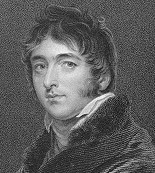 Queen Victoria sought out the advice, daily if possible, from William Lamb, the Second Viscount Melbourne, who was her real father figure. She kept a journal. Nightly, she’d inscribe his answers to her questions about life. A list of some of his sage advice is as follows:
· wives beaten by husbands are able to profit from the pity evoked
· mothers-in-law are not known to get along with daughters-in-law
· most marriages aren’t happy
· large dogs are dangerous as pets
· birds migrate by following the coastline
Eventually, Victoria’s role as monarch prohibited her from continuing correspondence with the then retired Prime Minister, for reasons of propriety.
http://en.wikipedia.org/wiki/William_Lamb%2C_2nd_Viscount_Melbourne
http://www.noelcollection.org/noel/Jerdan/lamb.html
Persons of Consequence: Queen Victoria and Her Circle by Louis Auchincloss ISBN #0394504275
Inventor of the Phonograph
1877
Accidental invention. As with many things in life, Edison stumbled on one of his great inventions while working on a way to record telephone communication at his laboratory in Menlo Park, New Jersey. Because of this, he was dubbed "Wizard of Menlo Park."
http://www.history.com/tdih.do?action=tdihArticleCategory&id=5537
http://memory.loc.gov/ammem/edhtml/edcyldr.html
Accidental invention. As with many things in life, Edison stumbled on one of his great inventions while working on a way to record telephone communication at his laboratory in Menlo Park, New Jersey. Because of this, he was dubbed "Wizard of Menlo Park."
http://www.history.com/tdih.do?action=tdihArticleCategory&id=5537
http://memory.loc.gov/ammem/edhtml/edcyldr.html
Sunday, November 19, 2006
Four Score and Seven Years Ago...

Most of us have heard those famous words, but I wonder how often anyone takes the time to reflect upon their meaning.
On November 2, 1863, many months after the battle of Gettysburg (July 1-3, 1863) had ended, Governor David Wills invited President Abraham Lincoln to make "a few appropriate remarks” at the consecration of a cemetery for the Union war dead.
Lincoln accepted the invitation, probably viewing the event as an appropriate time to honor the war dead, as well as reveal his evolving thinking about the war, not merely as a fight to save the Union but as an opportunity to establish freedom for all those under the law.
On November 19, 1863, in Gettysburg, Pennsylvania, Lincoln spoke the now-famous words. At the time, the President drew criticism because of the brevity of his comments. Yet those “few appropriate remarks” have gone on to be one of the most memorable speeches of all time:
Four score and seven years ago, our fathers brought forth upon this continent a new nation: conceived in liberty, and dedicated to the proposition that all men are created equal.
Now we are engaged in a great civil war. . .testing whether that nation, or any nation so conceived and so dedicated. . . can long endure. We are met on a great battlefield of that war.
We have come to dedicate a portion of that field as a final resting place for those who here gave their lives that that nation might live. It is altogether fitting and proper that we should do this.
But, in a larger sense, we cannot dedicate. . .we cannot consecrate. . . we cannot hallow this ground. The brave men, living and dead, who struggled here have consecrated it, far above our poor power to add or detract. The world will little note, nor long remember, what we say here, but it can never forget what they did here.
It is for us the living, rather, to be dedicated here to the unfinished work which they who fought here have thus far so nobly advanced. It is rather for us to be here dedicated to the great task remaining before us. . .that from these honored dead we take increased devotion to that cause for which they gave the last full measure of devotion. . . that we here highly resolve that these dead shall not have died in vain. . . that this nation, under God, shall have a new birth of freedom. . . and that government of the people. . .by the people. . .for the people. . . shall not perish from the earth.
Well said, Mr. President.
For more information on the Gettysburg Address or Abraham Lincoln, visit:
http://rmc.library.cornell.edu/gettysburg/
http://www.nps.gov/archive/gett/home.htm
http://americancivilwar.com/north/lincoln.html
http://sc94.ameslab.gov/TOUR/alincoln.html
Saturday, November 18, 2006
First Time Zones
And we can thank railroad companies for that, telling us just how much power they had at their heyday. At noon today in 1883, the American and Canadian Railroads began using 4 separate time zones to differentiate between scads of local times.
Local time was based on "High Noon" in just about each town, and I can't even imagine the nightmare it was to travel from Boston to New York to Philadelphia and constantly resetting your watch. Worse than jetlag! But as railroads shrunk the time it took to get from town to town, this way of keeping time was a logistical nightmare. Railroad timetables in major cities listed dozens of different arrival and departure times. All for the same train and each linked to a different local time zone.
So the companies divided the continent into four time zones, zones that are very close to what is still used today. Most Americans and Canadians quickly embraced their new time zones, since railroads linked them with the rest of the world. However, the federal government was different. It wasn’t until 1918 that Congress officially adopted the railroad time zones and put them under the supervision of the Interstate Commerce Commission.
http://www.history.com/tdih.do?action=tdihArticleCategory&id=4341http://www.enchantedlearning.com/inventors/page/t/timezones.shtml
Local time was based on "High Noon" in just about each town, and I can't even imagine the nightmare it was to travel from Boston to New York to Philadelphia and constantly resetting your watch. Worse than jetlag! But as railroads shrunk the time it took to get from town to town, this way of keeping time was a logistical nightmare. Railroad timetables in major cities listed dozens of different arrival and departure times. All for the same train and each linked to a different local time zone.
So the companies divided the continent into four time zones, zones that are very close to what is still used today. Most Americans and Canadians quickly embraced their new time zones, since railroads linked them with the rest of the world. However, the federal government was different. It wasn’t until 1918 that Congress officially adopted the railroad time zones and put them under the supervision of the Interstate Commerce Commission.
http://www.history.com/tdih.do?action=tdihArticleCategory&id=4341http://www.enchantedlearning.com/inventors/page/t/timezones.shtml
Friday, November 17, 2006
Suez Canal opens
1869
French Empress Eugénie, wife of Napoleon III, attended the inauguration ceremony. It took 15 years to complete the 100 mile canal across the Isthmus of Suez.
 In 1856, the Suez Canal Company was formed and granted rights to operate the canal for 99 years after completion. (WWII changed that.) At first forced laborers used picks and shovels. Later, when the Europeans arrived to work it, so did the dredgers and steam shovels. This may have been a coincidence. Labor disputes and cholera interrupted the work, and the 1869 date was actually 4 years behind schedule.
Ferdinand de Lesseps, its builder, would later failure at an attempt to build a canal across the Isthmus of Panama.
Today, an average of 50 ships navigate the canal daily, carrying more than 300 million tons of goods a year.
http://www.history.com/tdih.do?action=tdihArticleCategory&id=5530
http://ce.eng.usf.edu/pharos/wonders/Modern/suezcanal.html
http://www.touregypt.net/featurestories/suezcanal.htm
Thursday, November 16, 2006
Most Victorian Crosses Won in a Single Day 1857
Siege of Lucknow or the First War of Indian Independence.
Sir Colin Campbell easily crossed the nearly dry Charbagh Canal and advanced on the Secundrabagh, which housed most of the rebels. After its walls were breached by covering artillery fire, the 93rd Highlanders, part of the 53rd Regiment of Foot, the 4th Punjab Infantry, and various other detachments stormed it. It was a horrific defeat for the rebels. According to Campbell, some 2,000 rebels died. Later that day, Campbell's forces also stormed the Shah Najaf mosque, only a few hundred yards from the British defenders of the Chuttur Munzil.
http://en.wikipedia.org/wiki/Siege_of_Lucknow
http://www.defencejournal.com/2000/mar/lucknow.htm
http://theoldentimes.com/lucknow_1.html
http://www.army.mod.uk/lightinfantry/history_traditions/major_battles/lucknow_1857_1858.htm
Sir Colin Campbell easily crossed the nearly dry Charbagh Canal and advanced on the Secundrabagh, which housed most of the rebels. After its walls were breached by covering artillery fire, the 93rd Highlanders, part of the 53rd Regiment of Foot, the 4th Punjab Infantry, and various other detachments stormed it. It was a horrific defeat for the rebels. According to Campbell, some 2,000 rebels died. Later that day, Campbell's forces also stormed the Shah Najaf mosque, only a few hundred yards from the British defenders of the Chuttur Munzil.
http://en.wikipedia.org/wiki/Siege_of_Lucknow
http://www.defencejournal.com/2000/mar/lucknow.htm
http://theoldentimes.com/lucknow_1.html
http://www.army.mod.uk/lightinfantry/history_traditions/major_battles/lucknow_1857_1858.htm
Wednesday, November 15, 2006
Deposed - Brazil's Last Emperor 1889
Actually, it was only Brazil's 2nd emperor, but Pedro II did have a 49 year reign. He was a good leader, and the economy grew and people prospered under him. Until he alienated certain sects of society (think the military and growing urban middle class). So the military decided they'd do a better job ruling than he would.
Pedro left for Europe and died in exile 2 years later.
There's actually more to it than that, and a very interesting story with Portugal's crown prince, Don Pedro, declaring Brazil an independent country under his rule. But he was a lousy ruler, and Portugal was probably lucky he wasn't their leader. Pedro I abdicated in favor of his 5 year-old-son. Who, it turned out at age 15, didn't inherit his father's bad-ruler genes.
http://www.history.com/tdih.do?action=tdihArticleCategory&id=5525
http://www.if.ufrj.br/general/brazil.html
http://www.historicaltextarchive.com/sections.php?op=viewarticle&artid=529
http://gosouthamerica.about.com/od/brahistory/qt/IndependenceDay.htm
http://www.answers.com/topic/pedro-ii-of-brazilhttp://historicaltextarchive.com/sections.php?op=viewarticle&artid=427
Pedro left for Europe and died in exile 2 years later.
There's actually more to it than that, and a very interesting story with Portugal's crown prince, Don Pedro, declaring Brazil an independent country under his rule. But he was a lousy ruler, and Portugal was probably lucky he wasn't their leader. Pedro I abdicated in favor of his 5 year-old-son. Who, it turned out at age 15, didn't inherit his father's bad-ruler genes.
http://www.history.com/tdih.do?action=tdihArticleCategory&id=5525
http://www.if.ufrj.br/general/brazil.html
http://www.historicaltextarchive.com/sections.php?op=viewarticle&artid=529
http://gosouthamerica.about.com/od/brahistory/qt/IndependenceDay.htm
http://www.answers.com/topic/pedro-ii-of-brazilhttp://historicaltextarchive.com/sections.php?op=viewarticle&artid=427
Tuesday, November 14, 2006
Moby-Dick published 1851
It was a total failure. While not his first, or his last story published, most of which were well received, Moby-Dick wasn't even a blip on the classic radar. What eventually made it a classic? I have no idea, that particular piece of information isn't to be found.
http://www.history.com/tdih.do?action=tdihArticleCategory&id=4152
http://www.princeton.edu/~batke/moby/moby-1.html
http://www.online-literature.com/melville/mobydick/
http://www.history.com/tdih.do?action=tdihArticleCategory&id=4152
http://www.princeton.edu/~batke/moby/moby-1.html
http://www.online-literature.com/melville/mobydick/
Monday, November 13, 2006
Seattle Washington, 1851
The Denny Party lands at Alki Point. They will eventually be the founders of Seattle, WA.
http://en.wikipedia.org/wiki/Denny_Party
http://www.historylink.org/essays/output.cfm?file_id=5392
http://seattlepi.nwsource.com/local/46423_denny13.shtml
http://en.wikipedia.org/wiki/Denny_Party
http://www.historylink.org/essays/output.cfm?file_id=5392
http://seattlepi.nwsource.com/local/46423_denny13.shtml
Friday, November 10, 2006
Railroads During the Civil War
As the most advanced form of transportation on land at that time, railroads were important to both armies during the Civil War. Railroads were used to transport troops, supplies and weapons. The armies also used them to gain information on enemy troops and for tactical missions, including close combat. An advancing army often had to rebuild a railroad that the opposing army had derailed. Armies often fought over control of the rails. http://www.geocities.com/yosemite/trails/9401/civilwar.html Armed trains carried combat ready troops and artillery. The locomotive was placed at the train's center, so it could be protected. Flatcars were at the ends loaded with armed troops and artillery. Passenger or boxcars were in between. Trains of the Civil War era were the precursors to "tanks, armored personnel carriers, engineer vehicles and self-propelled artillery." http://www.historynet.com/magazines/american_civil_war/3026731.html?page=1&c=y http://en.wikipedia.org/wiki/Rail_transport_in_the_American_Civil_War
Thursday, November 09, 2006
Jack the Ripper kills last known victim 1888
Her name was Mary Jane Kelly. Jack the Ripper is the pseudonym of the unidentified serial killer (or killers) active in Whitechapel and adjacent districts of London in the latter half of 1888.The name is from a letter to the Central News Agency by someone claiming to be the murderer, published at the time of the killings.
http://en.wikipedia.org/wiki/Jack_the_Ripper
http://www.casebook.org/
http://www.crimelibrary.com/serial_killers/notorious/ripper/index_1.html
http://www.met.police.uk/history/ripper.htm
http://en.wikipedia.org/wiki/Jack_the_Ripper
http://www.casebook.org/
http://www.crimelibrary.com/serial_killers/notorious/ripper/index_1.html
http://www.met.police.uk/history/ripper.htm
Wednesday, November 08, 2006
Victorian Discoveries
1895: German physicist, Wilhelm Conrad Rontgen, observed the first X-Ray in his Wurzburg, Germany lab. He was trying to determine whether cathode rays could pass through glass and noticed a glow coming off a chemically coated screen.
He dubbed the ray ‘X’ because of the unknown nature of the ray. He won every German accolade, streets, towns, (probably babies) and honorary doctorates and memberships in learned German society. In 1901, he won the Nobel Prize in physics.
http://www.history.com/tdih.do?action=tdihVideoCategory&id=52083
http://nobelprize.org/nobel_prizes/physics/laureates/1901/rontgen-bio.html
http://www.britannica.com/nobel/micro/509_85.html
He dubbed the ray ‘X’ because of the unknown nature of the ray. He won every German accolade, streets, towns, (probably babies) and honorary doctorates and memberships in learned German society. In 1901, he won the Nobel Prize in physics.
http://www.history.com/tdih.do?action=tdihVideoCategory&id=52083
http://nobelprize.org/nobel_prizes/physics/laureates/1901/rontgen-bio.html
http://www.britannica.com/nobel/micro/509_85.html
Tuesday, November 07, 2006
Canada's transcontinental railway completed 1885
Craigellachie, in the mountains of British Columbia, was witness to the last spike driven into Canada's first transcontinental railway. It took 5 years for the Canadian Pacific Railway to get the 4,600 kilometers of single track all connected. Several smaller lines were also conencted to the larger CPR, uniting the country as never before.
Believe it or not, it was completed 6 years ahead of schedule.
http://www.history.com/tdih.do?action=tdihArticleCategory&id=5503
http://www8.cpr.ca/cms/English/General+Public/Heritage/A+Brief+History.htm
http://www.answers.com/topic/national-transcontinental-railway
And for those in America, I hope everyone voted!
Monday, November 06, 2006
Congratulations, Mr. President...and Mr. President
In 1860, Abraham Lincoln is elected the 16th president of the United States of America
In 1861, Jefferson Davis is elected the 1st president of the Confederate States of America
Both were natives of Kentucky. Lincoln was the first Republican elected with only 40% of the popular vote, but defeating 3 other candidates. Davis ran unopposed. Lincoln was a lawyer and a Whig representative to Congress before running for president in the heavily divided 1860 election. Davis attended West Point, served in the Black Hawk War of 1832, was a close advisor to then-General Zachary Taylor (former father-in-law) during the Mexican War, before becoming a senator and Secretary of War under President Franklin Pierce.
http://www.history.com/tdih.do?action=tdihArticleCategory&id=2378
http://www.history.com/tdih.do?action=tdihArticleCategory&id=5500
http://www.whitehouse.gov/history/presidents/al16.html
http://www.historyplace.com/lincoln/index.html
http://www.swcivilwar.com/davis.html
http://jeffersondavis.rice.edu/
In 1861, Jefferson Davis is elected the 1st president of the Confederate States of America
Both were natives of Kentucky. Lincoln was the first Republican elected with only 40% of the popular vote, but defeating 3 other candidates. Davis ran unopposed. Lincoln was a lawyer and a Whig representative to Congress before running for president in the heavily divided 1860 election. Davis attended West Point, served in the Black Hawk War of 1832, was a close advisor to then-General Zachary Taylor (former father-in-law) during the Mexican War, before becoming a senator and Secretary of War under President Franklin Pierce.
http://www.history.com/tdih.do?action=tdihArticleCategory&id=2378
http://www.history.com/tdih.do?action=tdihArticleCategory&id=5500
http://www.whitehouse.gov/history/presidents/al16.html
http://www.historyplace.com/lincoln/index.html
http://www.swcivilwar.com/davis.html
http://jeffersondavis.rice.edu/
Sunday, November 05, 2006
Victorian Fans Were Ever Popular
Nearly every woman owned a fan. Like many essential items during the 19th Century, the times dictated that fans be made as beautiful as possible. Fans were nevertheless just plain useful in many climes, as well as essential to pass along courtly secrets while whispering. Fan etiquette played an important role during Victorian functions.
This month, many of Queen Victoria’s fans and those of her family and contemporaries will be on display at The Queen’s Gallery, Buckingham Palace. The collection can also be viewed online in their e-gallery. The article entitled Unfolding Pictures in Majesty Magazine, Vol 27 No 11 highlights some of the fans that will be on display in The Queen’s Gallery mid-month.
Empress Eugénie, wife-consort of Napoleon III of France, was from Granada, Spain where fans were used for everyday affaires and were known to always be in motion. Eugenie brought much of her rich Spanish heritage to the popular and dominant French court, including her love of fans. She was known for making statements with her fans, as were many of the ladies of her era, by matching the fans to ensembles or by wearing plain ensembles that made extravagant fans stand out.
Fans served many purposes. The rules dictated that fans remained closed while one was in the presence of a sovereign, so many fans displayed unique identifying embellishments along their sides. Monograms were popular as well as artwork of family and portraits of children of the fan’s owner. Symbols of rank were also appropriate to display on fans, or simply one-of-a-kind artwork. Prized and valuable fans were typically attached to a wrist to be dropped or retrieved, according to a lady’s purposes.
Due to their artistry, fans became a favorite collectible during the 19th Century. Even during church services, fans were noted to be constantly expressing their bearers emotions, especially in Spanish speaking countries and Colonies. Some regions designed their own signals around fan usage. In Puerto Rico, young ladies were known to flirt or otherwise indicate if they were or weren’t available for romance. The speed at which a fan passed across a lady's breasts was the clue. Other regions also utilized their own unique communications with fans.
This month, many of Queen Victoria’s fans and those of her family and contemporaries will be on display at The Queen’s Gallery, Buckingham Palace. The collection can also be viewed online in their e-gallery. The article entitled Unfolding Pictures in Majesty Magazine, Vol 27 No 11 highlights some of the fans that will be on display in The Queen’s Gallery mid-month.
Empress Eugénie, wife-consort of Napoleon III of France, was from Granada, Spain where fans were used for everyday affaires and were known to always be in motion. Eugenie brought much of her rich Spanish heritage to the popular and dominant French court, including her love of fans. She was known for making statements with her fans, as were many of the ladies of her era, by matching the fans to ensembles or by wearing plain ensembles that made extravagant fans stand out.
Fans served many purposes. The rules dictated that fans remained closed while one was in the presence of a sovereign, so many fans displayed unique identifying embellishments along their sides. Monograms were popular as well as artwork of family and portraits of children of the fan’s owner. Symbols of rank were also appropriate to display on fans, or simply one-of-a-kind artwork. Prized and valuable fans were typically attached to a wrist to be dropped or retrieved, according to a lady’s purposes.
Due to their artistry, fans became a favorite collectible during the 19th Century. Even during church services, fans were noted to be constantly expressing their bearers emotions, especially in Spanish speaking countries and Colonies. Some regions designed their own signals around fan usage. In Puerto Rico, young ladies were known to flirt or otherwise indicate if they were or weren’t available for romance. The speed at which a fan passed across a lady's breasts was the clue. Other regions also utilized their own unique communications with fans.
Friday, November 03, 2006
Black Bart's last stagecoach robbery 1883
After 8 years of robbing stage coaches – but never passengers – Charles E. Bolton drops an important clue as to his identity and is captured shortly thereafter. Black Bart never shot anyone, and had a habit of leaving short poems, all signed, Black Bart, the Po-8. He was sentenced to 6 years in San Quentin, but served just over four. In actuality, he stole only $18,000.
http://www.history.com/tdih.do?action=tdihArticleCategory&id=4326
http://www.blackbart.com/
http://www.sfmuseum.org/hist9/blackbart.html
http://www.history.com/tdih.do?action=tdihArticleCategory&id=4326
http://www.blackbart.com/
http://www.sfmuseum.org/hist9/blackbart.html
Thursday, November 02, 2006
Time Zones 1868
New Zealand officially adopts a standard time to be observed nationally.
Standard time zone: UTC/GMT +12 hours
Daylight saving time: +1 hour
Current time zone offset: UTC/GMT +13 hours
Wednesday, November 01, 2006
Gold Standard 1893
Gold or silver, silver or gold? For much of the 1800s, that was the question over which should be the basis for the nation's currency. Finally, in 1893, Congress voted to turn back the 3 year old Sherman Silver Purchase Act, which generated $155.9 million in Treasury notes. But then silver’s price declined, and in the Panic of 1893 people redeemed their cash for the higher-priced gold.
http://www.u-s-history.com/pages/h762.html
http://www.u-s-history.com/pages/h792.html
http://www.history.com/tdih.do?action=tdihArticleCategory&id=6222
http://www.u-s-history.com/pages/h762.html
http://www.u-s-history.com/pages/h792.html
http://www.history.com/tdih.do?action=tdihArticleCategory&id=6222
Tuesday, October 31, 2006
Congress admits Nevada as the 36th state 1864
With a population 20,000 less than the normal 60,000 required for statehood, Congress nevertheless admitted Nevada as the 36th state in the Union. They wanted the votes. President Lincoln's reelection apparently hinged on the support of the Republican-dominated Nevada Territory. Basically, on 40,000 people, who couldn't all vote.
Never let it be said that Congress doesn't know a gold mine when it sees one. Or in Nevada's case, the 1859 discovery of the incredibly large and rich silver deposits at Virginia City.
Never let it be said that Congress doesn't know a gold mine when it sees one. Or in Nevada's case, the 1859 discovery of the incredibly large and rich silver deposits at Virginia City.
http://www.history.com/tdih.do?action=tdihArticleCategory&id=4323
http://www.answers.com/topic/nevada
http://www.nevadaweb.com/nevadaca/rocha-2.html
Monday, October 30, 2006
Gettysburg Ghost Stories
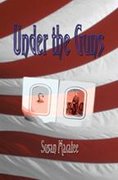
Happy Halloween! Since the town and battle of Gettysburg, Pennsylvania both figure prominently in both my novel, Under the Guns, and my work in progress, Erin's Rebel, I thought I'd do a blog for Halloween on some of the spooky stories told about the area. I've visited Gettysburg many times both as a Civil War reenactor and on family vacations and have gotten my share of goosebumps listening to the ghost stories that abound in that town and surrounding countryside, where so many lost their lives in 1863. Thought I'd pass along a few links on haunted Gettysburg you can check out for yourself. Enjoy! http://www.2bridges.com/gettysghosts.htm http://www.ghoststudy.com/ghost_stories.html
Second War of Schleswig (the Danish-Prussian War) 1864
While we fought our 'Great Civil War' (Abe Lincoln) , the second military conflict over Schleswig-Holstein succession question was being fought in Europe. It pitted Prussia and Austria against Denmark, who long controlled the two duchies. The disputes was against the Danish king who died without an acceptable heir. Acceptable to the German Confederation. And then there was the passing of a joint Danish/Schleswig constitution, which didn’t go over very well, either. German won, and in Denmark ceded control of both duchies.
http://en.wikipedia.org/wiki/Second_war_of_Schleswig
http://www.history.com/encyclopedia.do?articleId=221760
http://www.answers.com/topic/second-war-of-schleswighttp://www.germannotes.com/archive/article.php?products_id=423&osCsid=7ac0a040b48f5b8488909be37456fadc
http://en.wikipedia.org/wiki/Second_war_of_Schleswig
http://www.history.com/encyclopedia.do?articleId=221760
http://www.answers.com/topic/second-war-of-schleswighttp://www.germannotes.com/archive/article.php?products_id=423&osCsid=7ac0a040b48f5b8488909be37456fadc
Friday, October 27, 2006
Victorian Shopping - Macy’s opens 1858
After a string of seven business failures, Roland Macy finally hit the jackpot in 1858 when he founded his own department store, named R.H. Macy's & Co. The New York City store, located at 204-206 6th Ave and 14th street was a ‘fancy dry goods store’ and packed with a variety of useful products. It was an immediate success. Today, Macy's is the biggest department store in the world. The red Macy’s star apparently came from one tattooed on Mr. Macy’s arm (a tribute to the star that guided him when he was lost at sea).
http://www1.macys.com/store/about/history/index.jsp
http://www.history.com/tdih.do?action=tdihArticleCategory&id=6208
http://www1.macys.com/store/about/history/index.jsp
http://www.history.com/tdih.do?action=tdihArticleCategory&id=6208
Thursday, October 26, 2006
Shoot-out at the OK Corral 1881
After years of feuding and mounting tensions, on this day in 1881, the “law and order” Earps and the “cowboy” Clanton-McLaurys engage in their world-famous shoot-out near the OK Corral in Tombstone, Arizona, leaving three men dead and three more wounded.
http://www.history.com/tdih.do?action=tdihVideoCategory&id=51977
http://www.sccs.swarthmore.edu/users/98/dylan/tomb/shootout.html
http://www.tombstone.250x.com/
http://www.history.com/tdih.do?action=tdihVideoCategory&id=51977
http://www.sccs.swarthmore.edu/users/98/dylan/tomb/shootout.html
http://www.tombstone.250x.com/
Wednesday, October 25, 2006
Charge of the Light Brigade 1854
Lord James Cardigan led a charge of the Light Brigade Cavalry against well-defended Russian artillery during the Crimean War at the Battle of Balaclava. The British were actually winning when Cardigan received orders to attack. His cavalry gallantly charged down the valley and were decimated. They suffered 40% casualties. Later, it was learned that the order was the result of confusion and not given intentionally. Lord Cardigan survived the battle, and was hailed as a national hero in Britain.
Poem: http://poetry.eserver.org/light-brigade.html
Movie: http://www.imdb.com/title/tt0027438/
http://www.history.com/tdih.do?action=tdihArticleCategory&id=5467
http://pinetreeweb.com/13th-balaclava2.htmhttp://news.bbc.co.uk/1/hi/magazine/3944699.stm
Poem: http://poetry.eserver.org/light-brigade.html
Movie: http://www.imdb.com/title/tt0027438/
http://www.history.com/tdih.do?action=tdihArticleCategory&id=5467
http://pinetreeweb.com/13th-balaclava2.htmhttp://news.bbc.co.uk/1/hi/magazine/3944699.stm
Tuesday, October 24, 2006
First Barrel Ride Down Niagara Falls 1901

Annie Edson Taylor, 63, was the first to take the plunge. While not the first person over the falls (and who knows how many were tossed over them against their will) she was the first to do it in a barrel. Poor and seeking fame and fortune, the Civil War widow and 2 assistants strapped herself into a barrel 5 feet high and 3 feet around. Leather straps and cushions lined the barrel to protect her. However, her 15 minutes of fame lasted only about that and there was no fortune for Annie. She spent the rest of her life working as a street vendor in Niagara Falls, and died there in 1921.
http://www.history.com/tdih.do?action=tdihArticleCategory&displayDate=10/24&categoryId=leadstory
http://www.nfpl.library.on.ca/stuntupload/annie_taylor.html
http://travel.howstuffworks.com/niagara5.htm
Monday, October 23, 2006
NYSE seats up for sale: 1869
The New York Stock Exchange put memberships up for sale for the first time in its 77-year history. They sold for $8000 (over $100,000 now). Today? Try $800,000.
http://web.mit.edu/moser/www/nyse60105.pdf
http://www.history.com/tdih.do?action=tdihArticleCategory&id=6198
http://web.mit.edu/moser/www/nyse60105.pdf
http://www.history.com/tdih.do?action=tdihArticleCategory&id=6198
Sunday, October 22, 2006
Victorians Hosted State Balls and Informal Balls
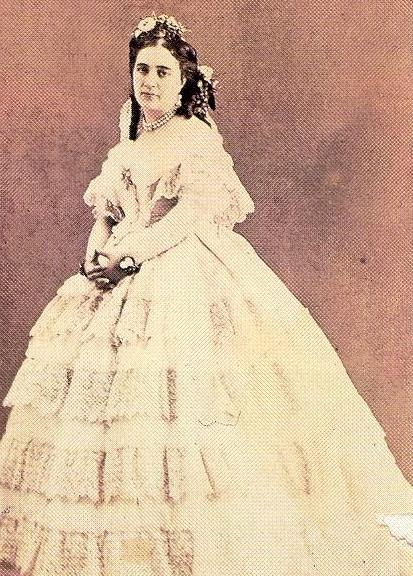
Victorians were trendy. Their entertainments reflected their awareness of trends, and their societal need to keep apace.
Napoleon III ran his Imperial Court with a flare unseen for decades on the Continent. Off-the-Continent, the Imperial Courts in the Americas were following suit. In particular, because Napoleon III sponsored the Mexican Imperials of the Second Empire - the Emperor Maximilian and Empress Carlota - that court particularly complied with protocal.
Two types of grand balls were accounted for during the Victorian era; State Balls and a casual tradition that was dubbed "Empress' Mondays". Victorian era authors may find it useful to include either style of ball to suit their authorial machinations. They differed in some of the following manners:
State Balls
* were very grandiose
*sovereign hosts arrived by 9:30 p.m. as witnessed by a large audience of attendees
* held in ballrooms
* said hosts retired early for the night, by midnight
* balls often continued until 4 a.m.
* full orchestras played throughout the night
* all attendees wore ascribed court dress such as that worn by the lady-in-waiting displayed top right, Dona Sanchez-Navarre of the Mexican Imperial Court; essentially all women wore the same gown and all men wore the same court uniform or a military uniform with full decoration
* protocol was strict and ceremony was relied upon
* etiquette was strict
* public scrutiny was always of concern
* guest lists were a matter of politics
* visits of state dignitaries precedented state balls and determined when the ball was held
* displays of the latest technology were part of the entertainment, often part of the decor
* lighting at state balls was dimmed to enhance the display of attendee’s jewels
* physical appearances and beauty were irrelevant; the purpose of attending was political gain
Empress’s Mondays
* were less grandiose
*sovereign hosts started off the affaires around 10 p.m.
* held in Salons
* hosts remained at the ball throughout the night
* balls often ended by 2 a.m.
* partial orchestras played periodically, often hidden in the patios or gardens
* attendees wore trendy or traditional attire, often verging on a masquerade ball
* protocol was less strict and ceremony relaxed
* etiquette was relaxed
* balls were not available for public perusal
* guest lists were comprised of local Society, usually outside political arenas
* balls were warm and intimate, and held regularly on Monday nights
* décor was limited to the elegantly decorated Salons, and guests roamed the grounds
* lighting was normal
* guests might be invited simply for their charm or beauty
By Kristin-Marie
The World is Ending!
In 1844, Millerites, followers of William Miller (once a Baptist), believed that the end of the world, in conjunction with the Second Advent of Christ, was about to happen. They calledOctober 22 The Great Anticipation. October 23 became known as The Great Disappointment. Clearly it didn’t happen.
http://www.iath.virginia.edu/utc/christn/chmillhp.html
http://www.answers.com/topic/millerites
http://chi.gospelcom.net/DAILYF/2001/10/daily-10-22-2001.shtml
http://www.iath.virginia.edu/utc/christn/chmillhp.html
http://www.answers.com/topic/millerites
http://chi.gospelcom.net/DAILYF/2001/10/daily-10-22-2001.shtml
Saturday, October 21, 2006
Victorian Women in Medicine
The medical profession of the 19th century didn't readily accept women into their ranks. The first school for nurses wasn't even established until after the Civil War. Although women physicians were scarce in this era, they were not unheard of. Elizabeth Blackwell, born in 1821, was the first American woman to gain entrance to medical school. She was only admitted when her fellow classmates jokingly voted to accept her. http://www.mommd.com/lookingback.shtml After her admittance, other women followed, including her sister, Emily, Maria Zakrzewska, Mary Putnam Jacobi and Ann Preston. Women's Medical College of Pennsylvania opened in 1850. This and other institutions of the time, including New York Medical College and Hospital for Women, devoted themselves to the education of women in the medical field. http://homeoint.org/cazalet/histo/newyork.htm It wasn't an easy road for women who sought to become doctors. In 1874, Edward H. Clarke wrote that women who earned an advanced education would develop "monstrous brains and puny bodies . . . [and] abnormally weak digestion." http://www.mommd.com/lookingback.shtml In 1891, Mary Putman Jacobi wrote, "It is perfectly evident from the records, that the opposition to women physicians has rarely been based upon any sincere conviction that women could not be instructed in medicine, but upon an intense dislike to the idea that they should be so capable." http://www.mommd.com/lookingback.shtml Women of the Victorian era had to work long and hard to be the very best in their class to overcome prejudices and establish their place in the world of medicine.
The Lady with the Lamp

In 1854, Florence Nightingale and a staff of 38 women volunteer nurses, trained by Nightingale and including her aunt, Mai Smith, went to the Crimean. Sidney Herbert (Secretary at War 1845–1846 and 1852–1854) authorized the expidation. The nurses landed some 545 km across the Black Sea from Balaklava, where the main British camp was based.
http://www.florence-nightingale.co.uk/
http://en.wikipedia.org/wiki/Florence_Nightingale
http://www.agnesscott.edu/Lriddle/WOMEN/nitegale.htm
Friday, October 20, 2006
Bela Lugosi born 1882
Born in Hungry, Lugosi established himself as a successful actor before immigrating to the US in 1921. He was a great success onstage in 1927, playing Dracula in the Broadway play, Dracula, and reprised the role in the 1931 film. Lugosi spent the next 20 years starring in horror films. He died August 16, 1956 and was buried with his Dracula cape.
http://www.history.com/tdih.do?action=tdihArticleCategory&id=3708
http://www.imdb.com/name/nm0000509/
http://www.auracom.com/tournier/webworld.htm
http://www.history.com/tdih.do?action=tdihArticleCategory&id=3708
http://www.imdb.com/name/nm0000509/
http://www.auracom.com/tournier/webworld.htm
Thursday, October 19, 2006
Construction begins on the Sutro Tunnel in Virginia City, Nevada
In 1869, Prussian-born mining engineer, Adolph Sutro, began work on four-mile-long tunnel through the solid rock of the Comstock Lode. Miners sank shafts deeper and deeper into the rock in search of more silver and gold. The further into the Earth they mined, the more water they encountered. This had to be pumped to the surface at great expense.
Enter Adolph Sutro. With his nifty invention of horizontal drainage, mine water would drain through a tunnel, minus expensive pumps. Handily, these tunnels could also be used to move men and ore in and out, greatly reducing transportation costs.
Everyone agreed the tunnel would be a boon to the Comstock. But they worried that Sutro would use his tunnel to take control of the entire Lode, and progress was continually slowed because of that fear. It was only by securing European capital that Sutro able to complete the $5 million project in 1878.
Every bit as successful as promised, Sutro’s tunnel drained two million gallons of water per year, and greatly reduced transportation costs. Alas, by 1878, the richer sections of the Comstock Lode had been tapped out, and profitability declined. Sutro, however, sold his tunnel in 1879 at a extraordinary profit, and moved to San Francisco where he became one of the city's largest landowners and mayor from 1894 to 1896.
http://www.history.com/tdih.do?action=tdihArticleCategory&id=4311
http://www.nevadaobserver.com/The%20Sutro%20Tunnel%20(1912).htm
http://www.library.unr.edu/specoll/mss/nc7.html
http://www.knpb.org/productions/sutro/yellowjacket.asp
http://www.greenspun.com/bboard/q-and-a-fetch-msg.tcl?msg_id=005Gak
Wednesday, October 18, 2006
Tuberculosis, the Victorian Scourge
The Victorian era was a time of great advances in medicine. But like in earlier centuries, people did die regularly of disease--cholera, influenza, measles etc. The one I find most fascinating is tuberculosis, or consumption as they called it back then.
Why?
Well for one thing, it was the leading cause of death in the U.S. in the 19th century. From the beginning of the century thru 1870, it was the cause of 1 in 5 deaths, or 20%! Compare that with the "scourge" of the late 20th century, AIDS, which is does not even hit the top 5 causes of death in the U.S. http://library.thinkquest.org/16665/causes.htm
Like those infected with AIDS, though, victims of tuberculosis could live a very long time. It was a wasting disease (thus the 19th century term consumption), its sufferers not dying within days or weeks, but living with attacks and remissions that could last for years or decades. It allowed those infected to get married, have children, and pass the disease on to them. Families, therefore, could suffer from the infection for 2 or even 3 generations, passing it from parent/grandparent to children. In fact, for much of the century, the physicians thought the disease was hereditary, not contagious. They believed that families had a predisposition to the illness.
We now know, of course, that tuberculosis is contagious, transmitted through the air. Why didn't people understand that back then, when it was considered likely with other illnesses, such as colds and influenza? I suspect that's because first and foremost, having the TB bacteria doesn't necessarily mean you will develop the disease. In fact, only 5-10% of the people who have the bacteria ever develop the disease. http://www.who.int/mediacentre/factsheets/fs104/en/
Secondly, unlike diseases such as influenza or cholera, it can takes years to develop tuberculosis. You may have been exposed to it by a train passenger in 1850 and not develop symptoms for until 1855. Who could say, then, where you got the disease?http://www.concordma.com/magazine/winter03/tuberculosis.html
http://www.geocities.com/victorianlace16/diseases.html
The majority of this information came from Living in the Shadow of Death, Tuberculosis and the social Experience of Illness in American History by Sheila M. Rothman
Why?
Well for one thing, it was the leading cause of death in the U.S. in the 19th century. From the beginning of the century thru 1870, it was the cause of 1 in 5 deaths, or 20%! Compare that with the "scourge" of the late 20th century, AIDS, which is does not even hit the top 5 causes of death in the U.S. http://library.thinkquest.org/16665/causes.htm
Like those infected with AIDS, though, victims of tuberculosis could live a very long time. It was a wasting disease (thus the 19th century term consumption), its sufferers not dying within days or weeks, but living with attacks and remissions that could last for years or decades. It allowed those infected to get married, have children, and pass the disease on to them. Families, therefore, could suffer from the infection for 2 or even 3 generations, passing it from parent/grandparent to children. In fact, for much of the century, the physicians thought the disease was hereditary, not contagious. They believed that families had a predisposition to the illness.
We now know, of course, that tuberculosis is contagious, transmitted through the air. Why didn't people understand that back then, when it was considered likely with other illnesses, such as colds and influenza? I suspect that's because first and foremost, having the TB bacteria doesn't necessarily mean you will develop the disease. In fact, only 5-10% of the people who have the bacteria ever develop the disease. http://www.who.int/mediacentre/factsheets/fs104/en/
Secondly, unlike diseases such as influenza or cholera, it can takes years to develop tuberculosis. You may have been exposed to it by a train passenger in 1850 and not develop symptoms for until 1855. Who could say, then, where you got the disease?http://www.concordma.com/magazine/winter03/tuberculosis.html
http://www.geocities.com/victorianlace16/diseases.html
The majority of this information came from Living in the Shadow of Death, Tuberculosis and the social Experience of Illness in American History by Sheila M. Rothman
America buys Alaska from Russians for US$7,200,000 1867
Larger in area than all but 18 of the world's nations, Alaska is derived from the Aleut Alyeska, meaning "great country", "mainland" or "great land". During the 18th century, Spaniards explored the coast and settled there – Cordova and Valdez.
U.S. Secretary of State William Seward (Seward’s Folly), urged the US to buy it, and while the transaction was completed on April 2, it wasn’t until October 18 that the hand over was completed. Or, if you go by the Julian calendar, Saturday, October 7, 1867 in Russia. Take your pick. That wasn’t the only problem Alaska had that day:
“Russia still used the Julian Calendar in 1867, and the world had not yet been divided into standard time zones; thus, there was no international date line, and the day began in the morning instead of starting at midnight. So, while the American day now ends with sunset in western Alaska, the Russian day then started with sunrise in "eastern" Alaska. Thus, Friday, October 6, 1867, the day before the physical transfer of ownership, was followed by Friday, October 18, 1867—which was Saturday, October 7, 1867 in Russia. The change in date was due to America bringing the Gregorian Calendar to Alaska, while the lack of change in day resulted from Alaska's shift from being the starting point of the Russian day to being the ending point of the American day.”
Get all that?
http://en.wikipedia.org/wiki/Alaska
http://www.akhistorycourse.org/
http://xroads.virginia.edu/~cap/BARTLETT/49state.html
Tuesday, October 17, 2006
A Rose by any Other Name...
Have you ever received a rejection that included the words “not what we’re looking for at this time?” A rejection just can’t get more vague than that. You’ve done your homework, you’ve studied your craft, your critique partners loved the story and characters– so what does “not what we’re looking for” really mean? If only editors could take the time to explain themselves rather than just hand out form letter rejections.
And have you ever wished there was a publisher who actually wanted those stories that the others “aren’t looking for?” Maybe you have a story that’s a bit quirky, one that’s set in an era that isn’t selling well at this time, or maybe it features the old no-no of athletes or rock stars as heroes or heroines.
Meet The Wild Rose Press, a new and exciting small electronic and print publisher. Our titles span the sub-genre spectrum from sweet to sensually erotic and are available in all lengths including short story, novella, category and single title.
At The Wild Rose Press, where I am senior editor over the historical lines, we like to say “we help writers grow”. Not only are our editors willing to work with an author if they like the story or the characters, but we welcome those works that the bigger houses don’t want. Certainly that isn’t to say we publish works that are unpublishable because of poor writing skills or lack of an actual story, but we do enjoy finding new and different ideas. And we never hand out “form” rejections; each editor makes every effort to let the writer know what did and didn’t work for her. Most of us even take the time to include helpful suggestions in our rejection letters. Best of all, we have an entire “greenhouse” on our site full of articles on the nuts and bolts of writing to help writers at all levels of their career, from the beginner to the polished professional.
Each month offers new articles, interviews with authors and editors and lots and lots of new releases. I hope you’ll stop by our garden at www.thewildrosepress.com and visit us soon!
And have you ever wished there was a publisher who actually wanted those stories that the others “aren’t looking for?” Maybe you have a story that’s a bit quirky, one that’s set in an era that isn’t selling well at this time, or maybe it features the old no-no of athletes or rock stars as heroes or heroines.
Meet The Wild Rose Press, a new and exciting small electronic and print publisher. Our titles span the sub-genre spectrum from sweet to sensually erotic and are available in all lengths including short story, novella, category and single title.
At The Wild Rose Press, where I am senior editor over the historical lines, we like to say “we help writers grow”. Not only are our editors willing to work with an author if they like the story or the characters, but we welcome those works that the bigger houses don’t want. Certainly that isn’t to say we publish works that are unpublishable because of poor writing skills or lack of an actual story, but we do enjoy finding new and different ideas. And we never hand out “form” rejections; each editor makes every effort to let the writer know what did and didn’t work for her. Most of us even take the time to include helpful suggestions in our rejection letters. Best of all, we have an entire “greenhouse” on our site full of articles on the nuts and bolts of writing to help writers at all levels of their career, from the beginner to the polished professional.
Each month offers new articles, interviews with authors and editors and lots and lots of new releases. I hope you’ll stop by our garden at www.thewildrosepress.com and visit us soon!
The Open Championship was first played on October 17, 1860 at Prestwick Golf Club
The inaugural tournament (commonly known as the British Open) was restricted to professionals. Those original eight played three rounds of the twelve-hole course in a one day. Willie Park Senior won with 174, beating favourite Old Tom Morris, by two strokes. Poor Willie won no money. In 1861, the tournament was opened to amateurs – eight joined the ten professionals.
It was only in 1863 that a purse was awarded - £10 or about $50 at the time. However, the winner didn’t even get to keep the money! It was shared between the second, third, and fourth placed professionals. The Champ got to keep the belt for a year. In 1864, Old Tom Morris won the first Champion's cash prize of £6 (today it’s about $11). Today? £720,000 or $1,335,753.82.
http://www.opengolf.com/history/timeline.sps
http://www.opengolf.com/history/past_opens.sps?PartNo=1
It was only in 1863 that a purse was awarded - £10 or about $50 at the time. However, the winner didn’t even get to keep the money! It was shared between the second, third, and fourth placed professionals. The Champ got to keep the belt for a year. In 1864, Old Tom Morris won the first Champion's cash prize of £6 (today it’s about $11). Today? £720,000 or $1,335,753.82.
http://www.opengolf.com/history/timeline.sps
http://www.opengolf.com/history/past_opens.sps?PartNo=1
Monday, October 16, 2006
First residential college for women in England est. 1869.
The College for Women, was located at Benslow House, Hitchin, in Hertfordshire, England. Relocated northwest of the centre of Cambridge, next to the village of Girton it became Girton College in 1872. The first students were called The Pioneers. Girton enjoys the rare distinction of having a song written by Gilbert & Sullivan named after the College: “Oh, maiden rich in Girton lore.” (Utopia ,Limited 1893). Their motto is: "Better is wisdom than weapons of war"
http://www.girton.cam.ac.uk/about/
http://www.girton.cam.ac.uk/about/
Sunday, October 15, 2006
Chiricahua Apache leader Victorio is killed Tres Castillos Mountains south of El Paso, Texas 1880
Determined to resist the loss of his homeland, Victorio began leading his small band of warriors on a long series of devastating raids against Mexican and American settlers and their communities in the 1850s. Finally, in 1869, the U.S. Army convinced Victorio to accept resettlement on an inhospitable patch of sunburnt land near San Carlos, Arizona, also known as Hell's Forty Acres.
Farming nearly impossible, and the conditions were deplorable. So Victorio decided this new reservation was unacceptable and moved his followers to more pleasant grounds at Ojo Caliente (Warm Springs). Unfortunately, this made him once again an outlaw in the eyes of the U. S.
In 1880, a combined force of U.S. and Mexican troops finally succeeded in tracking him down, surrounding them in the Tres Castillos Mountains. The Mexican soldiers sent the Americans away, and proceeded to kill all but 17 of the trapped Apaches. The exact manner of Victorio's death remains unclear. Some claimed an Indian scout employed by the Mexican army killed him. According to the Apache, Victorio took his own life rather than surrender to the hated Mexicans. Regardless, Victorio's death made him a martyr to the Apache people and strengthened the resolve of other warriors to continue the fight. The last of the great Apache warriors, Geronimo, would not surrender until 1886.
Victorio's sister was the famous woman warrior Lozen, Dexterous Horse Thief.
The character of Sierra Charriba, in Sam Peckinpah's film Major Dundee (1965), played by Michael Pate, was based off of Victorio.
http://www.greatdreams.com/apache/lozen.htm
http://www.history.com/tdih.do?action=tdihArticleCategory&id=4307
http://www.meyna.com/lozen.html
http://www.emayzine.com/lectures/APACHE.html
http://columbia.thefreedictionary.com/Apache
http://en.wikipedia.org/wiki/Victorio
Farming nearly impossible, and the conditions were deplorable. So Victorio decided this new reservation was unacceptable and moved his followers to more pleasant grounds at Ojo Caliente (Warm Springs). Unfortunately, this made him once again an outlaw in the eyes of the U. S.
In 1880, a combined force of U.S. and Mexican troops finally succeeded in tracking him down, surrounding them in the Tres Castillos Mountains. The Mexican soldiers sent the Americans away, and proceeded to kill all but 17 of the trapped Apaches. The exact manner of Victorio's death remains unclear. Some claimed an Indian scout employed by the Mexican army killed him. According to the Apache, Victorio took his own life rather than surrender to the hated Mexicans. Regardless, Victorio's death made him a martyr to the Apache people and strengthened the resolve of other warriors to continue the fight. The last of the great Apache warriors, Geronimo, would not surrender until 1886.
Victorio's sister was the famous woman warrior Lozen, Dexterous Horse Thief.
The character of Sierra Charriba, in Sam Peckinpah's film Major Dundee (1965), played by Michael Pate, was based off of Victorio.
http://www.greatdreams.com/apache/lozen.htm
http://www.history.com/tdih.do?action=tdihArticleCategory&id=4307
http://www.meyna.com/lozen.html
http://www.emayzine.com/lectures/APACHE.html
http://columbia.thefreedictionary.com/Apache
http://en.wikipedia.org/wiki/Victorio
Friday, October 06, 2006
Civil War Nurses
In both my young adult novel, Under the Guns, and my current work-in-progress, a time travel romance set during the Civil War, Erin's Rebel, my heroines assume the duties of nurses both on the battlefield and, in the former, a Washington hospital. At the time of the Civil War, nursing as a profession didn't exist for women. The armies used soldiers, appointed to serve as nurses for their fellow soldiers. It wasn't until the war escalated that women, who wanted to help the war effort of their respective sides, left their homes to nurse the wounded. Women living in towns near where battles were fought volunteered their homes and their nursing abilities. Also laundresses and cooks, already with the armies, were often pressed into service as nurses as needed after a battle. These nurses had no formal training. Most used the skills they'd obtained caring for family members. Many were married, middle-aged women who either had husbands, sons or both serving in the army. Sophronia Bucklin was a unusual nurse because she was single and very young at the time she served. She was born in 1846, so would have been only about 15 or 16 when the war started. After the war, she wrote a book of her experiences, In Hospital and Camp, published in 1869. In a quote from that book: "Could I ever suppress the shuddering that passed over me, as I entered the low wooden house, in which on rude benches lay the cold white corpses of three men? Miss Clark uncovered the face of the man who died last, and told me this story--of the wife and three children in the far West, who were yet to know how it had gone with their soldier. He was wounded in the second battle of Bull Run, and had been under her care for ten days. "A cloth saturated with blood lay over a bench, and I was wrought upon by sadness of the scene, and the echoing of many groans coming from the wards, that I only desired to hasten away from the dreadful place, and forget that it was man against his brother man, who was causing this awful destruction." Bucklin, Sophronia E. In Hospital and Camp. Philadelphia: John E. Potter and Company, 1869. In Louisa May Alcott's Hospital Sketches, she relates: "I am free to confess that I had a realizing sense of the fact that my hospital bed was not a bed of roses just then, or the prospect before me one of unmingled raptures. My three days' experiences had begun with a death, and, owing to the defalcation of another nurse, a somewhat abrupt plunge into the superintendence of a ward containing forty beds, where I spent my shining hours washing faces, serving rations, giving medicine, and sitting in a very hard chair, with pneumonia on one side, diphtheria on the other, two typhoids opposite, and a dozen dilapidated patients, hopping, lying, and lounging about, all staring more or less at the new "nuss", who suffered untold agonies, but concealed them under as matronly an aspect as a spinster could assume, and blundered through her trying labors with a Spartan firmness, which I hope they appreciated, but am afraid they didn't." Alcott, Louisa May. Hospital Sketches. Boston: James Redpath Publishers, 1863. Adelaide W. Smith was a independent volunteer who offered her services to help in the hospitals. In her book about her experiences, she wrote this dedication. "To the Boys in Blue 1861-1865; and to those brave women, who, with smiling faces and breaking hearts, sent them forth to save their country and their homes, while they themselves toiled in fields and elsewhere, waiting to welcome home too many who never returned; and to that band of heroic devoted women, many of whom left luxurious homes for the discomforts and privations of hospital life, and died, self-sacrificing patriots of the war, this true story is affectionately dedicated. Adelaide W. Smith." Smith, Adelaide W. Reminiscences of an Army Nurse during the Civil War. New York: Greaves Publishing Company, 1911. Source: In Hospital and Camp: The Civil War Through the Eyes of It's Doctors and Nurses by Harold Elk Straubing: Stackpole Books; copyright 1993 ISBN:0-8117-1631-7 Links with more information: http://www.dtsk8.org/6_8/8/Civil%20War%20Webpage-RS/northernnurses.html http://www.civilwarhome.com/civilwarnurses.htm http://www.civilwarhome.com/dixbio.htm http://xroads.virginia.edu/~CAP/hospital/whitman.htm
Monday, September 25, 2006
Victorian Nudes, Drawing Fine Lines at Fig Leaves
 The Victorian era witnessed a political push for indecency laws.
On any given day in any given city in nearly every neighborhood, foot traffic and passersby would be compelled to overlook the shockingly common sight of partially clad prostitutes and lower-class mistresses seeing Gentlemen into their gilded coaches at curbside.
As a side effect of the rise in Industry and the increase in technology, old and new artistic mediums were being utilized for increasingly visible pornography, shocking polite sensibilities.
Legislation began to be passed during the 19th Century to regulate Centuries-old traditions of pornography and nudity-in-public. Queen Victoria’s social influence in such matters belied the fact that her political opinions were being poppy-cocked in the Houses of Lords and Commons, alike. It came into fashion to adopt her moralistic stances as well as her embellished and prudish fashions, nostalgic décor, and gracious entertainments.
Hotly contested terms were applied to nudes and displays of nudity. The 19th Century revival in interest in the Renaissance era brought to the forefront historic painted nude portraits typical of royal and courtly ladies that were considered the equivalent of a modern family portrait during the Renaissance. Society during Victoria’s reign, however, required moralistic lines to be redrawn. Determinations were made as to whether new nudes or displays of nudity were to be considered classical, or not.
As Victorian-era artistic mediums evolved, photography of boudoir ladies, in particular, became increasingly available albeit driven underground. Any number of named and undisclosed models graced many a Victorian photographer’s portfolio for posterity to view. Art galleries of today are still known to display art shows from such Victorian photographers.
Acceptable nudity in artwork during the Victorian Era included a central attraction at the Great Exhibit -- the First World’s Faire -- of 1851. A nude sculpture by American artist Hiram Powers entitled Greek Slave [displayed top right], was considered acceptable for family viewing. Since the sculpted figure had a hand strategically draped, it was reviewed on the levels of a Sistine Chapel Garden-of-Eden occupant. The statue is housed at the Corcoran Gallery in Washington, D.C.
Polite Societies separated themselves from the undereducated masses by defining pornography, as well as determining new additions to the realms of Classical Art. Ultimately, the powerful Elite Minority triumphed, shutting out displays of public nudity and pornography.
No longer tolerated were previously typical public entertainments such as troupes of bare-breasted liveried female equestrians riding through crowded Central Parks while picnickers and strolling families gaped.
Not all municipalities passed the same laws at the same time regarding pornography and public nudity, nor cared to do so. In some parts of America, all one had to do was ride over the county lines to indulge.
By Kristin-Marie
Saturday, September 23, 2006
Period Quotes
Thought I'd pass along these interesting period quotes I came across in a special edition of The Citizens' Companion, a periodical written for Civil War civilian reenactors. These are from the August, 2006 special edition: "In private, watch your thoughts; in your family, watch your temper; in society, watch your tongue." Original Source: Civil War Etiquette; Martine's Handbook & Vulgarisms in Conversation "The ladies' dressing room is a sacred precinct, into which no gentleman should ever presume to look; to enter it would be an outrage not to be overlooked or forgiven." Original Source: Martine's Handbook & Vulgarisms in Conversation; R.L. Shep - Mendocino An Etiquette lesson from Civil War Etiquette Martine's Handbook & Vulgarisms in Conversation :
"Ladies may walk unattended in the streets, being careful to pass on as becomes their station-neither with a hurried pace, nor yet affecting to move slowly. Shop-windows, in New York especially, afford great attractions; but it is by no means desirable to be seen standing before them, and most assuredly not alone. Be careful never to look back, nor to observe too narrowly the dresses of such ladies as may pass you. Should any one venture to address you, take no heed, seem not to hear, but hasten your steps. Be careful to reach home in good time. Let nothing ever induce you to be out after dusk, or when the lamps are lighted. Nothing but unavoidable necessity can sanction such acts of impropriety." Ladies, we've come a long way. Source: The Citizens' Companion; The Voice of Civilian Reenacting; Special Edition - August, 2006 pp. 29, 35 & 61
Tuesday, September 19, 2006
Heraldry, Fashionably Revived if Under-regulated
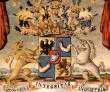 An interest in classical heraldic elements was revived during the Victorian Era, hand-in-hand with the revival of Elizabethan and Renaissance Eras and nostalgia for pageantry.
Most heraldry designed in the Victorian era was intentionally presumptuous. It crowded as many illustrious affectations into as small a space as possible. The result was beautiful and increasingly detailed heraldic artwork, sometimes used for show and sometimes just for contracts.
The historic Rothschild coat-of-arms displayed at right is typical of the times. The Victorian-ilk heraldry bears great resemblance to the re-popularized and ostentatious Renaissance styles.
Copper-plate engravings of armorial bookplates - available by custom order - were quite in demand with the General Public and sometimes commanded royal prices.
In general, armorial shields could be spotted on the sides of coaches, or worked into stained glass designs, or even displayed or disguised in Victorian architecture. University fraternities, such as Psi Upsilon, were going to great lengths to define and register their heraldic coats-of-arms.
A friendly web page with articles and resources is at The Heraldry Society www.theheraldrysociety.com. Other good reference sources exist with cultural historical groups, such as The Hispanic Society of America which often displays armorial textiles.
Debates arose, officially and unofficially, during the Victorian Era over whether a true 'gentleman' carried a coat-of-arms, or not, and about whether he could be considered a true gentleman if he didn't. Definitive answers were unavailable, as heraldry even to this day is largely under-regulated.
Attempts to redefine and consequently regulate popular usage of heraldry were made by barrister Arthur Charles Fox-Davies. His tome, The Art of Heraldry – An Encyclopedia of Armory, [0 906223 34 2] attested to his status as an expert on heraldry during Victorian times. His angle, though, was to disprove most usage of heraldry by any but certain registered armorial families in English and Welsh domain. (His studies didn't cover other countries or groups, for the most part.)
Civic heraldry designed during the Victorian Era remained true to popular sentiments with aggrandized artistry, making for fascinating displays intended to hold audiences enrapt.
The topic was a hotbed, and as a result, many heraldic artists decided to remain anonymous. Because heraldry was mostly unregulated, bestiaries listing definitions of the elements were closely horded like State Secrets. To this day, many countries and their armigers don't share bestiaries with the public.
Kristin-Marie
Monday, September 18, 2006
Robber baron causes panic 1873
Twelve years of unchecked expansion (1865-1873), the economy was bloated from inflation, an excess of speculation, and one man’s mistake combine for Panic. For 5 years after the 1873 panic, banks closed (37), brokerage houses shut their doors (2), markets deflated, American’s faith in the economy was nonexistent, and the nation seemed on the verge of collapse. It was one of the worst financial crises in America’s history.
The failure of the Philadelphia investment house of Jay Cooke & Co., who played a large role in financing the Union war effort by marketing federal bonds to farmers and workers, began when he decided to invest in just one more railroad. Between 1865-1873, Cooke's firm financed 35,000 miles of new railroads track.
The Union Pacific was a success. The Northern Pacific was not.
Railroads overbuilt, setting the stage for disastrous competition for freight traffic. Investors speculated heavily in railroad securities, and in 1873, it all crashed.
Cooke's failure drove panicked banks to demand payment of loans. Investors rushed to sell stocks in order to protect their capital.
It’s got to be difficult to be single handedly responsible for such a financial depression. Cooke was in bankruptcy, involved in Canadian corruption scandals, caused Prime Minister Sir John A. Macdonald to lose his office in the 1873 election, and yet still managed to turn everything around.
By 1880 he’d met all his obligations, invested in an Utah silver mine, and was wealthy once more. Ha. Must be nice. Forced to give up his Ogontz, PA estate in bankruptcy, he repurchased it and converted it into a school for girls. Actually, it seemed he really was a nice guy.
http://www.history.com/tdih.do?action=tdihArticleCategory&id=6101
http://dig.lib.niu.edu/gildedage/narr3.html
http://www.u-s-history.com/pages/h213.html
http://www.thehistorybox.com/ny_city/panics/panics_article9a.htm
http://en.wikipedia.org/wiki/Jay_Cooke
The failure of the Philadelphia investment house of Jay Cooke & Co., who played a large role in financing the Union war effort by marketing federal bonds to farmers and workers, began when he decided to invest in just one more railroad. Between 1865-1873, Cooke's firm financed 35,000 miles of new railroads track.
The Union Pacific was a success. The Northern Pacific was not.
Railroads overbuilt, setting the stage for disastrous competition for freight traffic. Investors speculated heavily in railroad securities, and in 1873, it all crashed.
Cooke's failure drove panicked banks to demand payment of loans. Investors rushed to sell stocks in order to protect their capital.
“As stocks on the New York exchanges sunk lower, borrowers had no money with
which to pay their debts. Businessmen, many of whom had borrowed money to
expand their operations during boom times, released workers.”
It’s got to be difficult to be single handedly responsible for such a financial depression. Cooke was in bankruptcy, involved in Canadian corruption scandals, caused Prime Minister Sir John A. Macdonald to lose his office in the 1873 election, and yet still managed to turn everything around.
By 1880 he’d met all his obligations, invested in an Utah silver mine, and was wealthy once more. Ha. Must be nice. Forced to give up his Ogontz, PA estate in bankruptcy, he repurchased it and converted it into a school for girls. Actually, it seemed he really was a nice guy.
http://www.history.com/tdih.do?action=tdihArticleCategory&id=6101
http://dig.lib.niu.edu/gildedage/narr3.html
http://www.u-s-history.com/pages/h213.html
http://www.thehistorybox.com/ny_city/panics/panics_article9a.htm
http://en.wikipedia.org/wiki/Jay_Cooke
Sunday, September 17, 2006
Battle of Yalu River (1894)
It involved the Japanese and the Chinese navies, and was the largest naval engagement of the First Sino-Japanese War. The Yalu River is the border between Korea and China. This battle was actually fought at the mouth of this river, in the Korea Bay (or the Yellow Sea, depending on who you ask).
A Japanese fleet under Admiral Sukeyuki Ito was attempting to disrupt the landing of Chinese troops protected by a fleet under Admiral Ting Ju ch'ang. It’s considered a significant beginning for later battles, the so-called dreadnought technology.
http://www.russojapanesewar.com/yalu1894.html
http://www.bookrags.com/wiki/Battle_of_Yalu_River_(1894)
A Japanese fleet under Admiral Sukeyuki Ito was attempting to disrupt the landing of Chinese troops protected by a fleet under Admiral Ting Ju ch'ang. It’s considered a significant beginning for later battles, the so-called dreadnought technology.
"On 16 September the Japanese Navy, having carried out a landing operation at
Chinnampo, was returning to sea. Admiral Ito had with him a powerful force
comprising ten cruisers, a gunboat, an armed merchantman and a flotilla of
torpedo boats. Ito's flagship, the 4,277-ton Matsushima, mounted one 12.5-inch
and eleven 4.7-inch guns, as did her sister ships Itsukushima and Hashidate. The
Fuso and Takachiho carried two 10.2-inch and six 5.9-inch, the 2,200-ton Hiei
one 10.2-inch and two 5.9-inch and the 2,450-ton Chiyoda ten 4.7-inch guns.
Togo's Flying Squadron, the Naniwa, Yoshino, and Akitsushima, were also in
company."
http://www.russojapanesewar.com/yalu1894.html
http://www.bookrags.com/wiki/Battle_of_Yalu_River_(1894)
Saturday, September 16, 2006
Claim your land now! (Before all the good parts are taken.)
Considered worthless desert some years before 1893, on Sept. 16 of that year, 100,000+ people gathered in the Cherokee Strip of Oklahoma to claim land the US Government had given to the Native Americans in a forced relocation better known as “The Trail of Tears”.
With one gunshot (that was probably heard by only half the people present) it began. Pioneers hungry for land raved on horseback and in carriages to stake their claims. Fighting broke out, but not too much was done – or could be done – about it.
“By 1885, a diverse mixture of Native American tribes had been pushed onto reservations in eastern Oklahoma and promised that the land would be theirs "as long as the grass grows and the water runs." Yet even this seemingly marginal land did not long escape the attention of land-hungry Americans. By the late nineteenth century, farmers had developed new methods that suddenly made the formerly reviled Plains hugely valuable. Pressure steadily increased to open the Indian lands to settlement, and in 1889, President Benjamin Harrison succumbed and threw open large areas of unoccupied Indian lands to white settlement. The giant Cherokee Strip rush was only the largest of a series of massive "land runs" that began in the 1890s, with thousands of immigrants stampeding into Oklahoma Territory and establishing towns like Norman and Oklahoma City almost overnight.”
http://www.history.com/tdih.do?action=tdihArticleCategory&id=4276
http://www.ok.gov/osfdocs/stinfo2.html
http://www.state.ok.us/?c=8
http://www.rosecity.net/tears/
http://www.pbs.org/wgbh/aia/part4/4h1567.html
With one gunshot (that was probably heard by only half the people present) it began. Pioneers hungry for land raved on horseback and in carriages to stake their claims. Fighting broke out, but not too much was done – or could be done – about it.
“By 1885, a diverse mixture of Native American tribes had been pushed onto reservations in eastern Oklahoma and promised that the land would be theirs "as long as the grass grows and the water runs." Yet even this seemingly marginal land did not long escape the attention of land-hungry Americans. By the late nineteenth century, farmers had developed new methods that suddenly made the formerly reviled Plains hugely valuable. Pressure steadily increased to open the Indian lands to settlement, and in 1889, President Benjamin Harrison succumbed and threw open large areas of unoccupied Indian lands to white settlement. The giant Cherokee Strip rush was only the largest of a series of massive "land runs" that began in the 1890s, with thousands of immigrants stampeding into Oklahoma Territory and establishing towns like Norman and Oklahoma City almost overnight.”
http://www.history.com/tdih.do?action=tdihArticleCategory&id=4276
http://www.ok.gov/osfdocs/stinfo2.html
http://www.state.ok.us/?c=8
http://www.rosecity.net/tears/
http://www.pbs.org/wgbh/aia/part4/4h1567.html
Friday, September 15, 2006
Agatha Christie is born in 1890
I wanted to do something on this, but couldn't find anything about this last day, only the war itself. So Dear Agatha is was!
In 1873, the last German troops leave France upon completion of payment of indemnity.
Born Mary Clarissa Agatha Miller in Torquay, Devon, England, Agatha Christie wrote 80 novels, 30 short story collections, 15 plays, and 6 romances under the pen name Mary Westmacott. Knighted in 1971, she died in 1976 with more than 400 million copies of her books sold in more than 100 languages.
It was during WWI, when her husband, Colonel Archibald Christie was fighting, that she learned about poisons while working in a pharmacy. Her first novel, featuring Hercule Poirot, The Mysterious Affair at Styles (1920), did OK, but it was her 2nd one, The Murder of Roger Ackroyd (1926) that was a bestseller and where she began her lifelong success.
http://www.history.com/tdih.do?action=tdihArticleCategory&id=4092
http://uk.agathachristie.com/site/home/
http://christie.mysterynet.com/
http://www.online-literature.com/agatha_christie/
In 1873, the last German troops leave France upon completion of payment of indemnity.
Born Mary Clarissa Agatha Miller in Torquay, Devon, England, Agatha Christie wrote 80 novels, 30 short story collections, 15 plays, and 6 romances under the pen name Mary Westmacott. Knighted in 1971, she died in 1976 with more than 400 million copies of her books sold in more than 100 languages.
It was during WWI, when her husband, Colonel Archibald Christie was fighting, that she learned about poisons while working in a pharmacy. Her first novel, featuring Hercule Poirot, The Mysterious Affair at Styles (1920), did OK, but it was her 2nd one, The Murder of Roger Ackroyd (1926) that was a bestseller and where she began her lifelong success.
http://www.history.com/tdih.do?action=tdihArticleCategory&id=4092
http://uk.agathachristie.com/site/home/
http://christie.mysterynet.com/
http://www.online-literature.com/agatha_christie/
Thursday, September 14, 2006
Civil War Ladies' Hairstyles and Hair Accessories
When I first became a Civil War reenactor, I had a lot of misconceptions about how women wore their hair back then. Most of this misinformation, I have to admit, came from Hollywood's inaccurate portrayals of women of the period. Just don't get me started on blue eyeshadow! One of the biggest mistakes I myself made as a newbie reenactor, was to buy a snood for my hair. I found out later that snoods didn't exist at the time of the Civil War even though these items are sold by Civil War period sutlers. The snood came into fashion around the 1940s. What was worn during the Civil War was a hairnet. And not all women wore these. There were two types--one was made of very fine netting that matched a woman's haircolor. The other type was a decorative net composed of strips of ribbon, velvet or other braided material with beading woven in. This second type of hairnet was worn, as a bonnet was, to conceal the hair. http://www.shasta.com/suesgoodco/newcivilians/womenswear/hairstyles.htm For an everyday look, women of the period wore their hair neatly confined. Not one strand was to be out of place. During the 1860s, people didn't wash their hair as often as we do today. Women also used sweet scented oils or pomades to slick their hair down. Then they wound it into a bun and pinned the hair in place. A round, wide face was the ideal during this time period. Women tried to achieve this look by parting their hair down the center, slicking it flat on top, pulling it to the back and securing it with pins into a bun at the back of the head. Older women wore their buns higher on the back of the head, while young women wore theirs low on the nape of the neck. Women of this period never wore bangs. At balls and formal affairs, other styles commonly worn were elaborate braids arranged around the head, sausage curls or ringlets. The key was to keep the ends of the hair out of sight. Meaning a woman in period attire with her long hair hanging down her back would be very inappropriate. This look was for the bedroom only. Little girls wore their hair in braids. Women also rolled their hair on the sides to create more width. Another trick to achieve width was to collect hair from brushes, roll it into a potato-shape and pin it to the sides of the head. http://www.shasta.com/suesgoodco/newcivilians/womenswear/rats.htm For more information on women's hairstyles: http://www.vintagevictorian.com/costume_1860.html http://en.wikipedia.org/wiki/1860s_in_fashion#Hairstyles_and_headgear
Oh, say can you see?
Not that it has anything to do directly with the Victorian Era, but in 1814 Frances Scott Key composed the Star Spangled Banner. It was regarded as the US national anthem by the armed forces during the 19th century, however. In 1916, by executive order, President Woodrow Wilson made it officially the National Anthem.
http://www.infoplease.com/ipa/A0194015.html
http://americanhistory.si.edu/ssb/
http://www.infoplease.com/ipa/A0194015.html
http://americanhistory.si.edu/ssb/
Wednesday, September 13, 2006
A Few Ladylike Activities
When a lady found herself with idle time on her hands, a few of her choices for spending her time included:
* charity work any or every day of the week with her church or favorite charitable society
* spending mealtime or teatime with other ladies of leisure and literary writers
* reading aloud in her chambers with other ladies, especially during the time for after dinner drinks and smokes
* feeding the birds at parks and common areas, especially during the Wintertime.
Kristin-Marie
* charity work any or every day of the week with her church or favorite charitable society
* spending mealtime or teatime with other ladies of leisure and literary writers
* reading aloud in her chambers with other ladies, especially during the time for after dinner drinks and smokes
* feeding the birds at parks and common areas, especially during the Wintertime.
Kristin-Marie
The Union Discovers "Lost Order"
9/13
In 1862, “Union soldiers [found] a copy of Confederate General Robert E. Lee's orders detailing the Confederates' plan for the Antietam campaign near Frederick, Maryland. But Union General George B. McClellan was slow to act, and the advantage the intelligence provided was lost.”
Sergeant John Bloss and Corporal Barton W. Mitchell found a piece of paper wrapped around three cigars, realized what it was, and passed it up the chain of command. Purely by accident, the division adjutant general, Samuel Pittman, recognized the handwriting (it was from a colleague from the prewar army, Robert Chilton) who happened to be the adjutant general to Robert E. Lee. Pittman took the paper to McClellan. McClellan crowed at his potential victory.
And then he did nothing.
He thought Lee had greater numbers than the Confederates actually did, took 18 hours to get his army in motion, and to top it all off, Lee was alerted to the approaching Federals, and sent troops to plug the gaps in his own army.
The press dubbed McClellan "Mac the Unready" and "The Little Corporal of Unsought Fields".
Ordered to relinquish command from the War Department, McClellan did so on Nov. 9, 1862. In true New Jersey fashion, he then went on to play an active roll in state politics. Yeah, we haven’t had a good governor in centuries…
http://www.history.com/tdih.do?action=tdihArticleCategory&id=2317
http://www.civilwarhome.com/macbio.htm
http://www.nps.gov/archive/anti/mccl-bio.htm
Tuesday, September 12, 2006
Don’t take candy from a stranger.
9/12
In 1898, Elizabeth Dunning (daughter of a US Congressman and wife of John Dunning, bureau chief for the Associated Press) and her sister, Mrs. Joshua Deane, died after 3 days of terrible stomach pains from consuming a box of chocolates from a Mrs. C, whom she did not know. (I won’t even ask why she’d do such a stupid thing as eat something from someone she didn’t know, but apparently signing the letter Mrs. C convinced Elizabeth it was from a friend.)
Dear John was having an affair with Cordelia Botkin while he and Elizabeth were living in San Francisco. Elizabeth found out, left John who left Cordelia. None too happy with the end of the affair, Cordelia sent letters to Elizabeth claiming the affair continued (long distance, apparently).
Convicted in 1899 of intentional poisoning by Arsenic, Cordelia received special treatment – overnight male visitors, a lushly decorated cell, and 2 days a week into San Francisco. Eventually these privileges were revoked, and Cordelia died in San Quentin in 1910.
http://www.well.com/~sfflier/Botkin.html
http://www.history.com/tdih.do?action=tdihArticleCategory&id=1124
http://www.russpickett.com/history/botkin.htm
In 1898, Elizabeth Dunning (daughter of a US Congressman and wife of John Dunning, bureau chief for the Associated Press) and her sister, Mrs. Joshua Deane, died after 3 days of terrible stomach pains from consuming a box of chocolates from a Mrs. C, whom she did not know. (I won’t even ask why she’d do such a stupid thing as eat something from someone she didn’t know, but apparently signing the letter Mrs. C convinced Elizabeth it was from a friend.)
Dear John was having an affair with Cordelia Botkin while he and Elizabeth were living in San Francisco. Elizabeth found out, left John who left Cordelia. None too happy with the end of the affair, Cordelia sent letters to Elizabeth claiming the affair continued (long distance, apparently).
Convicted in 1899 of intentional poisoning by Arsenic, Cordelia received special treatment – overnight male visitors, a lushly decorated cell, and 2 days a week into San Francisco. Eventually these privileges were revoked, and Cordelia died in San Quentin in 1910.
http://www.well.com/~sfflier/Botkin.html
http://www.history.com/tdih.do?action=tdihArticleCategory&id=1124
http://www.russpickett.com/history/botkin.htm
Monday, September 11, 2006
Oh! Susanna
9/11
Most of us know what happened today in 2001. (http://www.theseptemberproject.org/ and http://www.september11news.com/) I’m lucky to be able to remember this day with a happier spin because my niece was born in 2003, so we celebrate life on such a tragic day.
Steven Foster’s 1847 hit song was first played at a Pittsburgh saloon. It was a national hit and became the unofficial anthem of the 49ers - the miners during the California Gold Rush, not today's football team *G*.
Foster wrote several other classic popular songs, including De Campton Races (1850), Old Folks at Home [Swanee River] (1851), My Old Kentucky Home, Good-Night! (1853), Jeanie With the Light Brown Hair (1854), Gentle Annie (1856), Beautiful Dreamer (1862), and The Voices That Are Gone (1865).
Something I had no idea about until researching Foster for this blog. According Ken Emerson, Foster’s biographer and the All Music Guide:
http://www.answers.com/topic/oh-susanna-vocal-classical-work http://www.pdmusic.org/foster.html
http://www.history.com/tdih.do?action=tdihArticleCategory&id=3606
Most of us know what happened today in 2001. (http://www.theseptemberproject.org/ and http://www.september11news.com/) I’m lucky to be able to remember this day with a happier spin because my niece was born in 2003, so we celebrate life on such a tragic day.
Steven Foster’s 1847 hit song was first played at a Pittsburgh saloon. It was a national hit and became the unofficial anthem of the 49ers - the miners during the California Gold Rush, not today's football team *G*.
Foster wrote several other classic popular songs, including De Campton Races (1850), Old Folks at Home [Swanee River] (1851), My Old Kentucky Home, Good-Night! (1853), Jeanie With the Light Brown Hair (1854), Gentle Annie (1856), Beautiful Dreamer (1862), and The Voices That Are Gone (1865).
Something I had no idea about until researching Foster for this blog. According Ken Emerson, Foster’s biographer and the All Music Guide:
“It became associated with the California Gold Rush. Yet most people don't know
many of the words--fortunately, for the song was actually a blackface dialect
number whose words contain some appallingly racist lines. However, a little
thought also makes the song's subtext clear: the singer clearly identifies
himself as an African American, yet he blithely sings of coming from Alabama,
travelling freely by riverboat to New Orleans. For all its lightheartedness,
"Oh! Susanna" depicts a slave's escape attempt.”
http://www.answers.com/topic/oh-susanna-vocal-classical-work http://www.pdmusic.org/foster.html
http://www.history.com/tdih.do?action=tdihArticleCategory&id=3606
Sunday, September 10, 2006
British police make first DWI arrest 1893.
September 10.
Apparently, it wasn’t difficult to tell that George Smith was drunk while driving. The swerving gave him away.
http://www.history.com/tdih.do?action=tdihArticleCategory&id=7655 http://qualityweenie.mu.nu/archives/090321.php
Friday, September 08, 2006
First Lady gives birth to daughter!
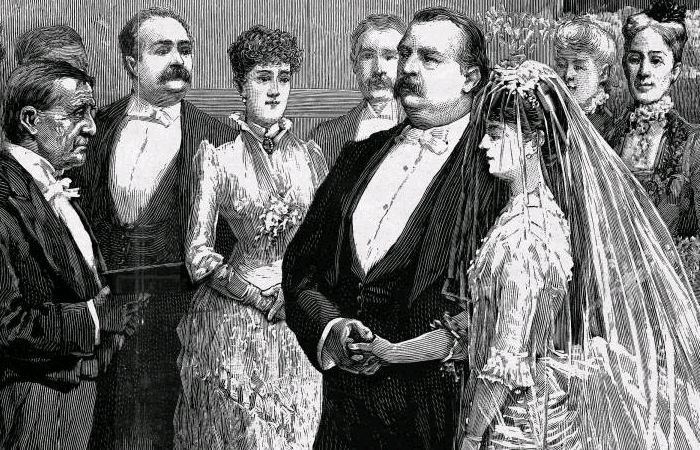
It was a tough choice today – President Grover Cleveland’s baby’s birth, or California becoming the 31st state.
I chose the baby only because it was a first. Frances Cleveland (27 years younger than her husband and the youngest First Lady in history) was the first First Lady to give birth in the White House. Daughter Esther is the first – and only – child born to a president in the White House, on September 9, 1893. Of course Grover Cleveland was also the first president to be married in the White House (though not married while in office) and the only President to serve two non-consecutive terms.
[picture: http://encyclopedia.quickseek.com/images/President_cleveland_wedding.png]
http://www.history.com/tdih.do?action=tdihArticleCategory&id=50965
http://www.americanpresident.org/history/grovercleveland/
http://www.worldbook.com/features/presidents/html/cleveland_frances.htm
http://www.whitehouse.gov/history/presidents/gc2224.html
Hurricane Hits Texan Coast (aka Isaac’s Storm)
On September 8, 1900, a deadly hurricane hit Galveston, Texas, killing between 6,000 and 12,000; it was so overwhelming and caused so much destruction, that no accurate accounts are available. According to NOAA, this hurricane’s sustained winds of at least 115 miles per hour make this a Category 3 hurricane (everyone else classifies it as a Category 4, but I’m going by wind speed here).
Since wind gauge blew away, wind speed might have been higher.
Isaac Cline was the chief weatherman for Texas, at a time when it the U.S. Weather Bureau was inundated with scandal. (Embezzlement and escape from prison, unable to accurately predict the weather to the point where astrologers were listened to more than weathermen…you get the picture.)
In an article written a few years before, 'Cline boldly declared a cyclone could never seriously' damage Galveston; anyone who thought otherwise was delusional. What he didn’t realize was that when cables arrived at the Washington Bureau headquarters about the storm off the Cuban coast was that this storm wasn’t like others that hit the Gulf.
It was a mistake that cost Isaac his wife.
Of course, hurricane forecasting technology of 1900 mainly consisted of ships at sea telegraphing into the mainland their approximate location (if they hadn’t been tossed about too much) and that they’d encountered a hurricane. To read more about this national disaster that was worse than the1906 San Francisco earthquake or the 1889 Johnstown Flood in Pennsylvania, try Isaac's Storm: A Man, a Time, and the Deadliest Hurricane in History by Erik Larson (Paperback: 0-375-70827-8).
http://www.history.com/tdih.do?action=tdihArticleCategory&id=50831
http://www.nhc.noaa.gov/aboutsshs.shtml
http://www.1900storm.com/isaaccline/isaacsstorm.lasso
Since wind gauge blew away, wind speed might have been higher.
Isaac Cline was the chief weatherman for Texas, at a time when it the U.S. Weather Bureau was inundated with scandal. (Embezzlement and escape from prison, unable to accurately predict the weather to the point where astrologers were listened to more than weathermen…you get the picture.)
In an article written a few years before, 'Cline boldly declared a cyclone could never seriously' damage Galveston; anyone who thought otherwise was delusional. What he didn’t realize was that when cables arrived at the Washington Bureau headquarters about the storm off the Cuban coast was that this storm wasn’t like others that hit the Gulf.
It was a mistake that cost Isaac his wife.
Of course, hurricane forecasting technology of 1900 mainly consisted of ships at sea telegraphing into the mainland their approximate location (if they hadn’t been tossed about too much) and that they’d encountered a hurricane. To read more about this national disaster that was worse than the1906 San Francisco earthquake or the 1889 Johnstown Flood in Pennsylvania, try Isaac's Storm: A Man, a Time, and the Deadliest Hurricane in History by Erik Larson (Paperback: 0-375-70827-8).
http://www.history.com/tdih.do?action=tdihArticleCategory&id=50831
http://www.nhc.noaa.gov/aboutsshs.shtml
http://www.1900storm.com/isaaccline/isaacsstorm.lasso
Thursday, September 07, 2006
“A Victorian Reborn”
On Saturday September 23 at 8 pm (EST) The History Channel will be showing a one-hour special on restoring an 1891 Victorian House. As part of its Save Our History campaign, The McCubbins-McCanless House in Salisbury, NC has been restored over what looks like (from the Timeline on the site) an 11 month period. Check out the links, you can click on a room and see what it looked like, but not how it does now. That, I suppose, will be revealed during the special.
http://www.history.com/classroom/victorianreborn/
http://www.history.com/classroom/victorianreborn/
Tuesday, September 05, 2006
Victorian Gardens
An explosion of interest in gardens occurred during the Victorian age. This period was celebrated for its progress, invention, new ideas, and discoveries.
In Regency times, Humphry Repton had established the flower garden around the house. His style of gardens often contained rustic elements of grottos and ruins for pictorial effect, called the Picturesque style landscape. John C. Loudon developed the Gardenesque style and advocated the use of ornamental shrubberies, bedding plants, exotics, and a formal design that made each garden a work of art. But these gardens were limited to the wealthy.
By the Victorian period, the industrial revolution was at its height. The middle classes had more leisure time. Improved roads and transportation made it possible for wealthy middle classes to build villas on the outskirts of town where the air was cleaner. Seeking to display their wealth, they created showy gardens rather than landscapes that would harmonize with their location. Better printing systems allowed the spread of horticultural knowledge and inspiration. Edwin Budding’s lawnmower meant people were able to manage manicured lawns. The Allotment Act in 1887 made space for growing plants available to city dwellers at a reasonable rent.
The Great Exhibition of 1851 demonstrated the continued enthusiasm for new technologies and designs. Joseph Paxton created the Crystal Palace, for which he was knighted by Queen Victoria. Paxton also designed the new conservatory at Chatsworth and later sold small greenhouses to amateur gardeners, which, among his other business interests, made him a millionaire. By the late Victorian era, heated conservatories displayed rare exotic plants. The middle Victorian garden style was eclectic, varying from Chinese to Italianate. By the late period, fantasy-themed gardens were popular, as were those celebrating the British empire. The garden gnome made its debut along with other garden ornaments. Japanese influence increased the demand for acers, flowering cherries, peonies and chrysanthemums. The garden became a place for family pursuits, such as tennis and croquet.
The Victorian period was the golden era of plant collection. British archeologists were risking their lives to bring back artifacts from all over the globe, and botanical adventurers were returning with plants from around the world. Brothers William and Thomas Lobb were among the Victorian plant hunters. William recovered plants form North and South America while Thomas traveled to Indonesia, India, and the Philippines. George Forrest traveled to China, Tibet, and Burma and was responsible for introducing about 600 species of plants including rhododendrons, camellias, magnolias, Himalayan poppies, and primulas. Joseph Hooker brought more species of rhododendrons from Himalaya. Robert Fortune disguised himself as a Chinese peasant and smuggled out cuttings of the tea plant from China into India, which enabled India and Ceylon to become established as major growers and exporters of tea. He also introduced 120 species of plants from China and Japan.
According to the Royal Horticultural Society, ornamental plants popular during Victorian times included: Monkey puzzle, many species of fern, Mexican orange, Rose box, helix ivy, bamboo, slender vervain, silver ragwort, blue marguerite, fuchsia, heliotrope, trailing lobelia, pelargoniums, gentian sage, hornbeam hedge, katsura tree, edelweiss, Scots pine, Japanese snowball, araranthus, calendula, cornflower, satin flower, cosmos, California poppy, Gilia, sunflower, Virginia stock, baby blue eyes, Californian bluebell, phlox, and nasturtium. Vegetables included: broad bean, cabbage, cardoon, carrot, French bean, leeks, lettuce, onion, parsley, peas, radish, salsify, sea kale, and turnips. I was amazed to see North American plants like California poppies and bluebells, yucca, and others I think of as only grown in the Southwestern United States , Central and South America.
According to Cheryl Hurd, Victorian gardening was comprised of eight elements. 1. A front and rear lawn were imperative for a formal garden. Cottage gardens were more informal and smaller. 2. Trees were used to shade important parts of the house and to line the drive or approach to the house. Ornamental trees were popular. 3. Shrubs were used mainly for delineating property lines or marking paths. They might also hide unsightly areas or frame doorways. It was popular to mix shrubs. 4. Most properties were fenced. The more elaborate the home, the more elaborate the fence and gate. 5. Ornaments such as urns, sculpture, fountains, sundials, gazing balls, birdbaths and man-made fish ponds were all used. 6. Seating benches, seats, pavillions and gazebos were as decorative as possible. Rattan and wicker furniture was used on porches and in sun rooms. 7. Carpet bedding, the use of same height flora, was popular until Gertude Jekyll became popular. She believed each flower and plant should be grown for its intrinsic beauty and a border called for plants of varying height—lowest at front. Roses were extremely popular. 8. Vines of all types were used.
Those interested in specific gardens and influential designers of the era should read about Gertrude Jekyll, William Robinson [author of The English Flower Garden], Sir Joseph Paxton, William Andrew Nesfield, and John Claudius Loudon.
References:
"Victorian Gardening," by Cheryl Hurd, The Victorian Era Online, http://www.victoriana.com/
"Garden Highlights," The Royal Horticultural Society, 2006, www.rhs.org.uk/gardens
"A History of British Gardening," BBC Gardening, www.bbc.co.uk
Gertrude Jekyll's Lost Garden, Rosamund Wallinger, printed in England by the Antique Collectors' Club Ltd. Woodbridge, Suffolk, Garden Art Press, 2000.
In Regency times, Humphry Repton had established the flower garden around the house. His style of gardens often contained rustic elements of grottos and ruins for pictorial effect, called the Picturesque style landscape. John C. Loudon developed the Gardenesque style and advocated the use of ornamental shrubberies, bedding plants, exotics, and a formal design that made each garden a work of art. But these gardens were limited to the wealthy.
By the Victorian period, the industrial revolution was at its height. The middle classes had more leisure time. Improved roads and transportation made it possible for wealthy middle classes to build villas on the outskirts of town where the air was cleaner. Seeking to display their wealth, they created showy gardens rather than landscapes that would harmonize with their location. Better printing systems allowed the spread of horticultural knowledge and inspiration. Edwin Budding’s lawnmower meant people were able to manage manicured lawns. The Allotment Act in 1887 made space for growing plants available to city dwellers at a reasonable rent.
The Great Exhibition of 1851 demonstrated the continued enthusiasm for new technologies and designs. Joseph Paxton created the Crystal Palace, for which he was knighted by Queen Victoria. Paxton also designed the new conservatory at Chatsworth and later sold small greenhouses to amateur gardeners, which, among his other business interests, made him a millionaire. By the late Victorian era, heated conservatories displayed rare exotic plants. The middle Victorian garden style was eclectic, varying from Chinese to Italianate. By the late period, fantasy-themed gardens were popular, as were those celebrating the British empire. The garden gnome made its debut along with other garden ornaments. Japanese influence increased the demand for acers, flowering cherries, peonies and chrysanthemums. The garden became a place for family pursuits, such as tennis and croquet.
The Victorian period was the golden era of plant collection. British archeologists were risking their lives to bring back artifacts from all over the globe, and botanical adventurers were returning with plants from around the world. Brothers William and Thomas Lobb were among the Victorian plant hunters. William recovered plants form North and South America while Thomas traveled to Indonesia, India, and the Philippines. George Forrest traveled to China, Tibet, and Burma and was responsible for introducing about 600 species of plants including rhododendrons, camellias, magnolias, Himalayan poppies, and primulas. Joseph Hooker brought more species of rhododendrons from Himalaya. Robert Fortune disguised himself as a Chinese peasant and smuggled out cuttings of the tea plant from China into India, which enabled India and Ceylon to become established as major growers and exporters of tea. He also introduced 120 species of plants from China and Japan.
According to the Royal Horticultural Society, ornamental plants popular during Victorian times included: Monkey puzzle, many species of fern, Mexican orange, Rose box, helix ivy, bamboo, slender vervain, silver ragwort, blue marguerite, fuchsia, heliotrope, trailing lobelia, pelargoniums, gentian sage, hornbeam hedge, katsura tree, edelweiss, Scots pine, Japanese snowball, araranthus, calendula, cornflower, satin flower, cosmos, California poppy, Gilia, sunflower, Virginia stock, baby blue eyes, Californian bluebell, phlox, and nasturtium. Vegetables included: broad bean, cabbage, cardoon, carrot, French bean, leeks, lettuce, onion, parsley, peas, radish, salsify, sea kale, and turnips. I was amazed to see North American plants like California poppies and bluebells, yucca, and others I think of as only grown in the Southwestern United States , Central and South America.
According to Cheryl Hurd, Victorian gardening was comprised of eight elements. 1. A front and rear lawn were imperative for a formal garden. Cottage gardens were more informal and smaller. 2. Trees were used to shade important parts of the house and to line the drive or approach to the house. Ornamental trees were popular. 3. Shrubs were used mainly for delineating property lines or marking paths. They might also hide unsightly areas or frame doorways. It was popular to mix shrubs. 4. Most properties were fenced. The more elaborate the home, the more elaborate the fence and gate. 5. Ornaments such as urns, sculpture, fountains, sundials, gazing balls, birdbaths and man-made fish ponds were all used. 6. Seating benches, seats, pavillions and gazebos were as decorative as possible. Rattan and wicker furniture was used on porches and in sun rooms. 7. Carpet bedding, the use of same height flora, was popular until Gertude Jekyll became popular. She believed each flower and plant should be grown for its intrinsic beauty and a border called for plants of varying height—lowest at front. Roses were extremely popular. 8. Vines of all types were used.
Those interested in specific gardens and influential designers of the era should read about Gertrude Jekyll, William Robinson [author of The English Flower Garden], Sir Joseph Paxton, William Andrew Nesfield, and John Claudius Loudon.
References:
"Victorian Gardening," by Cheryl Hurd, The Victorian Era Online, http://www.victoriana.com/
"Garden Highlights," The Royal Horticultural Society, 2006, www.rhs.org.uk/gardens
"A History of British Gardening," BBC Gardening, www.bbc.co.uk
Gertrude Jekyll's Lost Garden, Rosamund Wallinger, printed in England by the Antique Collectors' Club Ltd. Woodbridge, Suffolk, Garden Art Press, 2000.
Saturday, September 02, 2006
Faithless Mistress: Victorian Human Rights Symbol
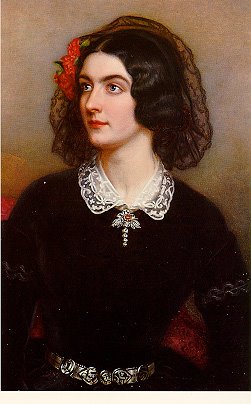
Times were changing during the Victorian era for nearly every echelon of Society. Although formal mistresses were historically prominent in their roles, due in large part to the experiences of Ludwig I of Bavaria and Lola Montez, Victorian mistresses began to be tucked away, discreetly. In previous centuries they had ruled the proverbial roost, if only temporarily, but jittery Aristocracy decided to care for public opinions.
In 1847, in exchange for her role as royal mistress, Lola Montez was created the Countess of Landsfeld and awarded trappings provided by the State, which unsettled the highly religious and penny-conscious German citizenry. But King Ludgwig was in love, and had been duped into believing his mistress was true to him and somehow deserving of a gift of rank.
The German people cried out against Lola, not because of her low background as a dancer from Ireland - the fact of which had gathered a fan club from a University about her that chose to view her as a symbol of human rights worth rioting over – but rather, the people railed against paying for yet one more monarchical affaire. Unlike the King, the populace knew Lola for a selfish and manipulative woman. Ludwig abdicated for her, but discovered during the process that she was unfaithful on many accounts. As a result, she was exiled and left for America.
Lola made an historic splash as a notorious celebrity. Despite the ill omen of breaking a monarch’s heart and of being exiled after only sixteen months as mistress, Lola arrived in America heralded by newspapers and awaited by throngs. She had reached celebrity status across an ocean for her reputation as an adventuress. Living eventually in the Gold Country and dancing for a living for miners and investors, alike, she was retired to a quaint cottage in Grass Valley, California. Lola was known for her famous and sensual Spider Dance that wooed many a fresh admirer. A nicely pictorial sight about Lola is http://www.zpub.com/sf/history/lola.html.
Since Society was still holding its cumulative breath as the final results of the French Revolution were decided, despite a number of belatedly exonerated members of Aristocracy returning to the top, when the People decidedly objected to supporting mistresses through the State coffers, members of Society began to bow out. Notably, Queen Victoria’s son kept his mistresses more circumspect, as a result. Society’s gentlemen followed suit. Gone, it seemed, were the days when the most prestigious and prominent parties were hosted by a blueblood’s latest mistress, dressed to the Nines and intentionally outshining all other women and wives in the room. A useful book for comparative anecdotal passages about royal mistresses is Sex with Kings, by Eleanor Herman, ISBN #0060585440.
Once considered an indispensable accessory for centuries, men who could afford the trappings of a mistress during Victoria’s reign were less inclined to flaunt them over their wives. The more clever of men unwilling to give up mistresses were engaging financial planners for them to develop income sources that weren’t out of sacrosanct coffers or traceable from their own ledgers.
By Kristin-Marie
Friday, September 01, 2006
Victorian Wallpaper and Arsenic
Here's a little known fact I uncovered while researching Victorian wallpaper--some of it has arsenic in it. Apparently arsenic was used in some of the inks, most specifically a sort of piercing green, which had copper arsenite in it. According to a book by Catherine Lynn, Wallpaper in America: from the seventeenth century to World War I, there were report of arsenic poisoning by wallpaper in the 1850's. It sounds to me a little like the lead poisoning problems I heard so much about when I was growing up. All right, I'm dating myself there.
Anyway, particles would be brushed off of this wallpaper accidentally and end up being ingested. This brings up an interesting question for those of us who tend to murder people in their books (that would be me). Arsenic seemed to be the poison of choice in the Victorian period. Could you blame the arsenic poisoning on the wallpaper?
Anyway, particles would be brushed off of this wallpaper accidentally and end up being ingested. This brings up an interesting question for those of us who tend to murder people in their books (that would be me). Arsenic seemed to be the poison of choice in the Victorian period. Could you blame the arsenic poisoning on the wallpaper?
Subscribe to:
Posts (Atom)