As in most wars, both sides like to believe God is on their side. This was certainly true during the American Civil War. Abraham Lincoln and Jefferson Davis, as well as generals of both armies were convinced God approved their respective causes.
It seems both sides in the Civil War used religion for their own purposes. Northerners used Chritianity as a calling to eradicate social ills, while Southerners focused on a literal reading of the Bible, but ignored social problems.
During mid-19th century America, people as a whole were devout, and religious institutions brought people together on a regular basis. Almost every person believed in a Divine being. Not believing in God was thought to be an aberration. "The Second Great Awakening of the early 19th century in particular greatly impacted American society." http://www.brucegourley.com/civilwar/gourleyhistor1.htm
". . . no other antebellum group had as much power to influence the greatest number of citizens on a regular basis as did America's clerical religious leaders." Robert. J. Miller/The Citizens' Companion/October, 2007
But what was the prevailing religion of this time period? The country was originally founded by Protestant fundamentalists, but the 19th century saw a great influx of immigrants bringing their customs and religious beliefs with them.
Civil War armies were said to be "the most religious armies of all American history." The Citizens' Companion/October, 2007
But the major religions represented were Calvanist-based Protestants.
Mid-19th century America was rampantly anti-Catholic, born of fear of immigrants from Catholic countries. But the Irish emigration of the 18th and 19th centuries slowly began to transfer the face of American religion and it had a major impact during the Civil War. "The Civil War for the first time witnessed large numbers of Roman Catholic chaplains in the field . . ." http://www.usachcs.army.mil/history/brief/chapter_3.htm.
Although primarily serving in the Union armies, as depicted in the movie Gettysburg when a priest gives the Irish Brigade a mass benediction before going out into battle, Roman Catholic priests also served in the Confederate Army as chaplains, although to a lesser degree. " . . . historians are only slowly recognizing the contributions of Catholics and minority religions in relation to the Civil War." http://www.brucegourley.com/civilwar/gourleyhistor1.htm
Southern leaders, including Jefferson Davis, held a low opinion of clergy in the service. They valued fighting men over praying chaplains. They also believed in the strict separation of church and state.
But, it seems both sides took what religious teachings they could use to justify their cause.
Sources: Miller, Robert J. 'The Citizens' Companion'. October, 2007. Vol. XIV - No. 4. pps. 11-15.
http://www.brucegourley.com/civilwar/gourleyhistor1.htm
http://www.usachcs.army.mil/history/brief/chapter_3.htm
Thursday, December 13, 2007
Monday, December 10, 2007
Tuesday Ten: Cowboy Slang

I know what you're thinking -- she's not really going to do another cowboy blog, is she?
Cowboy’s had their own unique way of talking, some phrases more colorful than others.
Here for our Tuesday Ten, are some of my favorites:
Buckle Chaser – an aggressive cowgirl.
Catch Colt – a foal not sired by the herd stallions (an “accident”.)
Crick in his getalong – a hobbling gait caused by an injury (love that one!).
Pounding Leather – riding hard.
Pull Leather – grab the saddle horn for safety.
Keeps his head pretty low in the herd – a horse or man that keeps a low profile.
Grub Liner – a cowboy who arrives just before supper and leaves before work starts.
Hurricane Deck – the saddle on a bucking horse.
High Pockets – a tall guy with long legs.
Victorian word, useless information for the day

I just looked this up while I was goofing off:
deadline--1864--a line drawn within or around a prison that a prisoner passes at the risk of being shot.
From Merriam-Webster's 11 collegiate dictoriany.
I imagine, given the date, that the word came about during the Civil War. Here's a picture from Andersonville in Georgia.
Anyone else know of words with interesting 19th century origins?
Friday, December 07, 2007
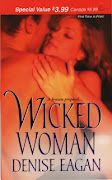
Interview - Denise Eagan
Scandalous Victorian Denise tells us about her writing and her new release, The Wicked Woman.
Why do you write historical?
History fascinates me—I love to analyze where we were to understand better where we are. But then when I hear some new tidbit, my first thought is, “What if a man did this? What if a woman did that? What would happen if. . . .” “What If” is the quintessential question every fiction writer starts with. For me, history tends to spark it more than current events. Besides, I’m going to read historical stuff anyway—I might as well use it!
What part of the Victorian era/setting do you write in?
I write in all of the subsets of the era. Wicked Woman is set in 1855. The sequel, Wild Card is in 1885. I also write in different areas across the U.S. I can’t seem to think of the 19th century as split between The Old West, The Civil War, The Gilded Age etc. I seriously doubt the people back then did, either. From what I understand, the people who went West primarily went to get rich (especially the 49ers!). The first thing they wanted once they moved past subsistence living was to purchase luxury items from back East, that was their definition of Success. Moreover, San Franciscan Society copied New York Society, and New York Society copied London Society. The Civil War affected the entire country and its affects lasted long after 1865—much of the Western settlers were displaced Southerners, including freed slaves. The Women’s Movement started in the 1850’s, quieted during the war, and then came on strong in the latter half of the century. To me the era was all interconnected and I feel compelled to write it that way. I sure hope it comes across in my books.
What is it about the era that most intrigues you?
The rapid technological and societal changes. Technologically the 19th century starts with oil lamps, fireplaces, letters, and horses. By the end its progressed from oil to gas lighting to electric lighting, fireplaces to stoves to furnaces, letters to telegraph to telephone/cable for communication, horse to steamships and trains for travel. If a person lives only 60 years, say from 1830 to 1890, he would have seen the majority of those changes. It must have them with their head spinning, much like many of us feel today. I can’t resist exploring that.
As for societal changes we start with agriculture and shipping as the primary ways to make a living, and move into the industrial revolution. In the beginning large families were preferred to help create wealth. In the end they were a hindrance. Women started the period pretty much as chattel. At the end they were earning college degrees and often supporting themselves. In the beginning—maybe due to the changes in family structure?—sex was accepted as natural, something enjoyed by both parties. At the end it many assumed that women were almost entirely uninterested moved by sex. Birth control seemed to follow suit, from not available, to widely available, to illegal, at least in the U.S. Changes in law, medicine, and I could just go on and on. . .
Again, I feel compelled to explore all of it—the conflicts that the changes created are fascinating! To me conflict is best understood through relationships, and the best relationship books are romances. Not just between hero and heroine, but the conflicts within families that either help or hurt the romantic relationship. I just love it!
Where do you get your information?
From anywhere and everywhere. I read books (which I check out of the library in stacks), I surf the net, I watch documentaries, I visit historical sights (Gettysburg, Williamsburg, coal mines in PA , The Living History Museum in Iowa) I talk to fellow historically-minded writers on the Heart’s Through History writer’s loop. It’s all fun, except for those really frustrating times when there is one tiny piece of information that I can’t find. It’s not so fun then.
What are you working on now?
I’m working on a manuscript which is a sequel to Wicked Woman and Wild Card . It’s currently (I’m bad at titles) named Stalking Star, about a Women’s Right’s advocate who is being stalked (I refer to him as a secret admirer) by a man who hates everything about the movement. In the meantime the heroine (a la The Bostonians) has rejected marriage to devote herself to the Cause. But she’s not happy with the Victorian assumption that she has also rejected sex. When she meets a Colorado rancher and sparks fly, she hopes that his Western roots will make him less conservative. By the time she realizes it doesn’t, she’s already hooked.
How many books have you written?
I think it’s 9. I haven’t counted lately because it’s pretty daunting seeing all those unsuccessful. A couple were early attempts at contemporary before I realized that I’m happiest as a historical writer. Almost all of them have a dead body in them somewhere. Sometimes it’s a death that’s haunting the characters (usually a murder :)). Sometimes somebody dies during the story. I just can’t seem to write a story without a body.
Do you write outside of the Victorian era, genre?
As I’ve said I have written a couple contemporaries and I do have some ideas for more of those, although my first love is the historical. I also have a Revolutionary War manuscript about a spy (highly disliked, by the way—spying didn’t gain a whole lot of cache until the 20th century.). The heroine considers herself a Tory. Couldn’t help but write that one, the conflict was so much fun, even if cliché!
What challenges have you faced in your career?
It took me 17 years before I got “The Call” and along the way I’ve faced all the usual—rejection, bad contest scores and critiques, bad agent/editor appointments, and of course the ever-present family intervention. But in the end I’m my own worst enemy. I listen to the negative voices in my head telling me I can’t get something published, I’m a hack not a writer, my plots are pure schlock—you name it those nasty voices have said it to me. The wonderful part about writing fiction is you get to live through your characters (which, other than being a re-enactor, is the only way to “live” history). The bad part is your mind can imagine truly horrible scenarios for your own life.
What is you writing schedule like?
Schedule? What’s that?
Seriously I do try to make up schedules, but I don’t always follow them. I try to confine promotion and the business of writing to the weekends. I find that the creative part of writing and business come from different part of my brain. It’s pretty hard to switch gears for me, too, so I’m better off having full days of one or the other.
Although I don’t write every day, the first thing I do every morning, right after I get coffee, is turn on the computer. If I think it’s going to be one of those days that I’m going to have a difficult time getting myself to work, I’ll open up a file and leave it on the screen to remind myself of priorities.
Thursday, December 06, 2007
Victorian Christmas
I didn't write this, but thought it was appropriate to direct people to read it. Anne Whitefield over at Unusual Historicals wrote this fascinating blog: Holidays & Celebrations: Victorian Christmas Recipes
Tuesday, December 04, 2007
Tuesday 10 - Sports
Sports with ties to or origins in Victoriana
There are lots of sports I could list here. With the advent of more leisure time, there was more time for the playing and watching of sports. Canoeing, rowing, running, hockey, all of it gathered momentum during the mid-to-later half of the 19th century. Here are 10 of those.
1. Baseball – Let’s forget the history of it, it’s too hard to track down. (And hey, Jane Austen made a reference to children playing "base-ball" on a village green in Northanger Abbey, written between 1798 and 1803, published 1818.) In 1845, Alexander Cartwright of New York City led the codification of an early list of rules (the so-called Knickerbocker Rules), from which today's have evolved. 19th Century Baseball
2. American Football – There are pads and helmets and braces! American Football, it is often said, is for wimps. I’ve seen Rugby, and that’s for crazy people. Walter Camp, player and coach at Yale University set down some rules in 1879. Read all about him and the significant rule changes from rugby and soccer.
3. Rugby – It’s convoluted, it’s mystifying…1838-39, 1841-42, 1845…here, just read it yourself, the site does a lot better explaining it than I could. Rugby
4. Football or Soccer – In America, it was a mishmash of changing rules until 1862 when Oneidas of Boston became the first organized soccer club in America. Princeton and Rutgers Universities engaged in the first intercollegiate soccer match November 6, 1876 (Rutgers won). The American Football Association was organized in 1884 in Newark, NJ, to maintain uniformity in the interpretation of rules and provide an orderly and stable growth. Elsewhere, though having been played for centuries in several similar incarnations, it wasn’t until 1848 and The Cambridge Rules that evolved into subsequent codes, including Association football.
5. Curling – I love Curling - it's one of the few WInter Olympic Sports I watch all the games to. When I visited Scotland, I saw the so-called first boulder they used. And I have no idea how they did anything with that but hurt themselves. The first Curling club was founded in Kinross, Loch Leven in 1668. The first national association was the Grand Caledonian Curling Club (founded in 1838). In 1843, the club got the privilege to be the Royal Caledonian Curling Club. This Club was the World Federation, till 1966, when the ICF (International Curling Federation) was founded.
6. Tennis –In December 1873, Major Walter Clopton Wingfield designed a game for the amusement of his guests at a garden party on his estate Nantclwyd, in Llanelidan, Wales. It was based on indoor, or real, tennis. Wingfield borrowed both the name and much of the French vocabulary of real tennis. The first championships at Wimbledon, in London were played in 1877.
7. Croquet – John Jaques II introduced croquet into England at the Great Exhibition in 1851. His display attracted such wide attention that the game speedily became the vogue, in Europe and throughout the British Empire.
8. Basketball - James Naismith, a Canadian physical education instructor, invented this sport in 1891. Here are the original 13 rules. Thirteen! I wonder how many there are now.
9. Roller Skating - Introduced in 1863, it was quickly made fashionable by the elite of New York City. Special skating dresses, allowing more freedom of movement, became popular by the 1870’s. The popularity of roller skating waned by the 1890’s, but like ice skating it helped lead to more freedom in dress and behavior for women.
10. Olympic Games – in Ancient times, it was last celebrated in 393AD, only to be revived by Evangelos Zappas in 1870 and 1875. The International Olympic Committeewas founded in 1894, and their first games were the 1896 Summer Olympics in Athens, Greece. (The First Olympics: Athens 1896. Great movie, probably not that historically accurate, but great movie!)
Tuesday 10...part 1
I have a blog all saved and ready to post. It's a great blog, really! And it's on my home computer. Which is at home, a place I won't be until about 7 tonight. But I have a lovely post on Victorian Sports ready to share, and I hope you'll come back tonight to read it!
Thursday, November 29, 2007
Victorian Era Parlour Talk: UFOs Meet Society
What do Unidentified Flying Objects (UFOs) have to do with the
Victorian Era? Actually, they became popular and proper topics of conversation. In an age when conversation was prized as an art, anything new and unusual or from another part of the world merited as a proper topic in Society.
While researching current topics of interest for my Victorian era novel manuscript, I was astounded at how little was in print about the rising interest by folks in that time in UFOs. I'd read of some reports years ago, but finding them at hand on the Internet proved difficult.
The following article content is reprinted with permission of the writer and researcher Ms. Stevie Pittsley:
Long before the famous stories emerged about a UFO crash in roswell ,in 1947, tales of alien spaceships hitting the Earth appeared in 19th Century papers: "About 35 miles northwest of Benkelman, Dundy County, on the 6th of June [1884] a very startling phenomenon occurred. It seems that John W. Ellis and three of his herdsmen and a number of other cowboys were out engaged in a round-up. They were startled by a terrific whirring noise over their heads, and turning their eyes saw a blazing body falling like a shot to earth. It struck beyond them, being hidden from view by a bank."
The article, from the Nebraska Nugget, goes on to say that the rancher found "fragments of cog-wheels, and other pieces of machinery" lying on the ground. The heat was so intense that "as to scorch the grass for a long distance around each fragment and make it impossible for one to approach..."
The group found the main part of the wreck and one of them "fell senseless from the gazing at it at too close quarters. His face was blistered, and his hair singed to a crisp." "Finding it impossible to approach the mysterious visitor [the UFO] the party turned back on it's trail. When it [the UFO] first touched the earth the ground was sandy and bare of grass. The sand was fused to an unknown depth over a space about 20 feet wide by 30 feet long, and the melted stuff was still bubbling and hissing."
Later in the story the ship is described as being 50 to 60 feet long, cylindrical and 10 to 12 feet in diameter. The writer notes that it was apparently composed of metal with an appearance like brass, but was remarkably light. The story also notes that the wreck is located in a remote and wild region and "the roads are hardly more than trails."
The second story appeared in the Dallas Morning News on April 19th, 1897:
"About 6 o'clock this morning the early risers of Aurora were astonished at the sudden appearance of the airship that had been sailing throughout the country. It was traveling due north, and much nearer the earth than before."
The article describes how the air vehicle "sailed over the public square and when it reached the north part of town collided with the tower of Judge Proctor's windmill and went to pieces with a terrific explosion, scattering debris over several acres of ground, wrecking the windmill and water tank and destroying the judges's flower garden." It continues with, "The pilot of the ship is supposed to have been the only aboard, and while his remains are badly disfigured, enough of the original has been picked up to show he was not an inhabitant of this world."
"Mr. T. J Weems, the U.S. Signal Service officer at this place and an authority on astronomy, gives it as his opinion that he [the pilot] was a native of Mars." According to the story the remains of the ship were composed of a strange metal that seemed a mixture of aluminum and silver. The townspeople came to view the wreak and pick up specimens. The pilot was buried the day after the article was published.
So what can we make of these crash stories? Was 19th century Earth visited by extra-terrestrial beings with superior (but apparently faulty) technology?
In viewing any article from 19th century newspapers we must be aware of the abundance of hoax journalism during that period. Newspapers didn't just report news, but also provided entertainment. Much of this was in the form of books that were serialized of a number of issues. Some of it was in another form that is little regarded now: The hoax news story. Both of the above are probably examples of this almost forgotten tradition. How do we know? Mainly because they lack any collaborating evidence. In both cases no follow up stories were ever written which seems strange if events of the magnitude suggested did really occur. Also no pieces of the spaceships have ever shown up in local museums or historical societies.
The Texas incident was investigated in the late 1960's. Then residents of Aurora who were there in 1897 were still alive. None reported that they remembered the crash. Several stated that Judge Proctor never had a windmill. One confirmed that the T. J. Weems mentioned in the story was not a signal officer, but the town blacksmith. Most were of the opinion that F. E. Hayden, who had written the story, was just trying to get some publicity for the town. In addition, a search of the alleged crash site with a metal detector revealed nothing.
The story might have remained dead except for a writer with the Dallas Times Herald. In 1973 the newspaper did a series of sensational stories about the "crash." Despite faulty evidence and questionable witness accounts the stories managed to attract national attention. The excitement reached its peak when an Aurora cemetery was desecrated. The cemetery had kept meticulous records showing just who was buried where and there was no "man from mars" on the roster. Despite this, a plot, that some claimed was the Martian's, was dug up and the tombstone stolen. According to some accounts the tombstone had a picture of an UFO carved into it.
Victorian Era?
 Actually, they became popular and proper topics of conversation. In an age when conversation was prized as an art, anything new and unusual or from another part of the world merited as a proper topic in Society.
While researching current topics of interest for my Victorian era novel manuscript, I was astounded at how little was in print about the rising interest by folks in that time in UFOs. I'd read of some reports years ago, but finding them at hand on the Internet proved difficult.
The following article content is reprinted with permission of the writer and researcher Ms. Stevie Pittsley:
Long before the famous stories emerged about a UFO crash in roswell ,in 1947, tales of alien spaceships hitting the Earth appeared in 19th Century papers: "About 35 miles northwest of Benkelman, Dundy County, on the 6th of June [1884] a very startling phenomenon occurred. It seems that John W. Ellis and three of his herdsmen and a number of other cowboys were out engaged in a round-up. They were startled by a terrific whirring noise over their heads, and turning their eyes saw a blazing body falling like a shot to earth. It struck beyond them, being hidden from view by a bank."
The article, from the Nebraska Nugget, goes on to say that the rancher found "fragments of cog-wheels, and other pieces of machinery" lying on the ground. The heat was so intense that "as to scorch the grass for a long distance around each fragment and make it impossible for one to approach..."
The group found the main part of the wreck and one of them "fell senseless from the gazing at it at too close quarters. His face was blistered, and his hair singed to a crisp." "Finding it impossible to approach the mysterious visitor [the UFO] the party turned back on it's trail. When it [the UFO] first touched the earth the ground was sandy and bare of grass. The sand was fused to an unknown depth over a space about 20 feet wide by 30 feet long, and the melted stuff was still bubbling and hissing."
Later in the story the ship is described as being 50 to 60 feet long, cylindrical and 10 to 12 feet in diameter. The writer notes that it was apparently composed of metal with an appearance like brass, but was remarkably light. The story also notes that the wreck is located in a remote and wild region and "the roads are hardly more than trails."
The second story appeared in the Dallas Morning News on April 19th, 1897:
"About 6 o'clock this morning the early risers of Aurora were astonished at the sudden appearance of the airship that had been sailing throughout the country. It was traveling due north, and much nearer the earth than before."
The article describes how the air vehicle "sailed over the public square and when it reached the north part of town collided with the tower of Judge Proctor's windmill and went to pieces with a terrific explosion, scattering debris over several acres of ground, wrecking the windmill and water tank and destroying the judges's flower garden." It continues with, "The pilot of the ship is supposed to have been the only aboard, and while his remains are badly disfigured, enough of the original has been picked up to show he was not an inhabitant of this world."
"Mr. T. J Weems, the U.S. Signal Service officer at this place and an authority on astronomy, gives it as his opinion that he [the pilot] was a native of Mars." According to the story the remains of the ship were composed of a strange metal that seemed a mixture of aluminum and silver. The townspeople came to view the wreak and pick up specimens. The pilot was buried the day after the article was published.
So what can we make of these crash stories? Was 19th century Earth visited by extra-terrestrial beings with superior (but apparently faulty) technology?
In viewing any article from 19th century newspapers we must be aware of the abundance of hoax journalism during that period. Newspapers didn't just report news, but also provided entertainment. Much of this was in the form of books that were serialized of a number of issues. Some of it was in another form that is little regarded now: The hoax news story. Both of the above are probably examples of this almost forgotten tradition. How do we know? Mainly because they lack any collaborating evidence. In both cases no follow up stories were ever written which seems strange if events of the magnitude suggested did really occur. Also no pieces of the spaceships have ever shown up in local museums or historical societies.
The Texas incident was investigated in the late 1960's. Then residents of Aurora who were there in 1897 were still alive. None reported that they remembered the crash. Several stated that Judge Proctor never had a windmill. One confirmed that the T. J. Weems mentioned in the story was not a signal officer, but the town blacksmith. Most were of the opinion that F. E. Hayden, who had written the story, was just trying to get some publicity for the town. In addition, a search of the alleged crash site with a metal detector revealed nothing.
The story might have remained dead except for a writer with the Dallas Times Herald. In 1973 the newspaper did a series of sensational stories about the "crash." Despite faulty evidence and questionable witness accounts the stories managed to attract national attention. The excitement reached its peak when an Aurora cemetery was desecrated. The cemetery had kept meticulous records showing just who was buried where and there was no "man from mars" on the roster. Despite this, a plot, that some claimed was the Martian's, was dug up and the tombstone stolen. According to some accounts the tombstone had a picture of an UFO carved into it.
Tuesday, November 27, 2007
Tuesday Ten, Victorian Adventures/Discoveries
1.) Antiseptics—as we know them, anyway. In 1847, Ignaz Semmelweis in Hungaria noted that when doctors washed their hands between pregnant patients in a hospital, the spread of puperal disease(childbed fever) was significantly reduced. In the ‘70’s Joseph Lister took the new “theory” into the operating room and tried to prevent sepsis with carbolic acid. It worked, but doctors were not particularly thrilled by the idea, especially in the U.S. http://web.ukonline.co.uk/b.gardner/Lister.html I do wonder if this is where the name Listerine came from.
2.) Tuberculosis—It was consumption for most of the century, and was thought to be a sort of family predisposition. It killed millions of people. (I’ve bloged about this earlier). In 1882 Robert Koch discovered the bacteria Mycobacterium tuberculosis. The name changed, and the treatments also. Unfortunately the cure (antibiotics) did not come about until the 20th century—1943. After both WWI and WWII! http://www.umdnj.edu/~ntbcweb/history.htm
3.) Electric Light—We all know this one, but we don’t associate it with the Victorians for the most part. Various elements of the light bulb had been around for some time, but Edison was the man who developed the first practical light bulb. And then went on to establish the electrical industry, starting in Manhattan in the 1880’s. http://inventors.about.com/library/inventors/bledison.htm
4.) Anesthesia—Pain relief, really. Sure, there had been many methods (alcohol was one! And laudanum) but ether and chloroform for operating came about during the Victorian period. The first use was in Boston, 1846. Both substances went on to be used quite often in childbirth (earlier blog, also) for which many women were grateful. http://neurosurgery.mgh.harvard.edu/History/gift.htm
5.) Telegraph—the telegraph itself was invented before the period, 1830. But it became widely used during the period, with wires being spread across the US and other countries (although I don’t know as much about them). The first news dispatched my Mr. Morses invention was in 1844, between Washington and Baltimore. http://inventors.about.com/library/inventors/bltelegraph.htm
6.)Telephone—1876 as many of us know. The first telephone line was between Sommerville MA and Boston in 1877. I read—but I don’t recall where—that the first pay phone was in Conneticut. Someone actually stood next to the phone and collected money from people who used it. http://inventors.about.com/library/inventors/bltelephone7.htm
7.) Gas lighting—This was really an early 19th century invention, but was so ubiquitious during the Victorian era that I felt I had to mention it. The first public use of gas for lighting occurred in London, 1812, the Regency period. The first pipes in the US were laid in the Baltimore, 1816. Gas lighting came to New York in 1820, all well before the start of the Victorian period. But as cities developed during the period, gas lines were laid, thus establishing the city as “modern”.
http://www.gaslite.com/history.html
8.) Central Heating—This is something I cannot find much information on, yet anyway. But I do know there were methods and furnaces that provided heat throughout an entire house by the end of the century, because Henry James references it in The Bostonians. (1886, referencing, 1876). I also saw one of these central heating systems in a preserved Victorian in Boston, the Gibson House http://www.thegibsonhouse.org/index.asp
9.) Indoor Plumbing—Toilets and bathtubs, oh my! As I have discussed in previous blogs, indoor plumbing was first introduced in the Tremont House in Boston, 1830 (close to the start of the Victorian period). The Gibson house (see above) had a tub with hot water in the 1850’s.
http://www.theplumber.com/usa.html
10.) Bicycle—This was just pure fun, and not the history changing invention of the previous 9. It came about in 1865, and was the rage—enough so that women’s clothes were even fashioned around it—in the latter part of the century.
http://www.pedalinghistory.com/PHhistory.html
Friday, November 23, 2007
Happy Thanksgiving
Thanksgiving was one of those holidays people celebrated but not necessarily one that everyone recognized. Actually, it was a jumble of days with no rhyme or reason celebrated from state to state whenever.
That all changed when poet and editor Sarah J. Hale began lobbying for a national Thanksgiving holiday. During the Civil War, President Abraham Lincoln, looking for ways to unite the nation, discussed the subject with her. So in 1863, he gave his Thanksgiving Proclamation, declaring the last Thursday in November a day of thanksgiving.
During The Great Depression (specifically 1939-1941), FDR sought to lengthen the Christmas shopping season, and proclaimed Thanksgiving the 3rd Thursday in November. Controversy followed, and Congress passed a joint resolution in 1941 decreeing that Thanksgiving should fall on the fourth Thursday of November, where it remains.
Today's Black Friday, the 'traditional' start of the Christmas season. But if you've seen anything in the stores since, oh, August, you know that's a bunch of bologna. Still I know people who actually woke up at 4 this fine morning to brave the cold and people and do some shopping. Personally, forget it - I refuse to do that to myself. I'd rather pay full price than deal with all those people.
Happy Thanksgiving!
Tuesday, November 20, 2007
Tuesday Ten: Stagecoach Etiquette

In the old west, the only means of public transportation was the stagecoach. Stage stops were as common on the western plains as bus stops are today.
Journeys by stage were long, dusty and uncomfortable. Coaches were cramped, loaded down with heavy merchandise and luggage and passengers jammed in like sardines—as many as twelve to fifteen at a time. Crowded conditions such as these required rules.
Here, taken directly from the 1877 Omaha Herald, are Wells Fargo’s Rules for Riding the Stagecoach:
v Abstinence from liquor is requested, but if you must drink, share the bottle. To do otherwise makes you appear selfish and unneighborly.v If ladies are present, gentlemen are urged to forego smoking cigars and pipes as the odor of same is repugnant to the Gentle Sex. Chewing tobacco is permitted, but spit with the wind, not against it.
Wednesday, November 14, 2007
Persistence
I just completed a workshop on persistence. That is, persistence as in regard to writing and getting your work noticed.
I thought I had persistence. After all, I've been writing toward publication for 13 years now. But, so far, I have only a few short stories published in obscure magazines that pay in copies or don't pay at all. I had one article that won first place in a contest, but I was never able to sell it. And another article was published for the whopping sum of $25.00.
I did have my first novel published about 5 years ago, but that hasn't been a windfall, only a few royalty checks trickle in now and then.
But, I'm still writing and intend to write as long as I'm physically able. Unlike some other writers, I've never set an arbitrary time limit on how long I'll stick it out before giving up if I'm not published or making a living at it in say, 5 years, 10 years, etc., because I never plan to quit. It's my life.
So, does that make me persistent? Apparently not enough. I have to start getting my work out there more, with queries, submissions, contest entries. I intend to do that.
Also, I have to start developing more projects. Get those things in the outline stage out of the drawer and start working on them again. And get those things still in 'the idea in my head', or 'one line blurb' stage, into development.
I want to be persistent, because writing and creating fictional characters that readers love is my life.
How about you? Have you set any arbitrary limits on the time you will take to make it as a writer before giving up?
Tuesday, November 13, 2007
Tuesday 10
Look - it's Tuesday! I totally missed that, what with the holiday (well it was for me, did you thank a Vet this weekend?) and the long weekend I took...ahem. No excuse. None. But I do have a list of ten for everyone.
10 Famous Firsts that debuted at the Chicago World's Fair of 1893 (otherwise known as the Colombian Exposition (which happened to be in Chicago) of 1893). Many of these are from The Devil in the White City: Murder, Magic, and Madness at the Fair that Changed America by Eric Larson, a great book (if you skim the boring menu parts) about serial killers, grand designs, and great Victorian history.
10 Famous Firsts that debuted at the Chicago World's Fair of 1893 (otherwise known as the Colombian Exposition (which happened to be in Chicago) of 1893). Many of these are from The Devil in the White City: Murder, Magic, and Madness at the Fair that Changed America by Eric Larson, a great book (if you skim the boring menu parts) about serial killers, grand designs, and great Victorian history.
 Ferris Wheel - George Washington Gale Ferris, Jr. had the idea while the Fair's committee searched for something to rival the Eiffel Tower showcased at the Paris Fair. He was laughed at, ridiculed, told it couldn't happen, and made a ton of money off it.
- Juicy Fruit Gum - It was a huge hit, and profits certainly have decreased in the ensuing century.
- Aunt Jemima's pancake mix - an all-in-one pancake mix for those busy Victorian women.
- Cracker Jack - originally called 'Candied Popcorn and Peanuts', it was a mixture of popcorn, molasses, and peanuts.
- Cream of Wheat - invented by wheat millers in Grand Forks, ND, where a warm breakfast seems to be a necessity.
- Quaker Oats - despite that huge lawsuit, still going strong and tasty, and still based in Chicago.
- Shredded Wheat - it wasn't expected to take off, for who would want what that was shredded? Guess those fair-goers didn't know anything.
- Pabst Blue Ribbon - actually it was just Pabst, but since it won the blue ribbon at the fair, was forever known as Pabst Blue Ribbon.
- Elongated coins - those 51¢ pennies with a neat design on both sides? Yeah, they debuted here, too.
- Vertical File - No, not food, which seemed to be the big thing to debut at the fair, but pretty darn important. Melvil Dewey (the guy who invented the ambiguous Dewey Decimal System) invented it.

Victoria's Empire Measuring Stick of Greatness
One thing Queen Victoria represented with her imperialism and personal lifestyle was a quest for presenting greatness. Each undertaking was a  new level of greatness or a revival of the superior achievements of the past. Those she surrounded herself with also shared this focus.
The momentum of achieving drove the fastest eras of innovation in all fields that occurred during the Victorian era, itself a conglomeration of many dramatic cycles of trends and changes.
The Victoria and Albert Museum continues to showcase the types of high-level achievements that would've done the court of Victoria justice.
 new level of greatness or a revival of the superior achievements of the past. Those she surrounded herself with also shared this focus.
The momentum of achieving drove the fastest eras of innovation in all fields that occurred during the Victorian era, itself a conglomeration of many dramatic cycles of trends and changes.
The Victoria and Albert Museum continues to showcase the types of high-level achievements that would've done the court of Victoria justice.
Tuesday, November 06, 2007
Tuesday Ten: Favorite Research books
After posting this, I realized that the last Tuesday Ten was about research books too--on the West. Ah well, I wrote it, I'll post it. Next time my rotation is up in the Tuesday Ten, I promise I will be more orginal.
Sorry Nic, for accidentally stealing your idea!
1.) The Essential Handbook of Victorian Etiquette, by Professor Thomas E. Hill. The information in this book is adapted directly from material published by Mr. Hill between 1873 and 1890. It give me a good idea of how people at this time were “supposed” to behave, concerning conversation, table manners, traveling and a number of other things. Parts of it are just plain funny.
2. )Confidence Men and Painted Women, Karen Halttunen. I bought this mostly because it had the dates on it, 1830-1870, which encompasses a good portion of the Victorian period. I really didn’t expect to get much out of it, but it has a wonderfully large section on Victorian mourning rituals. This is particularly important to me, since I tend to kill people off in my books.
3.) American Beauty, Lois W. Banner I expected this book to tell me interesting things about makeup and hairstyles and things like that. It did to some extent, but it also has lots of information on the changing “style” of women in general from the thin women of the early Victorian period, to the more robust women of later years. It also talks a lot about the theatre, which was very useful in Wild Card.
4.) Hands and Hearts, A History of Courtship in America by Ellen K. Rothman. This was one of those books that other books I read on the subject kept referring to. So I took this book out of the library—a lot. When I start taking books out 2-4 times a year, I figure it’s time to buy it. It details the courtship rituals from 1770-1920, and uses many diaries and other original resources to back it up.
5.) Victorian America, Classical Romanticism to Gilded Opulence, Wendell Garrett, David Larkin. This book is just plain pretty. It’s a picture book of Victorian homes and the furniture in them. I’ve used it in pretty much every book I’ve written, and some of the rooms in my books come directly from this one. There’s discussion of furniture and changing architecture.
6.) John Ransom’s Andersonville Diary, John Ransom. I love this book, and I can’t tell you why. I think because it’s all about triumph of “good over evil” or at least of the human spirit over horrific circumstances. Regardless, Andersonville plays a part in a couple of my books, as background. Besides, I love John Ransom’s writing voice.
7.)The Physician and Sexuality in Victorian America, John S. Haller, Robin M. Haller. This was interesting just for an all around view of how sex was viewed in the Victorian era. Also had some interesting information on birth control.
8.) Murder in America, Roger Lane Of course I like this one because I like to kill people off in my books. I don’t yet own this book, I just take it out of the library a lot. Probably time to order it. It is helpful in reading about punishment for murder during 19th century, and other times, also.
9.) The People’s Common Sense Medical Adviser In Plain English, R.V. Pierce MD. This would be difficult to come by for most because the copyright is 1876. I “borrowed” it off my stepfather several years back and have yet to return it. It details common medical problems and remedies in the 19th century. I’d be glad to look information up, if anyone wants to learn something specific. I use it quite a bit, as I also tend to make characters sick (I’m really coming across as sadistic here, aren’t I?)
10.) Victorian Costume and Costume Accessories Anne Buck I need to dress my characters. This book helps because it has some pictures and it explains what various items are. It also talks about materials used and which were fashionable and which were not. There’s a section on men’s clothing and children’s, too. I consult it often.
Saturday, November 03, 2007
Victorian Serial Killer--Jesse Pomeroy
In this age of CSI, Without a Trace and a host of other television stories we tend sometimes to look back on previous eras with nostalgia. Oh those wonderful days when you could let your children roam the streets and not worry about their safety! Ah, those wonderful Victorian days when we were safe!
Maybe so in some areas. Not in Boston, 1872, when Jesse Pomeroy was roaming the streets. Between February 1872 and mid-September 1872, he tortured, in a sexually explicit manner, 8 young boys between the ages 5 and 8. (I'll spare you the details of the abuse because it's just too horrific for me to put on a public blog.) Pomeroy was 12 at the time. Yes, that's right, not even yet a teenager. He was caught on September 20th after being identified by the last boy. He spent 2 years in a reformatory and was released in January 1874, after scarcely serving 2 years. He was considered a model prisoner, no doubt "reformed". I sincerely doubt in these days of "easy" prison terms, this child, obviously already a sexual predator, would have been released so easily, especially with so little fanfare.
Regardless, Jesse was NOT reformed.
Within 4 months of Jesse's release he not only went back to his former hobby of torture, he took up murder as well. He later confessed to two murders, a 10 year old girl and a 4 year old boy, both mutilated similarly to the torture he had inflicted on his other 8 victims. At the age of 14 he was convicted of murder in the first degree for the 4 year old boy. And condemned to death. But his sentence was commuted--he was only 14--specifically in solitary confinement in prison for the remainder of his life.
Society at the time labeled the horror of it all as a symptom of society decay, much like we label similar murders these days. Perhaps society is continuing to decay and that's why we still read about these things in ever-increasing frequency. Or maybe it's just because we are bombarded with information, and because we have such greater tools of detection these days then in the 19th century. The book I got this information Fiend by Harold Schecheter labels Pomeroy the "America's youngest serial killer". Personally, I doubt it. I just think it's the one we know about.
And now, some of you might be wondering, "How is Denise going to work this into a book?". I can't honestly say. Much of what was written in Fiend is just too disturbing, even for a true-crime, CSI addict like me. I may make a mention of it in one of my books because a few of my characters grew up in Victorian Boston. Still, I may just prefer to forget it, and go back to the comparative comfort of Victorian serial killer Jack the Ripper. Comforting because he was in England! And didn't prey upon children. I just thought this post should be written as a reminder that for all the advances we make, some things in history just do not change.
Friday, November 02, 2007
Interview--Nicole McCaffrey
Scandalous Victorian Nic tells us about her writing and her winter release The Model Man.
Why do you write historical?
Aside from having always been a history buff? LOL. Hmm… I’m fascinated by it. The courage it took to build a nation, the passion that held it together, the raw guts and determination it must have taken to travel west on a wagon train. Simpler times, simpler struggles. It seems so much more romantic than anything going on in the present day. I guess we could sum that up in one word: escapism!
What part of the Victorian era/setting do you write in?
I’m a real fan of the 1880s west of the Mississippi—the wild and woolly days of the old west. I also really love the Civil War era, but for some reason the whole idea of Cowboys and Indians, range wars and frontier justice calls to me the loudest.
What is it about the era that most intrigues you?
The struggles, the sacrifice, the courageous men and women who held things together during the war or built new lives out west. With the old west especially there’s a sense of lawlessness, that notion of black hats versus white, and good triumphing over evil that really appeals to me.
Where do you get your information?
Books. Many, many books, LOL. I really need to stop accumulating them. I start out with the internet when I need a quick answer, but I like to verify what I find by researching it further in books, which usually leads me to some other fascinating tidbit I didn’t know about, and then I have to hunt that down and learn everything I can about it, LOL. In other words, if I’m not writing about history I’ve most likely got my nose in a book reading about it. (Which makes me a very fascinating conversationalist! Not!)
What are you working on now?
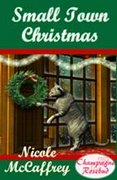
A bunch of things! I’m revising and editing my western historical, Wild Texas Wind. Kensington requested that one quite some time ago and I’ve really been dragging my heels about getting it to them (Fear. There’s no other excuse for it.). A secondary character in that story is demanding his own story, so I’ve begun some research with a goal toward making that happen. On top of that, some fellow Wild Rose Press authors have asked me to take part in an anthology that will be released next summer called Sons of Summerville, so I’ve been brainstorming with them on story ideas. As if that weren’t enough, I’m also contracted through The Wild Rose Press for a Civil War historical, Northern Temptress, to be released next summer –I need to get busy polishing that story and get it off to my editor. Additionally, last year’s holiday Novella, Small Town Christmas, will be re-released this month in print format. Whew!
How many books have you written?
About six or seven since I really got serious about writing – before that, probably dozens that I started and never finished. Most will never see the light of day again, others I’d love to pull out and polish. Each and every one was a learning experience that saw me grow as a writer so it will be hard to go back and “fix” what I did wrong, but one of these days… LOL.
Do you write outside of the Victorian era, genre?
Yes. Both my Wild Rose Press releases, Small Town Christmas and The Model Man (due out early next year) are contemporary-set, and the Sons of Summerville story will be, as well. I think occasionally my brain likes a vacation from all the history and sends me ideas that don’t require as much nitty-gritty research.
Can you tell us a little about your upcoming release, The Model Man?
Well the underlying theme is that sometimes the person who seems all wrong for you turns out to the one person who is exactly right. It’s lighthearted and funny, but my editor really helped me to dig deep and pull the emotion out of these characters. Here is the back cover blurb:
Single mom and romance novelist Kelly Michaels has no time for a man in her life. But when mega-famous cover model Derek Calavicci puts the moves on her at a romance writers’ conference, she succumbs to temptation. Common sense prevails, however, and after a few passionate kisses she turns him down; she has impressionable teenagers at home, after all, she doesn’t need a one-night-stand with a much younger man, no matter how hot he is. When photos of their passionate moonlight kiss hit the tabloids, her agent has to do some fast footwork to save her reputation. Will the notorious bad boy go along with her scheme?
Derek rarely hears a woman say “no” – it’s been that way his entire life. If Kelly isn’t interested, he’s not going to push her-- even if she does melt like ice cream on a hot sidewalk every time he touches her. But when an unexpected opportunity falls into his lap by way of Kelly’s scheming agent, he jumps at the chance. Pretend he’s in love with Kelly Michaels for two weeks? No problem. After all, the lady may say she’s never going to sleep with him... but he's got two weeks to convince her otherwise.
What challenges have you faced in your career?
Name an era that doesn’t sell and I probably write --or have written-- it! Whether it was the Civil War, the old west or even The Model Man where my heroine is over forty and thirteen years older than the hero—if it wasn’t popular to write about, I probably had a story in the works about it. When I belonged to the RWA chapter in my hometown, I was usually the sole historical writer, and always the only member writing American history. I spent years unable to connect with fellow American Historical writers—I didn’t even know if there were any out there besides me. Thank God for the internet and the Hearts through History chapter!
What is you writing schedule like?
Ha ha ha. I do try to touch base with my characters each day, but the only “guaranteed” time I get to write is while my youngest is in preschool three days a week. I guard those two hours like a rabid Rottweiler – I won’t answer the phone, won’t check e-mail and shut down my IM. But if you’ve ever had a preschooler you know that preschool is really just a fun place to go and swap germs with other kids, so he’s home sick almost as much as he’s at school. I do try to get up early and write (around 5-5:30 a.m.), but usually just as I’m getting into that routine one of the kids will get sick and it takes me weeks to get back into the swing of it again. So my schedule is haphazard at best. For me consistency is key, so even if it’s only for five minutes or if I just re-read something I wrote the day before, I make that daily “appointment” with my characters. Every little bit counts!
Thursday, November 01, 2007
The Victorian Lionesses: Fashion Plates to be Reckoned With

I’m taking my muse on a fashion sortie while I revise a Victorian manuscript.
Personal dissatisfaction with the costume details in my story scenes have me looking in dusty corner of bookshelves for Victorian era fashion details. I’m compelled, after all, to introduce my heroine where she resides in Spain to the reader while she’s wearing a recently fashionable and detailed style of menswear worn by certain women in Paris at that time. I’m also obligated, therefore, to explain to the reader why she’s in menswear.
What is it that appeals to romance readers and therefore writers about skydropping their heroines into male dominated settings while wearing trousers?. For one thing, it is fun to read and sets up automatic conflict (that necessary component in novel scripting) between the hero and heroine, peppering any scene. I know more than one writer parading their heroines about in some form of menswear, and I’ll admit that I always enjoy reading about this type of spunky romance heroine that has become considered a classic in the genre.
My muse led the search for details on the lioness trend.
Lionesses were originally an elite group of fashionistas in Paris around 1840 and 1850 who went out and about in exquisitely designed men’s styles. They were eventually outlawed from such costume when they’d grown in number but not before their cavalier attitudes caught on. When a woman meant business, therefore, she could feel free to tread out in pants and waistcoat and even riding a stallion. A pistol and sword completed the outfit.
The trend lasted a couple of decades but moved into the West in a different form where we see homesteading and pioneering women traveling about in down-scaled versions of the Parisian Lioness. Paris and Napoleon’s court boasted a nearly unrivalled fashionable court. It volcanically ignited most traceable trends in the imperializing world during the heights of the Victorian era.
Women of high merit and underplayed social status began proverbially wearing the pants in the Lioness trend before the middle of the century in Paris. By the 1860s or 1870s, though, women striding out in trousers were considered of easy moral character in some parts of the world and even presumed to be ladies-of-the-night in other parts. As a romance or historical writer, though, such facts are not deterrents. Rather, they’re tools to authorially use in plotting machinations, of course.
When my heroine, therefore, opens her story in swashbuckling style to encounter the hero. She’ll be in a mildly tattered Lioness outfit that her dearly departed mother had worn as she takes care of family business in a Quadrant that was world famous at the time for both its high caliber entertainments and haute cuisine. And famous for its extreme dangers. Only those skilled in defenses or who could afford body guards dared tread where a Lioness held no fear in going. All aristocratic Spanish ladies were trained well in self-defense and martial arts, so only a hero as strong as my hero, then, can impress her.
Tuesday, October 30, 2007
Tuesday Ten: Write the West

Here for this week's Tuesday ten are ten books to help you breathe life into your old west characters and take your reader there:
1. Time Life: The Old West (series). Now, I could have cheated and listed these by title –that would have covered two Tuesday Ten’s! But I am that rare western writer who doesn’t own the whole set (though I’m having fun collecting it, one book at a time, as needed). With titles such as The Cowboys, The Gunfighters, The Ranchers, The Townsmen, The Gamblers, there’s something there to help you create any character you conceive.
2. Saloons of the Old West, by Richard Erdoes. This one is never far from my fingertips. Saloons always figure into my westerns, they’re very much a character unto themselves. Either fancy with a high polished boot rail and rows of shiny glasses, or dim and dark with a sawdust floor—where hard men drank hard liquor and nobody asked questions. This book covers them all.
3. Cowboy Lingo by Ramon Adams. This gives you a real feel for how cowboys talk and think. There’s even a section on nicknames – cowboys were never called by their given names but by hair color (ex: red, copper, brick for a red-head) or by build (stretch, stubby, slim). And another section on the proper cowboy “names” for things—i.e., trousers were pants or britches, your horse was your mount, hats were a Stetson or a John B. (regardless of make).
4. How the West Was Worn: Bustles and Buckskin on the Wild Frontier by Chris Enss. Now that you’ve conceived your characters, you’ve got to dress them. And, if you’re writing romance, there will also come a time when you need to undress them, which leads me to…
5. The History of Underclothes by C. Willett Cunnington and Phillis Cunnington. Need I say more? Western writer or not, no historical romance author should be without this one.
6. The Writer’s Guide to Every Day Life in the Old West by Candy Moulton. With chapters like Coins and Currency; Food and Drink; Marriage and Family; Doctors, Dentistry and Medicine, this is a must-have for any western writer.
7. The Complete Idiot’s Guide to the Old West. Maybe it means I’m a complete idiot, but I really love this book. It doesn’t go into great detail but it’s more of a “this happened, which led to this happening, which then led to…” breakdown. It never fails to inspire me to further research some event or detail.
8. Soiled Doves: Prostitution in the Early West by Ann Seagraves. Every town had them and no western is complete without them. Was she a shrewd businesswoman or a victim of circumstance? Saint or sinner? This book gives you the gritty details that Hollywood glossed over.
9. Taming of the West: Age of the Gunfighter, Men and Weapons on the Frontier 1840-1900 by Joseph G. Rosa. I love the detail on the pictures of the rifles and six shooters, the bios on the outlaws and the lawmen, both the legendary and the lesser-known. You can’t create the fictitious ones if you don’t study the real ones!
10. Wild and Wooly: an Encyclopedia of the Old West by Denis McLoughlin. A who was who, what was what, and a “what the heck does that mean anyway?” resource.
Sunday, October 28, 2007
Victorian Baseball
I am a Red Sox fan. I have been for lo these many years, and have experienced the highs, and far more often the lows, of watching my team. I know a little about the history of the team, and I know for sure that baseball was originally created in Victorian times. I've even read a about in in a Civil War diary, which mentions a baseball "club" instead of a bat. It was very exciting, because when I read it, I thought "Wow, I can use baseball in a book! Yay!". I decided I would have my characters in my WIP go to a game. They do, after all, spend some time in Boston. What could be more fun than a Red Sox game?
Except the Red Sox weren't around in 1886.
No!!! Say it ain't so!!
I know there was a field, I know Boston had a team. But it wasn't the Red Sox, darn it all.
So I started to research.
The rules of baseball were written up in 1845. It was well established as a sport by the 1860's and I have heard that the Civil War spread its popularity. The first paid team was the Cincinnati Red Stockings in 1869, and the National League was established in 1876.
http://inventors.about.com/library/inventors/blbaseball.htm
Other 19th century teams (all in the National League, by the way):
The Braves (1871), The Cardinals(1882), The Cubs(1874), The Dodgers(1884), The Giants(1879), The Phillies(1880), The Pirates(1882) and the Reds(1882).
http://mlb.mlb.com/mlb/history/mlb_history_teams.jsp
The Yankees and Red Sox both started in 1901, still technically the Victorian Era, but not the time period I write in. I expect the rivalry was established at the same time. It seems, though, that the rivalry between the two cites--Boston and New York--may have started earlier, when there were two versions of the game--yes, you guessed it, the "New York Game" and "The Massachusetts Game". http://www.19cbaseball.com/game.html. I believe, although I cannot find it anywhere presently, that the Massachusetts Game allowed an out to be made if you threw the baseball at the player and hit him. I've heard that the balls were not as hard back then. Still, it does seem, um, fortunate, that this rule was eventually thrown out.
All of which is fairly interesting but in no way useful to my book. I need to send my hero to a baseball game. I am determined!
And now after surfing for an hour, I know this. Boston's original team was called The Red Stockings, established in the National League in 1876. In 1883 they became the Beaneaters. (A horrible, horrible name for a sports team). In 1909 they changed the name again to the Pilgrims, (better) which only lasted until 1912. Then they became The Braves. The team still exists under this name, only now they are the Atlanta Braves. http://www.sportsecyclopedia.com/nl/bosbraves/BosBraves.html
So there I have it. My hero is going to a--I can't believe I'm going to write this--Beaneaters game. Why on earth would anyone ever name a sports team something like that? And how on earth am I ever going to write that without laughing? I suppose I won't. I can hear my characters laughing now over the new name.
Next, I'm going to have to find out where they played ball. But that's for tomorrow. Today is about swallowing the fact that my city once actually named a team the Beaneaters. And enjoying my favorite team play in the World Series, even if they weren't playing as long ago as I had hoped.
GO SOX.
Subscribe to:
Posts (Atom)