Tuesday, January 22, 2008

Tuesday Ten: Heroes and Outlaws of The Old West (Part I.)


Before you can create your own Wild West characters, it helps if you know a little bit about the larger than life legends--good and bad--who populated the era and gave it its wild reputation. (Since this blog ended up being a bit long, I’ll post it in two parts.)

First up: The Good Guys.

Wyatt Earp. May as well start with the largest legend of them all. In 1875, tired of his career as a stagecoach driver twenty-seven year old Wyatt Earp moved to Wichita, Kansas and took a job as a policeman. He was fired after about a year. Legend has it he was fired for assaulting a local businessman who was about to beat another man to death. From there, Earp moved to Dodge City and became an assistant marshal (contrary to popular belief, he wasn’t a full fledged marshal). After an uneventful career (also contrary to popular belief, Dodge City was a peaceful town) He was eventually fired for getting into a fight with a dance hall girl. In 1879, he became deputy sheriff of a town called Tombstone in Arizona. He appointed his three brothers and the notorious Doc Holiday as deputies. In 1881, the five got into the famed “gunfight at the OK Corral” with the Clanton brothers. Though acquitted for acting in the line of duty, the men were criticized for their actions (some folks say the Clantons were ambushed) and eventually forced to leave town. Earp died in 1929 at the age of 80, but retains his legendary status.

Pat Garrett. Pat was raised the privileged son of a Louisiana plantation owner. The Civil War left the Garrett family in ruins and Pat’s parents died shortly thereafter. He headed for Dallas County, Texas, intent on becoming a cowboy. In 1878, while working in New Mexico, Garrett befriended William Bonney. The two men made an odd spectacle, with Garrett, at six foot four, towering over the five foot seven inch Bonney, but they gambled together so frequently they earned the nicknames Big Casino and Little Casino. Eventually their paths went separate ways; Garret married and had seven children. Bonney went on to live the life of an outlaw. In 1880, Garrett was elected sheriff of Lincoln County, and while proud of his new position was shocked to learn his first order of business would be to hunt down and kill his friend. The people of Lincoln were frightened of the criminals in the area, and wanted Billy the Kid dead. Garrett eventually captured his one-time buddy, but The Kid escaped before his death sentence could be carried out. Garrett later hunted down—and killed—the outlaw. In 1908 Pat Garrett met a violent end himself, shot in the back and the head by a man he’d rented property to.

Wild Bill Hickock. Perhaps one of the more colorful legends of the Old West, James Butler Hickock was born the son of a presbyterian deacon. After his father’s death fifteen-year-old, James got into a gunfight. He ran away to evade the law, ending up in Kansas. At the time, Kansas was in turmoil over the issue of slavery. James joined the “Free State Army” and was involved with many pro-slavery battles. Though he never enlisted in the Union army, he fought against the South as a spy, a scout and a sharpshooter. His aim became legendary and he earned the nickname Wild Bill for the risks he took during battle. When The War ended in 1865, Bill tried to settle into a peaceful existence, but repeatedly found himself embroiled in duels. His marksmanship continued to improve until he was regarded as one of the most feared men in the west—and the best shot in the world. Hickock eventually became Marshal of Abilene, Kansas, his very presence was enough to maintain order in the town. Wild Bill tried to cash in on his image several times by creating traveling road shows in which he would demonstrate his remarkable prowess with a gun. But Hickock, who loved to drink and gamble, was no businessman and the attempts failed. In 1876 Wild Bill was shot in the back during a game of poker by Broken Nose Jack McCall. To this day, the hand of cards Hickock held --an ace of spades, an ace of clubs; an eight of spades; an eight of clubs and the jack of diamonds—is regarded as “the dead man’s hand” and considered bad luck.

Tom Smith. Perhaps one of the lesser-known heroes, little is known about Smith’s early life. Born in New York sometime around 1840, he was of Irish descent. Smith would go on to become Marshal of Abilene in the years prior to Wild Bill Hickock. He was known as quiet, soft spoken and one who avoided using his gun whenever possible. Smith was seriously wounded while protecting a friend during a shoot out. His quick recovery prompted rumors that he was “bullet proof.” Abilene was one of the stops on the Chisholm Trail (the route by which cattle were shipped from Texas to the east). While the town was bustling and prosperous, the cowboys who drove the cattle were a rowdy bunch who often made trouble. Trying to maintain order in the town was such a dangerous job that no one wanted to be marshal of Abilene. Then Tom Smith arrived in town. The mayor warned Smith of the dangers, but he took the job of Marshal anyway. Smith’s first decree was that all visitors hand their guns in to the Marshal’s office. In 1870, when smith was around thirty years of age, he and the county sheriff rode out to arrest Andrew McConnell, who had killed a neighbor in a dispute over cattle. A gunfight ensued in which Smith was wounded. Fearing for his life, the sheriff ran, leaving the seriously wounded Smith to fight McConnell on his own. Smith and McConnell began to struggle on the floor, but the Marshal hadn’t noticed that his adversary had a back up. The friend picked up an ax and cut off Smith’s head. Tom Smith was given the funeral of a hero.

Bat Masterson. William Barclay Masterson was born on a farm in Illinois, but grew up in Wichita, Kansas. His father gave him his first gun at an early age. Young William spent much of his childhood practicing his aim. As a young man, he and his older brother, Ed, ran away, seeking a life of adventure. One of their first jobs was working on a railroad line for several months. When the time came to collect their pay, they were double crossed by their boss. Defeated, Edward returned home. But Bill stayed and worked elsewhere until he had enough money to buy a gun. Then he looked up his former boss and demanded the money owed him. Masterson then became a buffalo hunter, and his prowess with a gun helped earn up to a hundred dollars a day. Once while out hunting buffalo, Masterson was beaten and robbed by a group of Native Americans. Frightened, the other buffalo hunters returned to Dodge. Not Bill! He stayed and got his revenge. He found the men who had robbed him and stole forty horses from them. He then sold the horses in Dodge City for a tidy profit. Masterson hated the sheriff of Dodge, Larry Deger. The two once got into a fist fight and Deger tossed Masterson in jail. The following year Masterson beat Deger in the election for sheriff. During his tenure as sheriff, Dodge was a quiet, peaceful town. By now Masterson had earned himself the nickname Bat for his tendency to hit criminals over the head with a cane. (The cane was necessary due to an old leg injury incurred during a gunfight over a woman.). In 1902, Masterson moved to New York and became a sportswriter for The Morning Telegraph. He died in 1921 at sixty seven years of age, still writing for the newspaper.

I’ll be back a little bit later to post the second half of our Tuesday Ten—The Bad Guys.

Friday, January 18, 2008

Family Trees

My mother, Vivian Kirkpatrick Madsen, spent the last ten years of her life working on our family genealogy. I was fortunate enough to be the one who typed her work for her and, in remembering these special stories of my family I decided it would be fun to start sharing some of them. She put endless hours of research into the years and we each have a set of five three-inch binders of photos, certificates, and memories of people she contacted.

I guess what started all of the endless hours of family research for Mother was when we discovered that we are descendants of Danish royalty on my father’s side of the family. She was certain her family tree must have interesting people to brag about as well. I remember when we were younger my Grandfather Madsen would never talk about the family. He would shrug our ancestors off as horse thieves and such. One day at a family reunion my father’s cousin let the facts out of the bag. Years and years ago when King Fredrik VIII came through a small town in Denmark, he noticed my great, great grandmother and wanted her in his bed that night. That was the beginning of this part of the family tree. Of course, we cannot prove this as the records are sealed, but there is a great family resemblance along the branches of the tree. Poor old King Fredrik VIII ended up dying in a bordello in Hamburg, Germany, as stories passed along through the ages go. He only reigned as king for twelve years.

When I heard the story, I had to laugh as I’d been telling my oldest daughter that she was a princess since she was a little girl. The child absolutely would not allow anything to be put under her mattress. I honestly say, it didn’t matter what I tried, she would know it was there. Hans Christian Andersen’s Princess and the Pea came to mind every time she would complain. When we heard about being of royal blood, she looked at me and acknowledged that I’d been right all along, she was a princess.

It’s fun to know where you’ve come from sometimes. It has been for us. I hope you’ll enjoy some of the stories as I can get them on my blog over the next couple of months. Oh, and by the way, the day my mother discovered she was a direct descendant of John and Priscilla Alden, who came over on the Mayflower, she felt vindicated. She did have someone that almost elevated her to the height and glory of our royal blood. (grin)

Tuesday, January 15, 2008

The Well-Travelled Victorian

I love to travel. I haven't been to as many places as I'd like, and there are some I'd never go to for various reasons, but there are so many places in this world to see, how can you resist? Where did the well-mannered Victorian travel to? What part of the Empire did one see in the late 1800s?
1. London - Start with the center of the Empire, the capital city. Even if you've visited every season of your life, there's plenty to do outside the social circle. If you don't want to crusade for the downtrodden, there are those balls and soirees. Then again, if you do want to help your fellow man, I hear they're offering tours of the local goals. Just remember: in 1889 they had a dock strike, so it's best you avoid travel by ship. But then there were so many other means by then.

2. Edinburgh - Take the train up to Scotland to avoid the docks. Let's face it, there's plenty of things to see and do up there. If you're not into history, there's hunting. And if you're not into that, mayhap a nice stroll about the countryside will refresh the spirits. Take a boat ride down the Caledonia Canal, then see the lochs that form 2/3 of the canal; Loch Dochfour, Loch Ness, Loch Oich, and Loch Lochy. I'd be wary of Loch Ness, however. I've heard of strange sightings there.

3. Cairo - Now that you've rested and relaxed, you want a little excitement! What better place than the bazaars of such an ancient city? With the Suez Canal is open, you can continue around Africa instead of safari-ing through the interior.

4. Interior Africa - The Dark Continent. It was called many things, and even in the late 1880s when explorers mapped everything and journalists and scientists spilled many secrets, there were still things left unexplored. I caution you, when traveling through Sudan - this is an Islamic State and the Sharia Courts preside.

5. South Africa - Natives of this beautiful tip of Africa include the Khoikhoi, San and Bantu. Their customs may seem strange to us, but what is this world if not diverse? Conditions are not what one would hope for when visiting a part of the Empire, but with the discovery of gold and diamonds, it's hard to find luxurious accommodations. But then you opted for the world tour, didn't you. I'm sure you're prepared for this.

6. India - Magnificent architecture, spicy foods, history dating back thousands of years, and all wrapped up with the British Army looking after you. What more can a traveler want? It's all here, the bazaars, the markets, the cooking that results in delicious food. Sure, there are a few malcontents, but what great colony doesn't have them?

7. Burma - traveling overland might be harder than my sea, but it's such beautiful country, everyone should experience it once. Railroads are hard to construct in this backland, but believe me, the Empire is working on that. Think of it this way, you can tell your friends you saw the colonies as they once were, not after all that newfangled construction. Magnificent Buddha temples, beautiful rivers, and lush mountainous forests please the senses and inspire the soul. Not to be missed.

8. Hong Kong - our final stop on the Asian tour is this once-small outpost in China. With their own grandiose buildings and outlandish costumes, this is a place guaranteed to bring out the poet in all of us. And the tea, oh heavens, the tea! And you simply must hire a (reputable) guide to take you to see the Wall. For barbarians, their building concepts are on scale with anything we could think of. One final word of warning - the Dens. Be very careful not to fall into the Dens. The stories I've heard...!

9. Canada - Tis a long trip to be sure, but that Australian territory is filled with convicts and their outlaw descendants. (Did you perchance read of Ned Kelly? Ask the steamship porter if they can find you a copy in the next port.) O' Canada, a beautiful and vast place. I'd recommend at least 3 weeks to properly see the entire stretch of it. French upstarts or not. Try the fishing off Prince Edward Island, take the Canadian Pacific Railway to the beautiful and temperate city of Vancouver. It's worth the time.

10. Caribbean - Our final leg of this Empire trip is the Caribbean. Your ship's captain will know where to go, there are so many wonderful places to explore. Bahamas, Bermuda, The Virgin Islands, Antigua, Jamaica, even Belize on the coast of Central America. Bring your parasol, ladies, the sun is blinding bright, but expect phenomenal food and colorful natives.

Sunday, January 13, 2008

Haunted Vineyard House

Built in 1878-79, the Vineyard House stands on a hill overlooking the town of Coloma, nestled close to the American River in the Sierra Mountains of California. This four-story Victorian structure, with nineteen rooms, nine fireplaces, encircled by a porch with a second-floor balcony is haunted.

The story began when two men’s lives became strangely entwined and both died shocking deaths. Martin Allhoff, a native of Germany, and Robert Chalmers, a Scotsman, came to California during the rush of gold seekers hoping to strike it rich in the land around Coloma. They found some gold, but neither found great wealth.

Disillusioned with the difficulties of gold mining, bloody hands, broken bones and such, the two men decided to change occupations. Allhoff became a vintner and Chalmers an innkeeper.

Allhoff and his wife Louise enjoyed a prosperous life. He boasted that he had the best varieties of grapes, Concord, Cataawha, and Eden. Beyond the vineyards were his wine cellars, where the grape juices would be aged into multi-tasting delicacies. When he was jailed for alleged tax and liquor license violations, he brooded about the shame and disgrace he’d brought on his family and business. He committed suicide.

Robert Chalmers acquired the Sierra Nevada Hotel. He made a decision that was both unique and courageous for the gold rush country. In a region inundated with saloons and hotel bars, guests at his inn would be limited to teetotalers. No one came, the rooms remained vacant, the cashbox empty. In time he developed a small clientele of religious zealots and families seeking to protect their children from the influence of dens of iniquity all around them. He sponsored several civic affairs, but hardly any money came in.

He needed to look for more profitable means. He thought of the vast vineyards of his deceased friend, Martin Allhoff. His wife inherited the vineyards, winery, and cellars as well as all the other assets of her late husband. They married in 1869 and began a period of prosperity. As with Allhoff, Chalmers’ wines won special awards. In 1878, nine years after his marriage to Louise, he began his dream home. It would be called the Vineyard House. It became the home for his family, and a hotel considered the finest in all of Northern California. On April 4, 1879, a grand opening was held, and in all its pageantry, a large crowd partied and participated in the festivities. It became the meeting place of the elite, those who had found riches and wealth in the gold fields, and those who had it without the hardships of labor.

Former President Ulysses S. Grant visited and discussed the Civil War and Chalmers announced he’d been elected to the State Legislature. Then disaster struck. But unlike Allhoff, his started with a loss of memory. He’d say one thing and do another. He became short tempered, frightening his wife and children as well as the household staff. He would watch a grave being dug in the cemetery across the street from the mansion where Allhoff was buried. He’d go and lie in it, his arms crossed over his chest in the traditional position. His family and staff would have to restrain him and bring him home.

Several servants threatened to quit and, frightened for everyone’s safety, Louise had a cell with iron bars constructed in the basement. She convinced her husband that he should look inside, and once there, she locked the door behind him. There, alone, in the solitary world of his own demented illness, Chalmers drifted into the crazy darkness that he was destined for, without a worry of harming others. He writhed and moaned, cried out and banged his head against the bars which held him captive. Eventually he lost his eyesight and mumbled incoherently, as he moved about in this black, miserable cell. He was fed and checked on a daily basis, a chore no one in the family looked forward to.

In the end, he thought his wife was trying to poison him so he stopped eating. In 1881, he starved to death. After Louise died in 1900, strange occurrences started happening at Vineyard House. Robert Chalmers, although dead, refused to leave his home. A spirit, a part of his psyche, chose to be earthbound and stubbornly decided to remain at the mansion. Tenants complained of mysterious voices and sounds of ghostly footsteps and stomping that echoed along the corridors in what should have been the quiet hours of darkness. One boarder fled in the middle of the night so frightened he refused to say what he’d seen.

For many decades the Vineyard House was operated as a run-down rooming house and restaurant under a succession of owners. Ghost rumors abounded and the weird phenomena continued. Guests complained of hearing the rustling of skirts, metallic clangs and heavy breathing. One couple said they heard a group of noisy guests enter the front door and start up the stairs. Planning to complain, the couple opened their door to quiet the revelers. What they saw were three men in Victorian clothing who vanished before their eyes.

In 1975 a former restaurateur purchased the mansion and started renovations. Floors, stairs and balustrades were stripped to the natural wood. Walls were papered. Paint was applied where needed, which meant everywhere. They found forgotten furniture in the dark corners of the attic which helped their plan of refurbishing the mansion back to its original state.

No matter what plans the owner made for redecorating, it seemed to be predestined. “I’d painstakingly choose colors and wallpaper, paint and accessories,” he said. “My order would arrive in completely contrasting shades than what I asked for. This happened consistently. Imagine my surprise when thumbing through an old Vineyard scrapbook I found that the colors and fabrics that had been delivered matched the original Vineyard House décor. That’s when I began to realize somebody from beyond our world wanted to keep this house the way it was.”

He went on to say, “Strange things began to happen right after I purchased the mansion. A cup would be misplaced; a treasured bud vase would disappear and be rediscovered in some ungodly and most unlikely spot.”

Several old style wood coffins were discovered under the porch during the restoration – the homemade type, wider angled in the middle, held together with wood slots. It was known several prisoners who occupied the basement jail in the 1800’s had been executed, strung from an old oak tree the front yard of the Vineyard House. Another coffin was found in an old crawl space.

Today Robert Chalmers’ ghost bangs the walls when he’s aggravated. His spirit takes pride in annoying the guests that do not meet with his approval. His presence is felt throughout the house, including the basement, which when occupied, houses a downstairs dungeon-like pub, alongside the cell he once occupied. In life he was not a man sympathetic to the consumption of alcohol. “One night while tending the bar in the downstairs pub,” one of the owners said, “my customers and I were startled to see one cup in a series of eight hanging from nails on the wall begin to rattle by itself. It tweaked and moved while the others were still. A hollow silence fell over the place. Then, the cups started to bang and bump against the others in random disorder. Then as quickly as it began, the cups calmed and stopped. I thought it was over, but not the case. When I picked up dual shot glasses from beneath the counter, and wrists up, placed them together on the bar, I turned momentarily to grab the bottle to fill them. As I turned back, ready to pour, I saw the teetering and jumping of those two shot glasses, unaided by any human hands, proceed to slide across the bar to the waiting customer, empty.”

So many more sightings have happened over the years. Right now the place is empty, at least of mortals. I always look to see if Louise is standing at an upstairs window when I drive through Coloma, past the Vineyard House. Rumors that she walks the halls protecting her home still persist.

Information found in Nancy Bradley and Robert Reppert’s accounting in their book, “Gold Rush Ghosts.”

Saturday, January 12, 2008

James Clavell makes record-breaking book deal

Nothing what-so-ever about Victoriana, but the headline caught my attention. In 1986 he got a record-breaking $5 million in a bidding war for Whirlwind. This was the 5th book in his series that includes Shogun.

Ah, the life of Clavell...if only we could all be so lucky.

Tuesday, January 08, 2008

Tuesday Ten--Victorian Furniture Facts, Sort of

All right the original post only had 7 of the Tuesday Ten because blogger hates me. But I finally got it to work well enough that I now have 10 bits of information on Victorian Furniture. The majority of this information comes from A Field Guide to American Victorian Furniture. One of my most useful research sources. I strongly recommend it to anyone writing in this era, or people very interested in the era.

1.) There were quite a few subsets of Victorian Furniture. First, Traditional Early Victorian. These are early years in Victorian America, 1840-1850 and are fairly simple in design. The U.S. was yet to come into its own. It reflects, apparently, the American Empire form, with with some of the molding, medallions and details of later Victorian periods starting to show up. I couldn't find any examples of it on the internet. Does anyone have examples they might share?


2.) Gothic: 1840-1865. I used this furniture to delineate one of the villains in Wicked Woman, because the word and its connotations seemed to suit his personality. This furniture came with the Greek Revival fashion in architecture. This style was used in most kinds of furniture, although there aren't a whole lot of tables or sofas. From what I can see it was pretty ornate and had a lot of steeple type things.

3.) Spool turned--1850-1880 : This was the first factory manufactured and mass produced furniture in America. It's characterized by a sort of spool shaped design and was not particularly expensive. I imagine this is the sort of furniture that was most often found in middle-class homes, maybe even the Old West? I'm not sure. Nevertheless, it never caught on in Europe and so is particularly American. For more information on this specific kind of furniture, you can check out this website:


http://www.oldandsold.com/articles/article352.shtml

4.) French, Louis XV, 1845-1870. This is my favorite, the most ornate and the sort of furniture we typically think of when we think Victorian. Its typically carved in rosewood, mahogany or black walnut. This is the stuff with the grape leaves and roses carving and C & S shaped scrolling. Belter's furniture, which I did a post on earlier, was made in the Louis XV tradition. This pair is currently on sale at ebay for about $27000. http://cgi.ebay.com/OPULENT-VICTORIAN-J-H-BELTER-PAIR-OF-MERIDIENNES-CHAISE_W0QQitemZ270200281788QQihZ017QQcategoryZ63583QQssPageNameZWDVWQQrdZ1QQcmdZViewItem


Some very pretty armchairs here:

http://www.rubylane.com/shops/placebellecour/iteml/06-501B#pic1


5.) Renaissance, 1860-1875. This style was developed in Europe during the middle of the century. This sort of furniture included "tall arched pediments, semicircular arched panels, large carved cartouches, boldly done cornice moldings and cyma-curved or scrolled brackets." (Field Guid to American Victorian Furniture, Thomas H Ormsbee) I have no clue as to what any of that means and honestly, I can't see how it varies from the French Louis XV. Maybe because it looks sort of spiky as opposed to curvy. It is at this point that I am so, so glad I never elected to make a living dealing in antique furniture. I doubt anyone would take me seriously if I started describing furniture as spiky as opposed to curvy.

http://store.antiqueroom.com/rereceta.htmlqueroom.com/rereceta.html

6.) French, Louis XVI, 1865-1875. Because one Louis is not enough? You got me. There's not a whole lot of description here, and it doesn't seem like it was very popular. This furniture apparently had "turned rosettes" and "fine incised and gilded straight lines or scrolls." Well okay but apparently the other Louis furniture had turned rosettes too. It seems like the only difference were the gilded straight lines? None of my characters will ever be a furniture dealers, although they may very well make fun of the furniture. . . .All right, let me see if I can find an example somewhere on the internet. Ah here's a website that might explain this all much better, and if someone can understand it, would you mind explaining it to me?

http://www.sparrows.com/style.htm

7.) There's this Eastlake furniture that I am going to skip over to get to the furniture I wanted to talk about to begin with--Turkish Furniture! 1870-1880. Yup, it was called Turkish and was the predecessor of the overstuffed furniture we use today. It really does look far more comfortable (although maybe not as pretty) as all the rest. I used it in Wild Card for that reason. It was often sort of rectangular with "plain or figured upholstery with corresponding fringe from the seat to floor". It had tassels too! It came in all sorts of material, plus, velour, tapestry and occasionally leather. They appear to be on the lower side of cost. Now let me see if there's an internet picture somewhere. . . . Yes! Here it is, one in leather:

http://www.goantiques.com/detail,massive-victorian-turkish,1152014.html

And now for some specific pieces of furniture

8) Spool Turned Bed—Jenny Lind Bed. In use between 1840-1870, this kind of low rise bed is sometimes referred to the Jenny Lind Bed because if was in fashion at the time of her tours. Maybe she slept in them when touring? I don’t know. Seems kind of weird to me because there were a lot of things fashionable (I’m sure) when she touring which were not named after her.


9.) Washstand—although the well-to-do in urban areas had bathrooms in the late 1850’s, they weren’t widespread for many many more years. People used washstands instead (with the pitcher of water and bowl). They were freestanding chests with a back splash and sometimes an attached towel rack. Blogging about this turned out to be very useful to me today in my writing life because I wasn't quite sure where to place the water pitcher and bowl my heroine was using.


There's a really pretty marbled topped one here:
http://www.antiquearts.com/cgi-bin/google.fcgi/itemKey=1922307010#images


10.) Victorian table—contrary to what I knew when I started writing, coffee tables were not around until the very end of the century, and then probably only in Europe. When people got together for tea or coffee they’d use the typical Victorian table of a height between 27 and 29 inches. This has caused me a great deal of difficulty in writing because I’m used to the coffee table and have a difficult time picturing people drinking tea and coffee without one. I assume they held the tea in their laps, or used side tables. Unless it was a small tea party, where I believe they would gather around the pedestal table?

All right, I got all 10 in there, finally (blogger and my computer are fighting today). I have to say after writing this blog, I'm more confused about Victorian Furniture than I was before it. I really don't see the difference in quite a few of the styles. Which means that you'll probably be seeing more posts on it, because I get awfully irritated when I can't "get" something.

Assuming, of course, blogger and my computer will stop fighting.

Monday, January 07, 2008

Basket Give Away Winner!

Happy Twelth Day of Christmas (yesterday) and welcome to the Winter Doldrums. I personally thing they last until Mid-April to early May. Many others though, would say March 1? What do you think?

Today is the day we announce the winner of the basket--I'll have it posted on this post by 9:30 est this morning (assuming no computer problems).

Sometime later. . . .

After a very scientific approach to choosing our winner (I wrote all the names on slips of paper and picked one out of a hat) we have our winner! Kimberly! Congratulations!

If you would please email Denise Eagan at victorianromance@comcast.net with your mailing information I'll get that basket right on out to you.

Sunday, January 06, 2008

Weapons of the American Civil War

The American Civil War, like other wars both before and after, was responsible for a leap in technology regarding advances in weapons and military tactics in the space of a few years.

In the first years of the war, the generals used the same battlefield tactics as was used in the Revolutionary and Napoleonic Wars, when the smoothbore musket was the only weapon available. Fired at 100 yards, these muskets didn't inflict much damage on troops.

Early Civil War troops were massed together in a frontal attack just as in earlier times. The old smoothbore musket still in use necessitated such tactics. Unfortunately, as the war progressed, so did the deadliness of weapons. The . . . "Civil War musket was rifled . . . It completely changed the conditions under which soldiers fought." http://www.civilwarhome.com/civilwarweapons.htm

Troops in a Napoleonic style charge could now be killed at a distance of half a mile. The new technology made the military formations of the past out of date and greatly increased casualties. But it took Civil War generals a long time to change
tactics to match the advanced weaponry of the times.

Small arms carried by soldiers included muskets, rifles, carbines (short barrel rifles), and handguns, that included pistols and revolvers. The principal small arms of both sides were the .58 caliber Springfield musket and .69 caliber Harpers Ferry Rifle. They were muzzle loading arms that fired the minie ball.

Revolvers were used by both sides. The most common were the 1860 Colt Revolver and 1851 Navy. "The Remington New Model and the Starr Army Percussion revolvers were also purchased in large numbers by both sides." http://www.civilwarhome.com/civilwarweapons.htm

The development of the rifle bullet known as the minie ball revolutionized warfare. It caused high numbers of deaths making the American Civil War one of the bloodiest wars.

"In 1848 . . . French Army Captain Claude F. Minie created a smaller, hollow-based bullet that could far more quickly and easily be rammed into the bore, expanding when the weapon was fired to catch in the rifling and be shot spinning out of the barrel. That spin made the minie ball . . ." http://www.civilwarhome.com/civilwarweapons.htm

Artillery also went through a technological transformation, beginning in 1861 with pre-Mexican War smoothbores not much different than those used in the American Revolution and ending in 1865 with the Gatling Gun, a precurser to the modern machine gun. http://www.civilwarhome.com/artillery.htm

These weapons forever changed the tactics of Civil War armies, ending with trench warfare around Petersburg, Virginia in 1864-65. This also led to the foxholes of the early twentieth century wars.

The technology of the 19th century was fast moving, leading to many inventions we use today. And the American Civil War changed the weaponry and battle tactics for all future wars.

Sources:

http://www.civilwarhome.com/civilwarweapons.htm

http://www.civilwarhome.com/artillery.htm

Friday, January 04, 2008

Scandalous Victorian Interview--Jeanmarie Hamilton

Why do you write historical?

I write historical because I love the adventure of an entertaining historical romance.

What part of the Victorian era/setting do you write in?

I write in the Victorian era of the 1880s wild west. My American Title Contest finalist book, SEDUCTION, which I've sold to Highland Press, takes place in Arizona in 1880.

What is it about the era that most intrigues you?

To be honest I think it's the men and horses that intrigues me most. There's just something about a confident western man riding a powerful horse. The growth of the railroads at that time created an atmosphere of new adventure and prosperity in the towns and cities. My family lived the old west in Texas just outside San Antonio.

Where do you get your information?

I have heard and read stories about my Texas and Montana families since I was little. In addition, I've researched old family letters, legal documents, and family histories as well as information from books and maps in libraries in Texas and Arizona. I have photos of my family from the 1860s on. The photos provide information on how folks dressed in those days, and what their homes looked like, inside and out. They decorated their western homes with Victorian furniture, and they wore the latest Victorian fashions. They also incorporated suitable western fashions depending on the need and occassion, whether for a cattle drive in Montana or a fiesta in Texas. I'm told my great grandmother in Texas wore a velvet riding gown when she rode her horse during holiday celebrations. The skirt draped over the horse all the way to the ground. My great grandfather wore a black frock coat, vest, black trousers and western style hat. My grandmother told us that he taught her how to swim her horse across the Medina River when she was little. They often rode together on day trips between towns.

What are you working on now?

I'm having fun with a contemporary werewolf story which takes place in Texas near the border with Mexico. Waiting in the wings is an 1870s Victorian werewolf story that I'm impatient to finish.

How many books have you written?

I've written three western historicals and a paranormal western historical novella.

Do you write outside of the Victorian era, genre?

Yes, as I mentioned above. Also waiting is a fully plotted paranormal which takes place in the past before ancient cultures developed in the New World.

What challenges have you faced in your career?

Challenges which I think most writers face. Enough rejections to paper my office space. ;-) Contests. The American Title Contest II in which my book Seduction finaled. The need to rewrite and keep my goal of publishing books readers will love foremost in my mind. All while taking care of normal family needs and expectations.

What is you writing schedule like?

Crazy! Any scheduled plans for writing and finishing a current work in progress inevitably take second place to requests from editors to read full manuscripts. So my writing schedule basically involves writing and polishing the latest request before mailing it. Ideally, being a night owl, I plan to work on a current wip by writing every week day while my husband is at the office. But with interruptions, in reality that schedule only kicks in when an editor requests the full. Whether it's writing, blogging or emailing with other writers and readers, my main goal is to accomplish something writing-related every day.

Thursday, January 03, 2008

Victorian Picnics, a Role Reversal


In my Victorian era storyline, a pivotal scene to the caper occurs during a peaceful picnic. Wondering whether the Victorians did this tradition differently, or not, I looked it up.

It wasn’t woman’s work to host a picnic in the 19th Century. By 1850, they were a popular and coveted pastime.

Queen Victoria contributed to the popularization of picnics during her lifetime. When Victorian ladies and gentlemen wished to get away from the stricter settings, they meandered out to idyllic settings.

Gentlemen became the hosts, the purveyors of the fine fare, and the tour guides including for organized entertainments. Nearly any civilized activity was game as long as the host-gentleman led it.

Scenery was paramount. In fact, it was often held up as the reason for a picnic.

Fare was as important as when dining inside, but limited by convenience, of course. Chickens baked the day before were popular, as were dainty sandwiches (sans crusts).
Fresh fruit and pickled or deviled items accompanied the requisite bread and butter. Spices were toted along, especially salt and pepper and any that were popular. Desserts were compact and refreshing such as a loaf-cake or cookies.

Picnics were originally a pot-luck style with each guest bringing one dish. But, soon, the fare became something ladies would often oversee and the gentlemen would serve by waiting hand and foot on each guest.

Blankets were layered with cloths. Table service was china and silver, although each person’s setting might have their name etched or inscribed to keep things sorted out.

Wednesday, January 02, 2008

Chastity Belts--Victorian Creation

I heard this from television the other night on The History of Sex. While many of us consider chastity belts something from the middle ages, they turn out to be mostly Victorian in nature. In fact, no one has ever found a chastity belt dating back to the middle ages. They were written about in the poetry of the times, but the first ones made were made in the 19th century. And they weren't made for purposes of chastity, but to deny people the dangerous practice of "self-pleasure", which of course could lead to insanity. Actually too much of any sexual pleasure could lead to illness or insanity, according to my 19th century medical book The People's Common Sense Medical Adviser by R. V. Pierce. I could have sworn there were actual pictures of chastity belts in this book, but I have yet to find them. If anyone wants more information here's a link:

http://www.bbc.co.uk/dna/h2g2/A2430118

and here's a link to a book:

http://www.bbc.co.uk/dna/h2g2/A2430118

Anyone have any interesting ideas on how to incorporate this tid-bit in a book?

Tuesday, January 01, 2008

Tuesday Ten: How to Really Spoil Your True Love

Can we stand another holiday-themed blog? I've read a lot, but there's always room for one more. Sure it’s a Tuesday Twelve, instead of our usual ten, but it’s in keeping with our Twelve Days of Christmas theme, so bear with me! (And you thought it would be another cowboy blog!)

Did you know 2007 was the priciest Christmas ever – that is, if you wanted to spoil your true love with an authentic Twelve Days of Christmas! This year it would set you back $78,100 for all 364 items, a four percent increase over 2006.

The breakdown, for those of you ready to pull out your checkbook, is as follows:

* One partridge in a pear tree 164.99

Partridge 15.00
Pear Tree 149.99

* Two Turtle Doves 40.00

*Three French Hens 45.00

* Four Calling Birds 599.96

* Five Golden Rings 395.00

*Six Geese A Laying 360.00

*Seven Swans A Swimming 4,200.00

*Eight Maids A Milking 46.80

*Nine Ladies Dancing 4,759.19

*Ten Lords A Leaping 4,285.06

*Eleven Pipers Piping 2,213.40

*Twelve Drummers Drumming 2,397.85

Total Cost $78,100

Source: http://www.pncchristmaspriceindex.com/pressRelease.htm

Monday, December 31, 2007

Yearly Resolutions

Happy New Year From All of Us to All of You!!


As we did last year, the scandalous Victorians and I—writers as well as history enthusiasts—are writing out our resolutions. Here they are. . . .

Dee:

Do a better job separating the business end of writing from the creative end.

Finish Stalking Star. Rewrite and revise Westwind and Heart and Soul

Do a better job promoting Wild Card than I did for Wicked Woman

Blog more often. I do have research to share—I just never seem to get to it!

Re-vamp our blog to be prettier. We lost our Victorian house in the corner, and I can’t figure out how to get it back.

See if we can come up with a blog schedule, and extend guest blogging invitations to other Victorian history enthusiasts and/or writers. (anyone interested, btw, please feel free to email me at victorianromance@comcast.net)

Susan:

I ended 2007 on a happy note by selling my vampire romance short story, Eternity Waits, to The Wild Rose Press. It's been quite a while since I've sold anything, so I want to continue my good fortune into the new year.

1) My biggest goal of 2008 is to write more.
I've joined HHRW's Historical Hearts Writing Challenge loop and plan to set both weekly and monthly goals there. Having a place where I'm held accountable is a big help in accomplishing goals.

2) Make more time to read both in and out of my genre.

3) Mail out partials to my first choice publishers for my new Civil War romance and enter it in as many contests as I can afford. I don't think that will be many, but maybe I'll luck out and place in at least one. I haven't started revisions on this story, but a request should get my engine running.

4) Do some cutting on my time travel romance and try to find another publisher willing to look at it.

5) Step up my promotion efforts in advance of my short story's release.

6) Complete the outline for my sci-fi romance and finish the first draft by the end of 2008.


Christine:

1 - Be a more consistent blogger2 - Finish the 3 mss I have been tinkering with for the past year. JUST FINISH THEM!

2 - Finish the 3 mss I have been tinkering with for the past year. JUST FINISH THEM!

3 - Update my website more often

4 - Research more publishers, and send out queries


Marlene:

I am blog challenged. Love reading them, but don't do them well myself so I hideout meekly in my office ignoring requests. My goal is to create my own blog style and go for the gold.

Nic

I guess I'll say blog more and be more productive in my writing. I didn't put writing first as often as Ishould have this year, and since I have a lot going on in 2008, I really need to!


Mary Ann:


January 1st is one of my favorite days of the year. All my faults and bad habits disappear. I become a productive, efficient person. I handle emergencies calmly and always stay on track. I see the areas where I need to organize and fine tune my work schedule, my files, the top of my desk, my closet, etc. I luxuriate in the knowledge that this will be THE YEAR! Finally!
2008!

I will stop wasting time at the computer and produce great romantic prose each and every day.

I will have time to READ. Read BOOKS. I'll finish WICKED WOMAN and write my version of a review of it. I'll read RHETT BUTLER'S PEOPLE (Christmas gift from my sister) and find time to read some of the other books stacked around the house.

I will finish A MAN AT THE DOOR.

I WILL BE PUBLISHED!

FIREWORKS!

Uh oh. Tomorrow is January 1st. I start a four week workshop. There goes JANUARY!
THERE'S ALWAYS 2009!


Cynthia:


1. Re-write, edit and submit Playing For Keeps by the end of March.

2. Research Wild Geese stories, begin the first installment.

3. Continue to publicize In Sunshine or in Shadow.

Kristin-Marie:

Rewrite Vein of Gold as a screenplay version, submit two more historical manuscripts for publisher review and consideration, and keep up with the Scandalous Victorians and the blogs.


And finally Jenn:


My New Year's HOPE is to get done everything on my last year's resolution list.


For those of you wondering, here's our list for last year--I wince at it, because I didn't do any of them!
http://somethingvictorianblog.blogspot.com/2007/01/new-years-resolutions-for-scandalous.html

So how about you? Any resolutions you want to share? Or any goals, hopes?

Sunday, December 30, 2007

A gift I didn't know I wanted


Sex Wars, by Marge Piercy

This is a book that I didn't know I wanted for Christmas until my husband bought it for me. I originally thought it was a research book, but then I read the full title--it's a novel about the "turbulent post-Civil War period" . Here's a short bit from the inside cover:

"Post-Civil War New York City was the battleground of the American dream: an era of vast fortunes and crushing poverty; a time notorious for free love and the emerging rights of women, yet one that say the rise of brutal sexual repression and the enforcement of prejudice. . . . Embodying the times is Fredydeh, a spirited young Jewish woman from Russia. . . Interwoven with Fredydeh's story is a vividly wrought account of such real-life heroines--often at odds with the law as well as societal customs--Elizabeth Stanton, Susan B. Anthony and Victoria Woodhull. . . .Depicted as well is the fundamentalist crusader Anthony Comstock, who fought to eliminate sexual expression, pushing for the passage of laws that still haunt our legal system."

Not a romance obviously, but oh man, this book sounds like it was written just for me. And it starts out in 1868 with Ms. Woodhull herself, reading in bed with her temporary lover sleeping beside her. Fantastic. Haven't read it yet, but I just had to write a post on it. When I'm done (don't hold your breath, my to-be-read pile is very high these days) I'll post a short blog on it again.

This one promises to be much fun. Oh and here's Ms. Piercy's website, for anyone interested:

http://www.margepiercy.com/books/Sex-Wars.htm

Saturday, December 29, 2007

Celebrities

Our view is way different than the Victorians' view. Westerner's concept of them include (shudder) Paris Hilton and Britney Spears; I can't imagine why. Of course they also include senators, the filthy rich, and the filthier rich.

Will anyone remember them in 10 years? Probably not. Fame is so transitory.

But we do share some similarities: travellers, philanthropist, writers, those who did something new and revolutionary (the phone, the computer) or who broke social and gender barriers.

Here's a short list of Victorian celebrities. How many do you recognize?
Lord Shaftesbury, Elizabeth Fry, Queen Victoria, Prince Albert, Mary Seacole,
Robert Stephenson, Brunel, David Livingstone, Mary Kingsley, Florence
Nightingale and Alexander Graham Bell.
I can name something about 6 of them (if Robert Stephenson is who I think he is), and have heard about 1 more.

Lord Shaftesbury was huge in his time. Both politician and philanthropist, there's a memorial in Piccadilly Circus, London erected in 1893.

Elizabeth Fry was a prison and social reformer. She found the Association for the Improvement of the Female Prisoners in Newgate Prison, and started a school for those children imprisoned with their mothers. She's currently on the 5 Pound note.

Queen Victoria and Prince Albert...we know who they are.

Mary Seacole was rejected by Florence Nightingale as a nurse even though she knew a great deal about herbal remedies. Of mixed Jamaican and Scottish descent, she then borrowed money to head to the Crimea, distinguished herself as a superb nurse, and was lauded next to dear Florence.

Robert Stephenson is not who I thought it was...now that I think about it, that was Robert Louis Stephenson, and Stephenson is probably spelled differently. This one was a civil engineer, only son of George Stephenson, the famed locomotive builder and railway engineer.

Isambard Kingdom Brunel; I've heard of him and now see why he's known by his last name alone. He did the Great Western Railway, several famous steamships, and other important bridges; all this helped modernize public transport and modern day engineering.

David Livingstone - Yes, that Dr Livingstone, I presume.

Mary Kingsley: Fascinated by Africa, she lived in Angola for a time learning how to survive in the jungle, travelled by canoe up the Ogowe River and collected specimens of previously unknown fish, and, after meeting the Fang tribe, she climbed the 13,760 feet Mount Cameroon by a route unconquered by any other European, and returned to England a celebrity. After writing 2 books about her journey, she became a nurse in the Boer War.

Florence Nightingale and Alexander Graham Bell - Yup, we know about them, too. They're not quite as famous now, but at least most school age children can claim to have heard about them.

Wednesday, December 26, 2007

Christmas In Time of War

As I reflect on what it must be like for our soldiers in Iraq and other far off places, as well as their families who had to spend Christmas without their loved ones, I have to wonder what it must have been like for families during the American Civil War.

The Civil War occurred during the height of the Victorian era. And Christmas was very important to the Victorians.

Here are a few links to give you a glimpse of what Christmas was like during the Civil War.

http://www.brotherswar.com/19th_Century_Christmas.htm

http://www.cartoonstock.com/vintage/directory/a/american_civil_war.asp

http://dburgin.tripod.com/cw_xmas/cwarchristmas.html

Tuesday, December 25, 2007

Tuesday 10 - Christmas Gifts

Even though it's Christmas, I'm posting this beacuse I don't have to be anywhere until 2. Plus, I spent the last several days thinking of these.

Ten most memorable (but not necessarily best) gifts I’ve received over the years:

10 MP3 Player – I have one for my music, but I wanted one to download audiobooks from my library. I had to pick it out myself, but at lest I knew I was getting the right one. I opened it Christmas Eve and will be downloading Christmas Day.

9 Tea maker - I don’t drink coffee, so my godchild got me a tea maker – looks just like a coffeemaker, but with special inserts for tea bags and loose tea. One of the best things I’ve ever received!

8 Snoopy pendant – it was from Lenox, way too expensive, but absolutely adorable. I love Snoopy, ever since I was 2 and my maternal grandfather won a bigger-than-I-was stuffed Snoopy I dragged around with me by his poor neck. Same grandparents bought me this a couple years ago and I wear it every Christmas Eve.

7 Christmas Tree – yes, one year I got a Christmas tree for Christmas. Ok, early present. Pre-lighted (don’t do real), 6-footer. We loaded it into the car (you may begin laughing now). My mom of the bad hip, bad knee, bad foot and I lifted this boxed tree into the back of my Ford Escape. Done – then I went home. And had to carry the boxed tree up the initial flight of stairs to my condo…alone. I couldn’t do it; the thing was just too darn heavy! And there were steps. Tried pushing it, and watched it slide back down 12 of the 14 steps. I had to wait for my best friend’s husband to help, otherwise it might still be on the stairs, waiting.

6 Seesaw – I don’t know how old I was, but my paternal grandfather built one for me. Okay, okay, and my brother. I have no idea how my parents managed to fit it into the house, I never asked. But on Christmas morning when I came downstairs, there it was, and it was beautiful – I still have a very vivid memory of it in the living room. My cousin got one, too, but lucky for me I did have a brother; she was an only child. It’s really hard seesawing alone.

5 Draino – yes, you read correctly. When I moved into my current place, the tub didn’t have one of those honeycombed drains, so my very long hair ran straight down, clogging it every other week. One year, I got a 3-pack of Draino, neatly wrapped.

4 PJs, slippers, and a stuffed animal – every year my maternal grandparents gave them to me. Every year. I suspect this year will be no exception. The pjs I can deal with, they’re usually warm and big, and now my grandmother lets me pick them out. The slippers are great; my feet are always cold. The stuffed animal was cool when I was a kid, even as a teen. Now…I have nowhere to put them. Some are jammed into a box in my parents’ attic. Some are jammed into corners in various closets in my own house. I don’t know what to do with them!

3 Santa shops at Bamberger’s – You didn't know that? Well, he does. (Or did, since Macy’s bought them out and changed the name – probably still shops at Macy’s.) I was maybe 6. Clothes are staples when it comes to Christmas, and there I was, couldn’t even spell the word (had to look it up now bur or ber?), but I recognized that green box. “Hey,” I said in a story that’s still repeated today, “Santa went to Bamberger’s!”

2 Mustard Yellow Sweater - This was a strong contender for #1. It was my senior year in high school, the week before Christmas my grandmother had died, and this was what she got me; a hideous yellow sweater. I don’t know why she thought I’d look good in it, or why she hadn’t asked my mom (my mom claims to have told her neutral colors). I hated it. But I wore it twice because she had just died and I loved her dearly, questionable taste in Christmas presents aside.

1 A Roaster - Now I don’t cook. I can bake because of my addiction to chocolate, I can microwave, I can reheat, I can make noodles. My cooking/baking maternal grandmother insisted I needed a roaster. The thing is huge! I mean fit for a 30 pound turkey huge. I have no idea what to do with it except keep it in the box (where it’s happily resided for 4 years) and hope I never have to make Thanksgiving dinner.

What was your most memorable (but not necessarily best) gift? And don't forget to comment for our January 7th basket drawing!

Monday, December 24, 2007

Merry Christmas--A Basket for You


Merry Christmas from all of us Scandalous Victorians! This year to celebrate the season--and the winter doldrums--we're going to give away a basket of goodies. We'll be including many of the books we have on our site, a gift certificate to Barnes and Nobel, and (of course) chocolate.


To win, just log in and make a comment on one of our posts between now and Jan 6th (the 12 days of Christmas). On January 7th we'll pick the lucky winner out of a hat and post the name on our site. Good luck to all, and may your holidays be everything you hope for.


Saturday, December 22, 2007

Merry Christmas!


As Christmas fast approaches, I'm reminded of all the Christmas traditions that we've inherited from the Victorians. So, here's a Victorian Christmas tree to brighten up our blog in advance of the holiday.


May you all have a merry, joyous, blessed and peace filled Christmas!

Thursday, December 20, 2007

Victorian Movies

One thing led to another this afternoon and I got to thinking about Victorian-set movies. Googling them (Victorian movies) gave me 2 lists I could work with. The first was not as good as I'd have liked. No matter how much I love Herbie, there's no way you could convince me that Herbie Goes To Monte Carlo is Victorian-set.

Then I got to thinking of some popular movies, of which there are dozens. Phantom of the Opera jumped out at me. It's been done. And redone. And then done once more with Gerald Butler (yes ladies, you may now swoon).

It's the story that's loved, the anger and angst of the phantom, the romance of Christine and Raoul, and the classic good versus evil. But I wonder how many people realize the setting? Sure, they're in magnificent gowns and sharp tuxedos and horse and carriages clatter through, but do they understand the era? The innovations, the restrictions, the changing political views and reforms. Even the corsets.

Tuesday, December 18, 2007

Tuesday 10 Follow Up

I've got one for you, Dee, and it's even Victorian!

In Canda, the U.K., and I think the other Commonwealth countries, we still carry on the tradition of Christmas Crackers. I spent Christmas in Florida once, and while I didn't particularly miss the snow and cold, doing without the traditional stupid cracker nonsense totally depressed me.

So, I guess I'd better explain. Christmas Crackers are beautifully wrapped tube-like packages that sit on your dinner plate before the meal. Once everyone is seated, you cross your arms and hold your cracker out to the person on your left, while taking the end of the cracker of the person on your right. Once everyone is in position, you pull like mad. The crackers open with a big bang, and inside is a VERY cheap little toy of some kind (usually broken by the time the meal is over), a paper hat (many families INSIST you wear the hat if you want to eat) and a dumb joke or fortune-cookie-like saying. It has to be one of the stupidest traditions in the tradition of traditions, but that's what makes it fun!

On to the history. Apparently sometime in the 1850s, the cracker began simply as the idea to wrap candy in a paper twist. Then, a fortune was added to the candy, and then a trinket. Anyway, you can read all about it on this website,
http://www.christmasarchives.com/crackers.html

According to this site, there used to be incredible crackers, much fancier than the ones we get every year. My favourite story is this one: "One of the nicest stories told by the staff is that of the gentleman who send a diamond ring and a ten-shilling note, with a letter requesting that a special cracker be made with the ring inside, as a proposal to his ladylove. Sadly, the gentleman did not remember to include his address! " The ring, I am assured, remains in the cracker company's archives.

Jenn

Tuesday Ten--Victorian Christmas "Facts"


I was born skeptical—at times, downright cynical. Honestly, by the time I was 14 my sister had labeled me a cynic, so I am not so sure I believe all of what is here. The more traditional I did put into into a Christmas scene in Wicked Woman (not the Goose club!). I added the references at the end, if anyone can substantiate some of this, it would be very nice.

One thing seems for sure—our view of what Christmas is today developed mainly during the Victorian era.

1.) The first Christmas card came out in the 1840’s--1843 to be exact. Sir Henry Cole had John Calcott Horsley to design a card so he wouldn’t have to write a Christmas letter. These days, we seem to do both! The card sold for a shilling a copy.

2.) Queen Victoria herself introduced the Christmas tree in 1846. It was a custom brought by her love and husband, Prince Albert, from Germany. It quickly became the rage in England and else where, including the U.S.
http://www.christmasarchives.com/trees.html They did actually hang presents on the tree as the in the song I'll Be Home For Christmas. This was obviously before people bought cars for Christmas presents. . . .seriously a car? There are commercials, but it seems overboard to me. Okay, some editoralizing there.

3.) The use of mistletoe to decorate for Christmas came before the tree, and was, obviously, never completely usurped by the tree. We just added the tree to it, like we continue to add more and more onto Christmas tradition until some of us feel like we are breaking under the weight. All right, that was a little more editorializing there. . . .I'll stop now.

4.) Charles Dickens A Christmas Carol was (as most of us know) a Victorian novel, published in 1843.

5.) The Christmas goose in A Christmas Carol, was traditional Christmas fare in the south of England, while the north had roast beef. Reading this answered a lot of questions for me, as my family always had roast beef at Christmas, while I knew many others had turkey (American goose)

Gooses were, however, expensive. There wasa working class institution that allowed people without the means to buy a goose, to save up for a Christmas goose—The Goose Club. A worker contributed a small part of his weekly wages to the “club” generally run by the local pub . Sort of like the first Christmas Club account, I guess. Or layaway for a goose? Seems pretty weird to me, but this is what The Victorian Christmas Book says. . . .has anyone else heard of this? Don’t be shy, speak up! Apparently the club would also raffle off wine and port. Hmmmm. They’re pulling my leg, they’ve got to be.

6.) In England plum pudding was also part of the traditional Victorian Christmas feast. Originally it had plums but by Victorian time it was made with raisins and currents. Honestly, I’ve had plum pudding and I don’t think either is particularly good. That could be me. Oh, and they poured alcohol on it and set it aflame.

This also came out of the Victorian Christmas book, by Antony and Peter Miall. It has lots of real Victorian Christmas recipes in it. It appears, however, to be difficult to find new.

7.) The famous poem ‘Twas the Night Before Christmas was written in 1823. All right, I admit, that is not the Victorian Era. But I’m running out of facts here, so I’m sticking it in.

8.) Our view of Santa Claus as we know him today was established, some say, by Thomas Nash (1840-1902, so he really was a Victorian!) during the Victorian period, 1863-1886. He created a series of drawing for Harper’s Weekly, based, I imagine, partly on the famous poem. He gave Santa a white beard, depicted him in a toy shop, driving a sleigh etc.

9.) It took many years for Christmas to become a legal holiday in the U.S. Alabama was the first state to take legal note of it, in 1836. Boston—which had banned the practice, I believe in the 18th century—didn’t close the public schools for Christmas until 1870. Oklahoma territory declared it a holiday in 1890. I wonder what the Boston school children did before 1870? I can’t imagine parents sent their children to school. . . .

10.) The first Christmas movie was created in 1891—okay that’s a blatant lie, but I ran out of facts and I’m supposed to have 10. Does anyone else have any cool Victorian Christmas stuff to share? Doesn’t have to be documented or anything. I’m all for rumors and here say! Come on, people have to know something, maybe just want to tell us in what style you decorate your Victorian home. . . .

Christmas in America in the 1700’s and 1800’s (from the World book)
The Victorian Christmas Book, Antony and Peter Miall
Dickens’ Christmas, A Victorian Celebration, Simon Callow


Merry Christmas Everyone!


Thursday, December 13, 2007

Victorian Occult: Part II


Beyond things that went bump in the night...

Societies worldwide changed dramatically and often to extremes during the Victorian era. So did belief systems, as all religions and spiritual beliefs saw a revival, renewed impetus, or introduction.

Spiritualism took hold with ball-and-claw effect. The popularity of Victorian séances directly corresponds to the advent of the Spiritualists.

To be fair, any number of upstart religions were categorized as occult groups. Included were Mormons, Seventh Day Adventists and a number of Pentacostal offshoot groups that valued techniques once reserved for use in Dark Ages black enshrouded castle wings where crystal balls perched amidst blood-traced pentacles.

On the upside, communication with angelics reached mainstream levels, and any paranormal experience began to be viewed in that context. Fascination replaced fear, and proper Victorians could indulge in theosophical analysis of any new occult-relegated movement or discovery.

Whether a Victorian was espying a Puck or Pan, or stumbling into an abandoned Druid sacred grove rift with trapdoors and underground tunnels hiding magic tricks with smoke and mirrors meant to deter intruders...

Victorians enjoyed tales of the occult -- imaginery or not.

Watch for part III on Victorian occult….

Religion and the Civil War

As in most wars, both sides like to believe God is on their side. This was certainly true during the American Civil War. Abraham Lincoln and Jefferson Davis, as well as generals of both armies were convinced God approved their respective causes.

It seems both sides in the Civil War used religion for their own purposes. Northerners used Chritianity as a calling to eradicate social ills, while Southerners focused on a literal reading of the Bible, but ignored social problems.

During mid-19th century America, people as a whole were devout, and religious institutions brought people together on a regular basis. Almost every person believed in a Divine being. Not believing in God was thought to be an aberration. "The Second Great Awakening of the early 19th century in particular greatly impacted American society." http://www.brucegourley.com/civilwar/gourleyhistor1.htm

". . . no other antebellum group had as much power to influence the greatest number of citizens on a regular basis as did America's clerical religious leaders." Robert. J. Miller/The Citizens' Companion/October, 2007

But what was the prevailing religion of this time period? The country was originally founded by Protestant fundamentalists, but the 19th century saw a great influx of immigrants bringing their customs and religious beliefs with them.

Civil War armies were said to be "the most religious armies of all American history." The Citizens' Companion/October, 2007

But the major religions represented were Calvanist-based Protestants.

Mid-19th century America was rampantly anti-Catholic, born of fear of immigrants from Catholic countries. But the Irish emigration of the 18th and 19th centuries slowly began to transfer the face of American religion and it had a major impact during the Civil War. "The Civil War for the first time witnessed large numbers of Roman Catholic chaplains in the field . . ." http://www.usachcs.army.mil/history/brief/chapter_3.htm.

Although primarily serving in the Union armies, as depicted in the movie Gettysburg when a priest gives the Irish Brigade a mass benediction before going out into battle, Roman Catholic priests also served in the Confederate Army as chaplains, although to a lesser degree. " . . . historians are only slowly recognizing the contributions of Catholics and minority religions in relation to the Civil War." http://www.brucegourley.com/civilwar/gourleyhistor1.htm

Southern leaders, including Jefferson Davis, held a low opinion of clergy in the service. They valued fighting men over praying chaplains. They also believed in the strict separation of church and state.

But, it seems both sides took what religious teachings they could use to justify their cause.

Sources: Miller, Robert J. 'The Citizens' Companion'. October, 2007. Vol. XIV - No. 4. pps. 11-15.

http://www.brucegourley.com/civilwar/gourleyhistor1.htm

http://www.usachcs.army.mil/history/brief/chapter_3.htm

Monday, December 10, 2007

Tuesday Ten: Cowboy Slang


I know what you're thinking -- she's not really going to do another cowboy blog, is she? *Grin* Sorry, but I was pressed for time this week and this kind of stuff comes easy for me, so here goes!


Cowboy’s had their own unique way of talking, some phrases more colorful than others.


Here for our Tuesday Ten, are some of my favorites:


Buckle Chaser – an aggressive cowgirl.

Catch Colt – a foal not sired by the herd stallions (an “accident”.)

Cut Proud – when a gelding acts like a stallion.


Crick in his getalong – a hobbling gait caused by an injury (love that one!).


Pounding Leather – riding hard.


Pull Leather – grab the saddle horn for safety.


Keeps his head pretty low in the herd – a horse or man that keeps a low profile.


Grub Liner – a cowboy who arrives just before supper and leaves before work starts.


Hurricane Deck – the saddle on a bucking horse.


High Pockets – a tall guy with long legs.

Victorian word, useless information for the day


I just looked this up while I was goofing off:


deadline--1864--a line drawn within or around a prison that a prisoner passes at the risk of being shot.
From Merriam-Webster's 11 collegiate dictoriany.

I imagine, given the date, that the word came about during the Civil War. Here's a picture from Andersonville in Georgia.
Anyone else know of words with interesting 19th century origins?

Friday, December 07, 2007

Interview - Denise Eagan

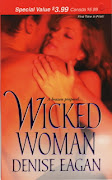
Scandalous Victorian Denise tells us about her writing and her new release, The Wicked Woman.


Why do you write historical?

History fascinates me—I love to analyze where we were to understand better where we are. But then when I hear some new tidbit, my first thought is, “What if a man did this? What if a woman did that? What would happen if. . . .” “What If” is the quintessential question every fiction writer starts with. For me, history tends to spark it more than current events. Besides, I’m going to read historical stuff anyway—I might as well use it!


What part of the Victorian era/setting do you write in?

I write in all of the subsets of the era. Wicked Woman is set in 1855. The sequel, Wild Card is in 1885. I also write in different areas across the U.S. I can’t seem to think of the 19th century as split between The Old West, The Civil War, The Gilded Age etc. I seriously doubt the people back then did, either. From what I understand, the people who went West primarily went to get rich (especially the 49ers!). The first thing they wanted once they moved past subsistence living was to purchase luxury items from back East, that was their definition of Success. Moreover, San Franciscan Society copied New York Society, and New York Society copied London Society. The Civil War affected the entire country and its affects lasted long after 1865—much of the Western settlers were displaced Southerners, including freed slaves. The Women’s Movement started in the 1850’s, quieted during the war, and then came on strong in the latter half of the century. To me the era was all interconnected and I feel compelled to write it that way. I sure hope it comes across in my books.


What is it about the era that most intrigues you?

The rapid technological and societal changes. Technologically the 19th century starts with oil lamps, fireplaces, letters, and horses. By the end its progressed from oil to gas lighting to electric lighting, fireplaces to stoves to furnaces, letters to telegraph to telephone/cable for communication, horse to steamships and trains for travel. If a person lives only 60 years, say from 1830 to 1890, he would have seen the majority of those changes. It must have them with their head spinning, much like many of us feel today. I can’t resist exploring that.

As for societal changes we start with agriculture and shipping as the primary ways to make a living, and move into the industrial revolution. In the beginning large families were preferred to help create wealth. In the end they were a hindrance. Women started the period pretty much as chattel. At the end they were earning college degrees and often supporting themselves. In the beginning—maybe due to the changes in family structure?—sex was accepted as natural, something enjoyed by both parties. At the end it many assumed that women were almost entirely uninterested moved by sex. Birth control seemed to follow suit, from not available, to widely available, to illegal, at least in the U.S. Changes in law, medicine, and I could just go on and on. . .

Again, I feel compelled to explore all of it—the conflicts that the changes created are fascinating! To me conflict is best understood through relationships, and the best relationship books are romances. Not just between hero and heroine, but the conflicts within families that either help or hurt the romantic relationship. I just love it!


Where do you get your information?

From anywhere and everywhere. I read books (which I check out of the library in stacks), I surf the net, I watch documentaries, I visit historical sights (Gettysburg, Williamsburg, coal mines in PA , The Living History Museum in Iowa) I talk to fellow historically-minded writers on the Heart’s Through History writer’s loop. It’s all fun, except for those really frustrating times when there is one tiny piece of information that I can’t find. It’s not so fun then.


What are you working on now?

I’m working on a manuscript which is a sequel to Wicked Woman and Wild Card . It’s currently (I’m bad at titles) named Stalking Star, about a Women’s Right’s advocate who is being stalked (I refer to him as a secret admirer) by a man who hates everything about the movement. In the meantime the heroine (a la The Bostonians) has rejected marriage to devote herself to the Cause. But she’s not happy with the Victorian assumption that she has also rejected sex. When she meets a Colorado rancher and sparks fly, she hopes that his Western roots will make him less conservative. By the time she realizes it doesn’t, she’s already hooked.


How many books have you written?
I think it’s 9. I haven’t counted lately because it’s pretty daunting seeing all those unsuccessful. A couple were early attempts at contemporary before I realized that I’m happiest as a historical writer. Almost all of them have a dead body in them somewhere. Sometimes it’s a death that’s haunting the characters (usually a murder :)). Sometimes somebody dies during the story. I just can’t seem to write a story without a body.


Do you write outside of the Victorian era, genre?

As I’ve said I have written a couple contemporaries and I do have some ideas for more of those, although my first love is the historical. I also have a Revolutionary War manuscript about a spy (highly disliked, by the way—spying didn’t gain a whole lot of cache until the 20th century.). The heroine considers herself a Tory. Couldn’t help but write that one, the conflict was so much fun, even if cliché!


What challenges have you faced in your career?

It took me 17 years before I got “The Call” and along the way I’ve faced all the usual—rejection, bad contest scores and critiques, bad agent/editor appointments, and of course the ever-present family intervention. But in the end I’m my own worst enemy. I listen to the negative voices in my head telling me I can’t get something published, I’m a hack not a writer, my plots are pure schlock—you name it those nasty voices have said it to me. The wonderful part about writing fiction is you get to live through your characters (which, other than being a re-enactor, is the only way to “live” history). The bad part is your mind can imagine truly horrible scenarios for your own life.


What is you writing schedule like?

Schedule? What’s that?

Seriously I do try to make up schedules, but I don’t always follow them. I try to confine promotion and the business of writing to the weekends. I find that the creative part of writing and business come from different part of my brain. It’s pretty hard to switch gears for me, too, so I’m better off having full days of one or the other.

Although I don’t write every day, the first thing I do every morning, right after I get coffee, is turn on the computer. If I think it’s going to be one of those days that I’m going to have a difficult time getting myself to work, I’ll open up a file and leave it on the screen to remind myself of priorities.

Thursday, December 06, 2007

Victorian Christmas

I didn't write this, but thought it was appropriate to direct people to read it. Anne Whitefield over at Unusual Historicals wrote this fascinating blog: Holidays & Celebrations: Victorian Christmas Recipes

Tuesday, December 04, 2007

Tuesday 10 - Sports

Sports with ties to or origins in Victoriana

There are lots of sports I could list here. With the advent of more leisure time, there was more time for the playing and watching of sports. Canoeing, rowing, running, hockey, all of it gathered momentum during the mid-to-later half of the 19th century. Here are 10 of those.

1. Baseball – Let’s forget the history of it, it’s too hard to track down. (And hey, Jane Austen made a reference to children playing "base-ball" on a village green in Northanger Abbey, written between 1798 and 1803, published 1818.) In 1845, Alexander Cartwright of New York City led the codification of an early list of rules (the so-called Knickerbocker Rules), from which today's have evolved. 19th Century Baseball

2. American Football – There are pads and helmets and braces! American Football, it is often said, is for wimps. I’ve seen Rugby, and that’s for crazy people. Walter Camp, player and coach at Yale University set down some rules in 1879. Read all about him and the significant rule changes from rugby and soccer.

3. Rugby – It’s convoluted, it’s mystifying…1838-39, 1841-42, 1845…here, just read it yourself, the site does a lot better explaining it than I could. Rugby

4. Football or Soccer – In America, it was a mishmash of changing rules until 1862 when Oneidas of Boston became the first organized soccer club in America. Princeton and Rutgers Universities engaged in the first intercollegiate soccer match November 6, 1876 (Rutgers won). The American Football Association was organized in 1884 in Newark, NJ, to maintain uniformity in the interpretation of rules and provide an orderly and stable growth. Elsewhere, though having been played for centuries in several similar incarnations, it wasn’t until 1848 and The Cambridge Rules that evolved into subsequent codes, including Association football.

5. Curling – I love Curling - it's one of the few WInter Olympic Sports I watch all the games to. When I visited Scotland, I saw the so-called first boulder they used. And I have no idea how they did anything with that but hurt themselves. The first Curling club was founded in Kinross, Loch Leven in 1668. The first national association was the Grand Caledonian Curling Club (founded in 1838). In 1843, the club got the privilege to be the Royal Caledonian Curling Club. This Club was the World Federation, till 1966, when the ICF (International Curling Federation) was founded.

6. Tennis –In December 1873, Major Walter Clopton Wingfield designed a game for the amusement of his guests at a garden party on his estate Nantclwyd, in Llanelidan, Wales. It was based on indoor, or real, tennis. Wingfield borrowed both the name and much of the French vocabulary of real tennis. The first championships at Wimbledon, in London were played in 1877.

7. CroquetJohn Jaques II introduced croquet into England at the Great Exhibition in 1851. His display attracted such wide attention that the game speedily became the vogue, in Europe and throughout the British Empire.


8. Basketball - James Naismith, a Canadian physical education instructor, invented this sport in 1891. Here are the original 13 rules. Thirteen! I wonder how many there are now.

9. Roller Skating - Introduced in 1863, it was quickly made fashionable by the elite of New York City. Special skating dresses, allowing more freedom of movement, became popular by the 1870’s. The popularity of roller skating waned by the 1890’s, but like ice skating it helped lead to more freedom in dress and behavior for women.

10. Olympic Games – in Ancient times, it was last celebrated in 393AD, only to be revived by Evangelos Zappas in 1870 and 1875. The International Olympic Committeewas founded in 1894, and their first games were the 1896 Summer Olympics in Athens, Greece. (The First Olympics: Athens 1896. Great movie, probably not that historically accurate, but great movie!)

Tuesday 10...part 1

I have a blog all saved and ready to post. It's a great blog, really! And it's on my home computer. Which is at home, a place I won't be until about 7 tonight. But I have a lovely post on Victorian Sports ready to share, and I hope you'll come back tonight to read it!