The 1800s saw some of the worst financial crises ever. Banks failed with alarming frequency, entire populations lost everything (India, Ireland, South America), and bankers and bank practices were scrutinized as never before – some even prosecuted.
Here are a couple failed banks and financial crises:
Anglo-Indian Bundelcund Banking Company 1833
Royal British Bank 1855
Irish Tipperary Bank 1857
The Inter-Oceanic Railway of Honduras 1872
Here are 10 (mostly) Victorian authors who wrote about finance. Some were affected by their banks folding and losing everything (William Thackeray). Some merely knew how to research and had never used a bank in their lives (Emile Zola). But they all wrote what today would be called the financial-fiction genre.
Marie-Henri Beyle, generally known as Stendhal, Lucien Leuwen (1894), published 52 years after his death.
Honoré de Balzac The Rise and Fall of Cesar Birotteau and The House of Nucingen selections from La Comédie humaine (various dates).
Harriet Martineau Illustrations of Political Economy(1832-1834) in 25 volumes. Poor Laws and Paupers Illustrated (1833) in 10 volumes, and Illustrations of Taxation (1834) in 5 volumes. When Lord Brougham sent Martineau government reports to use in constructing her stories she replied "I certainly never before met with materials so fit for the purposes of fiction."
William Makepeace Thackeray Vanity Fair (1847-1848), Samuel Titmarsh and the Great Hoggarty Diamond (1849) and The Newcomes (1854).
Charles Dickens Little Dorrit (1855 and 1857).
David Morier Evans, editor Bankers' Magazine (1857) and The Banker's Daughter (1870-1873).
Gustav Freytag Soll und Haben (1855) meaning, debit and credit was the most successful German novel of the century.
Anthony Trollope The Way We Live Now(1875).
George Gissing The Whirlpool (1897).
Emile Zola L'Argent or Money (1891).
http://www.projects.ex.ac.uk/RDavies/bankfiction/victorian.html
Tuesday, February 26, 2008
Sunday, February 24, 2008
Another Book Cover

Thought I'd show off my latest book cover. This is for my Civil War time travel romance, Erin's Rebel.
This story features the Victorian hair brooch described in my last post as the catalyst that transports the heroine back through time. The brooch contains a lock of the hero's hair.
This story will also be a release from The Wild Rose Press.
Saturday, February 23, 2008
Godly intervention?
I love stories like this. Paranormal is so interesting and you just never know, do you?
This is from history.com, This Day in History February 23, 1885
A remarkable reprieve for a man sent to the gallows
The authorities, mystified at the gallows' inexplicable malfunction, decided to ascribe it to an act of God. Lee was removed from death row, his sentence commuted, and he spent the next 22 years in prison. After he was released, he emigrated to America. The cause of Lee's remarkable reprieve was never discovered.
Condemned prisoners no longer have a chance at such reprieves. Even when there are mishaps in carrying out an execution (in one case, an executioner failed to properly find a vein for a lethal injection), authorities follow through until the prisoner has been put to death.
This is from history.com, This Day in History February 23, 1885
A remarkable reprieve for a man sent to the gallows
On this day in 1885, a 19-year-old man named John Lee is sent to the gallows in Exeter, England, for the murder of Ellen Keyse, a rich older woman for whom he had worked. Although he insisted he was innocent, Lee had been convicted and sentenced to death by hanging. However, after the noose was put around his neck and the lever that would release the floor beneath his feet was pulled, something malfunctioned and Lee was not dropped. Strangely, the equipment had been tested and found to be in working order. In facts, weights used in a test run plunged to the ground as expected. The hanging was attempted two more times, but when Lee stood on the trap door, and the lever was pulled, nothing happened. He was then sent back to prison.On November 15, 1884, Keyse, who had been a maid to Queen Victoria, was found dead in a pantry next to Lee's room. Her head was severely battered and her throat cut. There was no direct evidence of Lee's guilt; the case was made solely on circumstantial evidence. The alleged motive was Lee's resentment at Keyse's mean treatment.
The authorities, mystified at the gallows' inexplicable malfunction, decided to ascribe it to an act of God. Lee was removed from death row, his sentence commuted, and he spent the next 22 years in prison. After he was released, he emigrated to America. The cause of Lee's remarkable reprieve was never discovered.
Condemned prisoners no longer have a chance at such reprieves. Even when there are mishaps in carrying out an execution (in one case, an executioner failed to properly find a vein for a lethal injection), authorities follow through until the prisoner has been put to death.
Thursday, February 21, 2008
Victorian Hair Jewelry
The Victorian period was a very sentimental time. This was evidenced in the popularity of jewelry made from human hair. Often, upon a loved one's death, a lock of the deceased's hair was taken and preserved by being chemically treated. The braided or woven lock was then set in a metal frame.
The American Civil War increased the popularity of this type of jewelry. A soldier going off to war could have a lock of his hair woven into a brooch or other piece of jewelry for his wife or sweetheart, so she could keep a part of him with her. Likewise, a woman could send a piece of her hair off with her husband or beau.
Beside brooches, hair was woven into rings, watch chains, necklaces, fobs or charms.
"Hair was boiled in soda water, then sorted by lengths and divided into working groups of about 20-30 strands. Palette work was done on an artist's palette... When the piece was finished it was sent to a jewelers for mounting." The Citizen's Companion, August 2006, p. 54.
'Godey's Ladies Book' and 'Peterson's Magazine' ran ads for hair jewelry.
Sources: Who Wore What? Women's Wear 1861-1865 by Juanita Leisch
'Jewelry: What should a Reenactor Know?' by Anita Lauramore, The Citizen's Companion, August 2006. p. 54
Here are some links where you can view photos of Victorian hair jewelry:
http://www.morbidoutlook.com/fashion/historical/2001_03_victorianmourn.html
http://www.morninggloryantiques.com/JewelChatVictJwl.html
http://victorianhairartists.com/HairworkTechniques.html
The American Civil War increased the popularity of this type of jewelry. A soldier going off to war could have a lock of his hair woven into a brooch or other piece of jewelry for his wife or sweetheart, so she could keep a part of him with her. Likewise, a woman could send a piece of her hair off with her husband or beau.
Beside brooches, hair was woven into rings, watch chains, necklaces, fobs or charms.
"Hair was boiled in soda water, then sorted by lengths and divided into working groups of about 20-30 strands. Palette work was done on an artist's palette... When the piece was finished it was sent to a jewelers for mounting." The Citizen's Companion, August 2006, p. 54.
'Godey's Ladies Book' and 'Peterson's Magazine' ran ads for hair jewelry.
Sources: Who Wore What? Women's Wear 1861-1865 by Juanita Leisch
'Jewelry: What should a Reenactor Know?' by Anita Lauramore, The Citizen's Companion, August 2006. p. 54
Here are some links where you can view photos of Victorian hair jewelry:
http://www.morbidoutlook.com/fashion/historical/2001_03_victorianmourn.html
http://www.morninggloryantiques.com/JewelChatVictJwl.html
http://victorianhairartists.com/HairworkTechniques.html
Tuesday, February 19, 2008
Tuesday Ten--Funny Etiquette Rules
Ever wake up in th e morning, growl at the sun, snarl at your cup of coffee and then suddenly remember you've got Tuesday Ten looming over your head too? Okay, probably not unless you are Christine or Nic or me.
I had a good plan for Tuesday Ten. I live in New England and there are some really pretty, pretty Victorian homes in the area. I was going to take my digital camera around and photograph ten of them and put them on the blog. How great would that be? Trust me it would be really great. Make-it-your-computer-background great. Okay, maybe not quite that great.
Anyway, I never did do that whole photography thing. I do have one Victorian home photo from a year or two ago in Newport. I had more but the computer died, and now I've only got the one. It's Tuesday Ten, not Tuesday one--there isn't even a day of the week that alliterates with "one" (yes, I know alliterates is not a word. Call it poetic license, even though I'm not a poet and this is not a poem). I'm dragging my ten out of The Essential Handbook of Victorian Etiquette, originally published by Professor Thomas E Hill between 1873 and 1890. There is no rule, by the way, for murdering your beagle for chewing on your pen while you're trying to work. Just thought I'd throw that in, in case you were wondering.
So after that rambling pre-amble, here is it, the 10 funniest rules I found in this book:
1.)Never wantonly frighten others
2.)Never read letters which you may find addressed to others.
3.) When speaking to a boy under fifteen years of age, outside ot the circle of relatives, among comparative strangers call him by his Christian name.
If you don't know his age, do you ask him first? If you don't know his name do you just refer to him as "boy"?
4.) Do not always commence a conversation by an allusion to weather.
5.) Do not make a pretense of gentility, nor parade the face that you are a descendant of any notable family. Wear a sign instead. Okay, I added the last.
What should be avoided when calling.
6.) Do not take a dog or small child. Take the silverware.
7.) Do not continue the call longer when conversation begins to lag. I suspect if you broke rule number 4, this will happen very quickly.
Behavior to be avoided at the table.
8.) Never make noises with the mouth or throat. But you may pound on the table with your fist, or your utensils. Oh shoot, it says too, "Never permit yourself to use gestures, nor illustrations made with a knife or fork on the tablecloth". All right, scratch the utensils--just go for the fist.
Other stuff:
9.) Ladies should avoid walking rapidly upon the street, as it is ungraceful and unbecoming. running across he street in front of carriages is dangerous, and shows want of dignity. Can't believe how he buried the whole "dangerous" thing in the middle of that sentence.
10.) Swinging the arms when walking, eating upon the street, sucking the parasol handles. . . .are all evidences of illbreeding in ladies. Excuse me? Sucking the parasol handles? I think that's more than illbreeding. . . .
So there's my laugh for the day, with my twisted and often not funny sense of humor. By all means, if you know some funny rules, feel free to share! Oh and the spell check on Blogger doesn't work for me, so you can feel free to correct my spelling too!
 e morning, growl at the sun, snarl at your cup of coffee and then suddenly remember you've got Tuesday Ten looming over your head too? Okay, probably not unless you are Christine or Nic or me.
 I had a good plan for Tuesday Ten. I live in New England and there are some really pretty, pretty Victorian homes in the area. I was going to take my digital camera around and photograph ten of them and put them on the blog. How great would that be? Trust me it would be really great. Make-it-your-computer-background great. Okay, maybe not quite that great.
Anyway, I never did do that whole photography thing. I do have one Victorian home photo from a year or two ago in Newport. I had more but the computer died, and now I've only got the one. It's Tuesday Ten, not Tuesday one--there isn't even a day of the week that alliterates with "one" (yes, I know alliterates is not a word. Call it poetic license, even though I'm not a poet and this is not a poem). I'm dragging my ten out of The Essential Handbook of Victorian Etiquette, originally published by Professor Thomas E Hill between 1873 and 1890. There is no rule, by the way, for murdering your beagle for chewing on your pen while you're trying to work. Just thought I'd throw that in, in case you were wondering.
So after that rambling pre-amble, here is it, the 10 funniest rules I found in this book:
1.)Never wantonly frighten others
2.)Never read letters which you may find addressed to others.
3.) When speaking to a boy under fifteen years of age, outside ot the circle of relatives, among comparative strangers call him by his Christian name.
If you don't know his age, do you ask him first? If you don't know his name do you just refer to him as "boy"?
4.) Do not always commence a conversation by an allusion to weather.
5.) Do not make a pretense of gentility, nor parade the face that you are a descendant of any notable family. Wear a sign instead. Okay, I added the last.
What should be avoided when calling.
6.) Do not take a dog or small child. Take the silverware.
7.) Do not continue the call longer when conversation begins to lag. I suspect if you broke rule number 4, this will happen very quickly.
Behavior to be avoided at the table.
8.) Never make noises with the mouth or throat. But you may pound on the table with your fist, or your utensils. Oh shoot, it says too, "Never permit yourself to use gestures, nor illustrations made with a knife or fork on the tablecloth". All right, scratch the utensils--just go for the fist.
Other stuff:
9.) Ladies should avoid walking rapidly upon the street, as it is ungraceful and unbecoming. running across he street in front of carriages is dangerous, and shows want of dignity. Can't believe how he buried the whole "dangerous" thing in the middle of that sentence.
10.) Swinging the arms when walking, eating upon the street, sucking the parasol handles. . . .are all evidences of illbreeding in ladies. Excuse me? Sucking the parasol handles? I think that's more than illbreeding. . . .
So there's my laugh for the day, with my twisted and often not funny sense of humor. By all means, if you know some funny rules, feel free to share! Oh and the spell check on Blogger doesn't work for me, so you can feel free to correct my spelling too!
Sunday, February 17, 2008

During the Victorian era, men’s fashions moved away from the past. Prominent men such as the British Prime Minister Benjamin Disraeli were held up as icons of how gentlemen should not dress. He received criticisms for wearing historically prevalent shades including purple suits, but that was the sign of the times in menswear.
Menswear began to take a backseat in focus to women’s attire, and today’s ideas of traditional and classic menswear colors derive from the changes that happened in men’s styles during the Victorian era. Bright and liveried shades were replaced by the socially equalizing daily business suits in demure browns, dark blues, grays and blacks. A good charcoal suit, for example, could see a man through more than one event, from the office with the abacus to the evening charity meetings at church on his stroll home.
As social customs met political climates, the idea that all men were equal had changed the fashion scene once dominated by men’s apparel for many centuries. Once the peacocks, men of proper and aspiring societies became content to take a back seat to women’s flair and stopped wearing the diamonds, so to speak. Although pockets sprung up everywhere of regional styles, overall the gentleman of sensitivity utilized either the new clothing retail catalogs or his cherished tailor to fit in, in more ways than one. Most evidently by his choice of non-descript color schemes.
Menswear began to take a backseat in focus to women’s attire, and today’s ideas of traditional and classic menswear colors derive from the changes that happened in men’s styles during the Victorian era. Bright and liveried shades were replaced by the socially equalizing daily business suits in demure browns, dark blues, grays and blacks. A good charcoal suit, for example, could see a man through more than one event, from the office with the abacus to the evening charity meetings at church on his stroll home.
As social customs met political climates, the idea that all men were equal had changed the fashion scene once dominated by men’s apparel for many centuries. Once the peacocks, men of proper and aspiring societies became content to take a back seat to women’s flair and stopped wearing the diamonds, so to speak. Although pockets sprung up everywhere of regional styles, overall the gentleman of sensitivity utilized either the new clothing retail catalogs or his cherished tailor to fit in, in more ways than one. Most evidently by his choice of non-descript color schemes.
Saturday, February 16, 2008
Scandalous Victorian--Christine Koehler
I'm sorry. I slipped on getting this month's interview out on the first Friday of the month. Or the second, for that matter. But here it is--welcome to Scandalous Victorian, Christine Koehler.
Why do you write historical?
Because there are so many fascinating eras out there that I love, and love learning more about. Plus there are all sorts of restrictions, whenever the time was. Who could do what, when, and with whom. I enjoy writing them, then breaking every mold I can find. I also have a ‘news’ problem – I hear a story and must write something about it. It makes for infinite plot ideas, but makes it hard to focus on one time period or story.
What part of the Victorian era/setting do you write in?
Right now, it’s late Victorian England, 1882. I plan on expanding that within the loosely connected series to include Philadelphia, Egypt, and other parts of the world. Apparently I’m antsy and can’t enjoy one era for long.
What is it about the era that most intrigues you?
The clothes, the traveling, the sarcastic politeness – really enjoy that! The changing mores, the new enlightenment so to speak of social concerns. Plus there’s all that technology we take for granted today but was new and shiny to them, and as exciting as the internet was to us back in the day.
Where do you get your information?
Books, web, wikipedia. I really like that last, it’s easy to use, fast and you can get pinpointed information in a flash. On the other hand, it’s best to double check those facts before putting them in your story. As for the web, I love Googling something and then inevitably get lost in some tangent or another. I work in a library, so I have a lot of books at my fingertips, and can easily order more from elsewhere whenever I need them. This has its downfall, as I also have way more books than is normal stacking high in my house.
What are you working on now?
Erm…the better question here is what am I not working on? Philadelphia and Egypt 1882, a turn of the century story in Australia, Germany 1934, a contemporary or 2, toying with a Rome story, Russia 1917 and contemporary – they’re connected in the one story.
How many books have you written?
Finished? Three. Nearly so? Three more.
Do you write outside of the Victorian era, genre?
Oh yeah, but I do adore this era because of all the changes in society.
What challenges have you faced in your career?
The time it takes publishing houses to return an email. I don’t think that’s a ‘challenge’ per se, so much as a frustration. Also, finding time to write, plot, research, write, query, research publishers and agents.
What is you writing schedule like?
Every chance I get, I try to write something. Even if it’s a note or 2 for a plot idea, or to tinker with a plot, or random dialog for something already started. I have little enough time to sit and start from scratch, so my theory is that if I have something to work with, it’ll go smoother.
Why do you write historical?
Because there are so many fascinating eras out there that I love, and love learning more about. Plus there are all sorts of restrictions, whenever the time was. Who could do what, when, and with whom. I enjoy writing them, then breaking every mold I can find. I also have a ‘news’ problem – I hear a story and must write something about it. It makes for infinite plot ideas, but makes it hard to focus on one time period or story.
What part of the Victorian era/setting do you write in?
Right now, it’s late Victorian England, 1882. I plan on expanding that within the loosely connected series to include Philadelphia, Egypt, and other parts of the world. Apparently I’m antsy and can’t enjoy one era for long.
What is it about the era that most intrigues you?
The clothes, the traveling, the sarcastic politeness – really enjoy that! The changing mores, the new enlightenment so to speak of social concerns. Plus there’s all that technology we take for granted today but was new and shiny to them, and as exciting as the internet was to us back in the day.
Where do you get your information?
Books, web, wikipedia. I really like that last, it’s easy to use, fast and you can get pinpointed information in a flash. On the other hand, it’s best to double check those facts before putting them in your story. As for the web, I love Googling something and then inevitably get lost in some tangent or another. I work in a library, so I have a lot of books at my fingertips, and can easily order more from elsewhere whenever I need them. This has its downfall, as I also have way more books than is normal stacking high in my house.
What are you working on now?
Erm…the better question here is what am I not working on? Philadelphia and Egypt 1882, a turn of the century story in Australia, Germany 1934, a contemporary or 2, toying with a Rome story, Russia 1917 and contemporary – they’re connected in the one story.
How many books have you written?
Finished? Three. Nearly so? Three more.
Do you write outside of the Victorian era, genre?
Oh yeah, but I do adore this era because of all the changes in society.
What challenges have you faced in your career?
The time it takes publishing houses to return an email. I don’t think that’s a ‘challenge’ per se, so much as a frustration. Also, finding time to write, plot, research, write, query, research publishers and agents.
What is you writing schedule like?
Every chance I get, I try to write something. Even if it’s a note or 2 for a plot idea, or to tinker with a plot, or random dialog for something already started. I have little enough time to sit and start from scratch, so my theory is that if I have something to work with, it’ll go smoother.
Thursday, February 14, 2008
Perseverance Pays Off
I'm happy to announce I just got a contract for my Civil War time travel romance, Erin's Rebel, from The Wild Rose Press.
When I looked over my submission file for this manuscript, I realized I'd been sending it out for five years and getting nothing but rejections.
I actually wrote this story before joining RWA. This was the first novel I'd written entirely on my own. With my YA novel, I was in a writer's workshop with two published authors looking over my shoulder every step of the way. After I joined RWA, I started submitting ER, and was also entering it in RWA chapter contests as well as taking workshops. What I found was that the story and characters had problems. By this time, I'd starting work on another Civil War romance, Katie Rose. I thought maybe I should put Erin's Rebel aside and finish KR, but I couldn't get my mind off how to fix ER.
Since Erin's Rebel is the book of my heart and my biggest wish was for it to be published so everyone would have a chance to read it, I decided, whatever it took, I had to fix it to make it publishable. I went back to plot level, and taking what I'd learned in my workshops, I started from scratch with both character motivation and plot development coming up with a new and better version of the story. I then realized half the manuscript had to go, it no longer fit the new plot. I also had to move chapters around and write a lot of new material. My critique partners, all members of this blog, were a great help in getting my characters and those opening chapters right. After completing the revision, I submitted a partial to one publisher and got a request for the full. But in the end they didn't want it.
After yet another rejection, I decided to submit to The Wild Rose Press because I thought a small e-publisher might be the place for this story. With a lot of the bigger publishers, your story might be great, but if they feel they can't market it, because of the time period or setting, they'll pass on it without giving you a reason.
And The Wild Rose Press wants Civil War. Most publishers seem to shy away from it. The important thing is, this story will finally have the chance to be read by lots of readers and won't languish in my desk drawer. That's all I can ask.
At long last, my story's found a home.
When I looked over my submission file for this manuscript, I realized I'd been sending it out for five years and getting nothing but rejections.
I actually wrote this story before joining RWA. This was the first novel I'd written entirely on my own. With my YA novel, I was in a writer's workshop with two published authors looking over my shoulder every step of the way. After I joined RWA, I started submitting ER, and was also entering it in RWA chapter contests as well as taking workshops. What I found was that the story and characters had problems. By this time, I'd starting work on another Civil War romance, Katie Rose. I thought maybe I should put Erin's Rebel aside and finish KR, but I couldn't get my mind off how to fix ER.
Since Erin's Rebel is the book of my heart and my biggest wish was for it to be published so everyone would have a chance to read it, I decided, whatever it took, I had to fix it to make it publishable. I went back to plot level, and taking what I'd learned in my workshops, I started from scratch with both character motivation and plot development coming up with a new and better version of the story. I then realized half the manuscript had to go, it no longer fit the new plot. I also had to move chapters around and write a lot of new material. My critique partners, all members of this blog, were a great help in getting my characters and those opening chapters right. After completing the revision, I submitted a partial to one publisher and got a request for the full. But in the end they didn't want it.
After yet another rejection, I decided to submit to The Wild Rose Press because I thought a small e-publisher might be the place for this story. With a lot of the bigger publishers, your story might be great, but if they feel they can't market it, because of the time period or setting, they'll pass on it without giving you a reason.
And The Wild Rose Press wants Civil War. Most publishers seem to shy away from it. The important thing is, this story will finally have the chance to be read by lots of readers and won't languish in my desk drawer. That's all I can ask.
At long last, my story's found a home.
Wednesday, February 13, 2008
Quaker Woman Saves Washington's Army
She was dead for 38 years before the world learned of Lydia Darragh, the heroic woman who saved George Washington’s revolutionary army 231 years ago.
The archives of the University of California at Berkeley show only a few references to the incident in besieged Philadelphia during the bitter winter of 1777 when a delicate, righteous Quaker lady became one of the most unlikely spies of the Revolutionary War.
Philadelphia was in enemy hands the night of December 2. Washington and his ragged, starving men were shivering at Valley Forge when the Irish-born woman was called before the British officer who had requisitioned her house. Sternly, the unnamed adjutant general confronted the 48-year old woman who was known in the community as a skillful and tender nurse and midwife. But she had another reputation. Mrs. Darragh was under a cloud in the Society of Friends for her membership in the Fighting Quakers, a group which rejected the sect’s strict requirement of pacifism. The adjutant general informed her that she and her family were under orders to retire early that night because he and his staff were to have a council.
Accordingly, she and the family went to bed at 7 o’clock. Her curiosity aroused by the urgency of the general’s orders, Mrs. Darragh could not sleep. The minutes dragged by. Finally she slipped downstairs and pressed her ear to the keyhole of the council chamber. She overheard an order for all British troops to march two nights later and attack General Washington’s despairing army. She rushed back to her bedroom in turmoil over the threat she had overheard.
A militant believer in the American fight for independence, she decided on a desperate course of action. General Washington must learn of the British plan. The morning of December 4, she told her family they needed flour, and with this story she succeeded in getting a pass to go through British lines to Frankford. Not daring to tell even her husband of her mission, she went to the mill at Frankford, got the flour, then pressed on deep into American-held territory, where she met an officer she happened to know, Lt. Col. Thomas Craig of the Light Horse.
Taking him aside, the woman confided the momentous secret gleaned at the keyhole, after extracting a promise that her identity be kept secret. The startled officer sped off to Washington’s freezing encampment and told the commander in chief the British were planning a surprise attack.
That evening, General Sir William Howe marched out of Philadelphia with a strong force to destroy the American revolutionary army. As reported in the American Quarterly Review of March, 1827 from narrative accounts by Mrs. Darragh, a thoroughly confounded adjutant general later confronted her in her house. The woman’s blood ran cold with terror, fearing her secret was out.
Said the British general “...When we arrived near Whitemarsh, we found all their cannons mounted and the troops prepared to receive us. We marched back like a parcel of fools.”
Mrs. Darragh waited for the blow to fall, perhaps an order for her execution. As if in response to her unspoken thought, the general earnestly inquired whether any of her family was up the night he and the other officers had their meeting. Then he added: “I know YOU were asleep, for I knocked at your chamber door…I am entirely at a loss to imagine who gave General Washington information of our intended attack, unless the walls of the house could speak.”
The petite Quakeress went back to her kitchen, a tight smile on her lips.
Written by Jack Schreibman, Associated Press writer, 1938
The archives of the University of California at Berkeley show only a few references to the incident in besieged Philadelphia during the bitter winter of 1777 when a delicate, righteous Quaker lady became one of the most unlikely spies of the Revolutionary War.
Philadelphia was in enemy hands the night of December 2. Washington and his ragged, starving men were shivering at Valley Forge when the Irish-born woman was called before the British officer who had requisitioned her house. Sternly, the unnamed adjutant general confronted the 48-year old woman who was known in the community as a skillful and tender nurse and midwife. But she had another reputation. Mrs. Darragh was under a cloud in the Society of Friends for her membership in the Fighting Quakers, a group which rejected the sect’s strict requirement of pacifism. The adjutant general informed her that she and her family were under orders to retire early that night because he and his staff were to have a council.
Accordingly, she and the family went to bed at 7 o’clock. Her curiosity aroused by the urgency of the general’s orders, Mrs. Darragh could not sleep. The minutes dragged by. Finally she slipped downstairs and pressed her ear to the keyhole of the council chamber. She overheard an order for all British troops to march two nights later and attack General Washington’s despairing army. She rushed back to her bedroom in turmoil over the threat she had overheard.
A militant believer in the American fight for independence, she decided on a desperate course of action. General Washington must learn of the British plan. The morning of December 4, she told her family they needed flour, and with this story she succeeded in getting a pass to go through British lines to Frankford. Not daring to tell even her husband of her mission, she went to the mill at Frankford, got the flour, then pressed on deep into American-held territory, where she met an officer she happened to know, Lt. Col. Thomas Craig of the Light Horse.
Taking him aside, the woman confided the momentous secret gleaned at the keyhole, after extracting a promise that her identity be kept secret. The startled officer sped off to Washington’s freezing encampment and told the commander in chief the British were planning a surprise attack.
That evening, General Sir William Howe marched out of Philadelphia with a strong force to destroy the American revolutionary army. As reported in the American Quarterly Review of March, 1827 from narrative accounts by Mrs. Darragh, a thoroughly confounded adjutant general later confronted her in her house. The woman’s blood ran cold with terror, fearing her secret was out.
Said the British general “...When we arrived near Whitemarsh, we found all their cannons mounted and the troops prepared to receive us. We marched back like a parcel of fools.”
Mrs. Darragh waited for the blow to fall, perhaps an order for her execution. As if in response to her unspoken thought, the general earnestly inquired whether any of her family was up the night he and the other officers had their meeting. Then he added: “I know YOU were asleep, for I knocked at your chamber door…I am entirely at a loss to imagine who gave General Washington information of our intended attack, unless the walls of the house could speak.”
The petite Quakeress went back to her kitchen, a tight smile on her lips.
Written by Jack Schreibman, Associated Press writer, 1938
Tuesday, February 12, 2008
Tuesday Ten: Cowboy Clothes

Yippee-ki-yi-o! Get along li'l doggies, it's another cowboy blog!
I’ve always believed that the clothes make the man—and when it came to cowboys, that’s the absolute truth. Here are ten things that made the man so easy to recognize:
* Stetson, John B.,
* Spurs. Necessary when riding a horse—and practically a social requirement when not. They were as essential to controlling the horse as the reins. They were held in place by a chain passing under the instep and a broad, crescent-shaped strip of leather called spur leather. Also known as hooks, gut hooks, galves, grappling irons – or tin belly, if they were of inferior quality. Pear-shaped pendants knows as danglers or jingle-bobs were added to the spur rowel (a curved piece added to the frame of the spur) and gave him that musical sound when he walked.
* Chaps (or chivarras). An abbreviated version of the Spanish word chaparejos, which means leather breeches or overalls. These protected legs from injury when thrown or dragged through brush, and also provided protection from rain and snow.
* Britches. They were never pants, or trousers. Always britches.
* Plunder and poke. He carried his personal effects in his “war bag”, or as it was known in the Northwest, his poke. Also known as parfleshes or “porfleshes”, a version of the word “parfleche.” The personal belongings in the bag—his "doo dads" and "ditties"—were called plunder.
* Slicker. This oil skin coat was sometimes called a “fish” and was usually found rolled in a bundle behind the cantle of the saddle. Sometimes he also wore a “poncha” – a covering made by cutting a hole for his head through the middle of a blanket.
* Wipes. Also known as his neckerchief.
* Gloves. These were worn as protection against the cold, from rope burns and from injury. But many cowboys turned their noses up at gloves, claiming it was “cheaper to grow skin” than to buy it.
Wednesday, February 06, 2008
My Cover for Eternity Waits

I just got my cover art for my short vampire story, Eternity Waits, to be a future release from The Wild Rose Press.
I don't have an official blurb yet, but the story is set in a Civil War Confederate camp. My vampire, Alexandra, goes after a Rebel soldier she thinks is the reincarnation of her lover who died on a battlefield in Siberia in the 16th century.
I don't have a release date yet, but the cover is so gorgeous I just had to show it off to all my Victorian friends.
What do you think?
Tuesday, February 05, 2008
10 Things I wouldn't be able to live without in the Victorian Era
This is an almost continuation of Dee's 10 thing she loves/hates about the era. I shamelessly add to it because I have nothing else planned.
1. TV - I don't even watch a lot of it, but it's interesting and sometimes just plain frivolous. It's a good way to pass the time while cleaning, too...or procrastinate an afternoon away.
2. Computers - I can't even imagine not having them around now. I know the majority of people out there don't use them like I do (even read an article on how one executive went without for a whole week. Can't even imagine!) But there's no way I can do the research I want, or find the curious tidbits of information I'm interested in without it. The mere thought of sloughing through a gazillion books for 3 facts makes me want to whimper and hide. I email constantly, it’s so much better than writing letters to old friends.
3. Antibiotics - I have the worst immune system. I have a cold several times a season, sinus infections all the time, and need those antibiotics. Don't stand between me and the pharmacy. It's bad.
4. Allergy medicine - Granted, this goes with #3, but in a slightly different way. I have allergies and need both eye drops and prescription allergy medicine. I have nasal spray, and an unending supply of tissues. What did Victorians use? You know, I'm not even sure. But if it was just chicken soup, I'd need more. And I'd hope I was smart enough not to fall for the snake oil doctor's lines. But then desperate times and all...
5. Contacts - It's purely vain, true, but not the point. I wouldn't be able to live without my contacts 100+ years ago. I only wear glasses at night when I'm home, locked in tight, and ready for bed. I mentioned it was a vanity thing, right?
6. Planes, trains, and automobiles - Trains, well not so much. And they had rail then, and put it to better use than we do today. (Though I just heard a report this morning about Western Europe adding electric trains as competition to airlines.) But without a car I'd be lost. I'd probably hibernate away and never do much of anything, then die at a pathetically young age from boredom. I love to see new things, even if it's in my own state, let alone a quick trip across the country.
7. Telephones - today's use of them, not their original use. They're cheaper to use, more accessible, with less nosy people listening in on them and transferring you places. I can call New York AND Texas at the same time on 3-way, call the next town and the next state with a simple hit of the redial.
8. Microwave – I don’t cook. I reheat, I take out, I zap things. Without that handy little machine, I doubt I’d have moved out of my parents’ house.
9. Equal Rights – I’m way too outspoken not to have been a part of the Suffrage movement. Here’s hoping that I would’ve been then, too.
10. RWA – not the entity per se, but (you can tell I didn’t have 10 things, can’t you) by joining it, I met my fellow Victorians. And without them, I’m not certain I’d be as far with my writing as I am.
1. TV - I don't even watch a lot of it, but it's interesting and sometimes just plain frivolous. It's a good way to pass the time while cleaning, too...or procrastinate an afternoon away.
2. Computers - I can't even imagine not having them around now. I know the majority of people out there don't use them like I do (even read an article on how one executive went without for a whole week. Can't even imagine!) But there's no way I can do the research I want, or find the curious tidbits of information I'm interested in without it. The mere thought of sloughing through a gazillion books for 3 facts makes me want to whimper and hide. I email constantly, it’s so much better than writing letters to old friends.
3. Antibiotics - I have the worst immune system. I have a cold several times a season, sinus infections all the time, and need those antibiotics. Don't stand between me and the pharmacy. It's bad.
4. Allergy medicine - Granted, this goes with #3, but in a slightly different way. I have allergies and need both eye drops and prescription allergy medicine. I have nasal spray, and an unending supply of tissues. What did Victorians use? You know, I'm not even sure. But if it was just chicken soup, I'd need more. And I'd hope I was smart enough not to fall for the snake oil doctor's lines. But then desperate times and all...
5. Contacts - It's purely vain, true, but not the point. I wouldn't be able to live without my contacts 100+ years ago. I only wear glasses at night when I'm home, locked in tight, and ready for bed. I mentioned it was a vanity thing, right?
6. Planes, trains, and automobiles - Trains, well not so much. And they had rail then, and put it to better use than we do today. (Though I just heard a report this morning about Western Europe adding electric trains as competition to airlines.) But without a car I'd be lost. I'd probably hibernate away and never do much of anything, then die at a pathetically young age from boredom. I love to see new things, even if it's in my own state, let alone a quick trip across the country.
7. Telephones - today's use of them, not their original use. They're cheaper to use, more accessible, with less nosy people listening in on them and transferring you places. I can call New York AND Texas at the same time on 3-way, call the next town and the next state with a simple hit of the redial.
8. Microwave – I don’t cook. I reheat, I take out, I zap things. Without that handy little machine, I doubt I’d have moved out of my parents’ house.
9. Equal Rights – I’m way too outspoken not to have been a part of the Suffrage movement. Here’s hoping that I would’ve been then, too.
10. RWA – not the entity per se, but (you can tell I didn’t have 10 things, can’t you) by joining it, I met my fellow Victorians. And without them, I’m not certain I’d be as far with my writing as I am.
Friday, February 01, 2008
Bandit Built Store
The following accounting was obtained from Roscoe Wyatt, Oscar John and Walter Ray. Oscar and Walter both remember the Younger brothers in person. Wyatt was a conscientious historian. Personal interviews included two of my family members: Emma John Weeks and Percy Weeks. Oscar John (87 at the time of the interview) worked on the Bandit Built Store. He knew the Younger brothers from when they hid out on his La Honda ranch.
Among the men hired to build John Sears’ store, referred to as the “Bandit-Built Store” in 1877 were the Younger brothers from Forsyth, Kansas. At that time no one in La Honda, California, knew them as the Younger brothers, because they were posing as cousins to Oscar John and Walter Ray. Jim Younger actually lived behind the Redwood City Court House for one year using the name of Joe Hardin.
Cole, Jim, Bob and John Younger lived in Forsyth, Kansas on their father’s ranch in May, 1861, when the Civil War broke out. Cole, the youngest son, joined the Confederate Army and became a colonel. In November of that year, a short leave gave him a chance to visit his parents. As he approached the ranch, he found the place engulfed in flames. A band of Union troops and local Northern sympathizers reached the ranch before him and stole all of the stock before burning the grain, corn, and feed. They also threw his youngest sister, who suffered from tuberculosis, out on the cold ground, causing her death. When their father discovered what had happened and put up a fight, they hung him from a tree on the ranch. This left their mother, oldest sister, Molly, and three younger brothers homeless.
Within hours Cole, along with a friend, organized local Southern sympathizers and within a few hours they started wiping out their enemies. It’s reported that Cole alone killed one hundred men that he knew had something to do with his father’s and sister’s death. By the end of the war, Cole had a price on his head for desertion, killing for revenge, and a long list of other charges. He left his family in the care of his cousin, John Jarret’s, parents. He, John Jarret and a few friends left for California where they hoped to find sanctuary at his uncle’s ranch in San Jose, but ended up using a ranch in La Honda as their hideout.
Oscar John and his stepfather met the gang as they rode onto the ranch. Oscar was ten years old at the time. He recalls unsaddling ten horses. Everyone but Cole Younger and John Jarret left the ranch. They helped build the lakeside Ray ranch into a large two-story building. Cole and John traveled back to Kansas to bring the rest of their family west. They learned their mother had died and that Jim and Bob Younger had been accomplices to the James gang robberies. Cole was convinced the Ray ranch was the best place for the remainder of his family until everything blew over.
They arrived back in La Honda August, 1876, when big changes were happening. A new sawmill belonging to R.J. Weeks (my ancestor) opened and John Sears just started clearing an old bear pit site for his store and hotel. At last luck was with the Younger family. Oscar John talked John Sears into hiring his cousins from the east, no questions asked. The three brothers and John Jarret went to work on the store. Oscar John recalls seeing Cole shingling the roof of the store. When the store was finished, the men returned to the Ray ranch to work the harvest.
John Jarret spent that season at the Ray ranch, one season in Redwood City and then went back east. He returned the next year and started work on my family’s ranch. While there, he married Molly Younger, thereby becoming Cole’s brother-in-law as well as cousin.
The James Brothers were planning to rob the Northfield Bank in Minnesota. They couldn’t pull the job by themselves and no longer trusted their gang. They sent a message to Cole by a man named Giles. Since the Youngers knew Northfield, they expected them to participate in the robbery. Frank and Jesse James sent a message stating that if the Youngers refused to come, they would have them exposed to the law. Cole decided to participate to save his sister and brother-in-law. He left a rare set of pearl handled pistols with Jarret at the Weeks Ranch. He realized if he got caught with them, they’d be a dead giveaway as to his identity.
Cole had an agreement with Jesse James that this bank robbery would be their last appearance in the mid-west. Jesse assured Cole that after this job, they would never have to worry about money again. Unfortunately, the robbery went wrong. During their escape Jim Younger was shot in the jaw. Jesse wanted to kill Jim because it would hinder to their escape. Cole absolutely refused. So, while Jim lay bleeding in a wet creek bottom, the James brothers made a clean getaway. The Younger brothers gave themselves up to the law to save Jim from bleeding to death. Cole, Jim and Bob Younger were sentenced to serve terms in the Minnesota Penitentiary.
When John Jarret learned what had happened to his brothers-in-law, he happened to be working away from the Weeks ranch and only coming home on the weekends. Giles showed up at the ranch with a forged note from Cole. Molly wasn’t home so he gave the note to their housekeeper. It was written to Molly and asked that she give Giles the two rare guns. The note stated that Cole’s prison term was just about up and that he wanted to sell the guns so he could get a new start in life. The housekeeper, remembering Giles from his first trip, thought he was on the level and handed over the guns. Jarret, for some unknown reason, came home that night and found Giles there with the guns in his possession. After he read the letter, he knew it was forged because Cole always wrote in of care of him, not Molly. Giles confessed that he had a chance to sell the guns to an Illinois museum.
Jim Bartley, La Honda rancher and teamster, visited the Younger brothers at the Northfield, Minnesota Penitentiary. He learned that an old sweetheart of Jim Younger visited him regularly. She promised to marry him when he got out of prison. Jim looked forward to that day, planning once more to start life anew. However, the woman turned him down when he got out. His heart was broken. Having nothing to live for, he rented a room at a cheap boarding house and shot himself through the head.
Cole and Bob dropped into obscurity after serving their terms.
Among the men hired to build John Sears’ store, referred to as the “Bandit-Built Store” in 1877 were the Younger brothers from Forsyth, Kansas. At that time no one in La Honda, California, knew them as the Younger brothers, because they were posing as cousins to Oscar John and Walter Ray. Jim Younger actually lived behind the Redwood City Court House for one year using the name of Joe Hardin.
Cole, Jim, Bob and John Younger lived in Forsyth, Kansas on their father’s ranch in May, 1861, when the Civil War broke out. Cole, the youngest son, joined the Confederate Army and became a colonel. In November of that year, a short leave gave him a chance to visit his parents. As he approached the ranch, he found the place engulfed in flames. A band of Union troops and local Northern sympathizers reached the ranch before him and stole all of the stock before burning the grain, corn, and feed. They also threw his youngest sister, who suffered from tuberculosis, out on the cold ground, causing her death. When their father discovered what had happened and put up a fight, they hung him from a tree on the ranch. This left their mother, oldest sister, Molly, and three younger brothers homeless.
Within hours Cole, along with a friend, organized local Southern sympathizers and within a few hours they started wiping out their enemies. It’s reported that Cole alone killed one hundred men that he knew had something to do with his father’s and sister’s death. By the end of the war, Cole had a price on his head for desertion, killing for revenge, and a long list of other charges. He left his family in the care of his cousin, John Jarret’s, parents. He, John Jarret and a few friends left for California where they hoped to find sanctuary at his uncle’s ranch in San Jose, but ended up using a ranch in La Honda as their hideout.
Oscar John and his stepfather met the gang as they rode onto the ranch. Oscar was ten years old at the time. He recalls unsaddling ten horses. Everyone but Cole Younger and John Jarret left the ranch. They helped build the lakeside Ray ranch into a large two-story building. Cole and John traveled back to Kansas to bring the rest of their family west. They learned their mother had died and that Jim and Bob Younger had been accomplices to the James gang robberies. Cole was convinced the Ray ranch was the best place for the remainder of his family until everything blew over.
They arrived back in La Honda August, 1876, when big changes were happening. A new sawmill belonging to R.J. Weeks (my ancestor) opened and John Sears just started clearing an old bear pit site for his store and hotel. At last luck was with the Younger family. Oscar John talked John Sears into hiring his cousins from the east, no questions asked. The three brothers and John Jarret went to work on the store.
 Oscar John recalls seeing Cole shingling the roof of the store. When the store was finished, the men returned to the Ray ranch to work the harvest.
John Jarret spent that season at the Ray ranch, one season in Redwood City and then went back east. He returned the next year and started work on my family’s ranch. While there, he married Molly Younger, thereby becoming Cole’s brother-in-law as well as cousin.
The James Brothers were planning to rob the Northfield Bank in Minnesota. They couldn’t pull the job by themselves and no longer trusted their gang. They sent a message to Cole by a man named Giles. Since the Youngers knew Northfield, they expected them to participate in the robbery. Frank and Jesse James sent a message stating that if the Youngers refused to come, they would have them exposed to the law. Cole decided to participate to save his sister and brother-in-law. He left a rare set of pearl handled pistols with Jarret at the Weeks Ranch. He realized if he got caught with them, they’d be a dead giveaway as to his identity.
Cole had an agreement with Jesse James that this bank robbery would be their last appearance in the mid-west. Jesse assured Cole that after this job, they would never have to worry about money again. Unfortunately, the robbery went wrong. During their escape Jim Younger was shot in the jaw. Jesse wanted to kill Jim because it would hinder to their escape. Cole absolutely refused. So, while Jim lay bleeding in a wet creek bottom, the James brothers made a clean getaway. The Younger brothers gave themselves up to the law to save Jim from bleeding to death. Cole, Jim and Bob Younger were sentenced to serve terms in the Minnesota Penitentiary.
When John Jarret learned what had happened to his brothers-in-law, he happened to be working away from the Weeks ranch and only coming home on the weekends. Giles showed up at the ranch with a forged note from Cole. Molly wasn’t home so he gave the note to their housekeeper. It was written to Molly and asked that she give Giles the two rare guns. The note stated that Cole’s prison term was just about up and that he wanted to sell the guns so he could get a new start in life. The housekeeper, remembering Giles from his first trip, thought he was on the level and handed over the guns. Jarret, for some unknown reason, came home that night and found Giles there with the guns in his possession. After he read the letter, he knew it was forged because Cole always wrote in of care of him, not Molly. Giles confessed that he had a chance to sell the guns to an Illinois museum.
Jim Bartley, La Honda rancher and teamster, visited the Younger brothers at the Northfield, Minnesota Penitentiary. He learned that an old sweetheart of Jim Younger visited him regularly. She promised to marry him when he got out of prison. Jim looked forward to that day, planning once more to start life anew. However, the woman turned him down when he got out. His heart was broken. Having nothing to live for, he rented a room at a cheap boarding house and shot himself through the head.
Cole and Bob dropped into obscurity after serving their terms.
Thursday, January 31, 2008
Brother Against Brother
The preceding blogs about genealogy on this site got me thinking how little I know about my own family's roots. But several years ago, my huband did a search of his family to try to find an ancestor who'd fought during the American Civil War on the Union side and came up with very interesting information.
It all started about 12 years ago when my family visited Gettysburg, where we met a few Civil War reenactors. My husband was fascinated and set about finding a reenacting group he could join. He toyed with joining his co-worker's Confederate group based in New Jersey, but didn't want to go that far for meetings. He continued his search and found a local Union group, the 28th Pennsylvania Volunteer Regiment.
One of the requirements for male members of the group was to join the Sons of Union Veterans. Although members didn't have to have an ancestor who actually fought for the Union, it certainly was a perk. I think he got a special ribbon to wear.
My husband started research and found two uncles who'd fought for the Confederacy.
Wrong side. No perks there.
Besides, these Confederate soldiers weren't direct ancestors anyway. Continuing his research, he found Samuel Joseph Macateee, who not only fought for the Union, but was a direct ancestor. Ironically, Samuel was the younger brother of the two uncles who'd fought for the Confederacy.
He was sixteen when the Civil War broke out and living in Maryland with his family. After his older brothers joined the Confederate Army, his parents sent him north to York, Pennsylvania to live with an aunt, to keep him out of the war. Toward the end of the war, he joined the Union Army as part of Hampton's Battery.
So, while the American Civil War was said to have been a war of brother against brother, in my huband's family, it turned out to be the literal truth.
It all started about 12 years ago when my family visited Gettysburg, where we met a few Civil War reenactors. My husband was fascinated and set about finding a reenacting group he could join. He toyed with joining his co-worker's Confederate group based in New Jersey, but didn't want to go that far for meetings. He continued his search and found a local Union group, the 28th Pennsylvania Volunteer Regiment.
One of the requirements for male members of the group was to join the Sons of Union Veterans. Although members didn't have to have an ancestor who actually fought for the Union, it certainly was a perk. I think he got a special ribbon to wear.
My husband started research and found two uncles who'd fought for the Confederacy.
Wrong side. No perks there.
Besides, these Confederate soldiers weren't direct ancestors anyway. Continuing his research, he found Samuel Joseph Macateee, who not only fought for the Union, but was a direct ancestor. Ironically, Samuel was the younger brother of the two uncles who'd fought for the Confederacy.
He was sixteen when the Civil War broke out and living in Maryland with his family. After his older brothers joined the Confederate Army, his parents sent him north to York, Pennsylvania to live with an aunt, to keep him out of the war. Toward the end of the war, he joined the Union Army as part of Hampton's Battery.
So, while the American Civil War was said to have been a war of brother against brother, in my huband's family, it turned out to be the literal truth.
Tuesday, January 29, 2008
Ten things I love/hate about the Victorian Era
Morning, everyone,
Today is my turn for Tuesday ten. I am, however, sick with yet another cold and my computer died last week. The new one I have has a super-sensitive touch pad that makes writing difficult. Of course I'll have to fix it, but it may take some time. Between those two things, I am not going to be as good a Tuesday-tenner as I would like. No references this time. This is more discussion time than information.
All right, on to ten things I love/hate about the era.
1.)Clothes--I love the clothes, from the beginning to the end of the era, most especially the ones for formal affairs. Silks and satins and velvets. . . .long dresses and lace. People dressed differently for different occasions, unlike today where unless someone specifically says "semi-formal attire" jeans and sandals are acceptable.
2.) Manners--People actually had them. Granted the U.S. has always been a little more, um, we'll call it independent in the manner category. In other words, we tend to dis things that are viewed as "prissy". I'm pretty certain that in the Old West, this occurred a lot more often than in the cities. Still, people said please and thank you, and held doors open and in most cases tried to be more polite.
3.) Furniture--I admit I wouldn't have it in my house, but I still love the furniture of the time, with all the swirls and roses carved in it. In my house though, which is constantly in chaos, it would just get lost in the mess.
4.) Wallpaper--These days our walls are generally painted--it's just easier. But in the Victorian period wallpaper was cheaper and everyone used it. Again, it was pretty intricate and in my chaotic house would just make the mess look messier. But if I could afford someone to clean my house--or could somehow learn to love cleaning it myself--I would have lots of Victorian wallpaper.
5.) Formality--In the Victorian era people said ma'am or sir, and used Mr and Mrs, even when referring to their own spouses. (I recently read something--don't remember where though--in which a woman was berate for not calling her husband Mr.). The only time people these days say Mr. or Mrs is when referring to an old friends' parents. Sometimes that's not even true. In the town we lived in when my kids were born, everyone referred to their friends' parents by their first name. Me, I like the formality. Yes, it does create distance, but it also shows immediately how close people are. I like it.
This may, by the way, be different in other sections of the U.S. (and other countries, of course). I believe people in the South are far more likely to use formalities, but I suspect even there it's relaxing.
6.)Dancing--Yes, we do still dance, but not nearly as much as I believe they did back then. In the Victorian era dancing, specifically the waltz, was the best way for a man to "get close" to a woman. Thus men were far more inclined to want to dance. And dancing was "easier" in that there were set dances, The Cotillion, the Waltz, The Quadrille, etc. You learned the steps, and you could dance. Today, it's mostly free-style, and those of us without rhythm (me!) do not dance. It's far too embarrassing. I would have back then, though!
7.) Food--The Victorians liked to eat. A lot. And, as I have blogged on before (I think) as the era progressed and the eating became more ritual, the fashions changed to allow for extra weight. By the end of the era women who had a good 10-15 extra pounds on them were envied. I have an extra 10 pounds on me. No one envies me for it.
8.)Travel--yes is took much longer, was expensive and often filthy, and uncomfortable for people without a certain financial means. But for others if wasn't--just look at the steamships being built at the time! All manner of luxury! I think slower travel allowed people to see more, and forced them to talk more to each other, to compel people to get to know people from different backgrounds. Today we take cruises for the purposes of vacation, which duplicates Victorian overseas travel to some extent. As for land travel, thought, well it's all about the plane or the car, isn't it? Few people take overnight trains. I think it's a real shame.
Two things I hate:
9.) Corsets--While they sort of "equalized" women, allowing the larger ones to squish their waists so that they too, looked wasp-waisted, I think they did women a great deal of damage. From what I've read women started wearing them in the early teen years, and I suspect they created the same sort of malformation that binding feet did in Chinese women. This sort of malformation would have created, I believe, a great deal if difficulty during child-bearing years. I wonder how many women might not have suffered or died in childbirth if they hadn't been forced by society to wear these things.
10.)Treatement of women--Of course I've discussed this a number of times, and how the laws were so unfair to women, even to the point that were a wife to divorce her husband (assuming she could actually get a divorce) she lost everything, including her children. Even if those children were from another marriage. The laws, though, were not special to the era, they were just more obvious because of the women who fought against them.
Well that's it. What about you? What do you love or hate about the era?
Today is my turn for Tuesday ten. I am, however, sick with yet another cold and my computer died last week. The new one I have has a super-sensitive touch pad that makes writing difficult. Of course I'll have to fix it, but it may take some time. Between those two things, I am not going to be as good a Tuesday-tenner as I would like. No references this time. This is more discussion time than information.
All right, on to ten things I love/hate about the era.
1.)Clothes--I love the clothes, from the beginning to the end of the era, most especially the ones for formal affairs. Silks and satins and velvets. . . .long dresses and lace. People dressed differently for different occasions, unlike today where unless someone specifically says "semi-formal attire" jeans and sandals are acceptable.
2.) Manners--People actually had them. Granted the U.S. has always been a little more, um, we'll call it independent in the manner category. In other words, we tend to dis things that are viewed as "prissy". I'm pretty certain that in the Old West, this occurred a lot more often than in the cities. Still, people said please and thank you, and held doors open and in most cases tried to be more polite.
3.) Furniture--I admit I wouldn't have it in my house, but I still love the furniture of the time, with all the swirls and roses carved in it. In my house though, which is constantly in chaos, it would just get lost in the mess.
4.) Wallpaper--These days our walls are generally painted--it's just easier. But in the Victorian period wallpaper was cheaper and everyone used it. Again, it was pretty intricate and in my chaotic house would just make the mess look messier. But if I could afford someone to clean my house--or could somehow learn to love cleaning it myself--I would have lots of Victorian wallpaper.
5.) Formality--In the Victorian era people said ma'am or sir, and used Mr and Mrs, even when referring to their own spouses. (I recently read something--don't remember where though--in which a woman was berate for not calling her husband Mr.). The only time people these days say Mr. or Mrs is when referring to an old friends' parents. Sometimes that's not even true. In the town we lived in when my kids were born, everyone referred to their friends' parents by their first name. Me, I like the formality. Yes, it does create distance, but it also shows immediately how close people are. I like it.
This may, by the way, be different in other sections of the U.S. (and other countries, of course). I believe people in the South are far more likely to use formalities, but I suspect even there it's relaxing.
6.)Dancing--Yes, we do still dance, but not nearly as much as I believe they did back then. In the Victorian era dancing, specifically the waltz, was the best way for a man to "get close" to a woman. Thus men were far more inclined to want to dance. And dancing was "easier" in that there were set dances, The Cotillion, the Waltz, The Quadrille, etc. You learned the steps, and you could dance. Today, it's mostly free-style, and those of us without rhythm (me!) do not dance. It's far too embarrassing. I would have back then, though!
7.) Food--The Victorians liked to eat. A lot. And, as I have blogged on before (I think) as the era progressed and the eating became more ritual, the fashions changed to allow for extra weight. By the end of the era women who had a good 10-15 extra pounds on them were envied. I have an extra 10 pounds on me. No one envies me for it.
8.)Travel--yes is took much longer, was expensive and often filthy, and uncomfortable for people without a certain financial means. But for others if wasn't--just look at the steamships being built at the time! All manner of luxury! I think slower travel allowed people to see more, and forced them to talk more to each other, to compel people to get to know people from different backgrounds. Today we take cruises for the purposes of vacation, which duplicates Victorian overseas travel to some extent. As for land travel, thought, well it's all about the plane or the car, isn't it? Few people take overnight trains. I think it's a real shame.
Two things I hate:
9.) Corsets--While they sort of "equalized" women, allowing the larger ones to squish their waists so that they too, looked wasp-waisted, I think they did women a great deal of damage. From what I've read women started wearing them in the early teen years, and I suspect they created the same sort of malformation that binding feet did in Chinese women. This sort of malformation would have created, I believe, a great deal if difficulty during child-bearing years. I wonder how many women might not have suffered or died in childbirth if they hadn't been forced by society to wear these things.
10.)Treatement of women--Of course I've discussed this a number of times, and how the laws were so unfair to women, even to the point that were a wife to divorce her husband (assuming she could actually get a divorce) she lost everything, including her children. Even if those children were from another marriage. The laws, though, were not special to the era, they were just more obvious because of the women who fought against them.
Well that's it. What about you? What do you love or hate about the era?
Sunday, January 27, 2008
New Year's reads
After Christmas each year, I get a ‘to be read’ pile, but the new year brings no time to read them. Nevertheless I’ve managed to read two.
I won Cynthia Owens’ Christmas contest, and in addition to a beautiful book bag, candles, bath salt and other great stuff, I finally got my hands on her book.
Sure, and she can write a fine tale that has one seeing the green, smelling the peat fires and hearing the pipes and fiddles of Ireland. As someone said to me recently, it is the emotions that are key in romance writing, and this book has it in spades! The characters feelings were just dripping off the pages in the last three or four chapters--no, those were the constant tears pouring from my eyes. Made it hard to read, but such a satisfying finish.
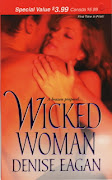
The other book I’ve read this year I feel a bit guilty about. I didn’t have time to read, you see, and I meant just to take a quick peek at the first page. But Denise Eagan hooked me immediately and never let me go. What a fantastic story, and funny and action-packed to boot. While it kept me up all night, the lack of sleep was well worth it. With apologies to my critique partners for my tardiness.
So, IN SUNSHINE AND IN SHADOW and WICKED WOMAN will go on my keeper shelf, right beside THE MOST UNSUITABLE HUSBAND by Caroline Clemmons. What a talented bunch I blog with!
I won Cynthia Owens’ Christmas contest, and in addition to a beautiful book bag, candles, bath salt and other great stuff, I finally got my hands on her book.
Sure, and she can write a fine tale that has one seeing the green, smelling the peat fires and hearing the pipes and fiddles of Ireland. As someone said to me recently, it is the emotions that are key in romance writing, and this book has it in spades! The characters feelings were just dripping off the pages in the last three or four chapters--no, those were the constant tears pouring from my eyes. Made it hard to read, but such a satisfying finish.
The other book I’ve read this year I feel a bit guilty about. I didn’t have time to read, you see, and I meant just to take a quick peek at the first page. But Denise Eagan hooked me immediately and never let me go. What a fantastic story, and funny and action-packed to boot. While it kept me up all night, the lack of sleep was well worth it. With apologies to my critique partners for my tardiness.
So, IN SUNSHINE AND IN SHADOW and WICKED WOMAN will go on my keeper shelf, right beside THE MOST UNSUITABLE HUSBAND by Caroline Clemmons. What a talented bunch I blog with!
Friday, January 25, 2008
Alternate Histories
One of the most famous alternate history writers is the Sci Fi guru Harry Turtledove. I'm currently reading (listening to) the first in his series, How Few Remain. In this, a key point during the Civil War changed - Lee's Special Order 191 wasn't lost as happened in the 'real' war, but was found before the Union Army could recover it. As a result, the South won the war and succeeded from the Union creating 2 countries; The Untied States of America and the Confederate States of America.
I think it's fascinating to read these changes, and to hear Mr. Turtledove's take on what could've happened. It has also had the effect of making me question what I know about history, and spend several hours looking up what really happened to key characters in the aftermath of the war, and what was going on 'here' in this timeline.
If you get the chance, give How Few Remain a try, or at least skim through it.
The year is 1881:
- Abraham Lincoln wasn't assassinated and is a for-the-workers speaker with leanings towards Marx and socialism. He's widely reviled by the north for losing the war.
- Stonewall Jackson lived to become the General-in-Chief of the Confederate Army. He's widely hated by the north for being such an excellent general, his reputation well deserved.
- General J.E.B. Stuart is now stationed in El Paso and commands a large garrison to protect the west and newly acquired Mexican territories bought from Emperor Maximilian.
- Colonel George A. Custer, is a cavalryman serving on the Great Plains far from Dakota Territory.
- Theodore Roosevelt is a young, brash Montana Rancher who formed Roosevelt's Unauthorized Regiment in response to a 2nd war between the north and south.
- Fredrick Douglass travels throughout the country witnessing the ongoing plight of the negro in the north and hoping to bring attention to the even worse plight of the slave in the south.
- Colonel Alfred Graf von Schlieffen is the military attache to the German Ambassador to the United States.
- Samuel Clemens is a newspaper editor in San Francisco.
- General Grant is a homeless drunkard who wanders the USA but is friends with Frederick Douglass.
- James G. Blane is now the president of the USA, while James Longstreet is president of the CSA.
- Germany supports the USA, while England and France are allied with the CSA.
Tuesday, January 22, 2008
Tuesday Ten: Heroes and Outlaws of The Old West (Part II.)

Part II: The Bad Boys
Henry McCarty, better known as William Bonney. Even better known as Billy the Kid. Short, ugly and buck-toothed, Billy became a petty thief at a young age. He spent several years working as a cowboy in
Jesse James. Jesse’s father was a Baptist minister. His father died when Jesse and older brother Frank were young, and their mother remarried an abusive man. The Civil War broke out and the James’ sided with the Confederates. Jesse and Frank joined a band of guerilla soldiers and fought for the Confederates. When the
Cherokee Bill. Part Native American, part white, part Mexican and part African-American, Crawford Goldsby was the victim of racism from an early age. It’s widely believed this is what triggered the violence that would eventually consume him. Bill fell in with two brothers named Bill and Jim Cook. He was fiercely loyal to them, considering them the only true friends he’d ever had. One day, a sheriff came to arrest the Cook brothers for stealing some horses. Instead of the Cooks going to jail, Bill shot the lawman. The brothers were grateful and indoctrinated Bill into their gang, giving him the name Cherokee Bill. He joined them in numerous robberies and gunfights. The same year he joined the Cook gang, Bill learned his sister had been beaten by her husband. Bill hunted down, then shot and killed his brother-in-law. Several months later, Bill was arrested and sentenced to death for killing a train conductor. He was rescued by the Cook gang. A year later he was in trouble for killing again, and Judge Isaac Parker, a.k.a. “the hanging judge” sentenced him to death. That night, Bill killed one of the prison guards. Furious, Judge Parker had Cherokee Bill hanged the very next day.
Doc Holliday. Born into a wealthy Southern household, John Henry Holliday was another one who saw his family’s wealth lost—and his family destroyed—by the Civil War. Despite claims that John attended Baltimore College of Dentistry, there are no records to prove he ever did. More than likely, Holliday learned dentistry as an apprentice. Around 1870, John left
Black Bart. In 1875 a man wearing a flour sack over his head held up a Wells Fargo Stagecoach in
Tuesday Ten: Heroes and Outlaws of The Old West (Part I.)

Before you can create your own Wild West characters, it helps if you know a little bit about the larger than life legends--good and bad--who populated the era and gave it its wild reputation. (Since this blog ended up being a bit long, I’ll post it in two parts.)
First up: The Good Guys.
Wyatt Earp. May as well start with the largest legend of them all. In 1875, tired of his career as a stagecoach driver twenty-seven year old Wyatt Earp moved to
Pat Garrett. Pat was raised the privileged son of a
Wild Bill Hickock. Perhaps one of the more colorful legends of the Old West, James Butler Hickock was born the son of a presbyterian deacon. After his father’s death fifteen-year-old, James got into a gunfight. He ran away to evade the law, ending up in
Tom Smith. Perhaps one of the lesser-known heroes, little is known about Smith’s early life. Born in
Bat Masterson. William Barclay Masterson was born on a farm in
I’ll be back a little bit later to post the second half of our Tuesday Ten—The Bad Guys.
Subscribe to:
Posts (Atom)