It’s amazing that what we take for granted now was new and fascinating slightly more than 100 years ago. I admit, some might be a stretch, but you can see the connections! The very first link at the bottom is a short blurb about Christmas in Victorian times, and highlights a lot of new inventions we take for granted today.
CD – yeah, you thought it was invented in the 1980s, didn't you. Technically, yes, but the phonograph was invented in 1877, and the gramophone record in the 1887. It took nearly 100 years for the jump, but jump it did.
Tires – yeah, the ones we still use on our own cars. Charles Goodyear (recognize the name?) announced vulcanization in 1844; rubber ones were invented by Robert Thomson in 1845; in 1888 John Boyd Dunlop patented the pneumonic tire (the kind we use today).
Which brings us to Cars…they were invented in 1885 – technically. But in 1850 gasoline was developed, there were already those rubber tires, in 1859 oil was discovered in the US, and in 1892 Rudolph Diesel discovered, well, diesel.
Cell phones – now follow me here. We all know about phones; they were invented in 1876, then came the wireless radio in 1895. Sure, I could’ve just put phones, but this was much more interesting!
Still, since you insist on connecting it all to a computer, what about Charles Babbage’s Calculating Machine? Sure, he didn’t invent the first computer, but he tried hard enough to do so. And sure, his Difference Engine really only made sense to about 5 people in the world, but it is the foundation of our modern day computer.
Christmas Cards - designed by John Calcott Horsely in 1843.
Vacuum Cleaner – 1901 by Hubert Booth who began the British Vacuum Company.
Escalators – yup, those very same moving stairs we take to the upper level of the department store or the 2nd floor of the airport. Jesse Renno and Charles Seeberger made it all possible in 1899.
Paper Clip – so small, so innocuous, so hard to find one when you need one! Samuel B. Fey made them in 1867; however advertising didn’t really begin until 1899.
Machine gun – Contrary to Hollywood culture, it didn’t suddenly pop up in the 1920s on a gangster’s arm. There was the Gatling Gun in 1861, a popular weapon of the American Civil War, and Hiram Maxim made the Maxim Machine Gun in 1885.
http://www.aboutbritain.com/articles/victorian-inventions.asp
http://www.45-rpm.org.uk/history.html
http://en.wikipedia.org/wiki/Tire
http://www.innovationslearning.co.uk/subjects/history/information/victorians/inventions/inventions_home.htm
http://cbg.e2bn.net/e2bn/leas/c99/schools/cbg/victorians/inventions/home/
http://www.officemuseum.com/paper_clips.htm
http://inventors.about.com/od/militaryhistoryinventions/a/firearms.htm
Tuesday, October 16, 2007
Wednesday, October 10, 2007
Is It a Boy Or a Girl?
It's a common question asked at a birth, but when studying pbotos from the nineteenth century, it's often hard to tell whether a young child is a boy or girl.
In that time period, despite their sex, infants and toddlers all wore dresses.
The reason was simple. Until a child was potty trained, a dress or gown made diapering easier. Infants were dressed in long gowns and wore knit or crocheted pants called "Soakers" over their diapers. http://www.shasta.com/suesgoodco/newcivilian/kids/infants.htm
Toddlers of both sexes wore short dresses which enabled them to crawl and walk.
http://members.tripod.com/~CWCiv/children/
So, how to tell the difference in period photos? One clue is the trim. Although dressed alike, boys' fashions during the Victorian era had less frilly trim. Another difference is the hairstyle. Both boys and girls could wear their hair short or long, but boys always had their hair either parted on the side or wore bangs, while girls always had their hair, short or long, parted in the center. http://members.tripod.com/~histclo/dress.html
Of course, 21st century reenactor fathers have a hard time dealing with their young sons wearing dresses, even though it's historically accurate. But to 19th century fathers, this was a practical clothing style.
In that time period, despite their sex, infants and toddlers all wore dresses.
The reason was simple. Until a child was potty trained, a dress or gown made diapering easier. Infants were dressed in long gowns and wore knit or crocheted pants called "Soakers" over their diapers. http://www.shasta.com/suesgoodco/newcivilian/kids/infants.htm
Toddlers of both sexes wore short dresses which enabled them to crawl and walk.
http://members.tripod.com/~CWCiv/children/
So, how to tell the difference in period photos? One clue is the trim. Although dressed alike, boys' fashions during the Victorian era had less frilly trim. Another difference is the hairstyle. Both boys and girls could wear their hair short or long, but boys always had their hair either parted on the side or wore bangs, while girls always had their hair, short or long, parted in the center. http://members.tripod.com/~histclo/dress.html
Of course, 21st century reenactor fathers have a hard time dealing with their young sons wearing dresses, even though it's historically accurate. But to 19th century fathers, this was a practical clothing style.
Tuesday, October 09, 2007
Tuesday Ten: The Cowboy Code

The American cowboy’s code of ethics was pretty straightforward—but each “rule” was backed up by plain ol’ common sense. Here, for our Tuesday Ten, are ten “laws of the plains” that the cowboy strictly adhered to.
1. It is bad manners to ask a man his name. He may have a reason why he can’t afford to share his name or bring attention to himself.
2. Stealing a man’s horse is a crime punishable by death. To leave a man stranded on the plains, miles from food, water or shelter is as good as killing him.
3. Cheating at cards is an unpardonable offense. The victim or one of his friends is entitled to retaliate with a six-shooter.
4. Drawing on an unarmed man is strictly prohibited. Offenders may be gunned down on the spot by the victim, if he’s able, or his kin or friends.
5. Encountering a stranger on the trail, a man must approach him and speak a few words before moving off in another direction. Greeting him establishes good intentions.
6. When two men meet, speak, and pass on, neither must look back over his shoulder. To do so is an indication of distrust, implying that the man looking behind him expects a shot in the back.
7. When a stranger dismounts to cool his horse it is not polite to remain in the saddle while carrying on a conversation with him. The proper thing to do is dismount and speak to him face to face, so he can see what you’re up to.
8. To ride another man’s horse without asking permission is a grave insult. A horse is private property and borrowing one without permission is equivalent to a slap in the face.
9. Only in a dire emergency is it permissible to borrow a horse. Every man has his own style of riding and a horse can easily be spoiled by the wrong rider.
10. A smart rider always puts his horse’s comfort before his own. If the horse becomes lame or disabled, the rider may find himself stranded in the middle of the desert.
Courtesy of Cowboys Then & Now museum, Portland, OR.
Saturday, October 06, 2007
Another Scandalous Victorian Interview -- Catching Up with Kristin-Marie

Why do you write historical?
In Kindergarten, I’d gather dozens of students about to tell them scary Victorian ghost stories. I’d learned already to use cliff-hanger endings and so the students would come back time and again to hear the rest of the story.
Nowadays, I love to unearth the past, presenting it in fresh form to readers.
What part of the Victorian era/setting do you write in?
1865 to 1866, and on into the Edwardian Era. Post Civil War era, mostly. Events of that timeframe tug at my heartstrings.
I focus mostly on lesser known royalty and nobility, and try to give the reader a view of the historical happenings through the experiences of the fictionalized historical persons and my fictional main characters who play off of them.
The reason I’m writing inspirational style is because religions and people’s faith were extremely important in their lives. Religious charities began dominating social scenes, for example, with balls and even daily involvements by patrons. History books tend to leave out such facts.
I’ve been most curious about the Mediterranean areas and Middle Europe during the Victorian era. But I research Queen Victoria and her lifestyle quite a bit because her influence was global. France’s Royal Court also influenced very many lives even at a distance as it was a measuring stick in everything from fashion to protocol.
What is it about the era that most intrigues you?
There are several things that stand out.
Lifestyles of the women, particularly of the nobility and aristocracy as I've mentioned. They had great influence behind the scenes. Great heartaches. Great joys.
The ways that society and social mores were changing and evolving. Queen Victoria’s morality changed society whether people wanted to change or not.
Technology was becoming available to Industry and the general public and changing their daily lives. For example, trains were new and being promoted as an elegant choice in travel in many parts. People dressed for the occasion and gourmet meals were served by liveried staff. The trips were short, though. Train barons began moving in and tracks began appearing all over, not necessarily connecting. But people began using trains to speed to destinations. The whole era was like that. Big changes. Then the entrepreneurs and investors would take over, putting things in reach of the populace.
Where do you get your information?
I ask around.
I interview.
I find families with historical documents from their treasured heritage. Often, they’ve preserved stories of those times.
Because I mostly write about nobility and royalty and indigenous tribal leaders, I’m known to interview or ask decedents from those groups for details. In once case, I had to await a congressional style decision before I could use fictionalized items based upon a real prince.
Mainstream sources include Google, bookstores and the library systems.
From there, the rest is imagination.
What are you working on now?
Presently, the bulk of my time is going into articles on historic and modern costuming, which includes, of course, etiquette and lifestyle elements.
That’ll change as I complete my research for the new inspirational novel manuscript. It’s entailed research from sources not available to the public and so has taken a bit of time. But I love the challenge of recreating a past as I understand it with as much authenticity as I dare utilize so it’s worth taking the time.
How many books have you written?
I’ve completed three full novel manuscripts and have about half a dozen other manuscripts in various revisions, from first drafts to fourth drafts.
This Summer, I began peddling the Victorian manuscript, Vistas of Gold as well as a contemporary manuscript. Steeple Hill’s upcoming inspirational historical line has read the full manuscript for my Victorian story by request, already, as they’d graciously asked for a first right to refuse it. We’ll see what the future brings for Vistas of Gold.
Do you write outside of the Victorian era, genre?
Yes. I’m also writing another inspirational historical romance about the little known missionary era in Ancient Ireland during the 1st Century A.D. Too little is published for source material so it is a jigsaw puzzle effort to fit together factual elements from history. The rest is fictionalized to fill in the missing pieces.
I also write and publish poetry – haiku, mostly – and I've worked as a journalist. And a costuming newsletter, column and other articles have been published recently.
What challenges have you faced in your career?
The first major challenge came when I was diagnosed with cancer, and so I quietly took time off of career and life. I decided not to tell everyone I knew right away and instead immersed myself in writing a contemporary manuscript. I took courses on novel writing. By the time I’d completed that first manuscript and Harlequin American Romance had read the full and rejected it, I was in remission and feeling good about learning a new type of writing skill. My early career years entailed advertising and public relations editing and marketing writing, so it was a new writing skill tucked under my belt.
Unexpected challenges also arose shortly afterwards with repeated home burglaries which included theft of my computer and most of my manuscripts. Since then, the Federal Trade Commission had a counselor call me and notify me that surveillance showed identity thieves were flashing my stolen manuscript pages at fine dining restaurants in Mexico. The identity thieves were pretending to be me, although I’m not from Mexico, but that is another story.
What is you writing schedule like?
I’ve just wrapped up a year-long writing sabbatical out of state during which I wrote anytime of day or night. Plus, I did some journalism to supplement the sabbatical, so some days were nonstop writing. I turned into a writing hermit for some months but the block of time facilitated my completing two full manuscript drafts. My goal had been to complete one. I’d recommend writing sabbaticals to other writers, as a result.
As I return to California and get back to a different lifestyle, I’ll schedule in two to four hours a day of research and writing time. I type rather fast, so that will yield a few pages a day. About right to make my scheduled commitments to turn in full manuscripts to editors for reads in the near future.
One thing I've learned in the last year on writing sabbatical is the value of keeping writing commitments, whether to a journalistic employer or to an awaiting editor, and especially to myself.
Check back on the 5th of November for another interview of a scandalous Victorian blogger.
Thursday, October 04, 2007
Another Interview
After doing my very first interview on this blog last month, I was asked to do an interview on Shirley Kiger Connolly's website.
I had fun talking about my book projects and work habits. Here's the link:
http://shirleykoinonia.tripod.com
I had fun talking about my book projects and work habits. Here's the link:
http://shirleykoinonia.tripod.com
Tuesday, October 02, 2007
Tuesday Ten--Slang sources
I bought several slang dictionaries years back to help me get a feel for period dialogue. I often found that the slang references were from books of the period, which lead me to investigate the original sources. Not only did I find more slang in those sources, but often learned general Victorian phrasing as well, which is often markedly different from current speech. Here are 10 sources.
Tom Sawyer—Mark Twain—I’ve used this one for my mid-western farmer-type Victorian characters. It’s very helpful for children as well.
Roughin’ It—Mark Twain—I’ve used this more for the Western characters, cowboys and miners and such. Lots of good slang.
Connecticut Yankee in King Arthur’s Court—Mark Twain—I’ve used this for my Eastern characters, later in the Victorian period. Mark Twain was really good with using regular speech as opposed to the formal speech in many books of this era. That’s why he’s on the list 3 times.
Little Women—Louisa May Alcott—Eastern characters and those of an educated class, mid Victorian period.
The Virginian—Owen Wister—The problem with this book is that it was published late in the period (1902?). I have used some of the slang, and I do use the dialogue to help me out, but I worry that I’m using early 20th century slang instead of that of the mid-19th. I find myself going back to my slang dictionaries to check.
Gettysburg—The movie—Of course this was written in the 20th century, but the dialogue often has a good period feel. I’ll sometimes have this movie on in the background as I revise my books, in hopes that the “feel” will sink in.
Sharpe Series—Bernard Cornwell—all the movies—I love these movies. They’re about the Napoleonic wars, true, but they do still give the general “feel” for the early 19th century. Although written in modern times, I’m comfortable with the authenticity of the dialogue, after looking up some of the phrasing in the slang dictionaries. I find it most useful when I have English characters (phrases like Bugger off) in my Victorian American novels. Besides, Sean Bean is to die for. http://www.compleatseanbean.com/sharpe.html
The Bostonians—Henry James—I’ve read the book but have yet to use it extensively. I expect to be doing so in the near future, when I edit/revise my WIP, since it’s about a Boston born women’s right’s activist.
Edgar Allen Poe—anything—Although he was American, his writing has, to me, a very British feel to it. I don’t know why. I do use him for flavor, but usually for characters who are apt to be more verbose and starchy.
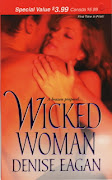
Pride and Prejudice and Sense and Sensibility—Jane Austen—Her books are from the regency era, true. But I had an English Aristocratic heroine in Wicked Woman and I wanted to see if I could find words that would differentiate her from the American characters in the book. I figured the wording in these books were close enough to the time period of Wicked Woman (1811 to 1855—40 years) that I wouldn’t be totally off.
Anyone else have favorite books written in the Victorian period? Especially anything Western. . . .
Tom Sawyer—Mark Twain—I’ve used this one for my mid-western farmer-type Victorian characters. It’s very helpful for children as well.
Roughin’ It—Mark Twain—I’ve used this more for the Western characters, cowboys and miners and such. Lots of good slang.
Connecticut Yankee in King Arthur’s Court—Mark Twain—I’ve used this for my Eastern characters, later in the Victorian period. Mark Twain was really good with using regular speech as opposed to the formal speech in many books of this era. That’s why he’s on the list 3 times.
Little Women—Louisa May Alcott—Eastern characters and those of an educated class, mid Victorian period.
The Virginian—Owen Wister—The problem with this book is that it was published late in the period (1902?). I have used some of the slang, and I do use the dialogue to help me out, but I worry that I’m using early 20th century slang instead of that of the mid-19th. I find myself going back to my slang dictionaries to check.
Gettysburg—The movie—Of course this was written in the 20th century, but the dialogue often has a good period feel. I’ll sometimes have this movie on in the background as I revise my books, in hopes that the “feel” will sink in.
Sharpe Series—Bernard Cornwell—all the movies—I love these movies. They’re about the Napoleonic wars, true, but they do still give the general “feel” for the early 19th century. Although written in modern times, I’m comfortable with the authenticity of the dialogue, after looking up some of the phrasing in the slang dictionaries. I find it most useful when I have English characters (phrases like Bugger off) in my Victorian American novels. Besides, Sean Bean is to die for. http://www.compleatseanbean.com/sharpe.html
The Bostonians—Henry James—I’ve read the book but have yet to use it extensively. I expect to be doing so in the near future, when I edit/revise my WIP, since it’s about a Boston born women’s right’s activist.
Edgar Allen Poe—anything—Although he was American, his writing has, to me, a very British feel to it. I don’t know why. I do use him for flavor, but usually for characters who are apt to be more verbose and starchy.
Pride and Prejudice and Sense and Sensibility—Jane Austen—Her books are from the regency era, true. But I had an English Aristocratic heroine in Wicked Woman and I wanted to see if I could find words that would differentiate her from the American characters in the book. I figured the wording in these books were close enough to the time period of Wicked Woman (1811 to 1855—40 years) that I wouldn’t be totally off.
Anyone else have favorite books written in the Victorian period? Especially anything Western. . . .
Thursday, September 27, 2007
Did you all know this?
I was researching a Chateau, and as often happens, I came across something completely different. Did everyone but me know that Queen Victoria's father lived openly for many years (in Canada and the West Indies) with a Catholic woman? Of course they couldn't marry (although there are some rumours about a morganatic marriage) because he might one day become the head of the Church of England--and his marrying a Catholic was against the Royal Marriage Act of 1688.
He finally went home and married Queen Victoria's mother. The interesting thing would be if there WAS a morganatic marriage, because bigamy rules would apply. That would have made Queen Victoria illegitimate!
The Duke of Kent (Victoria’s father) died in January 1820, when Victoria was eight months old. Her mother raised her in isolation from the Court (perhaps to avoid her hearing the whispers, hmmm?)
And yes, I looked it up. The Catholic mistress died unmarried and childless in Paris on August 8, 1830.
He finally went home and married Queen Victoria's mother. The interesting thing would be if there WAS a morganatic marriage, because bigamy rules would apply. That would have made Queen Victoria illegitimate!
The Duke of Kent (Victoria’s father) died in January 1820, when Victoria was eight months old. Her mother raised her in isolation from the Court (perhaps to avoid her hearing the whispers, hmmm?)
And yes, I looked it up. The Catholic mistress died unmarried and childless in Paris on August 8, 1830.
Tuesday, September 25, 2007
Tuesday 10
We’re starting a new thing here. You might’ve heard of Thirteen Thursday. We’re doing Tuesday Ten (it’s the alliteration). This is a list of 10 interconnected items that may or may not have to do with writing, the Victorian era, or anything except each other. Since this was loosely my idea, I’m going first.
10 historical novels I’ve read this year:
10 historical novels I’ve read this year:
So Worthy My Love by Kathleen Woodiwiss. Arguably my first romantic historical, and my favorite Woodiwiss book – when she died, I had to re-read it.
Dark Angels by Karleen Koen. I’d always wanted to read her Through a Glass Darkly, but never got around to it. When this prequel came out recently, I jumped at the chance. It’s not so much a romance, but the depictions of Charles II’s court are outstanding – intrigue, politics, backstabbing, and more.
In the Shadow of the Wind by Carlos Ruiz Zafon. Set in Barcelona during the immediate aftermath of the Spanish Civil War, this is a mystery, a so-called coming of age, romance, tragedy, and pretty much anything else you can think of. There were some clichés I could have skipped, but overall the descriptions were vivid and the plot compelling.
Lady Chatterley’s Lover by D. H. Lawrence. Not exactly what I thought it’d be, but I enjoyed it nonetheless. The rigid social and moral codes of post World War I are strong and confining here, as are Lady Chatterley’s attempts to circumvent them.
Anna Karenina by Leo Tolstoy. Tragic and moving, it’s the epitome of Russian literature. There are no happy endings in Russian literature, of course.
Wuthering Heights by Emily Bronte. It’s Heathcliff. That’s all I can really say about it. Heathcliff. I was reading Jasper Fforde’s Thursday Next series and had to re-read this one afterwards.
The English Patient by Michael Ondaatje. Granted, I loved the movie more, and the book was really a short story, but it was wonderful. The imagery, the angst, the pain. I loved it all.
A Place Called Freedom by Ken Follet. Rebelling against authority while seeking justice, with a (slightly unbelievable) romance thrown in.
A Dangerous Fortune by Ken Follet. Late Victorian bankers, it’s all trashy and scandalous, how could you not love it?
Pillars of the Earth by Ken Follet. 12-century England and a fictional cathedral, there are ambitions, politics, 40 years of all sorts of upheaval, and that precarious balance that holds everything together. It was great. And I hear there’s a sequel.
What have you read this year?
Monday, September 24, 2007
Savannah
I love Savannah! Love, love, love it. It's my perfect city, and if my life wasn't tied to the Northeast, I'd move there. OK, and I could afford to live in their $1.2 million homes right in the Historical Section.
The history is eccentric (yes, yes, Midnight in the Garden of Good and Evil and all, but better), their people were incredibly nice and knowledgeable, the history was bizarre and captivating, and the entire atmosphere was indescribable. Just go there.
Oh, and yeah. Writing was done. There's so much history there, and so much going on now, how could it not?
The history is eccentric (yes, yes, Midnight in the Garden of Good and Evil and all, but better), their people were incredibly nice and knowledgeable, the history was bizarre and captivating, and the entire atmosphere was indescribable. Just go there.
Oh, and yeah. Writing was done. There's so much history there, and so much going on now, how could it not?
Friday, September 21, 2007
Toilets in the 1800's
The Necessary
Toilets in the 1800’s
Probably everyone is aware that early Romans and Greeks had ingenious indoor plumbing and heating based on water flow. Many of the early sewers built by Romans in England are still utilized. King Minos of Crete had the first flushing water closet recorded. A toilet was discovered in the tomb of a Han Dynasty Chinese king dating to 200 BC. Garderobes in medieval castles were a step down [even though they were upstairs] from the Romans. They emptied into the moat, lake, or stream, which sometimes seeped back into the drinking water’s source and caused cholera and other diseases. The dark ages swept advances in plumbing under the rug, so to speak, along with cleanliness. What about more recent history for writers whose books are set in the Regency and Victorian periods through the early Twentieth Century?
The first sewers in America were built in the early nineteenth century in New York and Boston. These were to rid the streets of refuse. At this time, no one addressed getting fresh water safely to individual homes and apartments or eliminating the smelly outhouse. Chamber pots varied from open buckets to decorative ceramic containers with tight fitting lids. The pots were emptied daily into an outhouse or, heaven forbid, into the street. Offal carts made the rounds of city streets. The drivers used buckets and shovels to empty outhouses and cesspits and sprinkle the recesses liberally with lime. What a horrid job that must have been!
Thomas Crapper [yes, that really was the man’s name] was erroneously credited with inventing the first flushing toilet. However, he was a plumber and holds many patents for plumbing products, and had several plumbing shops. Actually, the earliest known flushing toilet in Western history is credited to Sir John Harington, godson of Queen Elizabeth I. It was crude and the Queen reportedly refused to use it. The earliest patent for a flush toilet was issued to Alexander Cumming in 1775. The problem with early toilets was that people did not understand how germs spread or the need for venting fumes away from the toilet. There was also difficulty perfecting a system would take all of the refuse away when flushed. In addition to smell, germs accumulated and spread disease. People became afraid to install the toilets inside their homes.
Bathing rooms were exactly that—rooms in which people could bathe. Using a cistern or a pump from the kitchen range’s water reservoir, water was piped to the bathtub. It was never more than tepid, and bathing was in only a couple inches of water. The alternative was having servants carry buckets of water to the bathing room. Usually, the tub emptied into a pipe that dumped water into the yard, street or a cesspit.. These tubs were often set into elaborate wooden cabinets that matched the bathing room wainscoating—not at all suitable for long term exposure to bath water.
Although it was not until the 1880’s and 1890’s that American plumbing flourished, early inventors were moderately successful. In 1829, the Tremont Hotel of Boston became the first hotel to have indoor plumbing and featured eight water closets. Until 1840, indoor plumbing could be found only in the homes of the rich and in better hotels. In 1852, J. G. Jennings invented an improved flushing system, and popularized public lavatories by installing them in the Crystal Palace for the Great Exhibition of 1851. Over 800,000 people paid to use them. In 1910, toilet designs began changing to resemble those of today. However, in rural areas as in the poorer section of cities, the outhouse was used well into the twentieth century. In a recent television interview, actor Michael Caine remarked that—as a child in England—his four-story tenement had only one outhouse for use by all the building’s residents.
Authors of Georgian through modern times may determine how plumbing was utilized in their time period by seeking publications on home restoration. Books on restoring homes of various time periods detail the plumbing plans with useful illustrations. Information on earlier time periods is available on the web and in history books.
Writing on Vacation
Isn't all it's cracked up to be.
I went away on this mini-vacation to Hilton Head to write, and ended up with a horrible migraine the first day. In my world, this isn't unusual. On vacation? This definitely is. I mean it's vacation! I should have no issues, problems, pain, or worries on vacation.
I did manage to sleep way more than I'm used to last night, and this morning plan on getting a big jump on the actual writing part of this vacation. Of course it probably doesn't hurt that it's more than a tad cloudy and I won't be spending my days on the beach or my one of 3 pools. But I have a great view!
This afternoon I'm off to Savannah for some sightseeing.
I went away on this mini-vacation to Hilton Head to write, and ended up with a horrible migraine the first day. In my world, this isn't unusual. On vacation? This definitely is. I mean it's vacation! I should have no issues, problems, pain, or worries on vacation.
I did manage to sleep way more than I'm used to last night, and this morning plan on getting a big jump on the actual writing part of this vacation. Of course it probably doesn't hurt that it's more than a tad cloudy and I won't be spending my days on the beach or my one of 3 pools. But I have a great view!
This afternoon I'm off to Savannah for some sightseeing.
Wednesday, September 19, 2007
Victorian Women In Journalism
In my Civil War time travel romance, Erin's Rebel, my heroine is a modern day journalist who finds herself transported to the time of the Civil War. Although at first, she's forced into the position of a laundress in an army camp, she later obtains a job as a reporter on a small town newpaper.
To learn if a woman in this time period could hold such a position, I researched the role American women played in journalism in the years leading up to the Civil War. What I found was that American women worked in publishing as early as the colonial era where they held positions as printers and publishers. Over time, they moved into newsrooms as reporters.
But unlike today, women reporters "were often relegated to covering the women's perspective, or writing 'sob stories', so called because their sentimental style was designed to get readers crying." http://www.iwmf.org/features/7578
For years, women journalists wrote exclusively for 'women's pages' and none covered hard news.
A few of the American women journalists who wrote during the Victorian era were Margaret Fuller, Rebecca Ann Latimer Felton and Sarah Josepha Hale.
Margaret Fuller was "the first femal foreign correspondent." http://www.distinguisedwomen.com/biographies/fuller-m.html She also was a book review editor and edited a quarterly literary publication, 'The Dial', from 1840 to 1842. In 1846 she became a foreign correspondent for the 'Tribune'.
Rebecca Ann Latimer Felton wrote speeches and press releases for her husband who served in the U.S. Congress. She was also editor of the newspaper they owned.
http://www.distinguishedwomen.com/biographies/felton.html
Sarah Josepha Hale wrote a novel, Northwood, that was successful. As a result she was recruited as editor "of a new magazine devoted to women." http://www.uvm.edu/~hag/godey/hale.html In 1836, she was approached by Godey to edit his 'Lady's Book', but she at first declined to stay with her own magazine. Later, he bought her magazine and combined both publications into one, keeping Sarah as editor.
Although Victorian women were shut out from covering all but stories of interest to other women, they were a force in the journalistic world of the times.
To learn if a woman in this time period could hold such a position, I researched the role American women played in journalism in the years leading up to the Civil War. What I found was that American women worked in publishing as early as the colonial era where they held positions as printers and publishers. Over time, they moved into newsrooms as reporters.
But unlike today, women reporters "were often relegated to covering the women's perspective, or writing 'sob stories', so called because their sentimental style was designed to get readers crying." http://www.iwmf.org/features/7578
For years, women journalists wrote exclusively for 'women's pages' and none covered hard news.
A few of the American women journalists who wrote during the Victorian era were Margaret Fuller, Rebecca Ann Latimer Felton and Sarah Josepha Hale.
Margaret Fuller was "the first femal foreign correspondent." http://www.distinguisedwomen.com/biographies/fuller-m.html She also was a book review editor and edited a quarterly literary publication, 'The Dial', from 1840 to 1842. In 1846 she became a foreign correspondent for the 'Tribune'.
Rebecca Ann Latimer Felton wrote speeches and press releases for her husband who served in the U.S. Congress. She was also editor of the newspaper they owned.
http://www.distinguishedwomen.com/biographies/felton.html
Sarah Josepha Hale wrote a novel, Northwood, that was successful. As a result she was recruited as editor "of a new magazine devoted to women." http://www.uvm.edu/~hag/godey/hale.html In 1836, she was approached by Godey to edit his 'Lady's Book', but she at first declined to stay with her own magazine. Later, he bought her magazine and combined both publications into one, keeping Sarah as editor.
Although Victorian women were shut out from covering all but stories of interest to other women, they were a force in the journalistic world of the times.
Friday, September 07, 2007
Interview with Jennifer Ross
Here's the next part of our monthly interviews with our authors. This month we're talking to Jennifer Ross, whose short story appears in No Law Against Love, Highland Press.
Why do you write historical?
I think it’s important to understand how we came to be where we are. I also think it’s fascinating! Even little things like expressions we still use today take on a whole new quality when we discover WHY we say them.
Take the way women were viewed, for example. The slow incremental steps that had us going from a piece of property indistinguishable from, say, a chair, to the really-close-to-complete-parity we have today. Every single one of those steps required a fight by the women of the time. I hate to think we take their sacrifices for granted.
What part of the Victorian era/setting do you write in?
At the moment, I’m in the very beginning of Victoria’s reign (and I say I’m in it because I spend so much of my time there it’s sometimes hard to return to the present).
What is it about the era that most intrigues you?
I didn’t pick the era, it just happens to be when the historical facts I’m writing about took place. But now that I’m here, I’m most intrigued by how quickly things are changing. Much like the 1990s and this decade (do you say the 2000s?) they were having an explosion of new technologies. Combine that with a new Sovereign, new countries, new morality, new wealth--it seems quite dizzying.
I also find it intriguing that the head of state of an ‘Empire where the sun never sets’ is one of those, you know, chair-like beings, and NOBODY seems to find that at all odd.
Where do you get your information?
Anywhere I can. I’ve read textbooks and diaries, visited archives and museums, and spend an incredible amount of time surfing the internet. I’ve joined Ancestry.ca and used to belong to the Canadian Institute for Historical Microreproductions until they changed their policy to make individual memberships prohibitively expensive. I really miss access to the full collection a lot.
What are you working on now?
I’m finishing the edits on A Test of Loyalty, and just beginning to do research for the next story in the series.
How many books have you written?
I have published a short story with Highland Press and have a few other short stories drafted, but A Test of Loyalty will be my first full-length novel.
Do you write outside of the Victorian era, genre?
My published short story, A Frightful Misconception (in the No Law Against Love anthology) was contemporary. I’m also thinking about a third story in the Test series that will take place in the early 1900s.
What challenges have you faced in your career?
Name every challenge for an aspiring writer. My biggest challenge, I guess, is the terror I have at public speaking. I’ve done a few readings and things that resulted in disaster. They certainly did nothing to improve my confidence! Maybe that’s not fair. The last thing I did--a romance author panel at my library--went very well.
What is you writing schedule like?
Schedule? We’re supposed to have schedules? I work on some form of my story every day, but that doesn’t mean writing, necessarily. It might be as little as thinking through a plot point, or reading a census entry or website. Often it means critiquing others’ work so they’ll return the favour. The editing process is a lot different than the writing process, but I don’t think I’m any more organized with it. I have tried to ‘write every day’ as so many established authors suggest, but that only erodes what confidence I have in what I’m doing and results in more writer’s block, several pages of absolute garbage, and depression. I finally decided to do it the way that comes naturally to me, and I do think I’ve been more productive. Happier, anyway.
Why do you write historical?
I think it’s important to understand how we came to be where we are. I also think it’s fascinating! Even little things like expressions we still use today take on a whole new quality when we discover WHY we say them.
Take the way women were viewed, for example. The slow incremental steps that had us going from a piece of property indistinguishable from, say, a chair, to the really-close-to-complete-parity we have today. Every single one of those steps required a fight by the women of the time. I hate to think we take their sacrifices for granted.
What part of the Victorian era/setting do you write in?
At the moment, I’m in the very beginning of Victoria’s reign (and I say I’m in it because I spend so much of my time there it’s sometimes hard to return to the present).
What is it about the era that most intrigues you?
I didn’t pick the era, it just happens to be when the historical facts I’m writing about took place. But now that I’m here, I’m most intrigued by how quickly things are changing. Much like the 1990s and this decade (do you say the 2000s?) they were having an explosion of new technologies. Combine that with a new Sovereign, new countries, new morality, new wealth--it seems quite dizzying.
I also find it intriguing that the head of state of an ‘Empire where the sun never sets’ is one of those, you know, chair-like beings, and NOBODY seems to find that at all odd.
Where do you get your information?
Anywhere I can. I’ve read textbooks and diaries, visited archives and museums, and spend an incredible amount of time surfing the internet. I’ve joined Ancestry.ca and used to belong to the Canadian Institute for Historical Microreproductions until they changed their policy to make individual memberships prohibitively expensive. I really miss access to the full collection a lot.
What are you working on now?
I’m finishing the edits on A Test of Loyalty, and just beginning to do research for the next story in the series.
How many books have you written?
I have published a short story with Highland Press and have a few other short stories drafted, but A Test of Loyalty will be my first full-length novel.
Do you write outside of the Victorian era, genre?
My published short story, A Frightful Misconception (in the No Law Against Love anthology) was contemporary. I’m also thinking about a third story in the Test series that will take place in the early 1900s.
What challenges have you faced in your career?
Name every challenge for an aspiring writer. My biggest challenge, I guess, is the terror I have at public speaking. I’ve done a few readings and things that resulted in disaster. They certainly did nothing to improve my confidence! Maybe that’s not fair. The last thing I did--a romance author panel at my library--went very well.
What is you writing schedule like?
Schedule? We’re supposed to have schedules? I work on some form of my story every day, but that doesn’t mean writing, necessarily. It might be as little as thinking through a plot point, or reading a census entry or website. Often it means critiquing others’ work so they’ll return the favour. The editing process is a lot different than the writing process, but I don’t think I’m any more organized with it. I have tried to ‘write every day’ as so many established authors suggest, but that only erodes what confidence I have in what I’m doing and results in more writer’s block, several pages of absolute garbage, and depression. I finally decided to do it the way that comes naturally to me, and I do think I’ve been more productive. Happier, anyway.
Saturday, September 01, 2007
Goals - redux
It's September (do I hear a big wail?) So as summer theoretically wanes, I thought I'd revisit my 2007 goals. Not that I really remember what they were, but here goes.
I finished 2 stories this year, have revamped, revised, and rethought 2 more. I've blogged at least every week here and at Unusual Historicals, though not my personal blog. For the rest of the year, I plan on finishing at least another book and submitting, submitting, submitting.
And taking 2 more 'writing' vacations. Honest, writing is being done!
I finished 2 stories this year, have revamped, revised, and rethought 2 more. I've blogged at least every week here and at Unusual Historicals, though not my personal blog. For the rest of the year, I plan on finishing at least another book and submitting, submitting, submitting.
And taking 2 more 'writing' vacations. Honest, writing is being done!
Wednesday, August 29, 2007
Victorian Music & Modern times
I love music, and wonder why it's taken me so long to do a post (or whatever) on it. I was watching Disney's Mickey and the Beanstalk a couple days ago, and in it Donald and Goofy are singing about how they're going to eat and eat until they die (they're starving peasants). Disney was a good one for this, using classical music set to their own words, but Warner Brothers did it, too, both with great success.
In this particular one, it's Funiculì, Funiculà, written by Peppino Turco with set to music by Luigi Denza in 1880. I know the tune (to the wrong words) , but the 'real' words make a lot more sense. I hope they'll get the sound of Goofy singing out of my head.
Though I still don't know what funiculi', funicula' means.
http://www.songsforteaching.com/folk/funiculifunicula.htm
http://kids.niehs.nih.gov/lyrics/funiculi.htm
In this particular one, it's Funiculì, Funiculà, written by Peppino Turco with set to music by Luigi Denza in 1880. I know the tune (to the wrong words) , but the 'real' words make a lot more sense. I hope they'll get the sound of Goofy singing out of my head.
Though I still don't know what funiculi', funicula' means.
http://www.songsforteaching.com/folk/funiculifunicula.htm
http://kids.niehs.nih.gov/lyrics/funiculi.htm
Monday, August 27, 2007
Women & Music
Thought I'd continue with my theme on music. It's an important part of daily life, then and now. How often do you turn on the radio, pop in a CD, or hum your favorite theme song? OK, maybe not that last, but sometimes those things get trapped in your head and then you're stuck for the day.
In Women Musicians in Victorian Fiction, 1860-1900 by Phyllis Weliver (ISBN: 0754601269), she begins with For nineteenth-century society, music was a means by which women could display their gentility, education, their physical grace and express their 'selves'. Novelists were quick to employ this recognized way for women to project their personalities, and fictional scenes featuring women musicians served to reinforce or explore and challenge traditional views of the place of both women and music in society.
This was very true. Many women took piano lessons for years, and were the 'entertainment' so to speak at social gatherings. They played all the latest music, from Gilbert and Sullivan to pop-culture songs, to Beethoven and Mozart.
And they sang. Whether in dance halls or their own conservatory, many trained their voices. Mostly. I'm sure there will always be those "American Idol" wannabes who think they can sing but really can't.
Still, no matter how I search the internet, it's incredibly hard to find books, sites, or lists of music from this era. There are operas and plays listed, but not much on the every day level. Typing in a general time, I got something from Wikipedia, but as always with that site, take its info with a grain of salt.
http://en.wikipedia.org/wiki/1882_in_music
Anyone else have site or books on this topic?
In Women Musicians in Victorian Fiction, 1860-1900 by Phyllis Weliver (ISBN: 0754601269), she begins with For nineteenth-century society, music was a means by which women could display their gentility, education, their physical grace and express their 'selves'. Novelists were quick to employ this recognized way for women to project their personalities, and fictional scenes featuring women musicians served to reinforce or explore and challenge traditional views of the place of both women and music in society.
This was very true. Many women took piano lessons for years, and were the 'entertainment' so to speak at social gatherings. They played all the latest music, from Gilbert and Sullivan to pop-culture songs, to Beethoven and Mozart.
And they sang. Whether in dance halls or their own conservatory, many trained their voices. Mostly. I'm sure there will always be those "American Idol" wannabes who think they can sing but really can't.
Still, no matter how I search the internet, it's incredibly hard to find books, sites, or lists of music from this era. There are operas and plays listed, but not much on the every day level. Typing in a general time, I got something from Wikipedia, but as always with that site, take its info with a grain of salt.
http://en.wikipedia.org/wiki/1882_in_music
Anyone else have site or books on this topic?
Tuesday, August 21, 2007
Music
The 'Victorian Era' is so long and encompasses so much, that it's nearly impossible to pick a trend or place or tune or much of anything. So I found a few sites on it, one really great one from the British Library. Or this one. This one is great (you need ActiveX to listen) Victorian Station.
Here are some children's songs, Nursery-songs.com. Again you can't listen to them only read the lyrics and see the illustrations. Worth it, but I'm not tune-ality inclined.
The Victorian Music Library allows you to borrow sheet music (at a cost). Here's their catalogue.
It was during this era that the gramophone came into use. Emile Berliner patented it, and records, in 1887. He was the first to use flat discs instead of cylinders. And was also the first to be able to mass produce them, making them cost effective and widely available. The first ones were made of glass, then zinc, and eventually plastic. [http://inventors.about.com/od/gstartinventions/a/gramophone.htm]
There are a lot of other musical inventions and I'm sure a lot of other websites out there with songs and recordings you can listen to. Anyone have a favorite?
Here are some children's songs, Nursery-songs.com. Again you can't listen to them only read the lyrics and see the illustrations. Worth it, but I'm not tune-ality inclined.
The Victorian Music Library allows you to borrow sheet music (at a cost). Here's their catalogue.
It was during this era that the gramophone came into use. Emile Berliner patented it, and records, in 1887. He was the first to use flat discs instead of cylinders. And was also the first to be able to mass produce them, making them cost effective and widely available. The first ones were made of glass, then zinc, and eventually plastic. [http://inventors.about.com/od/gstartinventions/a/gramophone.htm]
There are a lot of other musical inventions and I'm sure a lot of other websites out there with songs and recordings you can listen to. Anyone have a favorite?
Tuesday, August 14, 2007
BELLEVUE HOUSE
Periodically, we scandalous Victorians discuss architecture. Here is a link to an excellent website that covers the subject (complete with pictures!)
On a recent trip to Kingston, Ontario, I visited Bellevue House. This home was built in 1841 by a leading merchant in the area. Fortunately for us, the home was rented in 1848 by the man who would become our first Prime Minister, Sir John A. Macdonald. This happy fact meant that the house was preserved to that time and is now a National Historic Site--open to the public.

On a recent trip to Kingston, Ontario, I visited Bellevue House. This home was built in 1841 by a leading merchant in the area. Fortunately for us, the home was rented in 1848 by the man who would become our first Prime Minister, Sir John A. Macdonald. This happy fact meant that the house was preserved to that time and is now a National Historic Site--open to the public.
Bellevue House is an early version of the Italianate style of architecture, and I was surprised to discover that then, as now, these new forms of home design were met with ridicule and derision. This beautiful new home was known to its neighbours as the “Tea Caddy Castle,” “Molasses Hall,” or “Pekoe Pagoda.” Can you tell the merchant was a grocer? Sir John A., on the other hand, thought it a wonderful house, and called it “the most fantastic concern imaginable.” Of course, Macdonald was a visionary--he is the father of our country, after all.
http://www.pc.gc.ca/lhn-nhs/on/bellevue/natcul/index_E.asp
http://en.wikipedia.org/wiki/Bellevue_House
I made reservations for myself for the “tea and theatre” on Friday afternoon. Oh yes, I could get used to afternoon tea very happily, thank you. I even got to experience scones and clotted cream!
Jenn
Friday, August 03, 2007
author interview

Since we've been at this a while now--a year and a half give or take a few months--we've decided it's past time to give the Scandalous Victorians proper introductions. For the next 12 months, we'll be posting an interview the first Friday of every month featuring one of us.
The first to be drafted is one of our most prolific bloggers, Susan Macatee:
Why do you write historical?
That's easy. I love history, although back in high school, history was my least liked subject. I think my love of history started with reading historical fiction, then grew when I started to visit historic sites with my husband and three sons. I think my boys spent more time traipsing through museums and battlefields than at the beach or amusement parks. I love the atmosphere when visiting an actual site and imagining what happened there so long ago.
Next, my husband got into Civil War reenacting and pulled me right in. There's no better way to experience history than to live it, if only vicariously. But reenactors have to know so much more about the period they're representing and how people actually lived--how they dressed, what they ate, what they did for fun. That's what I'm most interested in. And it makes it much easier to write about a fictional character's life in the past.
What part of the Victorian era/setting do you write in?
So far, I've stuck to Civil War, because I know so much about it. It cuts down immensely on research. But some day I may venture into another historical period.
What is it about the era that most intrigues you?
The conflict. Brother against brother. A nation torn apart and all that. I always have my hero and heroine on opposing sides, so I have instant conflict. It's built in.
I also think the period was so romantic. The men in uniform marching off to battle. The love letters sent back and forth between soldiers and their women at home. Some of the preserved love letters were so beautiful.
Where do you get your information?
Books are my main source. I love reading first hand accounts of people who lived in the period. I also have books on clothing, and other necessary things, like the etiquette of the period. I even have a Civil War cookbook that my sister-in-law bought for me.
I also subscribe to a magazine for Civil War civilian reenactors, 'The Citizen's Companion', that supplies me with all sorts of interesting period information.
I use the Internet to research little things that I don't know or don't feel like pouring through all my history books to find, like the exact date of a particular battle. What regiments fought at which battle. For my fictional characters, I use fictional regiments. I look up the actual regiments and make up one that never existed. That way no one can point out that, for instance, the 2nd Virginia wasn't at the battle of Gettysburg.
What are you working on presently?
I'm writing a romance novel set during the Civil War that I've titled Katie Rose. The heroine's an Irish immigrant, who's disguised herself as a man and enlisted in the Confederate Army, originally to fight beside her husband after Yankees invaded his family's small Virginia farm and killed his father. When the story opens, Katie is a widow after her husband was killed six months before at the battle at Antietam. She remains in the army and is making the rounds on horseback as a mail carrier.
The hero is a Virginia gentleman who's had a falling out with his father, a wealthy plantation owner. He'd been studying at a northern university before the war began and refused to join the Confederate army. After his father disowns him and his fiancee jilts him, he goes back to Pennsylvania and joins the Union Army. Because of his Southern background, he's recruited as a spy. He's on a scouting mission in civilian dress, when he comes across Katie on one of her mail runs.
How many books have you written?
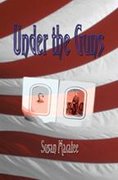
I have one published young adult book, Under the Guns, also set during the Civil War. Before that book, I wrote a middle-grade ghost story that was never published. My first adult romance, Erin's Rebel, is a Civil War time travel. It's presently under consideration at Medallion Press.
Do you write outside of the Victorian era, genre?
I'm a big science fiction fan and am planning a futuristic romance trilogy set hundreds of years in the future on a faraway planet. The first book is still in the outline stage.
What challenges have you faced in your career?
The biggest is finding the time to do everything I want. When you work from home, everyone seems to think you're always available. It's forced me to adopt a strict schedule, otherwise I'd never get any writing done. But I also want to keep myself flexible enough to be able to switch gears among projects if I have to or to take time off for important family things.
What is your writing schedule like?
I try to keep weekday afternoons for writing. Since Katie Rose is currently my major project, I try to work on that first. I try to write at least three new pages on that book each day. So, my goal is at least 15 new pages per week. I'm also sending earlier chapters of that book to my critique group, so if a chapter is due, I have to go over it and revise it for critiquing. I also always have revising to be done after a chapter's been critiqued. If there's any time left, I might switch to another project. Moving between projects keeps me fresh. I very rarely get stuck. Right now, I'm revising a short story that I wrote about four years ago and had stuck in a drawer. It's about a vampire in a Civil War camp. I work until it's time to start dinner. The time after dinner I reserve for any critiquing I have to do.
Thursday, August 02, 2007
It was a what...?
I've been trying to think of a new blog topic, but couldn't think of anything fun. That's actually a problem this week, thinking, but I've a week before my vacation and tons to do, a new story that need attention right now, and that ever-present work.
But then I thought of one. Trivia. It's fun, interactive, and you find the best tidbits out. I'll start, see if you can one-up me with the craziest, wackiest, most obscure piece of information you can find. The dates are 1837-1901, the first place is England, in honor of the woman who gave her name to the age.
One of London's most famous "male" doctors, Dr. James Barry, was discovered to be a woman upon her death in 1865.
http://www.lothene.demon.co.uk/others/barry.html
But then I thought of one. Trivia. It's fun, interactive, and you find the best tidbits out. I'll start, see if you can one-up me with the craziest, wackiest, most obscure piece of information you can find. The dates are 1837-1901, the first place is England, in honor of the woman who gave her name to the age.
One of London's most famous "male" doctors, Dr. James Barry, was discovered to be a woman upon her death in 1865.
http://www.lothene.demon.co.uk/others/barry.html
Subscribe to:
Posts (Atom)