I love music, and wonder why it's taken me so long to do a post (or whatever) on it. I was watching Disney's Mickey and the Beanstalk a couple days ago, and in it Donald and Goofy are singing about how they're going to eat and eat until they die (they're starving peasants). Disney was a good one for this, using classical music set to their own words, but Warner Brothers did it, too, both with great success.
In this particular one, it's Funiculì, Funiculà, written by Peppino Turco with set to music by Luigi Denza in 1880. I know the tune (to the wrong words) , but the 'real' words make a lot more sense. I hope they'll get the sound of Goofy singing out of my head.
Though I still don't know what funiculi', funicula' means.
http://www.songsforteaching.com/folk/funiculifunicula.htm
http://kids.niehs.nih.gov/lyrics/funiculi.htm
Wednesday, August 29, 2007
Monday, August 27, 2007
Women & Music
Thought I'd continue with my theme on music. It's an important part of daily life, then and now. How often do you turn on the radio, pop in a CD, or hum your favorite theme song? OK, maybe not that last, but sometimes those things get trapped in your head and then you're stuck for the day.
In Women Musicians in Victorian Fiction, 1860-1900 by Phyllis Weliver (ISBN: 0754601269), she begins with For nineteenth-century society, music was a means by which women could display their gentility, education, their physical grace and express their 'selves'. Novelists were quick to employ this recognized way for women to project their personalities, and fictional scenes featuring women musicians served to reinforce or explore and challenge traditional views of the place of both women and music in society.
This was very true. Many women took piano lessons for years, and were the 'entertainment' so to speak at social gatherings. They played all the latest music, from Gilbert and Sullivan to pop-culture songs, to Beethoven and Mozart.
And they sang. Whether in dance halls or their own conservatory, many trained their voices. Mostly. I'm sure there will always be those "American Idol" wannabes who think they can sing but really can't.
Still, no matter how I search the internet, it's incredibly hard to find books, sites, or lists of music from this era. There are operas and plays listed, but not much on the every day level. Typing in a general time, I got something from Wikipedia, but as always with that site, take its info with a grain of salt.
http://en.wikipedia.org/wiki/1882_in_music
Anyone else have site or books on this topic?
In Women Musicians in Victorian Fiction, 1860-1900 by Phyllis Weliver (ISBN: 0754601269), she begins with For nineteenth-century society, music was a means by which women could display their gentility, education, their physical grace and express their 'selves'. Novelists were quick to employ this recognized way for women to project their personalities, and fictional scenes featuring women musicians served to reinforce or explore and challenge traditional views of the place of both women and music in society.
This was very true. Many women took piano lessons for years, and were the 'entertainment' so to speak at social gatherings. They played all the latest music, from Gilbert and Sullivan to pop-culture songs, to Beethoven and Mozart.
And they sang. Whether in dance halls or their own conservatory, many trained their voices. Mostly. I'm sure there will always be those "American Idol" wannabes who think they can sing but really can't.
Still, no matter how I search the internet, it's incredibly hard to find books, sites, or lists of music from this era. There are operas and plays listed, but not much on the every day level. Typing in a general time, I got something from Wikipedia, but as always with that site, take its info with a grain of salt.
http://en.wikipedia.org/wiki/1882_in_music
Anyone else have site or books on this topic?
Tuesday, August 21, 2007
Music
The 'Victorian Era' is so long and encompasses so much, that it's nearly impossible to pick a trend or place or tune or much of anything. So I found a few sites on it, one really great one from the British Library. Or this one. This one is great (you need ActiveX to listen) Victorian Station.
Here are some children's songs, Nursery-songs.com. Again you can't listen to them only read the lyrics and see the illustrations. Worth it, but I'm not tune-ality inclined.
The Victorian Music Library allows you to borrow sheet music (at a cost). Here's their catalogue.
It was during this era that the gramophone came into use. Emile Berliner patented it, and records, in 1887. He was the first to use flat discs instead of cylinders. And was also the first to be able to mass produce them, making them cost effective and widely available. The first ones were made of glass, then zinc, and eventually plastic. [http://inventors.about.com/od/gstartinventions/a/gramophone.htm]
There are a lot of other musical inventions and I'm sure a lot of other websites out there with songs and recordings you can listen to. Anyone have a favorite?
Here are some children's songs, Nursery-songs.com. Again you can't listen to them only read the lyrics and see the illustrations. Worth it, but I'm not tune-ality inclined.
The Victorian Music Library allows you to borrow sheet music (at a cost). Here's their catalogue.
It was during this era that the gramophone came into use. Emile Berliner patented it, and records, in 1887. He was the first to use flat discs instead of cylinders. And was also the first to be able to mass produce them, making them cost effective and widely available. The first ones were made of glass, then zinc, and eventually plastic. [http://inventors.about.com/od/gstartinventions/a/gramophone.htm]
There are a lot of other musical inventions and I'm sure a lot of other websites out there with songs and recordings you can listen to. Anyone have a favorite?
Tuesday, August 14, 2007
BELLEVUE HOUSE
Periodically, we scandalous Victorians discuss architecture. Here is a link to an excellent website that covers the subject (complete with pictures!)
On a recent trip to Kingston, Ontario, I visited Bellevue House. This home was built in 1841 by a leading merchant in the area. Fortunately for us, the home was rented in 1848 by the man who would become our first Prime Minister, Sir John A. Macdonald. This happy fact meant that the house was preserved to that time and is now a National Historic Site--open to the public.

On a recent trip to Kingston, Ontario, I visited Bellevue House. This home was built in 1841 by a leading merchant in the area. Fortunately for us, the home was rented in 1848 by the man who would become our first Prime Minister, Sir John A. Macdonald. This happy fact meant that the house was preserved to that time and is now a National Historic Site--open to the public.
Bellevue House is an early version of the Italianate style of architecture, and I was surprised to discover that then, as now, these new forms of home design were met with ridicule and derision. This beautiful new home was known to its neighbours as the “Tea Caddy Castle,” “Molasses Hall,” or “Pekoe Pagoda.” Can you tell the merchant was a grocer? Sir John A., on the other hand, thought it a wonderful house, and called it “the most fantastic concern imaginable.” Of course, Macdonald was a visionary--he is the father of our country, after all.
http://www.pc.gc.ca/lhn-nhs/on/bellevue/natcul/index_E.asp
http://en.wikipedia.org/wiki/Bellevue_House
I made reservations for myself for the “tea and theatre” on Friday afternoon. Oh yes, I could get used to afternoon tea very happily, thank you. I even got to experience scones and clotted cream!
Jenn
Friday, August 03, 2007
author interview

Since we've been at this a while now--a year and a half give or take a few months--we've decided it's past time to give the Scandalous Victorians proper introductions. For the next 12 months, we'll be posting an interview the first Friday of every month featuring one of us.
The first to be drafted is one of our most prolific bloggers, Susan Macatee:
Why do you write historical?
That's easy. I love history, although back in high school, history was my least liked subject. I think my love of history started with reading historical fiction, then grew when I started to visit historic sites with my husband and three sons. I think my boys spent more time traipsing through museums and battlefields than at the beach or amusement parks. I love the atmosphere when visiting an actual site and imagining what happened there so long ago.
Next, my husband got into Civil War reenacting and pulled me right in. There's no better way to experience history than to live it, if only vicariously. But reenactors have to know so much more about the period they're representing and how people actually lived--how they dressed, what they ate, what they did for fun. That's what I'm most interested in. And it makes it much easier to write about a fictional character's life in the past.
What part of the Victorian era/setting do you write in?
So far, I've stuck to Civil War, because I know so much about it. It cuts down immensely on research. But some day I may venture into another historical period.
What is it about the era that most intrigues you?
The conflict. Brother against brother. A nation torn apart and all that. I always have my hero and heroine on opposing sides, so I have instant conflict. It's built in.
I also think the period was so romantic. The men in uniform marching off to battle. The love letters sent back and forth between soldiers and their women at home. Some of the preserved love letters were so beautiful.
Where do you get your information?
Books are my main source. I love reading first hand accounts of people who lived in the period. I also have books on clothing, and other necessary things, like the etiquette of the period. I even have a Civil War cookbook that my sister-in-law bought for me.
I also subscribe to a magazine for Civil War civilian reenactors, 'The Citizen's Companion', that supplies me with all sorts of interesting period information.
I use the Internet to research little things that I don't know or don't feel like pouring through all my history books to find, like the exact date of a particular battle. What regiments fought at which battle. For my fictional characters, I use fictional regiments. I look up the actual regiments and make up one that never existed. That way no one can point out that, for instance, the 2nd Virginia wasn't at the battle of Gettysburg.
What are you working on presently?
I'm writing a romance novel set during the Civil War that I've titled Katie Rose. The heroine's an Irish immigrant, who's disguised herself as a man and enlisted in the Confederate Army, originally to fight beside her husband after Yankees invaded his family's small Virginia farm and killed his father. When the story opens, Katie is a widow after her husband was killed six months before at the battle at Antietam. She remains in the army and is making the rounds on horseback as a mail carrier.
The hero is a Virginia gentleman who's had a falling out with his father, a wealthy plantation owner. He'd been studying at a northern university before the war began and refused to join the Confederate army. After his father disowns him and his fiancee jilts him, he goes back to Pennsylvania and joins the Union Army. Because of his Southern background, he's recruited as a spy. He's on a scouting mission in civilian dress, when he comes across Katie on one of her mail runs.
How many books have you written?
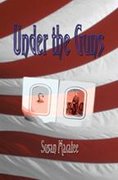
I have one published young adult book, Under the Guns, also set during the Civil War. Before that book, I wrote a middle-grade ghost story that was never published. My first adult romance, Erin's Rebel, is a Civil War time travel. It's presently under consideration at Medallion Press.
Do you write outside of the Victorian era, genre?
I'm a big science fiction fan and am planning a futuristic romance trilogy set hundreds of years in the future on a faraway planet. The first book is still in the outline stage.
What challenges have you faced in your career?
The biggest is finding the time to do everything I want. When you work from home, everyone seems to think you're always available. It's forced me to adopt a strict schedule, otherwise I'd never get any writing done. But I also want to keep myself flexible enough to be able to switch gears among projects if I have to or to take time off for important family things.
What is your writing schedule like?
I try to keep weekday afternoons for writing. Since Katie Rose is currently my major project, I try to work on that first. I try to write at least three new pages on that book each day. So, my goal is at least 15 new pages per week. I'm also sending earlier chapters of that book to my critique group, so if a chapter is due, I have to go over it and revise it for critiquing. I also always have revising to be done after a chapter's been critiqued. If there's any time left, I might switch to another project. Moving between projects keeps me fresh. I very rarely get stuck. Right now, I'm revising a short story that I wrote about four years ago and had stuck in a drawer. It's about a vampire in a Civil War camp. I work until it's time to start dinner. The time after dinner I reserve for any critiquing I have to do.
Thursday, August 02, 2007
It was a what...?
I've been trying to think of a new blog topic, but couldn't think of anything fun. That's actually a problem this week, thinking, but I've a week before my vacation and tons to do, a new story that need attention right now, and that ever-present work.
But then I thought of one. Trivia. It's fun, interactive, and you find the best tidbits out. I'll start, see if you can one-up me with the craziest, wackiest, most obscure piece of information you can find. The dates are 1837-1901, the first place is England, in honor of the woman who gave her name to the age.
One of London's most famous "male" doctors, Dr. James Barry, was discovered to be a woman upon her death in 1865.
http://www.lothene.demon.co.uk/others/barry.html
But then I thought of one. Trivia. It's fun, interactive, and you find the best tidbits out. I'll start, see if you can one-up me with the craziest, wackiest, most obscure piece of information you can find. The dates are 1837-1901, the first place is England, in honor of the woman who gave her name to the age.
One of London's most famous "male" doctors, Dr. James Barry, was discovered to be a woman upon her death in 1865.
http://www.lothene.demon.co.uk/others/barry.html
Sunday, July 29, 2007
Victorian Occult Beliefs, Part One
 Victorians believed in legends of beings of mystical lore including that of the historic Wild Men. In them, European and Asian legends met Western pioneers and explorers for some interesting tales and compilations of sightings.
Although in modern times a number of academicians and politicians have propelled these legendary beasts into the arena of indigenous wildlife, during the Victorian era, sightings of unusual giant hairy men were part of lore, often evoking hysterics or awe.
Victorians loved a good scary tale and displays of the unusual. Polite parlour talk encompassed elements of the paranormal, in fact. Scintillating in its nature, such talk cross-pollinated cultural myths and ideas allowing many occult and mythical legends to combine. Nevertheless, such beings and beasts influenced the lives of Victorian folk.
Explorers across the globe encountered the legends of what Ancient European tribes dubbed the Wild Men, even giving them place in historic heraldry. Famed zoologist, Willy Ley wrote a vintage article that includes quotes from a book by Major L.A. Waddel about encountering signs of Yeti -- the Himilayan Wild Man or Abominable Snowman– on an expedition. A member of the India Medical Corps, Waddel’s book, Among the Himilayas, recounts the Sherpa guides descriptions of the Abominable Snowman or Yeti. In 1889, the Sherpa led the group down a glacier by following the footprints of Yeti, later compared to those of bear and other wildlife during the trek. They apparently were known to dwell at the tops of snowy peaks and were taken into account around much of Asia and on down to Indonesia by explorers.
In the Americas, Native American legends round up a garden variety of Sasquatch or Bigfoot accounts that reflect the European Wild Men stories. The names vary by tribe, from the Algonkian Windigo dubbed a ‘big brother’, to the Plains Cree Wetiko, to the Ojibway Rugaru who extrapolated the French term for werewolf, loup-garou as credited to the influence of French trappers and French-speaking missionaries. As one travels from tribe to tribe, the legends of the big hairy Wild Men change tone, ranging from abductions of Native American maidens to harbingers of danger to come. As the White Man interacted with the Native Americans while pioneering West and settling once indigenous territories, the settlers would’ve heard of the Wild Man. Some totem poles have been noted to display the Wild Man alongside other deified members of the Animal Kingdom.
In the Colonialized Eastern Seaboard and amongst the Pennsylvania Dutch, Germanic legends were imported and combined with other ancient European pagan stories of the Wild Men revered and even feared as deity. During the Victorian era, the Wild Man evolved into a jolly ole elf form more familiarly called Santa Claus. The Wild Man combined with Saint Nicholas legends and evolved from Robin Goodfellow and the Italian Harlequin and the Nordic Wode as well as other myths. An interesting treatment of the evolution of the legends is found in “Santa Claus, Last of the Wild Man” ISBN# 0786402466 by Phyllis Siefker.
Victorians had to wonder if those large tracks or warning howls were man or beast or something in between. Sometimes, they turned to occult methods to make a determination, or relegated any events or encounters unexplainable to the occult. For a more modern take on the long-standing legends, visit YouTube for an opinion by Dr. Jane Goodall, a legend in her own right.
To be continued.
Explorers across the globe encountered the legends of what Ancient European tribes dubbed the Wild Men, even giving them place in historic heraldry. Famed zoologist, Willy Ley wrote a vintage article that includes quotes from a book by Major L.A. Waddel about encountering signs of Yeti -- the Himilayan Wild Man or Abominable Snowman– on an expedition. A member of the India Medical Corps, Waddel’s book, Among the Himilayas, recounts the Sherpa guides descriptions of the Abominable Snowman or Yeti. In 1889, the Sherpa led the group down a glacier by following the footprints of Yeti, later compared to those of bear and other wildlife during the trek. They apparently were known to dwell at the tops of snowy peaks and were taken into account around much of Asia and on down to Indonesia by explorers.
In the Americas, Native American legends round up a garden variety of Sasquatch or Bigfoot accounts that reflect the European Wild Men stories. The names vary by tribe, from the Algonkian Windigo dubbed a ‘big brother’, to the Plains Cree Wetiko, to the Ojibway Rugaru who extrapolated the French term for werewolf, loup-garou as credited to the influence of French trappers and French-speaking missionaries. As one travels from tribe to tribe, the legends of the big hairy Wild Men change tone, ranging from abductions of Native American maidens to harbingers of danger to come. As the White Man interacted with the Native Americans while pioneering West and settling once indigenous territories, the settlers would’ve heard of the Wild Man. Some totem poles have been noted to display the Wild Man alongside other deified members of the Animal Kingdom.
In the Colonialized Eastern Seaboard and amongst the Pennsylvania Dutch, Germanic legends were imported and combined with other ancient European pagan stories of the Wild Men revered and even feared as deity. During the Victorian era, the Wild Man evolved into a jolly ole elf form more familiarly called Santa Claus. The Wild Man combined with Saint Nicholas legends and evolved from Robin Goodfellow and the Italian Harlequin and the Nordic Wode as well as other myths. An interesting treatment of the evolution of the legends is found in “Santa Claus, Last of the Wild Man” ISBN# 0786402466 by Phyllis Siefker.
Victorians had to wonder if those large tracks or warning howls were man or beast or something in between. Sometimes, they turned to occult methods to make a determination, or relegated any events or encounters unexplainable to the occult. For a more modern take on the long-standing legends, visit YouTube for an opinion by Dr. Jane Goodall, a legend in her own right.
To be continued.
Saturday, July 28, 2007
The Art of Embalming
While working on my new Civil War romance, Katie Rose, I wrote a scene where the heroine, whose brother-in-law has just been killed at Gettysburg, is making arrangements with an embalmer to have his body shipped home to Virginia.
Prior to the American Civil War, funerals were handled by close family members and friends. But the large number of battle casualties and deaths from illness occurring such great distances from home, changed how the removal, preparation and burial of the dead was handled. http://www.stamfordhistory.org/cw_funeral.htm
Embalming the bodies of the dead became necessary to ensure that the body of a soldier could be returned to his family and laid to rest in the family plot.
"Dr. Thomas Holmes, the father of American embalming, was engaged by the medical department of the Union Army to set up battlefield embalming stations to enable the bodies of Union dead to be returned home. Numerous embalmers were trained in these new techniques, which included preparation of embalming fluids."
http://waterindustry.org/arsenic-3.htm
At this period in time, arsenic was used to keep the body sanitary and preserve it until burial.
Embalmers charged families about $7.00 for an enlisted man and $13.00 for an officer. They moved from one battlefield to the next, taking the comforts of home with them. http://www.nmfh.org/exhibits/holmes/index.html
At the end of the war, embalmers who worked with the military returned to their homes taking their new skills with them.
Prior to the American Civil War, funerals were handled by close family members and friends. But the large number of battle casualties and deaths from illness occurring such great distances from home, changed how the removal, preparation and burial of the dead was handled. http://www.stamfordhistory.org/cw_funeral.htm
Embalming the bodies of the dead became necessary to ensure that the body of a soldier could be returned to his family and laid to rest in the family plot.
"Dr. Thomas Holmes, the father of American embalming, was engaged by the medical department of the Union Army to set up battlefield embalming stations to enable the bodies of Union dead to be returned home. Numerous embalmers were trained in these new techniques, which included preparation of embalming fluids."
http://waterindustry.org/arsenic-3.htm
At this period in time, arsenic was used to keep the body sanitary and preserve it until burial.
Embalmers charged families about $7.00 for an enlisted man and $13.00 for an officer. They moved from one battlefield to the next, taking the comforts of home with them. http://www.nmfh.org/exhibits/holmes/index.html
At the end of the war, embalmers who worked with the military returned to their homes taking their new skills with them.
Wednesday, July 25, 2007
Wyoming Firsts
I was watching the History Channel the other day, no surprise there. But their new series The States was on, and they were talking about Wyoming. It became a U.S. territory on July 25, 1868.
Reports of its vastness, beauty, and natural formations were thought to be greatly exaggerated. Accounts by Jim Bridger and John Colter (of the Lewis & Clarke Expedition) were dismissed as tall tales. How little did they know.
But that’s not the point. The point is Votes for Women. (See previous blog.) As in Wyoming was the first to grant such. Yeah, sure, they wanted to ensure enough votes to be admitted as a state, but that’s almost secondary to the fact that they did it! Just check out their motto: The Equality State.
In fact, according to the History Channel thing, Wyoming refused to repeal women’s suffrage just because the U.S. didn’t want women in other states to get fanciful ideas in their pretty little heads. They were content to wait until the rest of the Union caught up with them, rather than take away suffrage.
Gotta admire that.
More Wyoming women firsts:
1869 Suffrage to women
1870 Women served on a jury in Laramie
1870 First female court bailiff (Mary Atkinson)
1870 First femal justice of the peace (Esther Hobart Morris)
1924 First elected female governor (Nellie Tayloe Ross)
If they could do it, why’d it take the rest of the country so long to catch up?
Reports of its vastness, beauty, and natural formations were thought to be greatly exaggerated. Accounts by Jim Bridger and John Colter (of the Lewis & Clarke Expedition) were dismissed as tall tales. How little did they know.
Once government sponsored expeditions to the Yellowstone country were
undertaken, the previous reports by men like Colter and Bridger were found to be
true. This led to the creation of Yellowstone National Park, which became the
world's first National Park in 1872.
But that’s not the point. The point is Votes for Women. (See previous blog.) As in Wyoming was the first to grant such. Yeah, sure, they wanted to ensure enough votes to be admitted as a state, but that’s almost secondary to the fact that they did it! Just check out their motto: The Equality State.
In fact, according to the History Channel thing, Wyoming refused to repeal women’s suffrage just because the U.S. didn’t want women in other states to get fanciful ideas in their pretty little heads. They were content to wait until the rest of the Union caught up with them, rather than take away suffrage.
Gotta admire that.
More Wyoming women firsts:
1869 Suffrage to women
1870 Women served on a jury in Laramie
1870 First female court bailiff (Mary Atkinson)
1870 First femal justice of the peace (Esther Hobart Morris)
1924 First elected female governor (Nellie Tayloe Ross)
If they could do it, why’d it take the rest of the country so long to catch up?
Sunday, July 22, 2007
Electric Chair--What I didn't need to know
There is no reason I need to know this. But I was researching the history of the telephone on the Internet (which I do need to know for my WIP) and mentioned to my husband that the telephone was invented in Boston. He very smugly said "I knew that" and then went on to say that Edison was the one who invented the electric chair as proof that it was dangerous. "Noooo," said I, and then went on to surf the net to prove--yeah, he's right.
From About.com http://inventors.about.com/od/hstartinventions/a/Electric_Chair.htm, in 1887 Edison (who was one of my personal heroes before learning this) put a bunch of poor animals on an electric plate and shot current through it to show how dangerous AC current was. Apparently it was part of a smear campaign against Westinghouse, Edison's competitor. Edison was a DC kind of guy. Me, I don't know the difference between the two. I don't really care. I don't think the animals did either.
Shortly after that, in 1888, New York established electrocution as the official form of capital punishment for the state.
And so many people think about the Victorian era nostalgically as a better, gentler time! Hah!
I really did not need to know this, and I have no intention to use it ever in any of my books. That being said, I do have a morbid fascination with crime and punishment. . . . .
From About.com http://inventors.about.com/od/hstartinventions/a/Electric_Chair.htm, in 1887 Edison (who was one of my personal heroes before learning this) put a bunch of poor animals on an electric plate and shot current through it to show how dangerous AC current was. Apparently it was part of a smear campaign against Westinghouse, Edison's competitor. Edison was a DC kind of guy. Me, I don't know the difference between the two. I don't really care. I don't think the animals did either.
Shortly after that, in 1888, New York established electrocution as the official form of capital punishment for the state.
And so many people think about the Victorian era nostalgically as a better, gentler time! Hah!
I really did not need to know this, and I have no intention to use it ever in any of my books. That being said, I do have a morbid fascination with crime and punishment. . . . .
Monday, July 16, 2007
What Would Queen Victoria Think, Today? An Exercise in Writing
My quill pen is in my hand. It's dipped in blood red ink. Here's what's going on.
Characterizations for my Victorian novel are underway. They're being beefed up, today. That said, I’m turning off the charm, and looking at the character depth. My newest critique group is named, Brutal Honesty. It epitomizes my new approach to revisions – brutally honest.
I'm writing-in Queen Victoria as a ‘magic helper’ role in my novel. She was simply a whisper in the background and will now become a lion’s roar. She’ll create a moment of change in the storyline where one is missing. The hero-myth, as used in storytelling, presents the magic helper as the character who injects wisdom at a critical moment. The hero or heroine is able, then, to proceed.
So. How to write her in when she's half a world away?
Easily with letters. Victoria was a prolific letter writer and wrote to anyone who was anyone. My heroine has a moral dilemma – quite the quandary. The hero is not destined to be my heroine’s husband. Will they have an affaire? Victoria will write to my heroine, spouting her morality which has been succeeding in expanding her world, literally. What advice would Victoria be spewing in her letter? For she was known to take the proverbial bull by the horns in respect to moral issues and not just in the Peerage or the Aristocracy.
Victoria put in place morality laws and elevated social structure to clean up the image of the royalty. She wanted shining examples at the top. It went along with her expansionism that has never been surpassed. Insisting on impeccable backgrounds and behavior for her own spouse and those of her children, she’d advise my heroine not to have an affaire. In the letter, she believes her high morals are the reason for her success in love and matters of state.
She’d roll over in her grave, today, observing what remains of her value system within her progeny in England. Never would she have allowed a scandlized mistress to marry an heir to the throne, nor allowed wild young royals to live together out of wedlock. She won’t condone my heroine entertaining an affaire even though its with the heartthrob of a hero. Because my heroine is a courtier in another court that is more interested in emulating the decadence of the French court, my heroine's strong Christian upbringing is challenged.
Victoria's economizing traits, however, trickled down amongst some of her descendents, though not all. She’d approve of the tendency to turn off as many lights as possible and of using tea bags twice. Over spending on ball gowns was not her style, though, as she used her coffers to create the most formidable navy ever seen, for example. Twice the size of any other country’s forces. Today's group of royals are tending to forget they're essentially civil servants and their allowances are too high for them to be above reproach when compared to other heads of state for frivolity in the face of the public. Disposable wardrobes may be a problem, today, but in Victoria's time, she even re-used the laces and buttons from prior generations, and so did her aristocratic peers. My heroine, therefore, receives a number of reminders from her distant friend.
Economizing in other areas, though, allowed Victoria to focus on what she valued, such as information gathering in a quickly changing world. Emulating the German’s, Victoria focused heavily on creating spy networks, not wanting to be left behind. Real spies, for example, never participated in brothel offerings and attended church regularly. They were nicknamed, ‘ghosts.’ My noble hero happens to be spying, and so needs to remain above reproach, himself. Spies who broke the rules in the Victorian era were considered despicable fellows ever after. My hero has to make moral choices in his income potentials in the spy world, and in maintaining morals high enough to be eventually considered worthy of my heroine.
Victoria would roll over in her grave, today, at intelligence faux pas such as the mistakes in the War on Terrorism and chasing after weapons of mass destruction that didn’t exist. Her spies weren’t put out to pasture in the manner of disrespect that occurs, today. Former members of Military Intelligence retire and then live in fear of black helicopters circling their homes as they stroll to the corner market and post such fears on web sites. Spies in the Victorian era were held in truly high esteem, and retired into elevated endeavors. The gifted Sir Robert Baden Powell came to the forefront on such matters, founding the Boy Scout moment which taught young males the same high value system instilled in the spies in Victoria's national espionage teams.
I’ve decided, then, on Queen Victoria’s role in my novel. She'll be a story complication and her successful morality movement a wrench in the cogs of the romance for my hero and heroine. Both my hero and heroine have much at stake if they break the Victorian social taboos being propelled forward by the most powerful queen in history.
It'll give them more to think about.
Characterizations for my Victorian novel are underway. They're being beefed up, today. That said, I’m turning off the charm, and looking at the character depth. My newest critique group is named, Brutal Honesty. It epitomizes my new approach to revisions – brutally honest.
I'm writing-in Queen Victoria as a ‘magic helper’ role in my novel. She was simply a whisper in the background and will now become a lion’s roar. She’ll create a moment of change in the storyline where
 one is missing. The hero-myth, as used in storytelling, presents the magic helper as the character who injects wisdom at a critical moment. The hero or heroine is able, then, to proceed.
So. How to write her in when she's half a world away?
Easily with letters. Victoria was a prolific letter writer and wrote to anyone who was anyone. My heroine has a moral dilemma – quite the quandary. The hero is not destined to be my heroine’s husband. Will they have an affaire? Victoria will write to my heroine, spouting her morality which has been succeeding in expanding her world, literally. What advice would Victoria be spewing in her letter? For she was known to take the proverbial bull by the horns in respect to moral issues and not just in the Peerage or the Aristocracy.
Victoria put in place morality laws and elevated social structure to clean up the image of the royalty. She wanted shining examples at the top. It went along with her expansionism that has never been surpassed. Insisting on impeccable backgrounds and behavior for her own spouse and those of her children, she’d advise my heroine not to have an affaire. In the letter, she believes her high morals are the reason for her success in love and matters of state.
She’d roll over in her grave, today, observing what remains of her value system within her progeny in England. Never would she have allowed a scandlized mistress to marry an heir to the throne, nor allowed wild young royals to live together out of wedlock. She won’t condone my heroine entertaining an affaire even though its with the heartthrob of a hero. Because my heroine is a courtier in another court that is more interested in emulating the decadence of the French court, my heroine's strong Christian upbringing is challenged.
Victoria's economizing traits, however, trickled down amongst some of her descendents, though not all. She’d approve of the tendency to turn off as many lights as possible and of using tea bags twice. Over spending on ball gowns was not her style, though, as she used her coffers to create the most formidable navy ever seen, for example. Twice the size of any other country’s forces. Today's group of royals are tending to forget they're essentially civil servants and their allowances are too high for them to be above reproach when compared to other heads of state for frivolity in the face of the public. Disposable wardrobes may be a problem, today, but in Victoria's time, she even re-used the laces and buttons from prior generations, and so did her aristocratic peers. My heroine, therefore, receives a number of reminders from her distant friend.
Economizing in other areas, though, allowed Victoria to focus on what she valued, such as information gathering in a quickly changing world. Emulating the German’s, Victoria focused heavily on creating spy networks, not wanting to be left behind. Real spies, for example, never participated in brothel offerings and attended church regularly. They were nicknamed, ‘ghosts.’ My noble hero happens to be spying, and so needs to remain above reproach, himself. Spies who broke the rules in the Victorian era were considered despicable fellows ever after. My hero has to make moral choices in his income potentials in the spy world, and in maintaining morals high enough to be eventually considered worthy of my heroine.
Victoria would roll over in her grave, today, at intelligence faux pas such as the mistakes in the War on Terrorism and chasing after weapons of mass destruction that didn’t exist. Her spies weren’t put out to pasture in the manner of disrespect that occurs, today. Former members of Military Intelligence retire and then live in fear of black helicopters circling their homes as they stroll to the corner market and post such fears on web sites. Spies in the Victorian era were held in truly high esteem, and retired into elevated endeavors. The gifted Sir Robert Baden Powell came to the forefront on such matters, founding the Boy Scout moment which taught young males the same high value system instilled in the spies in Victoria's national espionage teams.
I’ve decided, then, on Queen Victoria’s role in my novel. She'll be a story complication and her successful morality movement a wrench in the cogs of the romance for my hero and heroine. Both my hero and heroine have much at stake if they break the Victorian social taboos being propelled forward by the most powerful queen in history.
It'll give them more to think about.
Wednesday, July 11, 2007
Scrapbooking
It's all the rage. EVERYONE does it (OK, I don't. It requires patience and creativity I don't have.) It's new, it's exciting, it's...Victorian?
Another favorite pastime of both adults and children alike is the keeping of a scrapbook which is a collection of pictures on a subject of interest.
These scraps or "cutouts" can be printed in either black and white or in color, and either embossed or diecut. The collector fills his album with pictures grouped in themes, interspersed with personal notes, lines of poetry or dedications from family and friends.
Delighting in romanticism and sentimentality, popular scrapbook subjects include angels, children, birds, butterflies, pets, and fans. Also popular are military and naval themes as well as scraps depicting circus and seaside outings.
Victorians At LeisureThe Victorian Scrapbook
They scrapbooked cards, pictures from catalogs, Valentines, poems from admirers, sayings, anything they wanted to keep and remember. Sound familiar? OK, so they didn't invent them, but they did popularize them. Early scrap albums were looked upon as an extension of the diary and likewise used for the recording of personal mementoes and thoughts.
Another favorite pastime of both adults and children alike is the keeping of a scrapbook which is a collection of pictures on a subject of interest.
These scraps or "cutouts" can be printed in either black and white or in color, and either embossed or diecut. The collector fills his album with pictures grouped in themes, interspersed with personal notes, lines of poetry or dedications from family and friends.
Delighting in romanticism and sentimentality, popular scrapbook subjects include angels, children, birds, butterflies, pets, and fans. Also popular are military and naval themes as well as scraps depicting circus and seaside outings.
Victorians At LeisureThe Victorian Scrapbook
They scrapbooked cards, pictures from catalogs, Valentines, poems from admirers, sayings, anything they wanted to keep and remember. Sound familiar? OK, so they didn't invent them, but they did popularize them. Early scrap albums were looked upon as an extension of the diary and likewise used for the recording of personal mementoes and thoughts.
Saturday, July 07, 2007
 Princess Beatrice Contributed to Literature, Part 1
As the youngest of Queen Victoria's children, Beatrice's lot in life was to remain close to her mother. Even after Victoria's death on January 22, 1901, Beatrice spent much of the remainder of her years devoted.
Appointed literary executor of her mother's estate, Beatrice's daunting task was to edit Victoria's considerable volumes of diaries. The upside was that the diaries had been meticulously maintained.
In an era when letter-writing was begrudgingly prized, and journalizing was practically required, Queen Victoria had written more than most. Compelled to tear out incriminating or hurtful pages, Beatrice burned what was best buried with her mother, in her estimation. She dutifully copied by hand what remained into 111 volumes of notebooks provided by the court stationers, Parkins & Grotto.
What was omitted from the final versions of Queen Victoria's diaries is irreplaceable. On the other hand, the edited versions may have warranted some semblance of privacy in the very public world of Queen Victoria.
Thursday, July 05, 2007
Another game
But this is a sports-related (online) board game. OK, so it's from a UK primary school, but it's fun! And it's short - there are only a couple questions but some interesting facts. The links open in a 2nd window.
Sports in Victorian Times
Sports in Victorian Times
Tuesday, July 03, 2007
Happy Independence Day, America!
 The 1876 Centennial Exhibition in Philadelphia was attended by millions. It's not every year you can celebrate your country's 100th anniversary, and those Victorians weren't letting this party pass them by. Plus, this was the first ever world's fair. An event not to be missed.
They were emerging from Reconstruction, and there was the successes of science, industry, and cultural exchange on an unprecedented level. There was everything from a giant Corliss steam engine and Turkish scarf dancers, to hundreds of replicas of fishes. [link]
The idea of the Centennial Exposition is credited to John L. Campbell. In December 1866, Campbell first suggested to Philadelphia’s mayor, William Strumberg Stokley, that the Centennial be celebrated with an exposition in there. It was, after all, the place the Declaration was signed.
Celebrations started as early as May 10, 1876 - there was a lot to see and do, had to start early.
Philadelphia was astir with the excitement of anticipation as a whole nation,
well prepared by months of publicity, waited. The day was May 10, 1876, and in a
few hours the President of the United States and the Emperor of Brazil would
open in Fairmount Park the great International Exhibition to celebrate the
centennial year of American independence.
Pennsylvania Historical and Museum Commission
Games & Hobbies
It's summer so of course my mind turns to games - usually of the outdoor type but there are rainy days when you need to entertain yourself, too. I'll blog about that another day. Unless someone else wants to take that one?
There are sports (croquet, cricket, football, and boxing) and then there were the children's games. Now, one site I read has Games and Sewing under the same heading. As in girls sewed for fun. I'm not seeing this, but I'm sure there are plenty of people out there who do sew for fun. And I will gladly pay you to do any sewing I may need.
It was also an era when the rules were introduced. Marquess of Queensbury Rules for Boxing was just one. (I learned of these rules through The Quiet Man, that cool ending between John Wayne and Victor McLaglen. Great fight there!)
Rule # 11? No shoes or boots with springs allowed.
Well obviously.
There are sports (croquet, cricket, football, and boxing) and then there were the children's games. Now, one site I read has Games and Sewing under the same heading. As in girls sewed for fun. I'm not seeing this, but I'm sure there are plenty of people out there who do sew for fun. And I will gladly pay you to do any sewing I may need.
It was also an era when the rules were introduced. Marquess of Queensbury Rules for Boxing was just one. (I learned of these rules through The Quiet Man, that cool ending between John Wayne and Victor McLaglen. Great fight there!)
Rule # 11? No shoes or boots with springs allowed.
Well obviously.
Monday, July 02, 2007
President Garfield is shot 1881
Who? you're probably wondering. Yes, he was a US president - the 19th. Yes, he was shot. But who was he? The second president to be assassinated. He was in office for 4 whole months, and was killed by a disgruntled non-employee. You really do have to be careful of all the lunatics out there.
"...an attorney and political office-seeker named Charles Guiteau. He was a
relative stranger to the president and his administration in an era when federal
positions were doled out on a “who you know” basis. When his requests for an
appointment were ignored, a furious Guiteau stalked the president, vowing
revenge." History.com
Where were the Secret Service? As we know it, they didn't exist. Garfield was walking to the train that was to take him on a short vacation when Guiteau walked up behind him and fired 2 rounds. The first grazed Garfield’s arm, and the second lodged below his pancreas.
History of the Secret Service:
- Created on July 5, 1865 in Washington, D.C., to suppress counterfeit currency.
- In 1867 their responsibilities were broadened to include "detecting persons perpetrating frauds against the government." This appropriation resulted in investigations into the Ku Klux Klan, non-conforming distillers, smugglers, mail robbers, land frauds, and a number of other infractions against the federal laws.
- 1894 they began informal part-time protection of President Cleveland.
- 1901 Congress informally requested Secret Service Presidential protection following the assassination of President William McKinley. (The 3rd President assassinated.)
Historical accounts vary as to the exact cause of Garfield’s death. Some believeI'm going with A...I'm sure the B cause of death was circulated by the idiot doctors who fed him through the rectum. Ewwww.
that the physicians’ treatments—which included the administration of quinine,
morphine, brandy and calomel and feeding him through the rectum--may have
hastened his demise. Others insist Garfield died from an already advanced case
of heart disease. History.com
Tuesday, June 26, 2007
Do you play...croquet?
It's my favorite line from Alice in Wonderland. No, I don't know if it's from the books (though I suspect it is) or even which book it'd be from. It's from the Disney version. The Queen of Hearts is fantastic in it (as always), and asks Alice that line when Alice inadvertently stumbles onto her royal highness' kingdom. The king doesn't count here.
I've played croquet all my life, it was a favorite past time at my grandparents whe re my brother and cousin would play together in their large back yard. There were obstacles, fences, houses, window wells, flowers, and trees. It was great. Recently we invented our own 'house rules' version. The rules were difficult and changed with the person in the lead, but it made for some pretty interesting games.
It was also a favorite past time of the Victorians. The game as we know it was apparently invented in Ireland in the 1830s. It spread, though somewhat slower here in the states and Canada, but remains popular. And there are even professional games. I expect the competition is fierce.
I've played croquet all my life, it was a favorite past time at my grandparents whe
 re my brother and cousin would play together in their large back yard. There were obstacles, fences, houses, window wells, flowers, and trees. It was great. Recently we invented our own 'house rules' version. The rules were difficult and changed with the person in the lead, but it made for some pretty interesting games.
It was also a favorite past time of the Victorians. The game as we know it was apparently invented in Ireland in the 1830s. It spread, though somewhat slower here in the states and Canada, but remains popular. And there are even professional games. I expect the competition is fierce.
What other 'modern' games have you played that can trace their origins to our era?
Friday, June 22, 2007
Erich Maria Remarque born 1898
You know, the author of the World War I novel All Quiet on the Western Front.
What does his birth have to do with the Victorian Era?
Very little, actually. But it was a great book, and I highly recommend it.
And I had no idea he was married to Paulette Goddard! Cool.
Anyway...
The era as a whole had significant impact on the 20th century - we can still see the ramifications today. You can study WWII all you want, but without understanding WWI, you have very little hope of getting anything. And without studying the convoluted alliances of the late 1800s, you have very little hope of understanding WWI.
It's a vicious cycle.
But it does prove that all history is connected, and confirms that old adage "Those who don't understand history are destined to repeat it."
What does his birth have to do with the Victorian Era?
Very little, actually. But it was a great book, and I highly recommend it.
The celebrated American journalist H. L. Mencken called All Quiet on the
Western Front "unquestionably the best story of the World War." Both the book
and the 1930 film version were banned by the Nazis after their rise to power in
Germany in 1933 as “prejudicial to German national prestige.” Remarque went on
to write nine more novels, all dealing with the horror and futility of war and
the struggle to understand its purpose; his last novel, The Night in Lisbon, was
unsparing in its condemnation of World War II as Adolf Hitler’s attempt to
perpetrate the extermination of Jews and other “nonpeople” on behalf of the
“master race.”
http://www.history.com/tdih.do?action=tdihArticleCategory&id=699
And I had no idea he was married to Paulette Goddard! Cool.
Anyway...
The era as a whole had significant impact on the 20th century - we can still see the ramifications today. You can study WWII all you want, but without understanding WWI, you have very little hope of getting anything. And without studying the convoluted alliances of the late 1800s, you have very little hope of understanding WWI.
It's a vicious cycle.
But it does prove that all history is connected, and confirms that old adage "Those who don't understand history are destined to repeat it."
Saturday, June 16, 2007
You could WIN one of Four GRAND PRIZES!

Historical Romance Club is celebrating its 4th Anniversary with a HUGE Contest! With over Forty books generously donated by some of your favorite Romance Authors, the Historical Romance Club will be giving away Four GRAND PRIZES. The Diamond Prize Package; The Ruby Prize Package; The Emerald Prize Package; and The Sapphire Prize Package. Each package contains a mix of both e-Books and Print Books.
Prize List:
The Diamond Prize Package:
Faery Special Romances (print and bath salts) by Jaquie Rogers
The Importance of Almack's (e-book) by Denise Patrick
In the Wind's Eye (e-book) by Charlotte Boyett-Compo
Long Strange Trip (print) by Vicki Gaia
Midnight Magic (print - hardcover) by Shari Anton
Midnight Marriage (e-book) by Jean Fullerton
Secrets in the Annex (e-book) by Ann Cory
Summer Wind (e-book) by Charlotte Boyett-Compo
Tethers (e-book) by Sara Reinke
The Tribute (e-book) by Beth Williamson
Twilight's Kiss (print) by Marly Mathews
The Ruby Prize Package:
The Accidental Countess (e-book) by Melissa Schroeder
A Knight of Passion (e-book) by Ingela F. Hyatt
Allegra's Seduction (e-book) by Monica M. Martin
Always, My Love (e-book) by Phyllis Campbell
An Unexpected Engagement (print) by Sara Reinke
The Cheiftain's Bride (e-book) by Kate Hill
I'll Be Yours (e-book) by Marly Mathews
The Irish Countess (print) by Janet Quinn
The Mad Knight's Bride (print) by Kate Hill
Melting Iron (print) by Ann Cory
Sword of Rhoswen (e-book) by Brenda Williamson
The Emerald Prize Package:
A Dark Guardian (e-book) by Donna Grant
A Knight of Passion (print) by Ingela F. Hyatt
Come The Night (print) by Angelique Armae
Crossing the Line (print) by Catherine Stang
Dance of Desire (print) by Catherine Kean
My Lady's Protector: Knight of Pentacles (e-book) by Monica M. Martin
Prisoners of the Wind (e-book) by Charlotte Boyett-Compo
Twilight's Kiss (e-book) by Marly Mathews
Under a Warlock's Spell (e-book) by Ann Cory
Vows Of Deception (e-book) by Phyllis Campbell
The WyndMaster's Lady (e-book) by Charlotte Boyett-Compo
The Sapphire Prize Package:
Book of Days (e-book) by Sara Reinke
Cradle the Light (e-book) by Vicki Gaia
Cutlasses and Caresses (e-book) by Jean Fullerton
Dead Walkers The Protectorate (e-book) by Angelique Armae
The Earl's Enchantment (e-book) by Sara Freeze
Holding Out For A Hero (e-book) by Phyllis Campbell
In Sunshine or In Shadow (print) by Cynthia Owens
The Kilted Governess (e-book) by Janet Quinn
The Passenger (print) by Joie Lesin
Silk and Magic 2 (print) by M.A. duBarry
WindFall (print) by Charlotte Boyett-Compo
How to Enter:
Simply visit HRC ( http://www.HistoricalRomanceClub.com ) and click on the Contest Logo at the top of the Romance News on the index page. Be sure to read through the Contest Rules before filling out the entry form...And remember, you must be 18 or older to enter. ;)
Contest Closes:
July 31, 2007 at 9:00pm EDT. Hurry and enter today!
Subscribe to:
Posts (Atom)