The late 19th century brought exercise to the Victorians, both men and women—gymnasiums, bicycling and tennis.
Even in Victorian times, tennis has been around for centuries. It was, however, a “court” game, played indoors and generally confined to wealthy men. In England, 1873, Major Walter Clopton Wingfield, considered by some to be the inventor of modern tennis, brought the game outdoors, inventing “lawn” tennis. It was simpler than court tennis, which included a difficult scoring system and used the walls of the court; lawn tennis was in essence a combination of court tennis and badminton. It caught on fast and was soon the rage.
In 1874, Mary Ewing Outerbridge brought the game to New York. From a prominent New York family, Outerbridge obtained permission to lay out a court at the Staten Island Cricket and Baseball club. In the meantime, up in Massachusetts, William Appleton introduced the game at his summer place in Nahant, with F.R Sears, both from Boston Brahmin families. In 1875 a tournament was held there. And the game’s popularity quickly spread.
However, the home of the National Championships started in 1881, Newport, Rhode Island, a vacation resort for people like the Vanderbilts and Astors. It was, of course, an all male tournament, but as would be expected considering that a woman brought tennis to the United States, a female tournament followed not too long after. The first woman’s tournament was played at the Philadelphia Cricket Club in 1887.
Men and women did play tennis together also, although not in championships. Men tended to disparage these sorts of games (at least in private), since they considered women poor players. It is interesting to note that, while men at this time wore long pants and were at a disadvantage in comparison to today’s players, women’s outfits were similar to their everyday dress—long sleeved dresses with long, trailing skirts, hats (with feathers!) and most outrageous of all, corsets! It’s amazing that they played at all. On the other hand, considering the huge meals they ate at this period of time, tennis was probably a pretty good idea.
Wednesday, January 31, 2007
Monday, January 29, 2007
Real writers?
I had an interesting discussion last week in my book club. We’d read The Handmaid’s Tale and were wondering about Margaret Atwood’s other works when someone said how writing one book a year was phenomenal. I pointed out that there are some authors who publish 3 a year, sometimes more, and he said, ‘Well, yes but we’re not talking pulp books here, this is real literature’. (I argued the subjectiveness of that statement and he immediately backpedaled but I think it was only because I disagreed with him.)
What does that say about our genre? No wonder romance writers have such a bad rep, especially since I highly doubt he’d had ever read a romance in his whole life. Maleness aside, I was the only one to contradict him. Does the world view us as not real writers? What actually constitutes a ‘real’ writer? If there is such a thing.
What does that say about our genre? No wonder romance writers have such a bad rep, especially since I highly doubt he’d had ever read a romance in his whole life. Maleness aside, I was the only one to contradict him. Does the world view us as not real writers? What actually constitutes a ‘real’ writer? If there is such a thing.
Tuesday, January 23, 2007
The Joy of Revision!
Okay. I know. A lot of writers hate revisions. And I've just gone through a drastic rewrite of my time travel romance, Erin's Rebel. I practically rewrote the outline, then tossed out about a third of the original story. I had to rewrite new chapters and scenes from scratch to replace all those tossed chapters.
But now, having done all that work, I've got a much better story to work with and have finally gotten to, what I consider, the good part of revision. I do have to add in some extra scenes and description to make it to my target word count, but the rest is just improving what I wrote. Polishing, if you will.
For me, it's much easier at this stage to rework what I've aleady written, instead of having to pull new material out of the air.
Even though I work from an outline when writing my first draft, this outline is very sparse. A scene in outline form may only be a couple of sentences, while the scene itself is three or four pages long.
If I'm lucky, when writing my first draft, I can eke out three or four new pages per day. When I'm revising, I can do from one to three chapters.
My other project, also a Civil War romance, is still in the outline stage and I have a lot of research yet to do. Although I like this new story and look forward to writing it, all of the hard work is still ahead on this one.
Erin's Rebel, on the other hand, is nearly fully formed. Although edits can sometimes be a headache, it's nothing compared with trying to work out an outline. Research at the revision stage is mostly limited to looking up the dates and outcome of a Civil War battle in the vicinity of my setting. Or checking on a word I used in dialogue to be sure it was in use during the period. The main research for the story, at this point, is behind me.
Yes, I definitely like the revision stage.
But now, having done all that work, I've got a much better story to work with and have finally gotten to, what I consider, the good part of revision. I do have to add in some extra scenes and description to make it to my target word count, but the rest is just improving what I wrote. Polishing, if you will.
For me, it's much easier at this stage to rework what I've aleady written, instead of having to pull new material out of the air.
Even though I work from an outline when writing my first draft, this outline is very sparse. A scene in outline form may only be a couple of sentences, while the scene itself is three or four pages long.
If I'm lucky, when writing my first draft, I can eke out three or four new pages per day. When I'm revising, I can do from one to three chapters.
My other project, also a Civil War romance, is still in the outline stage and I have a lot of research yet to do. Although I like this new story and look forward to writing it, all of the hard work is still ahead on this one.
Erin's Rebel, on the other hand, is nearly fully formed. Although edits can sometimes be a headache, it's nothing compared with trying to work out an outline. Research at the revision stage is mostly limited to looking up the dates and outcome of a Civil War battle in the vicinity of my setting. Or checking on a word I used in dialogue to be sure it was in use during the period. The main research for the story, at this point, is behind me.
Yes, I definitely like the revision stage.
Monday, January 22, 2007
Women without souls
In the course of my reading, I was a little surprised to learn that Amelia Bloomer, the originator of the Bloomer costume so many of us are familiar with, didn't rush to sign the Declaration of Sentiments presented at the first Women's Rights convention in 1848. Although she agreed with most of the sentiments, she apparently felt that asking for women's suffrage went a tad too far. That is until the Spring of 1849, when the legislature of Tennessee declared that women had no right to own their own property because they had no souls. Amelia, a Quaker, became quite angry it seems and printed in her paper The Lily an editorial that said that if women had no souls then "we are not accountable beings, and if not accountable to our Maker, then surely not to man. . . " and that "Some men even act as though women had no souls, but it remained for the legislature of Tennessee to speak it to the world." Also, she said, "Although it may be an easy matter for them to arrive at such a conclusion, it will be quite another thing to make women believe it."
Personally, I think the Virgin Mary would have disputed the fact also. . . .
This information came out of The Bloomer Girls by Charles Neilson Gattey. I have yet to find anything to corroborate the decision by the Tennessee legislature. I would sincerely appreciate a comment posted by anyone who has information that either negates the assertion or can substantiate it.
Personally, I think the Virgin Mary would have disputed the fact also. . . .
This information came out of The Bloomer Girls by Charles Neilson Gattey. I have yet to find anything to corroborate the decision by the Tennessee legislature. I would sincerely appreciate a comment posted by anyone who has information that either negates the assertion or can substantiate it.
Saturday, January 20, 2007
Photography in the Victorian Era
One of the most important inventions of the nineteenth century was the development of photography. At the same time that men began to march off to war and wanted to leave their wives, mothers and sweethearts a memento, one photographic process replaced another and became cheaper, easier to produce, safer, and more durable.
Three photographic processes were especially popular at the same time: Daguerreotypes, ambrotypes and tintypes. These were one of a kind images which were almost always reversed left to right.
The Daguerreotype:
One of the most important inventions of the nineteenth century was the development of photography. At the same time that men began to march off to war and wanted to leave their wives, mothers and sweethearts a memento, one photographic process replaced another and became cheaper, easier to produce, safer, and more durable.
Three photographic processes were especially popular at the same time: Daguerreotypes, ambrotypes and tintypes. These were one of a kind images which were almost always reversed left to right.
The Daguerreotype:
Period of Use: 1839 - ca. 1860
The earliest practical photographic process was the daguerreotype. Particularly suited for portraiture, the images created were so lifelike that some referred to the process as a "mirror with a memory."
A daguerreotype was made by exposing an image on a sensitized silver-plated sheet of copper. As a result, the surface of a daguerreotype was extremely reflective. No negative was used in the daguerreotype process. The image is almost always reversed left to right. A photographer might have used a mirror inside the camera to correct this.
The Ambrotype:
The earliest practical photographic process was the daguerreotype. Particularly suited for portraiture, the images created were so lifelike that some referred to the process as a "mirror with a memory."
A daguerreotype was made by exposing an image on a sensitized silver-plated sheet of copper. As a result, the surface of a daguerreotype was extremely reflective. No negative was used in the daguerreotype process. The image is almost always reversed left to right. A photographer might have used a mirror inside the camera to correct this.
The Ambrotype:
Period of Use: 1851 - 1880s
The ambrotype was also known as the “glass Daguerrotype.” It was a variation of the wet plate process, and was less costly than the daguerreotype. An ambrotype was made by slightly underexposing a glass wet plate in the camera. The finished plate produced a negative image that appeared positive when backed with velvet, paper, metal or varnish, making it the 19th century equivalent of the "instant photograph.”
Because of the fragility of the material, both the ambrotype and daguerreotype were usually enclosed in a glass case.
The Tintype:
Because of the fragility of the material, both the ambrotype and daguerreotype were usually enclosed in a glass case.
The Tintype:
Period of use: 1858 - 1910s.
Also called Ferrotype or Malainotype, tintypes were another variation of the wet plate process. Photographers painted an emulsion onto a varnished iron plate, which was then exposed in the camera. The low cost and durability of tintypes, coupled with the growing number of traveling photographers, enhanced the tintype’s popularity
Tintypes came in a variety of sizes, were cheaper and sturdier than earlier processes, and could be mailed. Because of this, the tintype was extremely popular during the Civil War.
http://www.floridamemory.com/OnlineClassroom/photographic-processes/
Also called Ferrotype or Malainotype, tintypes were another variation of the wet plate process. Photographers painted an emulsion onto a varnished iron plate, which was then exposed in the camera. The low cost and durability of tintypes, coupled with the growing number of traveling photographers, enhanced the tintype’s popularity
Tintypes came in a variety of sizes, were cheaper and sturdier than earlier processes, and could be mailed. Because of this, the tintype was extremely popular during the Civil War.
http://www.floridamemory.com/OnlineClassroom/photographic-processes/
Thursday, January 18, 2007
The Perils of Research
Having grown up on Victoria Holt, I adore the Victorian era. It seems so mysterious, so Gothic, and no matter how much research I do to shed light on it, the Victorian era still feels that way to me.
And I do a lot of research.
I didn't originally; I just wrote the story and assumed that if my characters used candles instead of electric bulbs, I was doing it right. I was, of course, proven wrong, but I don't regret those days. Back then I wrote for the pure joy of living the story. I wrote with fire and enthusiasm, and I suspect that if I had been worried about the research, I'd never have finished those manuscripts. For a beginning writer, knowing you can write an entire book is everything.
Now, though, I do that research. I do it before the book is started, in the middle of writing and at the end. Most of the time it's not a burden, but a pleasure. Sometimes it's too much of a pleasure. It's very easy to get caught up in what I'm reading and forget that I opened the research book to find out one little bitty piece of information, which, incidentally, probably will only get one line in my manuscript. And that one line is only to establish mood and atmosphere, and will probably be skimmed by the average reader. And yet, I want that line badly. Eight hours and 20 pages of notes later I've got lots and lots of information related to what I was originally researching--but I still don't have the one line. And the information I have, I may never use.
I did this with Victorian Jewelry. For the record, researching Victorian jewelry was not my favorite thing to do. I was reading the book while my sons and husband watched the Super Bowl in another room, and their occasional yelps and cheers reminded me strongly of what I was sacrificing for the sake of my career. But I kept reading the book on jewelry because my hero was going to darned well buy my heroine a necklace for Christmas, and I wanted to know what it would look like. And actually, any other necklace any other of my characters in any other book might wear. So I read this book and took pages and pages and pages of notes. I got the necklace figured out and finished the story. Yay!
Except that recently I went back over those notes. They make no sense at all. I can barely read my own writing. If I ever want to write another novel with Victorian jewelry in it, I'll have to take the book out of the library again. Probably in the middle of the World Series, (but NOT if the Red Sox are in it because, really, some sacrifices are just too great) while my family screams and groans, and I read an entire book once again so I can make sure that yes, my character would wear a dragon-fly brooch encrusted with emeralds in 1885.
Only to decide later that she's way too poor for that.
In my next life, I'm going to write contemporary romances.
And I do a lot of research.
I didn't originally; I just wrote the story and assumed that if my characters used candles instead of electric bulbs, I was doing it right. I was, of course, proven wrong, but I don't regret those days. Back then I wrote for the pure joy of living the story. I wrote with fire and enthusiasm, and I suspect that if I had been worried about the research, I'd never have finished those manuscripts. For a beginning writer, knowing you can write an entire book is everything.
Now, though, I do that research. I do it before the book is started, in the middle of writing and at the end. Most of the time it's not a burden, but a pleasure. Sometimes it's too much of a pleasure. It's very easy to get caught up in what I'm reading and forget that I opened the research book to find out one little bitty piece of information, which, incidentally, probably will only get one line in my manuscript. And that one line is only to establish mood and atmosphere, and will probably be skimmed by the average reader. And yet, I want that line badly. Eight hours and 20 pages of notes later I've got lots and lots of information related to what I was originally researching--but I still don't have the one line. And the information I have, I may never use.
I did this with Victorian Jewelry. For the record, researching Victorian jewelry was not my favorite thing to do. I was reading the book while my sons and husband watched the Super Bowl in another room, and their occasional yelps and cheers reminded me strongly of what I was sacrificing for the sake of my career. But I kept reading the book on jewelry because my hero was going to darned well buy my heroine a necklace for Christmas, and I wanted to know what it would look like. And actually, any other necklace any other of my characters in any other book might wear. So I read this book and took pages and pages and pages of notes. I got the necklace figured out and finished the story. Yay!
Except that recently I went back over those notes. They make no sense at all. I can barely read my own writing. If I ever want to write another novel with Victorian jewelry in it, I'll have to take the book out of the library again. Probably in the middle of the World Series, (but NOT if the Red Sox are in it because, really, some sacrifices are just too great) while my family screams and groans, and I read an entire book once again so I can make sure that yes, my character would wear a dragon-fly brooch encrusted with emeralds in 1885.
Only to decide later that she's way too poor for that.
In my next life, I'm going to write contemporary romances.
Tuesday, January 16, 2007
Victorian Interests
I'm interested in a lot of different historical periods, and several of my WIPs aren’t remotely connected to this timeperiod. My undergraduate degree is in American History and is about as generalized as you can get. Why did I choose to write in this era? A lot of reasons. Mostly, however, it’s because of the delineation within its own society - straight-laced and proper, and new and exciting. Societal rules were strict and strictly adhered to – in public. Behind closed doors was something no one ever talked of. New inventions popped up all the time and were the talk of both rich and poor alike. So much was going on during these 64 years that it's almost impossible to think of them all! Physics and combustion, governmental upheavals, great literary works, everything we base our society on now, began then.
It's fascinating, how can one not be intrigued? What interests you in this time? What made you decide to write – or read – about this era?
It's fascinating, how can one not be intrigued? What interests you in this time? What made you decide to write – or read – about this era?
Monday, January 15, 2007
Victorian Women Fight Back, Declaration of Sentiments
In my next book, Stalking Star, the heroine is a woman’s right’s activist in 1886. To fully understand the movement and how she feels about it, I’ve been doing some research. I thought it would be horribly dull, since I’ve never had much interest in Elizabeth Cady Stanton, Amelia Bloomer, Susan B. Anthony or any of the rest. I’m learning, much to my surprise, that these women were not the cardboard women that I thought I knew, but actually quite intelligent and sometimes pretty funny. I’ll write about that more in a later blog.
For this week, however, I wanted to post parts of the Declaration of Sentiments, which was read at the first Women’s Rights’ Convention held in Seneca Falls, July 1848. It was modeled (as you’ll see) after the Declaration of Independence and was read by Elizabeth Stanton. Most of what they said I already knew, but to “hear” it in their own voices gives, I think, a better understanding of how women at this period in time felt about their societal roles. The movement was not just about getting the right to vote. It was about getting the right to vote (which might sound a little dull to today’s woman) so that they might have some say over their lives and the laws of the time, which were written almost exclusively with men—women’s superior!—in mind.
We hold these truths to be self-evident; that all men and women are created equal; that they are endowed by their Creator with certain inalienable rights; that among these are life, liberty, and the pursuit of happiness; that to secure these rights, governments are instituted, deriving their just powers from the consent of the governed.
The history of mankind is a history of repeated injuries on the part of man towards woman, having in direct object the establishment of an absolute tyranny over her. To prove this, let facts be submitted to a candid world.
These are some of the grievances that Stanton read: (these, to me, are the most flagrant):
Having deprived her of this first right of a citizen, the elective franchise, thereby leaving her without representation in the halls of legislation, he has oppressed her on all sides.
He has made her, if married, in the eyes of the law, civilly dead.
He has taken from her all rights in property, even to the wages she earns.
He has made her, morally, an irresponsible being, as she can commit many crimes with impunity, provided they be done in the presence of her husband. In the covenant of marriage, she is compelled to promise obedience to her husband, he becoming, to all intents and purposes, her master—the law giving him power to deprive her of her liberty, and to administer chastisement.
He has so framed the laws of divorce, as to what shall be the proper causes, and in case of separation, to whom the guardianship of the children shall be given, as to be wholly regardless of the happiness of women--the law, in all cases, going upon a false supposition of the supremacy of man, and giving all power into his hands.
I knew that at this time when a wife committed a crime, if her husband was present, he could be prosecuted for that crime (short of murder), since the wife was subordinate to the husband and by law, required to obey him. This was part of English law, and incorporated into the laws of the U.S. http://personal.pitnet.net/primarysources/blackst.html
That children went to the husband in the situation of a divorce I knew on a sort of peripheral basis. It does give us a greater understanding of why women would stay in a horrible marriage even if she had the means, the grounds and the emotional strength to file for divorce. Few women would risk losing her children, and you would imagine that the more brutal the man, the more she would fear for their welfare. I admit, however, that I haven’t any additional information or sources for this assertion. It’s something I’ll probably research at a later date.
In the meantime, for anyone interested in the full Declaration of Sentiments, you can read it at this web site:
http://www.fordham.edu/halsall/mod/Senecafalls.html
For this week, however, I wanted to post parts of the Declaration of Sentiments, which was read at the first Women’s Rights’ Convention held in Seneca Falls, July 1848. It was modeled (as you’ll see) after the Declaration of Independence and was read by Elizabeth Stanton. Most of what they said I already knew, but to “hear” it in their own voices gives, I think, a better understanding of how women at this period in time felt about their societal roles. The movement was not just about getting the right to vote. It was about getting the right to vote (which might sound a little dull to today’s woman) so that they might have some say over their lives and the laws of the time, which were written almost exclusively with men—women’s superior!—in mind.
We hold these truths to be self-evident; that all men and women are created equal; that they are endowed by their Creator with certain inalienable rights; that among these are life, liberty, and the pursuit of happiness; that to secure these rights, governments are instituted, deriving their just powers from the consent of the governed.
The history of mankind is a history of repeated injuries on the part of man towards woman, having in direct object the establishment of an absolute tyranny over her. To prove this, let facts be submitted to a candid world.
These are some of the grievances that Stanton read: (these, to me, are the most flagrant):
Having deprived her of this first right of a citizen, the elective franchise, thereby leaving her without representation in the halls of legislation, he has oppressed her on all sides.
He has made her, if married, in the eyes of the law, civilly dead.
He has taken from her all rights in property, even to the wages she earns.
He has made her, morally, an irresponsible being, as she can commit many crimes with impunity, provided they be done in the presence of her husband. In the covenant of marriage, she is compelled to promise obedience to her husband, he becoming, to all intents and purposes, her master—the law giving him power to deprive her of her liberty, and to administer chastisement.
He has so framed the laws of divorce, as to what shall be the proper causes, and in case of separation, to whom the guardianship of the children shall be given, as to be wholly regardless of the happiness of women--the law, in all cases, going upon a false supposition of the supremacy of man, and giving all power into his hands.
I knew that at this time when a wife committed a crime, if her husband was present, he could be prosecuted for that crime (short of murder), since the wife was subordinate to the husband and by law, required to obey him. This was part of English law, and incorporated into the laws of the U.S. http://personal.pitnet.net/primarysources/blackst.html
That children went to the husband in the situation of a divorce I knew on a sort of peripheral basis. It does give us a greater understanding of why women would stay in a horrible marriage even if she had the means, the grounds and the emotional strength to file for divorce. Few women would risk losing her children, and you would imagine that the more brutal the man, the more she would fear for their welfare. I admit, however, that I haven’t any additional information or sources for this assertion. It’s something I’ll probably research at a later date.
In the meantime, for anyone interested in the full Declaration of Sentiments, you can read it at this web site:
http://www.fordham.edu/halsall/mod/Senecafalls.html
Friday, January 12, 2007
Women In the Ranks -- Intro
Female Civil War Soldiers Although I've started revisions on my time travel romance, Erin's Rebel, I'm also revising an outline for a new Civil War romance I'm calling, Katie Rose. Katie is a widowed Irish immigrant who takes up the rifle while disguised as a man in the Confederate ranks. Through my research for this upcoming book, I've learned many interesting facts and have read biographies of the women who actually served in both the Union and Confederate armies pretending to be men. Since women weren't allowed to join the army during this period in history as they can today, this was the only way they could serve as soldiers. How did so many accomplish this and hide the fact that they were women? A few of the women I'll highlight include: Sarah Emma Edmonds, Jennie Hodgers and Sarah Rosetta Wakeman. Although these three all served in the Union Army, I'll also include stories of female Confederate soldiers. The main reference book I'll be using is All the Daring of the Soldier: Women of the Civil War Armies by Elizabeth D. Leonard, but I'll also use a few other source books as well as supply interesting links for further reading. In past blogs on this site, I've talked about women who served as nurses and even one who was a Union surgeon. But through this series of blogs, I plan to highlight the true stories of these brave, unsung women heroes who fought alongside the men in battle. I'll talk about why and how they hid their identities, as well as their day to day challenges. I'll also provide interesting links for further reading. Hope you enjoy. Source: All the Daring of the Soldier: Women of the Civil War Armies by Elizabeth D. Leonard: Penguin Books, copyright 1999: ISBN: 0-14-029858-4
Thursday, January 11, 2007
Anglo-Zulu War 1879
This war signaled end of Zulu independence, and shouldn't be confused with the Boer Wars (1880-1881 and 1899-1904). It was a complicated transfer of land and succession to King Mpande of Zululand (1840-1872), Boers, the king's sons, and the Utrecht district (read the background here: http://en.wikipedia.org/wiki/Anglo-Zulu_War#Background).
The new king Cetshwayo kaMpande (1872-1879) refused British demands of outrageous reparations for a minor boarder schirmish. In January 1879, a British force under Lieutenant General Frederick Augustus Thesiger, 2nd Baron Chelmsford invaded Zululand. Apparently, even though they declared a state of war to exist when Cetshwayo refused their demands, there was no authorisation by the British Government
Confused? It’s way more complicated than this. But the bottom line is all about colonialism.
http://www.kwazulu.co.uk/
http://www.anglozuluwar.com/
http://www.answers.com/topic/anglo-zulu-war
http://en.wikipedia.org/wiki/Anglo-Zulu_War
The new king Cetshwayo kaMpande (1872-1879) refused British demands of outrageous reparations for a minor boarder schirmish. In January 1879, a British force under Lieutenant General Frederick Augustus Thesiger, 2nd Baron Chelmsford invaded Zululand. Apparently, even though they declared a state of war to exist when Cetshwayo refused their demands, there was no authorisation by the British Government
Confused? It’s way more complicated than this. But the bottom line is all about colonialism.
http://www.kwazulu.co.uk/
http://www.anglozuluwar.com/
http://www.answers.com/topic/anglo-zulu-war
http://en.wikipedia.org/wiki/Anglo-Zulu_War
Wednesday, January 10, 2007
Standard Oil 1870
Incorporated by John D. Rockefeller in 1870, Standard Oil used effective but widely criticized tactics, to absorb or destroy most of its competition.
State laws tried to limite the scale of all companies (probably insitituted in response to the Robber Barons, Rockefeller included), Rockefeller (and his partners) developed innovative ways of organizing to manage their increasing enterprise.
http://en.wikipedia.org/wiki/Standard_Oil
http://www.history.rochester.edu/fuels/tarbell/MAIN.HTM
State laws tried to limite the scale of all companies (probably insitituted in response to the Robber Barons, Rockefeller included), Rockefeller (and his partners) developed innovative ways of organizing to manage their increasing enterprise.
http://en.wikipedia.org/wiki/Standard_Oil
http://www.history.rochester.edu/fuels/tarbell/MAIN.HTM
Monday, January 08, 2007
Victorian, childbirth & drugs
For much of the last 25 years the notion of using painkilling drugs during childbirth has been considered by many to be passé at best, poor parenting at the worst. The idea of “natural childbirth” took root in the last quarter of the twentieth century as being the “best” way to have a child because it spared the baby being exposed to drugs, which passed through the placenta. The mother’s pain was considered almost irrelevant, and as one woman pointed out to me “What’s wrong with a mother if she can’t handle a little pain for the sake of her child?” The best way to have a child was to learn to breathe. Breathing, it seemed, made the pain go away.
Many a Victorian woman would have looked at us like we have three heads.
At the time religion taught women that childbirth was God’s punishment for listening to the snake in the garden of Eden. A lot of Victorian women didn’t care. They didn’t know about the passage of the drugs to the infants, they didn’t have access to modern medicine such a c-sections, and forceps, sometimes improperly used, could cause horrible tears and sometimes irreparable damage. Childbirth could be a slow, painful death. Victorian women wanted drugs.
The original drug of choice was laudanum, a morphine derivative. Then, in 1847, Ether was introduced, shortly followed by chloroform (used in NYC in 1848). By the middle of the 19th century (among urban woman) both were often administered by doctors. They were not used by midwives, however, who had neither the training or the apparatus to use the drugs. Such training was withheld by the medical profession. Is it any wonder that the profession of midwifery slowly died out?
Doctors did have concerns over the use of drugs though. They masked the pain, and some claimed they slowed down childbirth. Therefore in the beginning, drugs were often used with great caution, some doctors only employing them in extreme cases, others only when asked. By the end of the century, using drugs during birth was a common occurrence and thus, childbirth, though still dangerous to women, was at least a little less dreaded.
Sources: Brought to Bed, Childbearing in America, 1750 to 1950, Judith Walzer Leavitt
Many a Victorian woman would have looked at us like we have three heads.
At the time religion taught women that childbirth was God’s punishment for listening to the snake in the garden of Eden. A lot of Victorian women didn’t care. They didn’t know about the passage of the drugs to the infants, they didn’t have access to modern medicine such a c-sections, and forceps, sometimes improperly used, could cause horrible tears and sometimes irreparable damage. Childbirth could be a slow, painful death. Victorian women wanted drugs.
The original drug of choice was laudanum, a morphine derivative. Then, in 1847, Ether was introduced, shortly followed by chloroform (used in NYC in 1848). By the middle of the 19th century (among urban woman) both were often administered by doctors. They were not used by midwives, however, who had neither the training or the apparatus to use the drugs. Such training was withheld by the medical profession. Is it any wonder that the profession of midwifery slowly died out?
Doctors did have concerns over the use of drugs though. They masked the pain, and some claimed they slowed down childbirth. Therefore in the beginning, drugs were often used with great caution, some doctors only employing them in extreme cases, others only when asked. By the end of the century, using drugs during birth was a common occurrence and thus, childbirth, though still dangerous to women, was at least a little less dreaded.
Sources: Brought to Bed, Childbearing in America, 1750 to 1950, Judith Walzer Leavitt
Friday, January 05, 2007
Dreyfus Affair 1894
French Captain, Alfred Dreyfus, was falsely accused, court marshaled, and sentenced to Devil’s Island Prison in French Guyana in 4 months for passing military secrets to Germany.
His conviction was based on incomplete and flimsy evidence, the fact that he was Jewish, and the French military’s need for a speedy trial.
To read more: http://bartleby.com/65/dr/DreyfusA.html
http://www.history.com/tdih.do?action=tdihArticleCategory&id=6767
http://en.wikipedia.org/wiki/Dreyfus_Affair
His conviction was based on incomplete and flimsy evidence, the fact that he was Jewish, and the French military’s need for a speedy trial.
To read more: http://bartleby.com/65/dr/DreyfusA.html
http://www.history.com/tdih.do?action=tdihArticleCategory&id=6767
http://en.wikipedia.org/wiki/Dreyfus_Affair
Thursday, January 04, 2007
Utah enters the Union 1896
In 1850, President Millard Fillmore named Brigham Young the first governor of Utah territory. Then reports spread that Mormon leaders disregarded federal law and publicly sanctioned polygamy. In 1857, President James Buchanan removed Young (he had over 20 wives and one must wonder how he…procreated with all his other duties) as governor, and sent U.S. Army troops to Utah to establish federal authority. Tensions continued until Wilford Woodruff, president of the Mormon Church, issued his 1890 Manifesto. In it, he renounced the traditional practice of polygamy and reduced the domination of the church over Utah communities. Renunciation of polygamy was also a key factor in statehood.
Six years later, the territory of Utah was made the 45th state.
http://www.history.com/tdih.do?action=tdihArticleCategory&id=4643
http://www.utah.com/visitor/state_facts/statehood.htm
http://historytogo.utah.gov/utah_chapters/statehood_and_the_progressive_era/struggleforstatehood.html
Six years later, the territory of Utah was made the 45th state.
http://www.history.com/tdih.do?action=tdihArticleCategory&id=4643
http://www.utah.com/visitor/state_facts/statehood.htm
http://historytogo.utah.gov/utah_chapters/statehood_and_the_progressive_era/struggleforstatehood.html
Tuesday, January 02, 2007
Victorian first: First Female White House Staffer 1890
President Benjamin Harrison welcomes Alice Sanger as the first female White House staffer today in 1890.
It has been speculated that Ms. Sanger's appointment wasan olive branch to the growing women’s suffrage movement. In 1890, two of the most influential women’s suffrage organizations, the American Woman Suffrage Association and the National Woman Suffrage Association, combined to become the National American Woman Suffrage Association (NAWSA). Their demands included stronger female property rights, employment and educational opportunities for women, improved divorce and child custody laws and reproductive freedom.
If Ms. Sanger actively supported women’s suffrage or not is unknown. But Harrison’s appointment ofof her indicats a (cautious) step toward strengthening female representation in government.
It has been speculated that Ms. Sanger's appointment wasan olive branch to the growing women’s suffrage movement. In 1890, two of the most influential women’s suffrage organizations, the American Woman Suffrage Association and the National Woman Suffrage Association, combined to become the National American Woman Suffrage Association (NAWSA). Their demands included stronger female property rights, employment and educational opportunities for women, improved divorce and child custody laws and reproductive freedom.
If Ms. Sanger actively supported women’s suffrage or not is unknown. But Harrison’s appointment ofof her indicats a (cautious) step toward strengthening female representation in government.
Monday, January 01, 2007
New Years Resolutions for the Scandalous Victorians
Happy New Year!
For 2007 my fellow Scandalous Victorian and I have discussed making our blog a little more writer friendly. Of course we want to about the Victorian period, but blog about what we learn about the period, but we've decided to discuss our journey as writers along with joys and pitfalls of writing about the Victorian period. With this in mind, we're going to set ourselves some writing goals for 2007. So here goes!
Denise, (that's me!)
1.) Rewrite Westwind, a Victorian Western set in Colorado 1876.
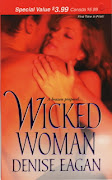
2.)Research and write Nick's Story (I'm so bad at titles) which is a spin-off of both Westwind and two other manuscripts, Wicked Widow and Wild Card. Nick's Story is set in Colorado, Boston and Newport RI, 1885, and brings together a Colorado rancher and a Woman's Right's reformer, who is also a member of Boston and New York society. It ought to be fun to see the way my rancher responds to the over-the-top opulence of upper-class American society during the Gilded Age. And of course there's a murder and a stalker, because what fun is a romance without a dead body or two?
3.) Write several blogs about the changes of women's roles during the Victorian period, the over-the-top opulence of the period (there was, no kidding, one party where men rode into a hotel on horses and ate upon horseback. These people were a little crazed) and American society in general.
4.) And I hope to invite a few other Victorian authors to share with us, either through blogging or an interview, their journey as authors. Okay, throwing the ball out to another of my Scandalous victorians. . . .
Okay, Denise. Here goes.
Susan's 2007 Goals
1) My biggest goal for this year was to finish the rewrite of my Civil War time travel romance, Erin's Rebel. This story is about a journalist who finds herself back in the time of the Civil War where she finds her true love, a Confederate army captain. After finishing, submitting and having this book rejected last March, I decided to revise the outline. This meant throwing about two-thirds of the original chapters away and starting from scratch. I'm happy to say that I completed the new draft just before Christmas. So, now my goal is to send the partial to the publisher I'm targeting. I hope to do this next week. After that, I plan to revise the manuscript, while I wait to hear back from the publisher.
2) I also want to revise the outline to my second Civil War romance that I'm calling Katie Rose. This is the story of a young Irish immigrant widowed early on during the war. She disguises herself as a man to fight Yankees and becomes involved with the hero, a Southerner who unknown to her, is a Yankee spy. After revising the outline, I hope to write and complete the first draft by the end of this year.
3) My other goals are to enter 1 contest per month for Erin's Rebel, at least until I get that contract.
4) I also plan to post two new blogs a month here and two blogs per week on my personal blog attached to my website about my life as a romance writer.
5) I also want to start preliminary work on a futuristic romance I plan to write and start worldbuilding for that project.
That's all I've got for now, so I pass it on the rest of the Scandalous Victorians . . . .
Christine's 2007 writing goals...
1) Bullwhip my writing partner (a worse procrastinator than I am) into finishing the 2nd of a 4 book series we have planned that has very little to do with the Victorian Era, but is the first project we worked on together. Contemporary romantic suspense.
2) (Still bullwhipping my writing partner) Finish the first of our 3 book erotica series set in an alternate Victorian world where magicks are forbidden and those who practice them hunted down and killed.
3) Stop writing so many series! Geez, I look back at my first 2 points and wonder how we’re ever going to get anything done with all these series hanging over our heads.
4) Update my personal writing blog at least twice a week and this blog just as much, if not more.
5) Submit. Agents, editors, critiquers. Must submit!
Kristin-Marie, next up and lighting a Victorian firecracker under some goals: 1) speed up a rewrite of a Victorian manuscript that slowed down for additional research with the intention of completing this version by Summer 2) attend one writing conference &/or take series of writing courses online to update craft techniques and market perspectives 3) blog bi-monthly on topics recently researched to share the wealth
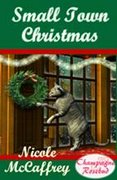
Nicole McCaffrey 2007 Writing Goals (or, as I like to call it -- Writing? What the heck is that???)
1) finish -- and submit -- Wild Texas Wind, which Kensington requested like... a lifetime ago!
2) begin research for the second in the Wild Texas series, about my rainmaker/gambler hero who meets his match when he is conned by an even better con than him.
3) Make writing a priority again. Between family illness and my new job at Wild Rose Press, somewhere along the line, writing got lost.
4) Blog more, procrastinate less.
Cynthia’s 2007 Goals
Well, 2006 was a great year as far as my writing was concerned, as I sold my first novel, In Sunshine or in Shadow, so I’m hoping to make 2007 just as good.
1.Finish the re-write of Coming Home, the sequel to Sunshine, and submit it to my editor by the end of February.
2.Complete the research and write the first draft of the third O’Brien story, Playing for Keeps.
3.Begin preliminary research for a post-Civil War series I’m planning.
4.Blog once a month.
5.Continue to hone my craft by taking some on-line classes.
6.Have a great time visiting England, Ireland and Wales this summer, and pretend it’s research!
Jenn's 2007 Goals
2006 saw me published for the first time, finish the first draft of a novel, be interviewed on the radio, and stand up and read in public . . . TWICE! Not to mention join this wonderful group of bloggers, and get my website up and running. 2007 has a lot to live up to.
1. Finish the final draft of A Test of Loyalty. And I thought once I finished the first draft things would be easier! Okay, add to this one, learn not to be so naive when it comes to writing.
2. Well, now that its done, I should do something with it, right? Find an agent, enter contests, do stuff like that. Of course, that means Write a Synopsis, which is probably a good goal for a year all by itself.
3. Begin research on the second book, Bea's story. That's not its title, I'll have to think one of those up as well.
4. Renew my commitment to my critique groups. I belong to four of them now, and between them I'm becoming a better writer with a better product. I value each so highly, I should make sure I let them know.
5. Blog, take advantage of marketing opportunities as they come along, and generally make myself obnoxious. In other words, "Don't be shy!"
6. And my favourite goal: READ!!
Mary Ann's (Serious) Goal for 2007
Instead of a laundry list of specific things I intend to do or complete in this new year, I plan to make a serious commitment to my writing. A seriously serious commitment.
I'm going to treat it like a job - something I've never done.
Retiring after more than two decades of teaching in public schools, I swore I'd never again set an alarm clock on a daily basis. However, starting days whenever I feel like crawling out of bed is getting me nowhere fast. I resolve to make a daily schedule for my "new" job as a writer.
The fine points of time allotments, etc., will need tweaking from time to time, but I intend to approach this as if I'm employed by someone hardnosed and unrelenting - a boss who expects me to start work on time and put in at least five 8-hour days per week.
With this kind of commitment, and the help of the wonderful Victorian Proofers, I should be able to complete my "dream" goal - completion of all rewrites on the book of my heart, Reaching Little Rock, before the end of 2007.
Marlene's goals for 2007
1. Continue working on my new manuscript "Hers to Captivate"
2. Do more research for the new work in progress
3. Try to participate in adding information to the blogs
4. And, now that I am not working at the gallery any longer, I plan to put more hours into working on my story, revisit my last two stories and concentrate on the deep POV and emotions in my stories.
For 2007 my fellow Scandalous Victorian and I have discussed making our blog a little more writer friendly. Of course we want to about the Victorian period, but blog about what we learn about the period, but we've decided to discuss our journey as writers along with joys and pitfalls of writing about the Victorian period. With this in mind, we're going to set ourselves some writing goals for 2007. So here goes!
Denise, (that's me!)
1.) Rewrite Westwind, a Victorian Western set in Colorado 1876.
2.)Research and write Nick's Story (I'm so bad at titles) which is a spin-off of both Westwind and two other manuscripts, Wicked Widow and Wild Card. Nick's Story is set in Colorado, Boston and Newport RI, 1885, and brings together a Colorado rancher and a Woman's Right's reformer, who is also a member of Boston and New York society. It ought to be fun to see the way my rancher responds to the over-the-top opulence of upper-class American society during the Gilded Age. And of course there's a murder and a stalker, because what fun is a romance without a dead body or two?
3.) Write several blogs about the changes of women's roles during the Victorian period, the over-the-top opulence of the period (there was, no kidding, one party where men rode into a hotel on horses and ate upon horseback. These people were a little crazed) and American society in general.
4.) And I hope to invite a few other Victorian authors to share with us, either through blogging or an interview, their journey as authors. Okay, throwing the ball out to another of my Scandalous victorians. . . .
Okay, Denise. Here goes.
Susan's 2007 Goals
1) My biggest goal for this year was to finish the rewrite of my Civil War time travel romance, Erin's Rebel. This story is about a journalist who finds herself back in the time of the Civil War where she finds her true love, a Confederate army captain. After finishing, submitting and having this book rejected last March, I decided to revise the outline. This meant throwing about two-thirds of the original chapters away and starting from scratch. I'm happy to say that I completed the new draft just before Christmas. So, now my goal is to send the partial to the publisher I'm targeting. I hope to do this next week. After that, I plan to revise the manuscript, while I wait to hear back from the publisher.
2) I also want to revise the outline to my second Civil War romance that I'm calling Katie Rose. This is the story of a young Irish immigrant widowed early on during the war. She disguises herself as a man to fight Yankees and becomes involved with the hero, a Southerner who unknown to her, is a Yankee spy. After revising the outline, I hope to write and complete the first draft by the end of this year.
3) My other goals are to enter 1 contest per month for Erin's Rebel, at least until I get that contract.
4) I also plan to post two new blogs a month here and two blogs per week on my personal blog attached to my website about my life as a romance writer.
5) I also want to start preliminary work on a futuristic romance I plan to write and start worldbuilding for that project.
That's all I've got for now, so I pass it on the rest of the Scandalous Victorians . . . .
Christine's 2007 writing goals...
1) Bullwhip my writing partner (a worse procrastinator than I am) into finishing the 2nd of a 4 book series we have planned that has very little to do with the Victorian Era, but is the first project we worked on together. Contemporary romantic suspense.
2) (Still bullwhipping my writing partner) Finish the first of our 3 book erotica series set in an alternate Victorian world where magicks are forbidden and those who practice them hunted down and killed.
3) Stop writing so many series! Geez, I look back at my first 2 points and wonder how we’re ever going to get anything done with all these series hanging over our heads.
4) Update my personal writing blog at least twice a week and this blog just as much, if not more.
5) Submit. Agents, editors, critiquers. Must submit!
Kristin-Marie, next up and lighting a Victorian firecracker under some goals: 1) speed up a rewrite of a Victorian manuscript that slowed down for additional research with the intention of completing this version by Summer 2) attend one writing conference &/or take series of writing courses online to update craft techniques and market perspectives 3) blog bi-monthly on topics recently researched to share the wealth
Nicole McCaffrey 2007 Writing Goals (or, as I like to call it -- Writing? What the heck is that???)
1) finish -- and submit -- Wild Texas Wind, which Kensington requested like... a lifetime ago!
2) begin research for the second in the Wild Texas series, about my rainmaker/gambler hero who meets his match when he is conned by an even better con than him.
3) Make writing a priority again. Between family illness and my new job at Wild Rose Press, somewhere along the line, writing got lost.
4) Blog more, procrastinate less.
Cynthia’s 2007 Goals
Well, 2006 was a great year as far as my writing was concerned, as I sold my first novel, In Sunshine or in Shadow, so I’m hoping to make 2007 just as good.
1.Finish the re-write of Coming Home, the sequel to Sunshine, and submit it to my editor by the end of February.
2.Complete the research and write the first draft of the third O’Brien story, Playing for Keeps.
3.Begin preliminary research for a post-Civil War series I’m planning.
4.Blog once a month.
5.Continue to hone my craft by taking some on-line classes.
6.Have a great time visiting England, Ireland and Wales this summer, and pretend it’s research!
Jenn's 2007 Goals
2006 saw me published for the first time, finish the first draft of a novel, be interviewed on the radio, and stand up and read in public . . . TWICE! Not to mention join this wonderful group of bloggers, and get my website up and running. 2007 has a lot to live up to.
1. Finish the final draft of A Test of Loyalty. And I thought once I finished the first draft things would be easier! Okay, add to this one, learn not to be so naive when it comes to writing.
2. Well, now that its done, I should do something with it, right? Find an agent, enter contests, do stuff like that. Of course, that means Write a Synopsis, which is probably a good goal for a year all by itself.
3. Begin research on the second book, Bea's story. That's not its title, I'll have to think one of those up as well.
4. Renew my commitment to my critique groups. I belong to four of them now, and between them I'm becoming a better writer with a better product. I value each so highly, I should make sure I let them know.
5. Blog, take advantage of marketing opportunities as they come along, and generally make myself obnoxious. In other words, "Don't be shy!"
6. And my favourite goal: READ!!
Mary Ann's (Serious) Goal for 2007
Instead of a laundry list of specific things I intend to do or complete in this new year, I plan to make a serious commitment to my writing. A seriously serious commitment.
I'm going to treat it like a job - something I've never done.
Retiring after more than two decades of teaching in public schools, I swore I'd never again set an alarm clock on a daily basis. However, starting days whenever I feel like crawling out of bed is getting me nowhere fast. I resolve to make a daily schedule for my "new" job as a writer.
The fine points of time allotments, etc., will need tweaking from time to time, but I intend to approach this as if I'm employed by someone hardnosed and unrelenting - a boss who expects me to start work on time and put in at least five 8-hour days per week.
With this kind of commitment, and the help of the wonderful Victorian Proofers, I should be able to complete my "dream" goal - completion of all rewrites on the book of my heart, Reaching Little Rock, before the end of 2007.
Marlene's goals for 2007
1. Continue working on my new manuscript "Hers to Captivate"
2. Do more research for the new work in progress
3. Try to participate in adding information to the blogs
4. And, now that I am not working at the gallery any longer, I plan to put more hours into working on my story, revisit my last two stories and concentrate on the deep POV and emotions in my stories.
Monday, December 25, 2006
Republic of Ezo 1868
It was a short-lived state formed by former Tokugawa retainers in Hokkaido, the northernmost, sparsely populated island of modern Japan. In 1868, they set up the Republic of Ezo, based on the American model, and elected Enomoto as its sosai. (Sosai means, roughly, "president" or "director-general".) These were the first elections ever held in Japan. Through Hakodate Magistrate Nagai Naoyuki, they tried to reach foreign legations present in Hakodate (the Americans, French, and Russians), but were not able to garner any international support for their new government.
The Republic officially ceased to exist on June 27, 1869.
http://en.wikipedia.org/wiki/Republic_of_Ezo
http://www.answers.com/topic/republic-of-ezo
http://www.worldstatesmen.org/Japan.htm
Thursday, December 21, 2006
Tumbleweeds Began to Roll, Late 19th Century
From my writing journals:
Research for my Victorian era story led me to the former badlands around Nevada one year. With enough history for even the most jaded buff, I fell in love with its ghost towns and lineage from the Gold Rush.
I wasn’t jaded, yet, and couldn’t stop exploring. Nevada had a rich Victorian heritage, after all, intertwined with Wild West Lore. Whether wheedling my way into mayoral archives or librarians' secret stashes, I learned early on that there were more treasures hidden away in Nevada during the Victorian era than miner’s golden nuggets.
At last, I had to leave my Victorian research for more urgent matters. But, on the way out of one of the hilly regions, while admiring the view, a lone tumbleweed blew into my car. With nowhere to turn off of the narrow road, the colliding tumbleweed destroyed a tire and did some other damage, too. It took two days to find someone who could repair my car so I could leave the state.
I mused on that random tumbleweed for those two days. The years of the Victorian era are often synonymous with the era of the old-time Western. The tumbleweed has so often been merely the backdrop in Westerns set in the desert. Flashbacks from Spaghetti Westerns jumbled through my mind. In truth, the tumbleweed didn’t arrive in the West as we know it until around the late Victorian era, perhaps around 1870ish. Its seeds entered the West by piggybacking amidst the grains of some Russian immigrants.
I vowed, then, to watch closer for tumbleweeds, in real and in novelistic scenery...
http://greenmuseum.org/content/work_index/img_id-83__prev_size-0__artist_id-3__work_id-7.html
http://texnat.tamu.edu/cmplants/toxic/Acrobat/Russian%20thistle.pdf
Research for my Victorian era story led me to the former badlands around Nevada one year. With enough history for even the most jaded buff, I fell in love with its ghost towns and lineage from the Gold Rush.
I wasn’t jaded, yet, and couldn’t stop exploring. Nevada had a rich Victorian heritage, after all, intertwined with Wild West Lore. Whether wheedling my way into mayoral archives or librarians' secret stashes, I learned early on that there were more treasures hidden away in Nevada during the Victorian era than miner’s golden nuggets.
At last, I had to leave my Victorian research for more urgent matters. But, on the way out of one of the hilly regions, while admiring the view, a lone tumbleweed blew into my car. With nowhere to turn off of the narrow road, the colliding tumbleweed destroyed a tire and did some other damage, too. It took two days to find someone who could repair my car so I could leave the state.
I mused on that random tumbleweed for those two days. The years of the Victorian era are often synonymous with the era of the old-time Western. The tumbleweed has so often been merely the backdrop in Westerns set in the desert. Flashbacks from Spaghetti Westerns jumbled through my mind. In truth, the tumbleweed didn’t arrive in the West as we know it until around the late Victorian era, perhaps around 1870ish. Its seeds entered the West by piggybacking amidst the grains of some Russian immigrants.
I vowed, then, to watch closer for tumbleweeds, in real and in novelistic scenery...
http://greenmuseum.org/content/work_index/img_id-83__prev_size-0__artist_id-3__work_id-7.html
http://texnat.tamu.edu/cmplants/toxic/Acrobat/Russian%20thistle.pdf
Wednesday, December 20, 2006
Irish Emigration During the Victorian Era - Part II
Although the Irish immigrants arriving in America had come to escape hunger and oppression, they found that life for them didn't change all that much. By the height of the potato famine, an Irish immigrant wrote home saying that, "My master is a great tyrant, he treats me as badly as if I was a common Irishman. Our position is one of shame and poverty." http://kinsella.org/history/histira.htm Signs for employment were often followed by: "NO IRISH NEED APPLY". The new immigrants had to live in cellars and shanties. Their brogue and dress were ridiculed. They were also held up to scorn for their poverty and illiteracy. The Irish held together and met intimidation with violence. Prayer and drink solidified them, helping them to survive life in the city. One newspaper was led to say about them, "The Irish have become more Americanized than the Americans." http://www.kinsella.org/history/histira.htm "The Church played an integral part in their lives. It was a militant Church who fought not only for their souls but also for their human rights." http://kinsella.org/history/histira.htm America needed the Irish. Men were needed for the heavy work of building bridges, canals and railroads. Women worked as maids, cooks and child caretakers. Irish immigrants needed these jobs to survive and they proved to be hard workers. Although they never forgot their homeland, the Irish loved America. But they never lost their hatred of the English. This led them to rebel against anything they saw as oppression on the part of their new country. "In New York City during the Civil War, they rioted against the draft lottery after the first drawing showed most of the names were Irish." http://www.kinsella.org/history/histira.htm http://www.civilwarhome.com/draftriots.htm The Irish, who'd suffered brutality back in Ireland at English hands were fierce warriors. They used brutal methods to fight back against the oppression of mine owners in Pennsylvania, forming a secret organization called the Molly Maguires. http://en.wikipedia.org/wiki/Molly_Maguires They also formed their own Irish Brigade during the Civil War. http://www.civilwarhome.com/irishbri.htm http://irishvolunteers.tripod.com/irish_brigade_history.htm As new immigrants of other nationalities later came to American shores, the Irish were finally hailed as an asset. They were fully Americanized. Hostility shifted to these new immigrants. The Irish finally found power and acceptance. "In 1850 at the height of the Potato Famine, Orestes Brownson, a celebrated convert to Catholicism, stated, 'Out of these narrow lanes, dirty streets, damp cellars, and suffocating garrets, will come forth some of the noblest sons of our country, whom she will delight to own and honor.' " http://www.kinsella.org/history/histira.htm
Tuesday, December 19, 2006
Victorian Christmas
In 1843 Charles Dickens (officially) published A Christmas Carol in England. All 6,000 copies sold out by the 22nd. That's the kind of sales I'd love to have. of course, the book was priced at 5 shillings, so profits were low. The story was originally written as a potboiler so he could pay off a debt, it's since become one of the most enduring Christmas stories.
http://en.wikipedia.org/wiki/A_Christmas_Carol
http://etext.virginia.edu/toc/modeng/public/DicChri.html
http://fidnet.com/~dap1955/dickens/carol.html
http://en.wikipedia.org/wiki/A_Christmas_Carol
http://etext.virginia.edu/toc/modeng/public/DicChri.html
http://fidnet.com/~dap1955/dickens/carol.html
Subscribe to:
Posts (Atom)