Wednesday, May 31, 2006
What Victorian Gents Wore - Part III
Coats Most Victorian gentlemen owned four different types of coat to fit every occasion. These consisted of the business coat, frock coat, dress coat and overcoat. The business suit, otherwise known as the sack suit, would be considered leisure wear for a gentleman, but farmers, laborers or cowboys would wear sack suits for dress occasions, such as church. The sack coat was large and baggy in the 1850s, then became more fitted through the 1860s and beyond. This garment was popular with working class men because it was affordable. http://www.lahacal.org/gentleman/sack.html The frock coat could be single or double breasted, usually black, and longer than the sack, coming to just above the knee. The frock coat was worn with contrasting pants and a top hat, although in the South and West low crowned hats were often worn instead. http://www.lahacal.org/gentleman/frock.html Vests were worn with the frock coat. In the 1860s, colorful vests of Chinese silk were worn. After that, black, white or gray vests became the norm. http://www.lahacal.org/gentleman/vest.html For evening wear, gentlemen wore a black tail coat, white bow tie, black or white vest, black trousers and a heavily starched white shirt. http://www.lahacal.org/gentleman/evening.html In harsh winter weather, a greatcoat was a necessity. This was a full-length overcoat made of wool in dark or drab colors. The coat had an attached single or double cape over the shoulders. Men also wore raincoats made of oilcloth and water-proofed wool; capes worn as formal wear by the well-to-do; and shawls, which for men were plain, functional garments. Lincoln kept his shawl with him all the time. Fur coats made from Buffalo or other animal hides were worn in coldest weather by those who could afford them. Sweaters were popular with farmers, homesteaders, and immigrants. These were knitted at home from wool. http://www.shasta.com/suesgoodco/newcivilians/gents/mensovercoats.htm More links: http://www.shasta.com/suesgoodco/newcivilians/gents/menscoats.htm http://www.lahacal.org/gentleman/attire.html http://www.lahacal.org/gentleman/morning.html
Tuesday, May 23, 2006
Telltale Embroidery
Telltale Embroidery
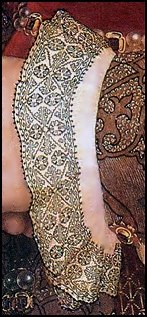
Embroidery experienced a revival (along with anything else Elizabethan) during Victoria’s reign. Authors writing about characters in the 19th Century, therefore, can utilize embroidery detail in their characters’ costumes to help set the backdrop for whether the fashions are current or older.
A delightfully presented article supplies a number of good resources on embroidery, in general, and blackwork, in particular: http://www.prettyimpressivestuff.com/blackwork.htm
Blackwork embroidery, for example, was re-popularized in the 19th C, and its original rules of application no longer applied. Embroidery had become rather freeform. Originally, blackwork consisted of black threads cross-stitched onto natural linen along cuffs and other visible places. The once-sumptuary embroidery form may be described in its original styles with heraldic elements and Arabic geometrics, or, it may be useful to show characters with the then-trendy picturesque scenery in blackwork. Some modern re-enactors and artisans have revived the embroidery form in stylized scenery. Black and white threads together became common, along with whitework and even goldwork (commonly noted in ecclesiastical attire), and many other styles.
A number of terms were well in use in relation to embroidery, such as the coining of the term “Spanish work” when referring to blackwork embroidery. Catherine of Aragon is often credited with popularizing its form when she took numerous blackwork-embroidered dresses with her to England from Spain. The running Holbein stitch got its name when informal portraits were done by new artists such as Hans Holbein simply for the sake of recording new items made for the wardrobes of the members of the court. By Victorian times, embroidery of many forms often emulated and even surpassed its historical roots and in reflection of the increasing freedoms of the times, the rules of embroidery were often broken in creative designs.
Kristin-Marie
Thursday, May 11, 2006
What Victorian Gents Wore - Part II
Victorian Menswear Trousers of the mid-nineteenth century Men's trousers of the mid-nineteenth century weren't much different from men's pants today, with the exception of zippers. Pants were full in the leg, baggy in the seat, and touched the tops of the feet. They were cut snugly at the waist, so braces (suspenders) weren't needed to keep them up. The waistband was split in the back and a string or lace was inserted to hold the gap. This way the waistband could be adjusted to fit. Pants were constructed of wool, homespun, jeancloth (which was wool & cotton or cotton twill), or linen. Wool was preferred in black, brown, gray or tan. Only fancy trousers might come in plaids, stripes or designs. Wealthy gentlemen may have worn linen pants in summer. Braces (or suspenders) were used to hold up working men's pants. These were made of canvas, leather or other fashion items. They all had leather tabs at the ends with buttonholes that attached to buttons on the waistband of the pants. Buckles on the front of the braces could be adjusted for height. Belts were not worn during this period to hold up pants, although soldiers wore leather belts over their coats as part of their uniforms. Links: http://www.shasta.com/suesgoodco/newcivilians/gents/mentrousers.htm http://www.gentlemansemporium.com/store/trousers.php
Wednesday, May 03, 2006
Birth control in the Victorian Era
When we think of the Victorian period, we probably don’t consider birth control. Surely this was not a part of Victorian life, right? Wrong. It became increasingly important as we moved from an agricultural society, where the children were a blessing, to a technological society, where children were more of a burden. While there were various forms of birth control the one that appeared to be used most by married woman was douching.
Douching had several benefits. First, of all it was legal through the entire period. While the Comstock laws made pretty much anything related to reproduction “obscene” and could therefore not be transported through the mail, douching was considered by most doctors as an important part of women’s health. Secondly, the more acceptable method of method of birth control, withdrawal, depended upon the male and his willingness to practice it, whereas douching put the control in the hands of the wife, who, after all, paid the most for the outcome.
In the years before the Comstock laws douching was openly marketed as a way to prevent conception. Syringes could be bought early in the century from physicians and peddlers. By mid-century they could be bought through the mail. While some women used plain water in an attempt to avoid conception, others used readily available spermicides such as vinegar and baking soda. By mid century they could buy pre-made solutions that claimed to be more effective, using substances as carbolic acid (ow!), tannin and salicylic acid. Information on how to douche and other methods of birth control were available early in the century in pamphlets and books by several different authors, most notably Fruits of Philosophy by Charles Knowlton.
Of course this method of birth control was not highly effective by current standards. We expect rates of 85-99%. Douching could not come anywhere close to these standards, but it did work better than nothing at all, and was widely practiced. Most married women would expect, and want, children from their marriage--just not one every year which is what this method of birth control prevented.
For purposes of writing, this is useful information if you’re writing about a married woman. Most of my books, however, are about single men and single women, and so in my next blog I’ll discuss the sort of birth control more likely to be used by that section of the population.
Douching had several benefits. First, of all it was legal through the entire period. While the Comstock laws made pretty much anything related to reproduction “obscene” and could therefore not be transported through the mail, douching was considered by most doctors as an important part of women’s health. Secondly, the more acceptable method of method of birth control, withdrawal, depended upon the male and his willingness to practice it, whereas douching put the control in the hands of the wife, who, after all, paid the most for the outcome.
In the years before the Comstock laws douching was openly marketed as a way to prevent conception. Syringes could be bought early in the century from physicians and peddlers. By mid-century they could be bought through the mail. While some women used plain water in an attempt to avoid conception, others used readily available spermicides such as vinegar and baking soda. By mid century they could buy pre-made solutions that claimed to be more effective, using substances as carbolic acid (ow!), tannin and salicylic acid. Information on how to douche and other methods of birth control were available early in the century in pamphlets and books by several different authors, most notably Fruits of Philosophy by Charles Knowlton.
Of course this method of birth control was not highly effective by current standards. We expect rates of 85-99%. Douching could not come anywhere close to these standards, but it did work better than nothing at all, and was widely practiced. Most married women would expect, and want, children from their marriage--just not one every year which is what this method of birth control prevented.
For purposes of writing, this is useful information if you’re writing about a married woman. Most of my books, however, are about single men and single women, and so in my next blog I’ll discuss the sort of birth control more likely to be used by that section of the population.
What Victorian Gents Wore - Part I
Victorian Menswear Shirts & Undergarments of the mid-nineteenth century What men wore in the mid-nineteenth century wasn't that much different from what men wear today. Shirts were cut full in both the body and sleeves. All shirts were loose fitting with collars. Dress shirts buttoned down the front, while work and non-dress shirts were pullovers. A placket with four buttons down the front of the shirt allowed the man to fit the shirt over his head. The materials used for shirts were wool, flannel, cotton, muslin and linen. Dress shirts came in white only, while work and non-dress shirts could be white, plaid, striped or calico. Undershirts were generally worn beneath shirts. They consisted of wool or cotton and sometimes old shirts served as undershirts. Drawers were worn beneath trousers. These were full-length, constructed of wool or cotton and had a fly front opening and closed with a button at the waist. A one-piece Union Suit was worn in extremely cold weather. These buttoned up the front, had a fly front opening and drop down panel on the seat ( A good example of this is the scene in "Back to the Future III" where Michael J. Fox is practicing his draw in front of a full-length mirror.) Some links with photos: http://www.lahacal.org/gentleman/shirt.html http://www.fcsutler.com/fcclotaccess.asp http://www.gentlemansemporium.com/store/shirts.php http://www.shasta.com/suesgoodco/newcivilians/gents/menshirts.htm
Friday, April 21, 2006
Flamenco Guitars and Gypsy Troupes Part I
Victorians found the sonorous notes of guitars and their accompanying wailing love songs to be especially endearing during moonlit forays or on starry nights.
Music was evolving both on and off the Continent (Europe), like everything else during the Victorian Era. International sentiments were mixing into America’s melting pot, including in the realms of musical entertainment. The telegraph and shipping line innovations were making the world smaller. Europe’s popular music was quickly available in burgeoning America.
Back in Europe, the Iberians were evolving the guitar and spanning the gap between Gypsy fairground antics and Royal courtroom entertainment. Flamenco, in particular, was coming out of its Primordial-egg state and even reached one of its golden eras during the late Victorian era. With the increasing demand for the guitar in global markets, its popularity increased quickly with its availability. During Victoria’s reign, Flamenco was incorporating multi-cultural elements and was even becoming a preferred dance form.
In Europe, Valencian-aristocracy (descended from the Kingdom of Navarre) were especially taking an interest in the commonplace entertainments of Gypsies and their musical collusion with the Arabic and Jewish communities amongst Mediterranean port cities. To be frank, the said aristocracy began showing up in formal black ball gowns and attire to partake in the wild festivities the Gypsies made available to the public. Although the Valencian ladies dressed formally in silks, their full-skirts were unsuported with wires or cage-like structures for such wild nights on the arms of their "dons." The flamenco was the in-thing, and its popularity was already hitting the current and former Spanish colonies and territories, all the way up to the royal courts of Mexico, as well as in Europe. The guitar, of course, was heavily in use at such locales and was being competitively mastered, as the Iberians had a history of driving musical-technique innovations -- the wilder, the better.
The guitar’s acknowledged Gypsy roots also helped increase its popularity among the masses across the Atlantic as Gypsy bands migrated. The Gypsy bands were appearing regularly at fairgrounds -- part of the reason that guitar music became synonymous with the musical forms that moved Westward to entertain settlers and business moguls, alike. After all, what would a campfire have been without the five-string?
Guitar music had reached the echelons of royal-court entertainment during the Renaissance and in the Victorian era guitarists were mastering it with renewed vigor as the Wild, Wild West re-popularized it. With the addition of new strings, not to mention its new shape -- that of a woman’s torso, the guitar became embedded in every level of society. A nicely translated term paper from Spain posted on the Internet details a few of the key innovators along with timelines of the evolution of the guitar and its roots in Spain.
http://www.linguatics.com/guitar.htm
The popular instrument was invented in Spain. It was a legacy from the Arabs after the Islamic-Moorish invasion in Europe. When Crusade-era Spanish Kingdoms re-conquered the Iberian Peninsula during the Middle Ages, their Aristocracy immediately incorporated the Arabic forms of arts and entertainment, including lute music. Authors of Victorian literature can get a feeling of the Victorian guitar music from modern performers such as Loreena McKennitt.
http://www.wbr.com/mckennitt/bookofsecrets/cmp/secrets.html
Renaissance-era creativity then incorporated the instruments, including the Arabic stringed instruments, into everyday entertainment. About as amusing as playing chess or engaging other parlor entertainment to the later Victorians who became well accomplished at both.
The Victorian era saw many new businesses arise, and musical instruments are not to be overlooked since they comprised the largest part of available entertainment as the West was won. In Spain, prominent name-brands were already synonymous with the increasingly esteemed guitar and commanded hefty price tags. As Americans increased their wealth, they also increased their imports of pricey European luxury items and the rising name-brands. Let’s face it: the incorporation of guitars into Society’s classical soirees also had a hand in the guitar moving Westward. Variations on classic sonatas and the like from the Victorian era are still popular and available today.
http://www.amazon.com/gp/product/B00000258U/102-8664115-8936126?n=5174
Moveable guitar chord-patterns, however, weren’t in play quite yet, and wouldn’t be until around the beginning of the Edwardian era, but a clever author can always allude to whatever musical innovations their heroic characters can improvise. Strumming and picking were well in play. Add into the equation the percussion instruments of those guitar-aficionados, the traveling bands of Gypsies, and you can understand why on-looking crowds went wild and tossed coins in their requests for more of the mostly Iberian-derived, innovative music.
Cowboy crooners singing to coyote moons around campfires come close to comparing to the traditional songs of unrequited love and broken hearts that the Gypsies brought with them from the Iberian Peninsula when they made a showing in America.
Music was evolving both on and off the Continent (Europe), like everything else during the Victorian Era. International sentiments were mixing into America’s melting pot, including in the realms of musical entertainment. The telegraph and shipping line innovations were making the world smaller. Europe’s popular music was quickly available in burgeoning America.
Back in Europe, the Iberians were evolving the guitar and spanning the gap between Gypsy fairground antics and Royal courtroom entertainment. Flamenco, in particular, was coming out of its Primordial-egg state and even reached one of its golden eras during the late Victorian era. With the increasing demand for the guitar in global markets, its popularity increased quickly with its availability. During Victoria’s reign, Flamenco was incorporating multi-cultural elements and was even becoming a preferred dance form.
In Europe, Valencian-aristocracy (descended from the Kingdom of Navarre) were especially taking an interest in the commonplace entertainments of Gypsies and their musical collusion with the Arabic and Jewish communities amongst Mediterranean port cities. To be frank, the said aristocracy began showing up in formal black ball gowns and attire to partake in the wild festivities the Gypsies made available to the public. Although the Valencian ladies dressed formally in silks, their full-skirts were unsuported with wires or cage-like structures for such wild nights on the arms of their "dons." The flamenco was the in-thing, and its popularity was already hitting the current and former Spanish colonies and territories, all the way up to the royal courts of Mexico, as well as in Europe. The guitar, of course, was heavily in use at such locales and was being competitively mastered, as the Iberians had a history of driving musical-technique innovations -- the wilder, the better.
The guitar’s acknowledged Gypsy roots also helped increase its popularity among the masses across the Atlantic as Gypsy bands migrated. The Gypsy bands were appearing regularly at fairgrounds -- part of the reason that guitar music became synonymous with the musical forms that moved Westward to entertain settlers and business moguls, alike. After all, what would a campfire have been without the five-string?
Guitar music had reached the echelons of royal-court entertainment during the Renaissance and in the Victorian era guitarists were mastering it with renewed vigor as the Wild, Wild West re-popularized it. With the addition of new strings, not to mention its new shape -- that of a woman’s torso, the guitar became embedded in every level of society. A nicely translated term paper from Spain posted on the Internet details a few of the key innovators along with timelines of the evolution of the guitar and its roots in Spain.
http://www.linguatics.com/guitar.htm
The popular instrument was invented in Spain. It was a legacy from the Arabs after the Islamic-Moorish invasion in Europe. When Crusade-era Spanish Kingdoms re-conquered the Iberian Peninsula during the Middle Ages, their Aristocracy immediately incorporated the Arabic forms of arts and entertainment, including lute music. Authors of Victorian literature can get a feeling of the Victorian guitar music from modern performers such as Loreena McKennitt.
http://www.wbr.com/mckennitt/bookofsecrets/cmp/secrets.html
Renaissance-era creativity then incorporated the instruments, including the Arabic stringed instruments, into everyday entertainment. About as amusing as playing chess or engaging other parlor entertainment to the later Victorians who became well accomplished at both.
The Victorian era saw many new businesses arise, and musical instruments are not to be overlooked since they comprised the largest part of available entertainment as the West was won. In Spain, prominent name-brands were already synonymous with the increasingly esteemed guitar and commanded hefty price tags. As Americans increased their wealth, they also increased their imports of pricey European luxury items and the rising name-brands. Let’s face it: the incorporation of guitars into Society’s classical soirees also had a hand in the guitar moving Westward. Variations on classic sonatas and the like from the Victorian era are still popular and available today.
http://www.amazon.com/gp/product/B00000258U/102-8664115-8936126?n=5174
Moveable guitar chord-patterns, however, weren’t in play quite yet, and wouldn’t be until around the beginning of the Edwardian era, but a clever author can always allude to whatever musical innovations their heroic characters can improvise. Strumming and picking were well in play. Add into the equation the percussion instruments of those guitar-aficionados, the traveling bands of Gypsies, and you can understand why on-looking crowds went wild and tossed coins in their requests for more of the mostly Iberian-derived, innovative music.
Cowboy crooners singing to coyote moons around campfires come close to comparing to the traditional songs of unrequited love and broken hearts that the Gypsies brought with them from the Iberian Peninsula when they made a showing in America.
Wednesday, April 19, 2006
Mary Walker, M.D.
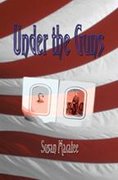
I researched Dr. Mary Walker years ago and used her along with a few other Victorian women whose stories I admired as a composite for my fictional young heroine in my young adult novel, UNDER THE GUNS. Mary Walker grew up in rural Oswego, New York and graduated from Syracuse Medical College in 1855. Her parents raised her to regard corsets as an unhealthy form of dress. Later in life she adopted a style of reform dress, a short, fitted knee-length dress with bloomers worn beneath the skirt. She believed crinolines, petticoats and yards of long skirts to be dangerous and unsanitary. She married young, but refused to assume her husband's last name. He was also a doctor who she'd met while in medical school. They started a joint medical practice that lasted thirteen years as did the marriage. When the Civil War began, she volunteered as an army surgeon, but because she was female, she was only allowed to serve as a nurse. However, the nursing duties she performed were actually those of an assistant surgeon. Although she was the first female surgeon in the United States Army, she served as an unpaid volunteer. She made her own army uniform, which consisted of a knee-length fitted dress, designed to look like a Federal Army frockcoat. Under this she wore trousers. This outfit caused her much ridicule. While serving in enemy territory, she often crossed over the lines to lend assistance to civilians. She also reported anything she learned of military value to her superiors, causing her to be labeled a spy. She was captured while in Rebel territory and taken as a prisoner-of-war. She spent four months in Richmond, Virginia's Castle Thunder. She was released in a prisoner exchange and took great pride in the fact that she, being a woman and only five foot tall was exchanged for a six foot tall Confederate major. After the war, she received the Congressional Medal of Honor. No other woman before her had received that honor. It was rescinded in 1917 because Congress revised their standards to only award the medal to those in "actual combat with the enemy". Mary refused to give it back and wore it proudly until she died two years later. Now that's a heroine! Links: http://www.gamepuppet.com/civilwar/women/w8-walker.htm http://www.mishalov.com/Dr._Mary_Walker.html http://www.mnwelldir.org/docs/history/biographies/mary_walker.htm For a more in-depth account of the life of Mary Edwards Walker, M.D. read: Yankee Women: Gender Battles in the Civil War by Elizabeth D. Leonard W. W. Norton & Company ISBN 0-393-31372-7
Thursday, April 13, 2006
VICTORIAN FASTLANE: Part 1, The Tycoons


WELCOME to a new series on the Tycoons,
the fascinating men who created today's corporate world. Their heyday matched Victoria's reign almost exactly - although some say their age ended when the Titanic sank in 1912.
The Tycoons created the industrial system that gave the United States the most powerful and dynamic economy in the world. Masters of organization, they were visionaries and risk takers who thought and acted on a grand scale.
The fortunes of today's billionaires pale in comparison to the wealth of these men. As a percentage of the US economy, no other American fortune - not even Bill Gates' or the late Sam Walton's - would even come close to John D. Rockefeller's.
In the coming weeks I'll post articles on seven of these larger-than-life Victorian Americans. From different backgrounds, their lives were varied, exciting and colorful. I hope to offer some insight into each man.
Part 2: John Jacob Astor (1763-1848) The first millionaire in the US, he made his fortune in fur trading (establishing Astoria while he was at it) and real estate. We'll cover not only the founder of the dynasty, but John Jacob Astor IV (1864-1912) the richest millionaire to go down on the Titanic.
Part 3: Andrew Carnegie (1835-1919) This steel magnate founded what became US Steel and then founded libraries all over this country. He loved his native Scotland and built a Victorian mansion there in the ruins of an old castle - thereby giving the world (and Madonna and Guy Ritchie) the famed Skibo Castle - the most romantic wedding site imaginable.
Part 4: Henry Clay Frick (1849-1919) This American industrialist was
considered ruthlessly anti-union. His partnership with Carnegie, in what became US Steel, is chronicled in the book, MEET YOU IN HELL. During the strike at the Homestead Steel Mill, Carneigie played golf in Scotland while Frisk toiled in the mine office. An anarchist broke in and shot Frisk twice in the neck and stabbed him several times with a poisoned dirk. He received medical attention in his office and finished the work day.
Part 5: Jay Gould (1836-1892) He was a soft-spoken man, called the DARK GENIUS OF WALL STREET. He made a fortune in northeastern railroads and was able to buy out Vanderbilt's shares in the Erie Canal. He controlled Western Union, New York's elevated rails and dabbled in gold futures. His reputation suffered when he posted bond for Boss Tweed.
Part 6: John Pierpont Morgan (1837-1919) Unlike the others, J. P. Morgan was born into wealth. He attended fine schools in Boston and, at 20, he graduated from a German University. The most famous tycoon in his day, his name is still linked with American finance and banking. Well respected, he worked to keep the financial world afloat. He once kept the US economy from sinking in a Great Panic by convincing millionaire friends and foes to agree to underwrite the government for a time. He financed the work of Thomas Edison and made the use of electricity a practical reality.
Part 7: John D. Rockefeller (1839-1937) When he died at 98, he was worth $1.4 billion in 1937 dollars.
For many years (the good old days) he virtually controlled the US oil supply. His Standard Oil Company was renamed ESSO in the 20th century and updated to Exxon. Today it's Exxon-Mobil.
By 1905, his worth was $240 million, and in that same year he gave away $13.6 million. Five years later, he gave Standard Oil stock worth $50 million to start the Rockefeller Foundation. As he grew older, he worked as hard giving away money as he'd worked acquiring it.
Part 8: Cornelius Vanderbilt (1794-1877) He created the first fortune topping $100 million, but he was a ruthless, unpleasant, ill-educated man who never learned to read and could only spell words phonetically. Born on Staten Island, he borrowed a $100 when he was 16 to buy a small boat, and then hired himself out as a ferry sevice to New York City. He acquired the name Commodore when he got into the steamship business. He started buying railroad stock and soon revolutionized the railroad industry. He was coarse, profane, tobacco stained and snubbed by polite society. Amazingly, the name Vanderbilt has a very genteel ring today.
Watch for upcoming episodes featuring your favorite Tycoons in the VICTORIAN FASTLANE!
SOURCES:
THE HOUSE OF MORGAN
An American Banking Dynasty and the Rise of Modern Finance.
By Alan Chernow
THE TYCOONS
How Andrew Carnegie, John D. Rockefeller, Jay Gould and J. P. Morgan Invented the American Super Economy.
By Charles R. Morris
DARK GENIUS OF WALL STREET
The Misunderstood Life of Jay Gould, King of the Robber Barons.
By Edward J. Renehan, Jr.
MEET YOU IN HELL
Andrew Carnegie, Henry Clay Frick, and the Bitter Partnership That Transformed America.
By Les Standiford
CITY JOURNAL:
The Robber Barons' Bum Rap
By Maury Klein, Winter 1995
Tuesday, April 11, 2006
A Dress for Every Occasion
Just as we wear different outfits to the office, a night on the town, exercise, shopping or working or lounging around the house, the Victorian woman of the 1860s had a dress for every occasion. The main feature of all these dresses (excluding formal wear) was that they all fastened in the front, whether one-piece or two. Otherwise, how would they have gotten dressed in the morning without help? Unlike Scarlett O'Hara, most women didn't have maids to dress them. The fasteners used during the period were buttons or tiny hooks and eyes. One piece dresses, called wrappers, were often worn while working in the house, garden or field. Aprons were worn over all dresses when doing anything that might soil the gown. Aprons were made from leftover material or old dresses, blankets or other items. The Victorians recycled everything. While the one-piece dress was worn for work, other dresses were constructed of two pieces, consisting of a fitted bodice and skirt. The skirt was then basted onto the bodice, eliminating gaps and making the garment appear to be one-piece, as most dresses of the period matched top and bottom. Evening dresses were also two-piece, but the bodices fastened up the back. These bodices were low cut, exposing the shoulders, upper chest (but no cleavage), and arms. Fine fabrics were used and unlike the skirts worn every day, these skirts were often trimmed with lace or ribbon. The links below give more information and pictures of different types of dresses worn during the Victorian period, 1860s and beyond. http://www.shasta.com/suesgoodco/newcivilians/womenswear/fashion.htm http://www.victoriana.com/library/Timeline/1861.htm http://www.tudorlinks.com/treasury/articles/viewvictorian.html http://www.fashion-era.com/mid-late_victorian_fashion.htm http://www.shasta.com/suesgoodco/newcivilians/womenswear/dresses.htm For more information on women's dresses of the 1860s, read: Who Wore What? Women's Wear 1861-1865 by Juanita Leisch copyright 1995 Thomas Publications ISBN 0-939631-81-4
Friday, April 07, 2006
Chocolate is life
Oh, wait…what do you mean it isn’t part of the Food Pyramid? Are you sure? That has to be an oversight! Sacrilege! Blasphemy! Oh the horror! Who do I talk to about changing that?
Ahem…right then. So before the 1840s, chocolate was mostly drank, had a bitter taste, and wasn’t in solid eating form. Luckily, Joseph Fry, it’s believed, made the first edible chocolate in 1847, and the Cadbury Brothers followed in 1849.
Swiss candle maker, Daniel Peter, joined his father-in-law's chocolate business and in 1867 began experimenting with milk. Yes, you guessed it, milk chocolate, which he began marketing in 1875. Peter’s partner in all this…? Baby food manufacturer Henri Nestlé.
That whole process that heats, rolls, and grinds chocolate into a smooth, creamy liquid that’s evenly blended (conching) was invented by Swiss confectioner Rodolphe Lindt in 1879.
http://en.wikipedia.org/wiki/Chocolate#History
Of course, it was once thought of as an aphrodasiac, and that hasn’t exactly been disproven. The Aztec’s loved it. When it was brought over to Europe, it quickly became the ideal gift for a loved one. http://www.globalchefs.com/article/archive/art058afrocho.htm
Dark Chocolate is even considered healthy for you by people who study that and don’t just indulge. http://lowfatcooking.about.com/od/healthandfitness/a/chochealth.htm
So as I said…I like it and it makes me feel good and no one can make me feel guilty over that.
Ahem…right then. So before the 1840s, chocolate was mostly drank, had a bitter taste, and wasn’t in solid eating form. Luckily, Joseph Fry, it’s believed, made the first edible chocolate in 1847, and the Cadbury Brothers followed in 1849.
Swiss candle maker, Daniel Peter, joined his father-in-law's chocolate business and in 1867 began experimenting with milk. Yes, you guessed it, milk chocolate, which he began marketing in 1875. Peter’s partner in all this…? Baby food manufacturer Henri Nestlé.
That whole process that heats, rolls, and grinds chocolate into a smooth, creamy liquid that’s evenly blended (conching) was invented by Swiss confectioner Rodolphe Lindt in 1879.
http://en.wikipedia.org/wiki/Chocolate#History
Of course, it was once thought of as an aphrodasiac, and that hasn’t exactly been disproven. The Aztec’s loved it. When it was brought over to Europe, it quickly became the ideal gift for a loved one. http://www.globalchefs.com/article/archive/art058afrocho.htm
Dark Chocolate is even considered healthy for you by people who study that and don’t just indulge. http://lowfatcooking.about.com/od/healthandfitness/a/chochealth.htm
“Many of the worlds oldest supercentenarians, e.g. Jeanne Calment (1875-1997)http://www.chocolate.org/index.html
and Sarah Knauss (1880-1999), were passionately fond of chocolate. Jeanne
Calment habitually ate two pounds of chocolate per week until her physician
induced her to give up sweets at the age of 119 - three years before her death
aged 122. Life-extensionists are best advised to eat dark chocolate rather than
the kinds of calorie-rich confectionery popular in America.”
So as I said…I like it and it makes me feel good and no one can make me feel guilty over that.
Thursday, April 06, 2006
Mourning Rituals and Customs
Mourning Rituals and Customs in the Victorian Era*
Death is a subject most of us don’t like to think about or even talk about, but Victorians openly accepted it. This is evidenced by the extensive mourning rituals and the social acceptance of being in mourning.
My hometown boasts one of the country’s first Victorian municipal cemeteries (http://www.fomh.org/). Notables from the Victorian era buried there include Frederick Douglas and Susan B. Anthony. While it might seem strange to you and I today to ever conceive of having a picnic lunch at the site of a loved one’s grave, in the Victorian era, it was quite common. In truth, the Victorians kept their loved ones close by keeping their death and the world beyond a part of their daily lives. Mourning practices were, quite simply, a part of daily living.
All communities had mourning rules that dictated how long a family would be in mourning according to their relation to the deceased. A woman might mourn her parents for months or even years, but a cousin or distant in law might dictate a much shorter mourning period. A husband’s death, on the other hand, would dictate full mourning for six to twenty four months, with the tradition being one year and one day. This period of deep mourning might be followed by a period of lighter mourning that allowed the woman to slowly return to society. (Many women chose to remain in full mourning the rest of their lives, returning to society, but retaining their “widows weeds”.)
The recommended guide for length of the mourning period (according to author Lou Taylor)
Widow for Husband 2 1/2 years
Widower for wife 3 months (ya gotta love the irony there)
Mother for Child one year
Child for parent one year
In an affluent home, windows and mirrors were covered with crepe and black wreaths of silk and wax flowers were hung on the front door and mantles. The hanging of crepe (an expression we’ve all heard used before) was an announcement to the community of a death in the family and neighbors were quick to respond with offers of food, help and consolation.
If the deceased were an immediate family member from the household, they would be laid out in the parlor, or on occasion, in the bedroom. Vigil was kept on the body for 24 hours a day by family members and servants alike and vigil candles would be kept lit around the room. Flowers were brought in, not just as a gift of remembrance but as an aid in masking the odor of decay. The vigil continued for a period of one to four days, followed by the funeral or burial in a public or private cemetery. (The first public cemetery was designed in Boston in 1832 and other cities quickly followed suit.)
Next time we’ll take a look at a lady’s life in mourning, including dress and decorum.
* information compiled from “The After Life” by Karen Rae Mehaffey.
Death is a subject most of us don’t like to think about or even talk about, but Victorians openly accepted it. This is evidenced by the extensive mourning rituals and the social acceptance of being in mourning.
My hometown boasts one of the country’s first Victorian municipal cemeteries (http://www.fomh.org/). Notables from the Victorian era buried there include Frederick Douglas and Susan B. Anthony. While it might seem strange to you and I today to ever conceive of having a picnic lunch at the site of a loved one’s grave, in the Victorian era, it was quite common. In truth, the Victorians kept their loved ones close by keeping their death and the world beyond a part of their daily lives. Mourning practices were, quite simply, a part of daily living.
All communities had mourning rules that dictated how long a family would be in mourning according to their relation to the deceased. A woman might mourn her parents for months or even years, but a cousin or distant in law might dictate a much shorter mourning period. A husband’s death, on the other hand, would dictate full mourning for six to twenty four months, with the tradition being one year and one day. This period of deep mourning might be followed by a period of lighter mourning that allowed the woman to slowly return to society. (Many women chose to remain in full mourning the rest of their lives, returning to society, but retaining their “widows weeds”.)
The recommended guide for length of the mourning period (according to author Lou Taylor)
Widow for Husband 2 1/2 years
Widower for wife 3 months (ya gotta love the irony there)
Mother for Child one year
Child for parent one year
In an affluent home, windows and mirrors were covered with crepe and black wreaths of silk and wax flowers were hung on the front door and mantles. The hanging of crepe (an expression we’ve all heard used before) was an announcement to the community of a death in the family and neighbors were quick to respond with offers of food, help and consolation.
If the deceased were an immediate family member from the household, they would be laid out in the parlor, or on occasion, in the bedroom. Vigil was kept on the body for 24 hours a day by family members and servants alike and vigil candles would be kept lit around the room. Flowers were brought in, not just as a gift of remembrance but as an aid in masking the odor of decay. The vigil continued for a period of one to four days, followed by the funeral or burial in a public or private cemetery. (The first public cemetery was designed in Boston in 1832 and other cities quickly followed suit.)
Next time we’ll take a look at a lady’s life in mourning, including dress and decorum.
* information compiled from “The After Life” by Karen Rae Mehaffey.
Wednesday, April 05, 2006
Those Free Lovin’ Victorians
So you think the Victorians were prudish, uptight people in high-necked clothing, huh? Well I suppose at certain times during the period, and with certain people, that description is apt. Certainly there were quite a few “purity writers” during the 19th century. On the other hand, there was rampant prostitution, an increase in birth control devices, and the free love movement.
The free love movement started in the 1850’s with the help of Stephen Pearl Andrews who believed that “individual freedom, instead of, or in predominance over, social constraint, as the safer and better medium through which to conduct to the higher development of mankind” (http://praxeology.net/HJ-HG-SPA-LMD-17.htm) I’m not personally sure if all of the free lovers believed that they were working towards the higher development of mankind, however. Consider a speech given by Victoria Woodhull in 1871, before she ran for president:
“Yes, I am a Free Lover. I have an inalienable, constitutional and natural right to love whom I may, to love as long or as short a period as I can; to change that love every day if I please, and with that right neither you nor any law you can frame have any right to interfere. And I have the further right to demand a free and unrestricted exercise of that right, and it is your duty not only to accord it, but, as a community, to see that I am protected in it. I trust that I am fully understood, for I mean just that, and nothing less!" And the Truth Shall Make You Free (November 20, 1871)
Sounds very little like “for the good of mankind” to me. It sounds to me like Woodhull, (and probably quite a few other free lovers) were concerned more about government interference in the bedroom than the good of mankind. They obviously didn’t have a whole lot of faith in monogamy or marriage. Interesting, as from what I can see many of them (Woodhull not included—she was married 3 times) had fairly long, stable marriages.
So who were the free lovers? As mentioned, Woodhull, Andrews, Mary Gove Nichols and her husband. There were anarchists and feminists, Angela and Ezra Haywood, Moses Harman, who spent two years in jail for publishing obscenity under the Comstock Laws and his daughter Lillian. ( http://en.wikipedia.org/wiki/Free_love ) And of course John Humphrey Noyes, who started the Oneida Community, an 1850’s commune that practiced “complex marriage”. (http://www.nyhistory.com/central/oneida.htm) It lasted 30 years and was, regardless of the “complex marriage” issue, a very religious community. Just the not sort of religion you’d have expected in 1850. . . .
All right, so all of this is very interesting, right? 1970’s kind of free love, complete with communes, in the 1850’s—but how? If a woman practiced free love, wouldn’t that mean pregnancy? And how on earth was she supposed to support a child without a husband? After all, women weren’t exactly fighting men for the corner office at this point in history. Women could scarcely support themselves, never mind a child. Well they did have birth control. It was not the Pill, granted, and not as reliable as today by any stretch. But they did have it, and it was legal and available until 1873, when the Comstock Laws--obscenity laws that made pretty much anything relating to sex illegal--were passed. But that is another post, coming soon to a blog near you. . . .
Books on Victorian Free Love:
Sex Radicals and the Quest for Women’s Equality, Joanne Passet
Free Love: Marriage and Middle-Class Radicalism in America, 1825-1860, John Spurlock
The free love movement started in the 1850’s with the help of Stephen Pearl Andrews who believed that “individual freedom, instead of, or in predominance over, social constraint, as the safer and better medium through which to conduct to the higher development of mankind” (http://praxeology.net/HJ-HG-SPA-LMD-17.htm) I’m not personally sure if all of the free lovers believed that they were working towards the higher development of mankind, however. Consider a speech given by Victoria Woodhull in 1871, before she ran for president:
“Yes, I am a Free Lover. I have an inalienable, constitutional and natural right to love whom I may, to love as long or as short a period as I can; to change that love every day if I please, and with that right neither you nor any law you can frame have any right to interfere. And I have the further right to demand a free and unrestricted exercise of that right, and it is your duty not only to accord it, but, as a community, to see that I am protected in it. I trust that I am fully understood, for I mean just that, and nothing less!" And the Truth Shall Make You Free (November 20, 1871)
Sounds very little like “for the good of mankind” to me. It sounds to me like Woodhull, (and probably quite a few other free lovers) were concerned more about government interference in the bedroom than the good of mankind. They obviously didn’t have a whole lot of faith in monogamy or marriage. Interesting, as from what I can see many of them (Woodhull not included—she was married 3 times) had fairly long, stable marriages.
So who were the free lovers? As mentioned, Woodhull, Andrews, Mary Gove Nichols and her husband. There were anarchists and feminists, Angela and Ezra Haywood, Moses Harman, who spent two years in jail for publishing obscenity under the Comstock Laws and his daughter Lillian. ( http://en.wikipedia.org/wiki/Free_love ) And of course John Humphrey Noyes, who started the Oneida Community, an 1850’s commune that practiced “complex marriage”. (http://www.nyhistory.com/central/oneida.htm) It lasted 30 years and was, regardless of the “complex marriage” issue, a very religious community. Just the not sort of religion you’d have expected in 1850. . . .
All right, so all of this is very interesting, right? 1970’s kind of free love, complete with communes, in the 1850’s—but how? If a woman practiced free love, wouldn’t that mean pregnancy? And how on earth was she supposed to support a child without a husband? After all, women weren’t exactly fighting men for the corner office at this point in history. Women could scarcely support themselves, never mind a child. Well they did have birth control. It was not the Pill, granted, and not as reliable as today by any stretch. But they did have it, and it was legal and available until 1873, when the Comstock Laws--obscenity laws that made pretty much anything relating to sex illegal--were passed. But that is another post, coming soon to a blog near you. . . .
Books on Victorian Free Love:
Sex Radicals and the Quest for Women’s Equality, Joanne Passet
Free Love: Marriage and Middle-Class Radicalism in America, 1825-1860, John Spurlock
Tuesday, April 04, 2006
Not quite the era...
It's the end of the world, as we know it... [REM, Its the End of the World As We Know It (And I Feel Fine)]
On Wednesday night, at 2 minutes and 3 seconds after 1 in the morning, it'll be 01:02:03 04.05.06. Apparently, this isn't going to happen again until 2106.
On Wednesday night, at 2 minutes and 3 seconds after 1 in the morning, it'll be 01:02:03 04.05.06. Apparently, this isn't going to happen again until 2106.
Victorian Mary Gove Nichols
Oh wow. I meant to do a blog on the Victorian Free Love movement, which started before the Civil War and lasted through the '70's. In the process of doing more in-depth research I came across a book review about a book on Mary Gove Nichols. http://www.press.jhu.edu/books/title_pages/2341.html
Apparently Ms. Nichols was a true radical (for the times). She believed in free love, in equality for women, and--get this!--went around the U.S. giving anatomy lectures. This, mind you, at a time when some doctors would use dolls and ask women to point at the parts that were bothering them rather than examine them. Amazing! I love this woman. Add her to our first female candidate for president, Ms. Woodhull, and Victorian women really did rock--that is until Anthony Comstock and his obscenity laws came alongin 1873 and pretty much ruined everything for everyone. The more I read about that man the less I like him.
Apparently Ms. Nichols was a true radical (for the times). She believed in free love, in equality for women, and--get this!--went around the U.S. giving anatomy lectures. This, mind you, at a time when some doctors would use dolls and ask women to point at the parts that were bothering them rather than examine them. Amazing! I love this woman. Add her to our first female candidate for president, Ms. Woodhull, and Victorian women really did rock--that is until Anthony Comstock and his obscenity laws came alongin 1873 and pretty much ruined everything for everyone. The more I read about that man the less I like him.
Thursday, March 30, 2006
Victoria Woodhull for President!

Victoria Woodhull was the first woman to run for president, in 1872, almost 50 years before the nineteenth amendment guaranteed women the right to vote. How is that for a kick-ass heroine? She was also, in 1870 the first woman to testify before congress, and man, what a testimony that was! Instead of campaigning for an amendment, as most of the suffragists did, she declared that the United States constitution,
( http://www.usconstitution.net/const.html#Am14) as written by the framers already gave women the right to vote. Nowhere, she testified, did it use the word “male” but instead opted for the gender-neutral “person”. In fact, not until the 14th amendment, ratified 1868, did the word “male” enter the constitution, and that only in relation to voting, not citizenship. All which seems perfectly logical right?
The problem was, there was much logic on the other side of the debate.
In the late 19th century “obey” was still a part of the marriage vows, and women were in many ways still the property of their husbands. This being the case, couldn’t a husband then compel his wife to vote for his candidate? The secret ballot, after all, was not widely established in the U.S. until the 1880’s. Thus a married man would have 2 votes, a single man only one. Consider that the 15th amendment giving all men the right to vote regardless of race or creed, could only come after the 13 amendment, eliminating slavery. Women were still “slaves” to their husbands.
So why do we not hear about Ms. Woodhull regularly in relation to the suffragists? Well. . . .Ms. Woodhull was not exactly a proper Victorian woman. For one thing, in 1872 she was divorce, remarried and living with both husbands. Granted her first husband was an alcoholic and she felt sorry for him. But Ms. Woodhull had numerous other affairs, all with the consent, and encouragement, of her second husband. Both of them believed in the free love movement, and this, in the end was Ms. Woodhull’s downfall. Women’s suffrage was bad enough—free love was a step too far.
Free love, you say? But wasn’t that a 1970’s thing? Oh no, that was an 1830’s thing! And is a subject for another blog.
Wednesday, March 29, 2006
This Is the Way We Wash Our Clothes . . .
Hate to do the laundry? Well, compared to the Victorians, we have it easy. We separate our clothes by whites and colors, dark and light, then throw them into the washing machine, add soap, and the machine takes over. Afterward, we toss them into the dryer. The rest is folding--a few things may need ironing, but most can just be put away. In the Victorian home, wash was usually done once a week and took up the entire day. Before 1880 when the first washing machine became generally available, the day started with fetching water. If the woman didn't have a well to draw water from, she'd have to lug it from a nearby stream. Some women used yokes so their back could take the brunt of the weight. The soap used was homemade from water, wood ash and lard. The water had to be heated in the hearth. The clothes were separated, much as we do today. Very dirty or heavy clothes were soaked in lye, then boiled. Lighter clothes were hand washed in cold or lukewarm water. Most women used a washtub or basin. A variety of methods were used, just as today, to get out stubborn stains. The washboard was only used for the dirtiest garments. A long wooden stick with pins attached called a dolly was used to agitate the clothes in the washtub. Once the clothes were rinsed in clear water, they had to be wrung out. This was either done by hand or with a press. This was a contraption with rollers. The clothes were rolled through it to wring out the excess wetness. With no clothes dryer, the only option for drying clothes was either to lay them in the sun, hang them on a bush, or a clothesline outside or in the attic. Women often waited until the clothes were nearly dry to hang them outside to protect them from being splattered with mud. The ironing was often left for the next day, but the wash area (if not done outdoors) had to be mopped or swept and the tub or basin had to be cleaned. Here are a few links with further information and pictures: http://www.vintageconnection.net/archives/VictorianLaundry.htm http://lizzieandrewborden.com/Archive0404/VictAmer/Workweek.htm http://curriculum.enoreo.on.ca/socialstudies/pioneer-virtual/chores.html http://www.townfield.doncaster.sch.uk/pages/trips/cusworth_laundry.htm
Monday, March 20, 2006
Beneath It All #3
Now I'll wrap up my series on Victorian undergarments. Petticoats were used to keep dresses clean by avoiding contact with skin and also to provide fullness in the skirt and protect the wearer's modesty. Victorian petticoats were often constructed of white cotton, although they also used flannel for warmth in cold weather. I've also heard references to women wearing red petticoats. To men of that period, a flash of petticoat beneath a woman's skirt could be erotic. This essential undergarment had a ruffle at the bottom and was heavily starched to provide extra fullness. Before the hoopskirt, women would wear as many as five petticoats to make their skirts appear full. The petticoat was worn tied around the waist over the corset, if one was worn, with a ribbon drawstring inserted into the waistband. The hoop or crinoline (and these terms were used interchangeably) freed women from having to wear all those petticoats. Now they only needed two. One for underneath the hoop to protect their modesty, the other worn above the hoop to keep the bones of the hoop from showing through the skirt. Period hoops were boned with watch-spring steel, steel bands or whale bone. Now, just imagine having to sit down wearing that. The hoop was essentially a fashion item. Working women of the period wouldn't have worn them. As with the corset, it depended on many factors as to whether the hoop was worn. They certainly didn't wear them all the time. Skirts grew to their fullest in 1856 after the cage crinoline appeared, freeing fashionable women from wearing all those petticoats. Unlike the whale bone hoops, the steel bands of the crinoline could be compressed allowing some flexibility. After 1862 the silhouette changed. Dresses became flatter in the front. The hoop was replaced by the bustle. For photos, illustrations and further information about all the undergarments I've been discussing, check out these great links: http://shasta.com/suesgoodco/newcivilians/womenswear/petticoats.htm http://gallery.sjsu.edu/paris/fashion/ http://www.vam.ac.uk/collections/fashion/corset/1830/index.html Next time I'll talk about how they washed all those clothes.
Saturday, March 18, 2006
After Dinner—the Rotund Victorians
So I cooked the Victorian Dinner, ate the Victorian dinner and now I have the Victorian hips. Just for kicks, I took the menu I published earlier on the site and tried to calculate the calorie count
Fried oysters-------------167
Oxtail soup----------------68
Salmon------------------- 184
Chicken Croquettes--------276
Roast Sirloin---------------177
Ices------------------------100
Duck-----------------------300
Chocolate Souffle------------63
Which comes to a whopping 1,335 for one dinner! Now, granted the portions I used may be a little large, but I didn’t include all the side dishes, either, or the sauces that the Victorians loved to use. Nor did I add in the wine. So all in all, this count is probably about 500-1000 calories smaller than it would be when all the trimmings are added. For modern comparison, a Big Mac with large fries and a milk shake is 1,265 calories.
An active 150 pound woman needs about 2000 calories a day to maintain her weight. A Victorian woman could eat this in one dinner, and the kind of women who would attend this sort of dinner party (upper middle class to upper class) weren’t typically active. You'd think that these women had as difficult a time back then with weight control as we do today. Corset anyone?
So how did this all play out?
First of all, the phenomenon of the 8-9 course dinner was not an early Victorian experience. Early in the period dinner was a la francais . Basically this brought the courses down to about 3. Every diner had a plate, the food was put on the table and then passed around like we typically do at a holiday dinner. This differs greatly from the experience later in the period, when food was served a la russe, (http://www.cuisinenet.com/digest/custom/restaurant/a_la_russe.shtml)
in which servants passed out each course on plates. In the first example, you could choose what to eat and how much. In the latter, you’d probably eat at least a little of every course so as not to insult the hostess. The latter would cause you to eat more.
Interestingly, the concept of (American) female beauty early in the Victorian period was slim and willowy—delicate. It was not fashionable, in fact, for a woman to display any sort of appetite at all. The ideal waist measurement was 18 inches and when dieting didn’t accomplish that (how could it?) a corset did. Some doctors played into this by advocating lighter menus for the delicate female body, and most people believed that that delicate female body functioned better with the support of a corset. I have to say here that when I read this I could hear my rebellious heroines wondering “If that’s true, how on earth did women survive before the corset?”, even as they try to lace the darned thing tighter, because women are slaves to fashion no matter what era we live in.
Later in the Victorian period, past the 1860’s the concept of female beauty changed. Artists started painting “fleshy” women. In the 1870’s doctors started advocating plumpness as a sign of good health. By the 1880’s it was fashionable to be plump and American women were more afraid of being too thin than being too fat.
It is interesting to note that dining a la russe became fashionable in the 1870’s, around the same time that plumpness became fashionable. By this time canning was widely used as were kitchen iceboxes. In the 1880’s refrigerator cars came into play. By the late 19th century food was cheaper and more widely available than ever before. People could quite literally eat more food, more easily. All of which has some similarities to today’s society: the notion that the rise in fast food has contributed to the rise in weight problems. It seems that the Victorian answer was to make “fat” fashionable.
And so, in answer to how I would handle my extra Victorian weight? It seems I might have celebrated it, unlike today when the answer is to diet and excercise. But I'm thinking that from a historical perspective I might just hold off on that. Maybe like the Victorians, instead of dieting, we’ll change our concept of beauty. . . .
Fried oysters-------------167
Oxtail soup----------------68
Salmon------------------- 184
Chicken Croquettes--------276
Roast Sirloin---------------177
Ices------------------------100
Duck-----------------------300
Chocolate Souffle------------63
Which comes to a whopping 1,335 for one dinner! Now, granted the portions I used may be a little large, but I didn’t include all the side dishes, either, or the sauces that the Victorians loved to use. Nor did I add in the wine. So all in all, this count is probably about 500-1000 calories smaller than it would be when all the trimmings are added. For modern comparison, a Big Mac with large fries and a milk shake is 1,265 calories.
An active 150 pound woman needs about 2000 calories a day to maintain her weight. A Victorian woman could eat this in one dinner, and the kind of women who would attend this sort of dinner party (upper middle class to upper class) weren’t typically active. You'd think that these women had as difficult a time back then with weight control as we do today. Corset anyone?
So how did this all play out?
First of all, the phenomenon of the 8-9 course dinner was not an early Victorian experience. Early in the period dinner was a la francais . Basically this brought the courses down to about 3. Every diner had a plate, the food was put on the table and then passed around like we typically do at a holiday dinner. This differs greatly from the experience later in the period, when food was served a la russe, (http://www.cuisinenet.com/digest/custom/restaurant/a_la_russe.shtml)
in which servants passed out each course on plates. In the first example, you could choose what to eat and how much. In the latter, you’d probably eat at least a little of every course so as not to insult the hostess. The latter would cause you to eat more.
Interestingly, the concept of (American) female beauty early in the Victorian period was slim and willowy—delicate. It was not fashionable, in fact, for a woman to display any sort of appetite at all. The ideal waist measurement was 18 inches and when dieting didn’t accomplish that (how could it?) a corset did. Some doctors played into this by advocating lighter menus for the delicate female body, and most people believed that that delicate female body functioned better with the support of a corset. I have to say here that when I read this I could hear my rebellious heroines wondering “If that’s true, how on earth did women survive before the corset?”, even as they try to lace the darned thing tighter, because women are slaves to fashion no matter what era we live in.
Later in the Victorian period, past the 1860’s the concept of female beauty changed. Artists started painting “fleshy” women. In the 1870’s doctors started advocating plumpness as a sign of good health. By the 1880’s it was fashionable to be plump and American women were more afraid of being too thin than being too fat.
It is interesting to note that dining a la russe became fashionable in the 1870’s, around the same time that plumpness became fashionable. By this time canning was widely used as were kitchen iceboxes. In the 1880’s refrigerator cars came into play. By the late 19th century food was cheaper and more widely available than ever before. People could quite literally eat more food, more easily. All of which has some similarities to today’s society: the notion that the rise in fast food has contributed to the rise in weight problems. It seems that the Victorian answer was to make “fat” fashionable.
And so, in answer to how I would handle my extra Victorian weight? It seems I might have celebrated it, unlike today when the answer is to diet and excercise. But I'm thinking that from a historical perspective I might just hold off on that. Maybe like the Victorians, instead of dieting, we’ll change our concept of beauty. . . .
Wednesday, March 15, 2006
Some Victorian Hotels in the Wild West by Jeanmarie Hamilton
Contrary to the ideas some folks have about the old west, there were many towns with fine hotels. Some of the better hotels had restaurants with popular menus for that time. Such as one where my great grandfather, Jim Christie, worked. He married my great grandmother in Houston and in the early 1880s they moved to New Orleans, Louisiana, where he was assistant manager of the St. Charles Hotel. From there they moved to Galveston, Texas, where he was employed at the old Beach Hotel which was later destroyed by fire. In 1885 he was proprietor of a small hotel in Wooten Wells, Texas, which was considered at that time a summer resort for people from Dallas and that area of Texas. Later he became associated with the Vogel Hotel in Dallas, before they moved to El Paso. Following is a menu copied from an original menu handwritten by Jim Christie:
Carson & Lewis House
---:.–~–:.---
~~~Dinner~~~
12 to 2 P.M.
~~~~~~
SOUP.
Okra & Tomato
FISH.
Hot Salmon
BOILED.
Fresh Pork & Cabbage
Tongue Sauce
ROAST.
Beef
Chicken with dressing
ENTREES.
Venison Pie, Corn Bread
Macaroni & Cheese
VEGETABLES.
Irish Sweet Potatoes, Turnips
Onions, Rice, Green Peas
RELISHES.
Pickles, Chow Chow
PASTRY.
Peach Cobbler
Apricot Pie, Blackberry Pie
DESSERT.
Oranges, Apples, Cake, Cheese
Nuts, Raisins
COFFEE. ICED TEA. MILK. BUTTERMILK.
EXTRAS – Fruit and Dessert taken from the table, and Meals sent to rooms will be charged extra.
J. Christie
75 cents
Carson & Lewis House
---:.–~–:.---
~~~Dinner~~~
12 to 2 P.M.
~~~~~~
SOUP.
Okra & Tomato
FISH.
Hot Salmon
BOILED.
Fresh Pork & Cabbage
Tongue Sauce
ROAST.
Beef
Chicken with dressing
ENTREES.
Venison Pie, Corn Bread
Macaroni & Cheese
VEGETABLES.
Irish Sweet Potatoes, Turnips
Onions, Rice, Green Peas
RELISHES.
Pickles, Chow Chow
PASTRY.
Peach Cobbler
Apricot Pie, Blackberry Pie
DESSERT.
Oranges, Apples, Cake, Cheese
Nuts, Raisins
COFFEE. ICED TEA. MILK. BUTTERMILK.
EXTRAS – Fruit and Dessert taken from the table, and Meals sent to rooms will be charged extra.
J. Christie
75 cents
Tuesday, March 14, 2006
Votes for Women!
According to wikipedia (http://en.wikipedia.org/wiki/Suffragette), suffragists are peaceful protestors and suffragettes are violent protestors. Huh, there’s a difference I wouldn’t have caught. But I guess when you’re protesting the protestors, you tend toward semantics.
Actually, when I see Suffragettes (suffragists, whatever), I think of music. Oh, I know the history of women’s right, not nearly all of it but more than the average person, but music always comes to mind with that word. Don’t know why, I don’t actually know any suffragette songs (songs sung by actual suffragettes), but if anyone does, I’d love to have the link. So, music.
In Mary Poppins, Glynis Johns, as Winifred Banks, sang it in the beginning:
We’re clearly soldiers in petticoats
And dauntless crusaders for woman’s votes
Though we adore men individually
We agree that as a group they’re rather stupid!
Cast off the shackles of yesterday!
Shoulder to shoulder into the fray!
Our daughters’ daughters will adore us
And they’ll sign in grateful chorus
“Well done, Sister Suffragette!”
Or David Bowie’s (or Alice in Chains, or Boy George, or from Frankie Goes to Hollywood, or some group I’ve never heard of, Get Up Kids, or from others, I’m sure) Suffragette City:
Suffragette City
Back in Suffragette City
Way down in Suffragette City
Back in Suffragette City
Doo wah! Suffragette City
Woo Hah! Suffragette City
Way down in Suffragette City
Suffragette City... Suffragette
Ragtime Suffragette (http://www.8notes.com/scores/6017.asp?ftype=midi):
What’s that noise upon the avenue?
What’s that crowd a-doin’ ‘round there too?
What’s the meaning of that awful crash?
Has a taxicab got in a smash?
Johnny, Johnny run and get your gun.
Get in quick or you’ll be dead, my son.
It would make Napolean quake
And shake his head with fear.
Oh dear, oh dear, just look, look, look who’s here;
That ragtime suffragette,
She’s no household pet,
Raggin’ with bombshells and raggin’ with bricks,
Raggin’ and naggin’ with politics,
That ragtime suffragette,
Ragtime suffragette,
For Lordy, while her husband’s wait home to dine,
She’s just rag-gin’ up and down the line.
A-shoutin’ votes, votes, votes for women,
She’s a ragtime suffragette.
Right, so that last one I found on a google search, I didn’t actually know it until today.
It’s hard to believe now, but many women (and men) who fought for women’s rights were treated worse than criminals. They were cruelly imprisoned, dismissed and hated. Okay, okay, so they did drastic things such as throwing themselves in front of the king’s carriage, chaining themselves to railings, setting fire to the contents of mailboxes and other forms of arson, smashing windows, and the “technical assault” (causing no harm) of police officers. They were all jailed.
But drastic time call for drastic measures and all.
Sure, there were pockets of universal suffrage: the Wyoming Territory (1869) became the first modern government where equal suffrage was extended to women, and the British colony of the Pitcairn Islands, gave women the right to vote in 1838.
(Where the *&^ is that? Apparently, there’s an island in the Pacific, population 50 +/-, where they currently raise bees. Yes, bees. According to their website: In 1789, a famous mutiny took place when Master's Mate Fletcher Christian and about half the crew took control of the HMS Bounty, and set the Captain, Lt. William Bligh, adrift in the ship's launch with those crewmembers who remained loyal to him. Several of the mutineers along with their Tahitian & Tubuan consorts and a handful of native men found sanctuary on Pitcairn. The current population of Pitcairn are descendants of 6 of the mutineers from this famous voyage, and their women. http://www.lareau.org/pitc.html)
Technically, the first suffragist in America was Abigail Adams. She admonished her husband, John Adams who was with the 2nd Continental Congress, to “Remember the Ladies and be more generous and favourable to them than your ancestors”. She wrote that on March 31, 1776 (http://www.pbs.org/wgbh/amex/adams/filmmore/ps_ladies.html).
Yet the Declaration of Independence reads: “We hold these truths to be self-evident, that all men are created equal, that they are endowed by their Creator with certain unalienable Rights, that among these are Life, Liberty and the pursuit of Happiness. — That to secure these rights, Governments are instituted among Men, deriving their just powers from the consent of the governed…” (http://www.ushistory.org/Declaration/document/index.htm)
So much for that. We created an entirely new country, broke away from the parent country, something that’d never been done before, and we couldn’t even give all of our people something as simple (as implied in both Declaration and Constitution) as the right to vote. Two more amendments and the 1960s Civil Rights Movement later, and we’re finally nearly there.
But back to 1776. Abigail Adams wrote about women’s rights in 1776, yet it wasn’t until 1837, the same year our Era begins, that something organized happened.
(In 1836, Sarah Grimke began speaking as an abolitionist and a women’s rights advocate; male abolitionists think she’s a liability and force her to stop.)
Lucretia Mott, a Quaker activist, organized the first National Female Anti-Slavery Society convention in New York City. She was denied membership in earlier anti-slavery organizations because she was a woman. Eighty-one delegates from twelve states attended. Lucretia had other encounters besides being denied membership in anti-slavery organizations – the World’s Anti-Slavery Convention in London rejected her and other female American delegates based solely on the fact that they were women.
Apparently, anti-slavery didn’t extend to females.
Skipping ahead to July 1848 and the Seneca Falls convention, and the “Declaration of Sentiments and Resolutions”. (http://www.pinn.net/~sunshine/book-sum/seneca3.html)
Skipping ahead again. 1866: Elizabeth Cady Stanton and Susan B. Anthony, the 2 most recognized names in American Suffrage, form the American Equal Rights Association. This organization is for both white and black women (oh, and men, too, sure you can join!) who want to see everyone able to vote. Universal suffrage.
The 1868, the Fourteenth Amendment is ratified, defining ‘citizens’ and ‘voters’ as male.
A serious blow for women, but they didn’t stop there. During the 1872 presidential election, Susan B. was arrested and brought to trial in Rochester, New York. Sojourner Truth demanded a ballot at a polling booth in Grand Rapids, Michigan. She was only turned away.
1878: A Woman Suffrage Amendment introduced to Congress. It failed. It’ll take another 41 years for it to pass.
Belva Ann Lockwood, a lawyer, can’t practice the law before the Supreme Court. For the next three years, she pursued legislation that finally enabled women to practice before the Court and became the first woman to do so in 1879.
Small steps in America and Britain, we worked hard, with both violent and peaceful movements, creating things for ourselves along the way – newspapers, magazines, books, papers, speeches, law even.
And New Zealand and Australia were the first countries to grant universal suffrage! New Zealand in 1893, Australia in 1894.
American women, as a whole, gained the right to vote in 1919 with the 19th Amendment. British women over the age of thirty gained the right in 1918, women over 21 in 1928.
It took 143 years for women to vote! Yet today, about 56.2% of eligible American women vote (http://www.apsanet.org/content_5270.cfm). What happened? I think our Victorian forebears would be incredibly disappointed in us.
(Most of this information came from: http://memory.loc.gov/ammem/vfwhtml/vfwtl.html)
Actually, when I see Suffragettes (suffragists, whatever), I think of music. Oh, I know the history of women’s right, not nearly all of it but more than the average person, but music always comes to mind with that word. Don’t know why, I don’t actually know any suffragette songs (songs sung by actual suffragettes), but if anyone does, I’d love to have the link. So, music.
In Mary Poppins, Glynis Johns, as Winifred Banks, sang it in the beginning:
We’re clearly soldiers in petticoats
And dauntless crusaders for woman’s votes
Though we adore men individually
We agree that as a group they’re rather stupid!
Cast off the shackles of yesterday!
Shoulder to shoulder into the fray!
Our daughters’ daughters will adore us
And they’ll sign in grateful chorus
“Well done, Sister Suffragette!”
Or David Bowie’s (or Alice in Chains, or Boy George, or from Frankie Goes to Hollywood, or some group I’ve never heard of, Get Up Kids, or from others, I’m sure) Suffragette City:
Suffragette City
Back in Suffragette City
Way down in Suffragette City
Back in Suffragette City
Doo wah! Suffragette City
Woo Hah! Suffragette City
Way down in Suffragette City
Suffragette City... Suffragette
Ragtime Suffragette (http://www.8notes.com/scores/6017.asp?ftype=midi):
What’s that noise upon the avenue?
What’s that crowd a-doin’ ‘round there too?
What’s the meaning of that awful crash?
Has a taxicab got in a smash?
Johnny, Johnny run and get your gun.
Get in quick or you’ll be dead, my son.
It would make Napolean quake
And shake his head with fear.
Oh dear, oh dear, just look, look, look who’s here;
That ragtime suffragette,
She’s no household pet,
Raggin’ with bombshells and raggin’ with bricks,
Raggin’ and naggin’ with politics,
That ragtime suffragette,
Ragtime suffragette,
For Lordy, while her husband’s wait home to dine,
She’s just rag-gin’ up and down the line.
A-shoutin’ votes, votes, votes for women,
She’s a ragtime suffragette.
Right, so that last one I found on a google search, I didn’t actually know it until today.
It’s hard to believe now, but many women (and men) who fought for women’s rights were treated worse than criminals. They were cruelly imprisoned, dismissed and hated. Okay, okay, so they did drastic things such as throwing themselves in front of the king’s carriage, chaining themselves to railings, setting fire to the contents of mailboxes and other forms of arson, smashing windows, and the “technical assault” (causing no harm) of police officers. They were all jailed.
But drastic time call for drastic measures and all.
Sure, there were pockets of universal suffrage: the Wyoming Territory (1869) became the first modern government where equal suffrage was extended to women, and the British colony of the Pitcairn Islands, gave women the right to vote in 1838.
(Where the *&^ is that? Apparently, there’s an island in the Pacific, population 50 +/-, where they currently raise bees. Yes, bees. According to their website: In 1789, a famous mutiny took place when Master's Mate Fletcher Christian and about half the crew took control of the HMS Bounty, and set the Captain, Lt. William Bligh, adrift in the ship's launch with those crewmembers who remained loyal to him. Several of the mutineers along with their Tahitian & Tubuan consorts and a handful of native men found sanctuary on Pitcairn. The current population of Pitcairn are descendants of 6 of the mutineers from this famous voyage, and their women. http://www.lareau.org/pitc.html)
Technically, the first suffragist in America was Abigail Adams. She admonished her husband, John Adams who was with the 2nd Continental Congress, to “Remember the Ladies and be more generous and favourable to them than your ancestors”. She wrote that on March 31, 1776 (http://www.pbs.org/wgbh/amex/adams/filmmore/ps_ladies.html).
Yet the Declaration of Independence reads: “We hold these truths to be self-evident, that all men are created equal, that they are endowed by their Creator with certain unalienable Rights, that among these are Life, Liberty and the pursuit of Happiness. — That to secure these rights, Governments are instituted among Men, deriving their just powers from the consent of the governed…” (http://www.ushistory.org/Declaration/document/index.htm)
So much for that. We created an entirely new country, broke away from the parent country, something that’d never been done before, and we couldn’t even give all of our people something as simple (as implied in both Declaration and Constitution) as the right to vote. Two more amendments and the 1960s Civil Rights Movement later, and we’re finally nearly there.
But back to 1776. Abigail Adams wrote about women’s rights in 1776, yet it wasn’t until 1837, the same year our Era begins, that something organized happened.
(In 1836, Sarah Grimke began speaking as an abolitionist and a women’s rights advocate; male abolitionists think she’s a liability and force her to stop.)
Lucretia Mott, a Quaker activist, organized the first National Female Anti-Slavery Society convention in New York City. She was denied membership in earlier anti-slavery organizations because she was a woman. Eighty-one delegates from twelve states attended. Lucretia had other encounters besides being denied membership in anti-slavery organizations – the World’s Anti-Slavery Convention in London rejected her and other female American delegates based solely on the fact that they were women.
Apparently, anti-slavery didn’t extend to females.
Skipping ahead to July 1848 and the Seneca Falls convention, and the “Declaration of Sentiments and Resolutions”. (http://www.pinn.net/~sunshine/book-sum/seneca3.html)
Skipping ahead again. 1866: Elizabeth Cady Stanton and Susan B. Anthony, the 2 most recognized names in American Suffrage, form the American Equal Rights Association. This organization is for both white and black women (oh, and men, too, sure you can join!) who want to see everyone able to vote. Universal suffrage.
The 1868, the Fourteenth Amendment is ratified, defining ‘citizens’ and ‘voters’ as male.
A serious blow for women, but they didn’t stop there. During the 1872 presidential election, Susan B. was arrested and brought to trial in Rochester, New York. Sojourner Truth demanded a ballot at a polling booth in Grand Rapids, Michigan. She was only turned away.
1878: A Woman Suffrage Amendment introduced to Congress. It failed. It’ll take another 41 years for it to pass.
Belva Ann Lockwood, a lawyer, can’t practice the law before the Supreme Court. For the next three years, she pursued legislation that finally enabled women to practice before the Court and became the first woman to do so in 1879.
Small steps in America and Britain, we worked hard, with both violent and peaceful movements, creating things for ourselves along the way – newspapers, magazines, books, papers, speeches, law even.
And New Zealand and Australia were the first countries to grant universal suffrage! New Zealand in 1893, Australia in 1894.
American women, as a whole, gained the right to vote in 1919 with the 19th Amendment. British women over the age of thirty gained the right in 1918, women over 21 in 1928.
It took 143 years for women to vote! Yet today, about 56.2% of eligible American women vote (http://www.apsanet.org/content_5270.cfm). What happened? I think our Victorian forebears would be incredibly disappointed in us.
(Most of this information came from: http://memory.loc.gov/ammem/vfwhtml/vfwtl.html)
Subscribe to:
Posts (Atom)