As writers, we spend a great deal of time focusing on things like point of view, plotting, pacing, passive voice and the craft of constructing sentences that convey the right message to the reader.
But we dread writing query letters and synopses, even though they are the very first “impression” an editor has of us and our skill as a writer and our professionalism overall. Too often, we don’t give these valuable selling tools a lot of thought until it’s time to write one. And that can seem a pretty daunting task when you’ve just pulled a clean, warm copy of your latest MS off the printer.
But broken down into the necessary pieces, the query is not such a big deal. (Don’t tell my critique partners I said that – me of the trembling hands and sweaty palms at the very mention of the word “query”!!)
We all know the basics needed for a good query letter. Who is the story is about, minus the physical descriptions, what is going to pull them apart (Conflict!!! – please imagine this word as a flashing neon sign. Conflict!!) and how they are going to over come it. A little bit about who you are and why you are qualified to write this story and you’re done – right? Right!
Not so fast…
In recent months, in my capacity as senior editor at The Wild Rose Press, I have had the opportunity to see things from the “other” side of that envelope (or in my case, the e-mail inbox). So maybe it would be easier for me to talk about what not to do when querying an editor.
Dear Nicola…That was how the most recent query I received began. It pretty much went down hill from there. Call me old fashioned (it’s okay, I write historicals! I am old fashioned!) but having a stranger – let alone someone in a business situation – address me by first name just makes me bristle. Having them get that first name wrong just leaves me annoyed. Didn’t the author double check her information? Was my given name that difficult? Just a few weeks ago I sat through a three-hour-long high school graduation where nearly every other female student graduating was named Nicole or had Nicole for a middle name. Surely this author has heard it once or twice before. So what was this – a typo?
Slow down. Take your time. Have a friend or CP read the letter over. Set it aside for a day or two and re-read it before mailing it – and by all means, double check the accuracy of your information, right down to the spelling of the editor’s name and title.
Another query that comes to mind left me puzzled rather than interested in the author’s story. This author went on for several paragraphs in an attempt to convince me her story was appropriate for one specific line – a line that features non-American set historicals (i.e., regency, medieval). Yet the story was set in Colonial Virginia. This tells me she didn’t do her homework. Simply taking time to familiarize herself with our publishing company, and maybe a few minutes spent browsing the web site, would have been well worth her time. She would have seen that there was, indeed, a line for American-set historicals. Instead of wasting valuable “selling” time telling me how I could twist her story to fit this one particular line, she could have told me about the story itself. Do your homework. Familiarize yourself with the publisher you’re querying.
Lastly, mind your manners. Over at Wild Rose, we have a wonderful forum populated by our authors and wannabe authors where they share their successes, struggles and more. As editors, we often stop by to offer words of support, encouragement, and just to say hello. We enjoy the regular contact with the writers –heck, we’re writers, too, and the authors, in turn, have told us how much they like the “open door” feel of things on the forum. But it’s possible to get too comfortable. Not long ago an author posted a message complaining that she had sent a partial to an editor “like a month ago” and still hadn’t heard back. A month? A month you say? True our turn around time is a bit different than a big New York publishing house, and some editors aren’t quite as deluged as others and can respond more quickly --but posting the message to the forum was wrong. E-mailing the appropriate editor and inquiring about the status of her submission would have been appropriate.
Another author, mere minutes after I e-mailed her a detailed, two-page rejection letter pointing out to her exactly why I couldn’t accept her story as it was written and giving her in-depth suggestions on what areas of weakness she needed to focus on – went on the same forum ranting about editors “who don’t know what they’re talking about” and who asked her to “make changes that would compromise the historical accuracy” of her work. (Since when does learning the correct rules of PV affect historical accuracy?? ) She didn’t name me personally, but her intent was clear. Did she honestly think I wouldn’t see that message? What does that say about her to the other editors who saw it? She’s probably a wonderful person, but her angry, unprofessional response reflects poorly on her to everyone who sees it. Remember, whether you’re in a ladies room stall at a conference, or blabbing on a forum – you never know who may be listening.
One other common mistake I’ve seen is in the “bio” part of the query letter. You know, those last couple paragraphs where you say I’ve been writing for X number of years, am past president of my local chapter, etc. This should be about you, the writer. It’s important to convey to the editor how long you have studied your craft, how active you are in writing-related organizations, and any contests you’ve won or finaled in, particularly if it relates to the story you’re querying. But for me, personally, I don’t care if you have six goldfish, two cats and a dog named Ralph or that your husband is a retired marine biologist who can speak Dolphin. They aren’t querying me. You are. Save that stuff for the bio on your web site.
Perhaps my “favorite” query, or should I say the one that stands out in my mind as the worst I’ve ever received begins with “I’m querying you on behalf of so and so…” No mention of why this writer was querying me on behalf of someone else or the relation to that someone. Not to mention the whole sticky mess that opens up. Do you even know this person you’re querying for? And why couldn’t she do it herself? Too shy? Too busy? So for that one -- just don’t do it. Ever!
Thanks to Jenn and Christine for suggesting this blog, I never would have thought of it myself.
For more information about The Wild Rose Press, you can visit their website at www.thewildrosepress.com . You can also visit their “Greenhouse” for more information on writing query letters and synopses.
Friday, July 28, 2006
Thursday, July 27, 2006
Researching Our Work
I love research, and can lose myself in it. Recently, I've been working on the details needed for a fake foretune teller in Victorian England. She reads palms and uses tarot cards in her routine for wealthy English ladies. The first mistake I made was in ordering a lovely set of tarot cards. Oops, I didn't realize that there were period tarot cards and discovered I'd ordered a contemporary deck. So, back to the drawing board--or world wide web.
This is just and example of the problems of writing in a historical time period. None of us wants to use an anachronism. Research is very important. Fortunately, there are wonderful references and experts on writers loops to help.
Carolyn
This is just and example of the problems of writing in a historical time period. None of us wants to use an anachronism. Research is very important. Fortunately, there are wonderful references and experts on writers loops to help.
Carolyn
Tuesday, July 25, 2006
The Engagement Ring
Thanks to Dee for this. I know she’s on her way to Atlanta for the RWA National Conference, so I thought I’d post what she’s helped me find on Victorian engagement rings. Her information was also a reminder to increase my Victorian book collection. I’ll shortly be buying Hands and Hearts: History of Courtship in America.
Queen Victoria also wore an engagement ring, a serpent symbolizing good luck. [6] And, of course, what the queen wore, society copied. As with many things from the Victorian Era, our traditions date from what they did.
Rings were often given as a sign of a marriage promise, though often only the wealthy could afford to do so. It wasn’t until 860 AD that the Catholic Church mandated all marriages were to be symbolized by a ring. “In 860 Pope Nicolas I decreed that a ring was a requirement to signify betrothal or engagement and it was also stipulated that it should be a gold ring…” [1]
But that was a wedding ring, not an engagement ring. The first recorded occurrence of a woman receiving a diamond engagement ring was in 1477. The Archduke Maximilian of Hamburg gave it to his betrothed, Mary of Burgundy. [2] Unfortunately, I wasn’t able to find anything on the ring itself.
“By 1890 engagement had become a distinctive stage in the transition to marriage—a stage with its own rites of initiation (the announcement), its own ceremonial object (the engagement ring) and its own rules of conduct” [3]
A diamond ring symbolized innocence; sapphires, immortal life; rubies, affection; emeralds, success in love. No pearls or opals - they were considered harbingers of bad luck. [4]
By the mid 1870’s colorless stones were more fashionable. By the 1880’s, diamonds were considered far better taste than the brightly colored stones of the 1860’s. And by the 1890’s, colored stones were completely out of fashion. In 1857 diamond mines were discovered in Brazil, and in 1867 they were discovered in South Africa. [5]
1. http://www.hkjewellery.co.uk/default.asp?Page=engagementrings-history
2. http://www.circa1930s.com/c30content/c30-historyengagementrings.htm
3. Hands and Hearts: History of Courtship in America by Ellen K. Rothman
4. Illustrated Encyclopedia of Victoriana: A Comprehensive Guide to the Designs, Customs, and Inventions of the Victorian Era by Nancy Ruhling and John Crosby Freeman
5. Victorian Jewelry by Margaret Flower
6. http://www.hudsonvalleyweddings.com/guide/rings.htm
Queen Victoria also wore an engagement ring, a serpent symbolizing good luck. [6] And, of course, what the queen wore, society copied. As with many things from the Victorian Era, our traditions date from what they did.
Rings were often given as a sign of a marriage promise, though often only the wealthy could afford to do so. It wasn’t until 860 AD that the Catholic Church mandated all marriages were to be symbolized by a ring. “In 860 Pope Nicolas I decreed that a ring was a requirement to signify betrothal or engagement and it was also stipulated that it should be a gold ring…” [1]
But that was a wedding ring, not an engagement ring. The first recorded occurrence of a woman receiving a diamond engagement ring was in 1477. The Archduke Maximilian of Hamburg gave it to his betrothed, Mary of Burgundy. [2] Unfortunately, I wasn’t able to find anything on the ring itself.
“By 1890 engagement had become a distinctive stage in the transition to marriage—a stage with its own rites of initiation (the announcement), its own ceremonial object (the engagement ring) and its own rules of conduct” [3]
A diamond ring symbolized innocence; sapphires, immortal life; rubies, affection; emeralds, success in love. No pearls or opals - they were considered harbingers of bad luck. [4]
By the mid 1870’s colorless stones were more fashionable. By the 1880’s, diamonds were considered far better taste than the brightly colored stones of the 1860’s. And by the 1890’s, colored stones were completely out of fashion. In 1857 diamond mines were discovered in Brazil, and in 1867 they were discovered in South Africa. [5]
1. http://www.hkjewellery.co.uk/default.asp?Page=engagementrings-history
2. http://www.circa1930s.com/c30content/c30-historyengagementrings.htm
3. Hands and Hearts: History of Courtship in America by Ellen K. Rothman
4. Illustrated Encyclopedia of Victoriana: A Comprehensive Guide to the Designs, Customs, and Inventions of the Victorian Era by Nancy Ruhling and John Crosby Freeman
5. Victorian Jewelry by Margaret Flower
6. http://www.hudsonvalleyweddings.com/guide/rings.htm
Thursday, July 13, 2006
Bonnets & Hats
Victorian Ladies' Headwear The main type of headwear worn by women of the 1860s was the bonnet. Women's diaries of the period often contained comments about altering or re-trimming a bonnet to update it. During the 1860s bonnet brims grew taller at the top with the sides curving back to form a "spoon" shape. A curtain, or short gathered piece at the back of the bonnet rested just above the nape of the neck, covering a woman's bun (the usual daytime hairstyle of the period). Bonnets tied under the chin with long, wide ribbons and were trimmed with an assortment of ribbon, flowers and other fabrics. http://www.bonnets.com Most bonnets served the purely decorative purpose of framing a woman's face. But one style of bonnet worn by women working outdoors was truly functional. The sunbonnet made of a variety of fabrics, shielded a woman's face and neck. Stiffened slats sewn into the brim of the bonnet projected over the face. A cape on the back of the bonnet covered the neck, keeping the sun's rays at bay. Sunbonnets could be plain or decorated. http://www.bonnets.com/bonnet.html Hats were also worn by young women and girls of the period. Most had low crowns with brims extending completely around the hat. Material used could be fur, felt or straw depending on the season. Straw was popular when visiting the seaside. Most hats were trimmed with ribbons, flowers and sometimes veils. http://www.bonnets.com/hats.html In the home, a hat or bonnet wasn't necessary for receiving company, as long as the hair was neat and confined, but a lady never ventured out in public without a hat or bonnet. For more on women's hats and bonnets consult: Who Wore What? Women's Wear 1861-1865 by Juanita Leisch Thomas Publications 1995 ISBN 0-939631-81-4 http://www.shasta.com/suesgoodco/newcivilians/womenswear/hats.htm http://www.fashion-era.com/hair_hats_184070.htm
Thursday, July 06, 2006
Let’s see the country
Cross-country vacations were ‘invented’ by Samuel Bowles (1826-1878). The Springfield Republican newspaper editor, he traveled across America and wrote about what a wonderful time he was having doing so, Across the Continent (1865) [1]. Apparently, he believed that crossing the continent might help to med the schism caused by the Civil War.
By bringing “harmony the heretofore jarring discords of a Continent of separated peoples,” Bowles promoted travel as patriotism – businessmen promoted it as tourist dollars. However, with travel becoming easier and more accessible to the masses, it also helped transform the American West from cattle towns to industrial cities.[2]
Queen Victoria promoted her own version of cross-country traveling when she first made the trip – partly by the new invention of train – to Scotland in 1842. “Their exploration of Perthshire, walking, reading and deer-stalking, was so pleasurable that they returned annually. In 1852 they bought Balmoral and had the castle built. The Queen’s Scottish memoirs and paintings of the scenery were extremely popular and her love of tartan ensured publicity and a healthy business for the tweed industry.” [3]
Tourist dollars provided a boom to Scotland. If the Queen went to Scotland, so, too, could everyone else. When the railroad extended north in the early 1850s, travel became much easier for everyone as more and more people traveled both to and from Scotland to seek their fortunes.
1. http://en.wikipedia.org/wiki/Samuel_Bowles_%28journalist%29
2. The New York Times Sunday Book Review, July 2, 2006, Bruce Barcott
http://www.nytimes.com/2006/07/02/books/review/02barc.html?_r=1&oref=slogin
3. http://www.scotclans.com/history/1842_victoria.html
By bringing “harmony the heretofore jarring discords of a Continent of separated peoples,” Bowles promoted travel as patriotism – businessmen promoted it as tourist dollars. However, with travel becoming easier and more accessible to the masses, it also helped transform the American West from cattle towns to industrial cities.[2]
Queen Victoria promoted her own version of cross-country traveling when she first made the trip – partly by the new invention of train – to Scotland in 1842. “Their exploration of Perthshire, walking, reading and deer-stalking, was so pleasurable that they returned annually. In 1852 they bought Balmoral and had the castle built. The Queen’s Scottish memoirs and paintings of the scenery were extremely popular and her love of tartan ensured publicity and a healthy business for the tweed industry.” [3]
Tourist dollars provided a boom to Scotland. If the Queen went to Scotland, so, too, could everyone else. When the railroad extended north in the early 1850s, travel became much easier for everyone as more and more people traveled both to and from Scotland to seek their fortunes.
1. http://en.wikipedia.org/wiki/Samuel_Bowles_%28journalist%29
2. The New York Times Sunday Book Review, July 2, 2006, Bruce Barcott
http://www.nytimes.com/2006/07/02/books/review/02barc.html?_r=1&oref=slogin
3. http://www.scotclans.com/history/1842_victoria.html
Tuesday, July 04, 2006
Nineteenth Century Rail Travel
By Caroline Clemmons
Rail travel’s hypnotic rhythm, unique smells, and the sense of adventure stir the imagination, but a few basic facts offer enlightenment to the advent of personal travel by train. The first commercial rail cars were in England in—believe it or not—1630—and were drawn by horses over wooden rails to transport coal. By the mid 1700’s, iron rails had replaced wood. The first steam-powered land vehicle built by Frenchman Nicholas-Joseph Cugnot in 1769 laid the foundation for future locomotives.
In the United States, Congress had invested heavily in the Eerie Canal and other waterways and resisted the idea of railroads. Public opinion eventually won. In 1827, the Baltimore and Ohio Railroad was the first railroad charter granted in the United States. By 1852, its three hundred miles of track made this the longest railroad in the world. At first used only for transporting goods, passenger service soon developed. Once the transcontinental rail lines were completed in 1869, America was opened to settlers from all over the world.
A wide variety of facilities awaited passengers. On some lines, the coaches were little more than rough structures that offered no comfort. Wooden benches with high backs—many times without a cushion of any kind—tortured passengers on a long journey. By comparison, it probably was no worse than riding in a wagon, and the train made the trip faster. Other lines had coaches with padded bench seats, and still others with movable armchairs. Toilets sometimes were no more than a curtained off chamber pot offering minimal privacy. Summer forced passengers to choose between tolerating soot, smoke and dust with the windows open, or sweltering with windows closed. In winter, passengers near the potbellied stove roasted while those at the other end of the car froze. Sometimes cars were reserved for women and their escorts and no males traveling without family were allowed in these coaches. Often as not, all travelers jumbled together.
Soon lines developed luxury cars designed to mimic fine hotel lobbies. A major advance occurred when George M. Pullman began his line of luxury cars called Pullman Palace Cars. His company developed hotel cars, sleeping cars, club cars, dining cars, and drawing room cars. According to George Deeming, Curator of the Railroad Museum of Pennsylvania, these coaches required high fees similar to luxury hotels and were not available to the masses. The first Pullman sleeping car appeared in 1859 at only forty feet long. It was a reconstructed wooden day coach with metal wheels and a low, flat roof. A tall man was likely to bump his head. It had ten upper and ten lower berths with mattresses and blankets, but no sheets. A one-person toilet stood at one end. Two small wood-burning stoves furnished heat and candles provided light.
In 1865, the first real Pullman sleeping car came into service. It featured the first upper berth that folded out of sight for daytime, heated air from a hot air furnace under the floor, upper deck window ventilation, and roomier wash rooms. This car had black walnut interior with inlay or mirrors between windows. In another ten years, the length had increased to seventy feet with even more elaborate wood interior and luxurious plush seats. Pullman coaches offered privacy with curtained off sleeping quarters or wood paneled compartments, and separate toilets for men and women.
At first trains stopped for passengers to debark and eat or even to spend the night in a hotel, as depicted in stories of the Harvey Girls and Harvey Hotels. Time always pressed diners and the traveler had no control over what food was available. Some dining places—due to necessity for speed—served the poorly prepared rations. A few sites deliberately cheated travelers with slovenly hygiene and half-cooked food. Others, such as Harvey, maintained high standards. At a dining stop, passengers rushed off the train for a hasty meal, then rushed back on board when the gong sounded. Travelers were forced to gulp and run if they were lucky enough to beat the crowd and get served.
The advent of the dining car meant passengers could eat a proper meal on board, provided they had the cash. The first dining car, the Delmonico, came into service in 1868 on the Chicago & Alton line. Within ten years, they were on most lines. In 1878, a full meal cost seventy-five cents, at a time when a common laborer made less than that for an entire day’s work. Pullman dining cars marketed luxury. Fine tablecloths had PPCC woven into the cloth, for Pullman Palace Car Corporation. Uniformed servers delivered well-prepared food to tables set with fine china, crystal and silver. Some cars had fresh flowers in built-in silver vases at each table.
Shipping also changed, with railroad cars providing speed and more protection for cargo than horse or mule drawn wagons. For a fee, rail cars could be temporarily or permanently customized for specific products. In the Kansas, Texas & Pacific Railroad Museum in Dennison, Texas, books intended for railroad employees detail modifying and repair of shipping cars for a variety of purposes.
The Great Western Railway constructed a bridge across Niagara Falls to link the United States and Canada in 1855. It was not until 1882 that a bridge crossed the expanse of the Mississippi River at Memphis. Prior to that date, trains departing West from Memphis were ferried, one or two cars at a time, across the Mississippi.
In 1869 (this date really surprised me) the first refrigerated rail car appeared and soon allowed the transport of fresh produce and meats. One of the significant changes brought about by the railroad in the West was elimination of the great cattle drives to the Midwest or Northern markets. Centralized rail shipping allowed ranchers to ship from locations near home.
After the Civil War, train robberies occurred, particularly West of the Mississippi River. Former soldiers carried out many of these, some returning home and others looking for an easy income. Usually no one was injured, but watches, wallets, money and jewelry were collected from the passengers. Sometimes robbers forced passengers to drink liquor or sing as added aggravation.
Towns grew and flourished along the railroad. Those communities bypassed by the line often withered and disappeared. Competitions arose between communities to attract the railroad, often with bitter result. For those fortunate enough to live near a rail line, products never before seen became available. Railroads brought easier travel, dependable shipping, and availability of goods to change America forever.
For those interested in more details about rail travel, consult your local library for their selections or ask for one of the following:
The American Railroad Passenger Car; John H. White, Jr. 1978, Johns Hopkins University Press, Baltimore MD 21218.
Hear The Wind Blow: A Pictorial Epic Of America In The Railroad Age; Lucius Beebe and Charles Clegg, Grossett & Dunlap.
The Overland Limited, Lucius Beebe, Howell-North Books, Berkley CA. [This has a large section on Pullman cars.]
The Pacific Tourist: Adams & Bishop’s Illustrated Guide of Travel, The Atlantic To The Pacific; Frederick E. Shearer, Editor; Adams & Bishop, 1881.
Railroads Across America; Mike Del Vecchio, 1998, Lowe & Hold, Ann Arbor MI
The Railroad Passenger Car; August Mencken, Johns Hopkins Press. [This includes personal accounts by passengers over 150 years.}
~~~~~~~~~~~~~~~~~~
Visit Caroline Clemmons at her website at www.carolineclemmons.com for release information, excerpts, recipes, writing tips, and her contest.
Rail travel’s hypnotic rhythm, unique smells, and the sense of adventure stir the imagination, but a few basic facts offer enlightenment to the advent of personal travel by train. The first commercial rail cars were in England in—believe it or not—1630—and were drawn by horses over wooden rails to transport coal. By the mid 1700’s, iron rails had replaced wood. The first steam-powered land vehicle built by Frenchman Nicholas-Joseph Cugnot in 1769 laid the foundation for future locomotives.
In the United States, Congress had invested heavily in the Eerie Canal and other waterways and resisted the idea of railroads. Public opinion eventually won. In 1827, the Baltimore and Ohio Railroad was the first railroad charter granted in the United States. By 1852, its three hundred miles of track made this the longest railroad in the world. At first used only for transporting goods, passenger service soon developed. Once the transcontinental rail lines were completed in 1869, America was opened to settlers from all over the world.
A wide variety of facilities awaited passengers. On some lines, the coaches were little more than rough structures that offered no comfort. Wooden benches with high backs—many times without a cushion of any kind—tortured passengers on a long journey. By comparison, it probably was no worse than riding in a wagon, and the train made the trip faster. Other lines had coaches with padded bench seats, and still others with movable armchairs. Toilets sometimes were no more than a curtained off chamber pot offering minimal privacy. Summer forced passengers to choose between tolerating soot, smoke and dust with the windows open, or sweltering with windows closed. In winter, passengers near the potbellied stove roasted while those at the other end of the car froze. Sometimes cars were reserved for women and their escorts and no males traveling without family were allowed in these coaches. Often as not, all travelers jumbled together.
Soon lines developed luxury cars designed to mimic fine hotel lobbies. A major advance occurred when George M. Pullman began his line of luxury cars called Pullman Palace Cars. His company developed hotel cars, sleeping cars, club cars, dining cars, and drawing room cars. According to George Deeming, Curator of the Railroad Museum of Pennsylvania, these coaches required high fees similar to luxury hotels and were not available to the masses. The first Pullman sleeping car appeared in 1859 at only forty feet long. It was a reconstructed wooden day coach with metal wheels and a low, flat roof. A tall man was likely to bump his head. It had ten upper and ten lower berths with mattresses and blankets, but no sheets. A one-person toilet stood at one end. Two small wood-burning stoves furnished heat and candles provided light.
In 1865, the first real Pullman sleeping car came into service. It featured the first upper berth that folded out of sight for daytime, heated air from a hot air furnace under the floor, upper deck window ventilation, and roomier wash rooms. This car had black walnut interior with inlay or mirrors between windows. In another ten years, the length had increased to seventy feet with even more elaborate wood interior and luxurious plush seats. Pullman coaches offered privacy with curtained off sleeping quarters or wood paneled compartments, and separate toilets for men and women.
At first trains stopped for passengers to debark and eat or even to spend the night in a hotel, as depicted in stories of the Harvey Girls and Harvey Hotels. Time always pressed diners and the traveler had no control over what food was available. Some dining places—due to necessity for speed—served the poorly prepared rations. A few sites deliberately cheated travelers with slovenly hygiene and half-cooked food. Others, such as Harvey, maintained high standards. At a dining stop, passengers rushed off the train for a hasty meal, then rushed back on board when the gong sounded. Travelers were forced to gulp and run if they were lucky enough to beat the crowd and get served.
The advent of the dining car meant passengers could eat a proper meal on board, provided they had the cash. The first dining car, the Delmonico, came into service in 1868 on the Chicago & Alton line. Within ten years, they were on most lines. In 1878, a full meal cost seventy-five cents, at a time when a common laborer made less than that for an entire day’s work. Pullman dining cars marketed luxury. Fine tablecloths had PPCC woven into the cloth, for Pullman Palace Car Corporation. Uniformed servers delivered well-prepared food to tables set with fine china, crystal and silver. Some cars had fresh flowers in built-in silver vases at each table.
Shipping also changed, with railroad cars providing speed and more protection for cargo than horse or mule drawn wagons. For a fee, rail cars could be temporarily or permanently customized for specific products. In the Kansas, Texas & Pacific Railroad Museum in Dennison, Texas, books intended for railroad employees detail modifying and repair of shipping cars for a variety of purposes.
The Great Western Railway constructed a bridge across Niagara Falls to link the United States and Canada in 1855. It was not until 1882 that a bridge crossed the expanse of the Mississippi River at Memphis. Prior to that date, trains departing West from Memphis were ferried, one or two cars at a time, across the Mississippi.
In 1869 (this date really surprised me) the first refrigerated rail car appeared and soon allowed the transport of fresh produce and meats. One of the significant changes brought about by the railroad in the West was elimination of the great cattle drives to the Midwest or Northern markets. Centralized rail shipping allowed ranchers to ship from locations near home.
After the Civil War, train robberies occurred, particularly West of the Mississippi River. Former soldiers carried out many of these, some returning home and others looking for an easy income. Usually no one was injured, but watches, wallets, money and jewelry were collected from the passengers. Sometimes robbers forced passengers to drink liquor or sing as added aggravation.
Towns grew and flourished along the railroad. Those communities bypassed by the line often withered and disappeared. Competitions arose between communities to attract the railroad, often with bitter result. For those fortunate enough to live near a rail line, products never before seen became available. Railroads brought easier travel, dependable shipping, and availability of goods to change America forever.
For those interested in more details about rail travel, consult your local library for their selections or ask for one of the following:
The American Railroad Passenger Car; John H. White, Jr. 1978, Johns Hopkins University Press, Baltimore MD 21218.
Hear The Wind Blow: A Pictorial Epic Of America In The Railroad Age; Lucius Beebe and Charles Clegg, Grossett & Dunlap.
The Overland Limited, Lucius Beebe, Howell-North Books, Berkley CA. [This has a large section on Pullman cars.]
The Pacific Tourist: Adams & Bishop’s Illustrated Guide of Travel, The Atlantic To The Pacific; Frederick E. Shearer, Editor; Adams & Bishop, 1881.
Railroads Across America; Mike Del Vecchio, 1998, Lowe & Hold, Ann Arbor MI
The Railroad Passenger Car; August Mencken, Johns Hopkins Press. [This includes personal accounts by passengers over 150 years.}
~~~~~~~~~~~~~~~~~~
Visit Caroline Clemmons at her website at www.carolineclemmons.com for release information, excerpts, recipes, writing tips, and her contest.
Saturday, July 01, 2006
The Cowboy Mystique
Cowboy. Gambler. Gunslinger. Soiled Dove. Law man. Funny how the very names bring to mind a certain image, one largely created by Hollywood and popular fiction, both romantic and otherwise. These are the characters who live in my imagination, and around whom I like to create my stories. I’d like to speak about these colorful characters over the next few blogs.
Let’s start with that honor-bound “knight of the plains”, the cowboy.
The earliest cowboys were a far cry from the image that probably jumped to your mind with the very mention of the word. For one thing, they spoke Spanish, and rather than the stereotypical chaps and Stetsons, they wore brightly colored costumes and did most of their riding, roping and branding in the Mexican provinces of Upper California and Texas. They called themselves Vaqueros (the pronunciation of the name is similar to that of the word “buckaroos” which is where the term originated) from vaca, the Spanish word for cow.
But these vaqueros created the legacy that lives on in the American cowboy as we think of him today. So where did that code of conduct come from that tells us – in one simple word – that this is a man of noble deeds and few words?
When defeated Texans returned to their run-down farms after the civil war ended in 1865, they found a land teeming with wild longhorns (a breed of wild bovine that resulted from the breeding of the American cow with Spanish cattle. These guys were lean, slab-sided—and ornery). A longhorn steer worth four dollars in Texas could fetch as much as $40 up north where there was an insatiable demand for beef. Cattle were also needed to feed army troops, railroad crews, as well as Indians newly confined to reservations. A new western industry was about to boom – and the cowboy would play a central role.
Most cowboys were young, from their late teens to early twenties. And they were a varied lot, made up of both former Union and Confederate soldiers (a large percentage were ex Confederates from Texas), Mexican-Americans and a small percentage of African Americans as well. Some were simply young men looking for excitement.
A cowboys’ past was a private matter – the origination, perhaps of “don’t ask, don’t tell.” He was just as likely to be a preacher’s son, a dropout from an Eastern university or the youngest son of an English nobleman sent to the American West to make something of himself as he was to be a wanted man. But the way he threw a saddle over his horse was all his peers needed to know whether he understood his business or not. That was all that mattered.
The cowboy was no mere farm hand. He had to be a superb horseman, excellent ropester and tough enough to subdue a 1,000 pound steer. It goes without saying that such a man would carry himself with pride, knowing he was admired – even envied – by other men who hadn’t the wherewithal to withstand his nomadic lifestyle. Spring and fall would find him on roundups – collecting the cattle and driving them in so the calves could be branded and bulls castrated in the spring; cutting marketable steers from the herd in the fall (females were kept for breeding). And that wasn’t even the dangerous part.
On the trail, a cowboy faced a multitude of dangers ranging from violent weather to raging rivers, illness and disease, marauding guerilla gangs and even groups of angry farmers determined to keep the longhorns, which carried a virus fatal to other breed of cattle, away from their fields. Stampedes were also an ever-present threat. Two or three thousand longhorn steer could be controlled only when they wanted to be and were capable of erupting into mass hysteria any time of the night or day, particularly during bad weather. So no matter how cold, wet or sleep-deprived a cowboy might be, he had to be prepared to leap into the saddle at the first rumble of a herd on the run.
Spending months on a trail drive meant he would go long periods of time without seeing a woman, let alone touching or speaking with one. Since his lifestyle precluded him from forming romantic entanglements, (marriage and family was out of the question as long as he remained in that line of work) the only women he could hope to meet on equal terms were prostitutes, or the “soiled doves” awaiting his arrival at the end of the trail. Because of this, his attitude toward “respectable women” was primly Victorian, almost worshipful. And when the opportunity to be in the company of a decent woman arose, the cowboy would go to great lengths to make the most of it.
As one story goes, neighbors from a distant spread attended a dance at a Texas ranch one rainy evening, bringing their newly-hired governess with them. When leaving for home with her employers, the young governess forgot her overshoes. The following Sunday, an eager young cowboy showed up at their door and presented the young lady with one shoe. “But there were two,” she protested. “Yes,” answered the cowboy, “I’ll bring the other one next Sunday if you don’t mind. And ma’am? I sure do wish you was a centipede.”
In 1886 a severe drought that left the herds in poor condition by summer’s end was followed by a series of blizzards. Livestock on the range was devastated, with some ranches losing up to ninety percent of their stock. This was the beginning of the end of the open-range cowboy.
So no matter what image his names brings to mind for you, the cowboy was, courageous, strong, dedicated, trail-wise, and respectful of women. A true American hero.
For more information on cowboys and the Wild West I recommend:
“The Wild West” by Warner Books
“Cowboys of the Old West” – by Time Life books
Let’s start with that honor-bound “knight of the plains”, the cowboy.
The earliest cowboys were a far cry from the image that probably jumped to your mind with the very mention of the word. For one thing, they spoke Spanish, and rather than the stereotypical chaps and Stetsons, they wore brightly colored costumes and did most of their riding, roping and branding in the Mexican provinces of Upper California and Texas. They called themselves Vaqueros (the pronunciation of the name is similar to that of the word “buckaroos” which is where the term originated) from vaca, the Spanish word for cow.
But these vaqueros created the legacy that lives on in the American cowboy as we think of him today. So where did that code of conduct come from that tells us – in one simple word – that this is a man of noble deeds and few words?
When defeated Texans returned to their run-down farms after the civil war ended in 1865, they found a land teeming with wild longhorns (a breed of wild bovine that resulted from the breeding of the American cow with Spanish cattle. These guys were lean, slab-sided—and ornery). A longhorn steer worth four dollars in Texas could fetch as much as $40 up north where there was an insatiable demand for beef. Cattle were also needed to feed army troops, railroad crews, as well as Indians newly confined to reservations. A new western industry was about to boom – and the cowboy would play a central role.
Most cowboys were young, from their late teens to early twenties. And they were a varied lot, made up of both former Union and Confederate soldiers (a large percentage were ex Confederates from Texas), Mexican-Americans and a small percentage of African Americans as well. Some were simply young men looking for excitement.
A cowboys’ past was a private matter – the origination, perhaps of “don’t ask, don’t tell.” He was just as likely to be a preacher’s son, a dropout from an Eastern university or the youngest son of an English nobleman sent to the American West to make something of himself as he was to be a wanted man. But the way he threw a saddle over his horse was all his peers needed to know whether he understood his business or not. That was all that mattered.
The cowboy was no mere farm hand. He had to be a superb horseman, excellent ropester and tough enough to subdue a 1,000 pound steer. It goes without saying that such a man would carry himself with pride, knowing he was admired – even envied – by other men who hadn’t the wherewithal to withstand his nomadic lifestyle. Spring and fall would find him on roundups – collecting the cattle and driving them in so the calves could be branded and bulls castrated in the spring; cutting marketable steers from the herd in the fall (females were kept for breeding). And that wasn’t even the dangerous part.
On the trail, a cowboy faced a multitude of dangers ranging from violent weather to raging rivers, illness and disease, marauding guerilla gangs and even groups of angry farmers determined to keep the longhorns, which carried a virus fatal to other breed of cattle, away from their fields. Stampedes were also an ever-present threat. Two or three thousand longhorn steer could be controlled only when they wanted to be and were capable of erupting into mass hysteria any time of the night or day, particularly during bad weather. So no matter how cold, wet or sleep-deprived a cowboy might be, he had to be prepared to leap into the saddle at the first rumble of a herd on the run.
Spending months on a trail drive meant he would go long periods of time without seeing a woman, let alone touching or speaking with one. Since his lifestyle precluded him from forming romantic entanglements, (marriage and family was out of the question as long as he remained in that line of work) the only women he could hope to meet on equal terms were prostitutes, or the “soiled doves” awaiting his arrival at the end of the trail. Because of this, his attitude toward “respectable women” was primly Victorian, almost worshipful. And when the opportunity to be in the company of a decent woman arose, the cowboy would go to great lengths to make the most of it.
As one story goes, neighbors from a distant spread attended a dance at a Texas ranch one rainy evening, bringing their newly-hired governess with them. When leaving for home with her employers, the young governess forgot her overshoes. The following Sunday, an eager young cowboy showed up at their door and presented the young lady with one shoe. “But there were two,” she protested. “Yes,” answered the cowboy, “I’ll bring the other one next Sunday if you don’t mind. And ma’am? I sure do wish you was a centipede.”
In 1886 a severe drought that left the herds in poor condition by summer’s end was followed by a series of blizzards. Livestock on the range was devastated, with some ranches losing up to ninety percent of their stock. This was the beginning of the end of the open-range cowboy.
So no matter what image his names brings to mind for you, the cowboy was, courageous, strong, dedicated, trail-wise, and respectful of women. A true American hero.
For more information on cowboys and the Wild West I recommend:
“The Wild West” by Warner Books
“Cowboys of the Old West” – by Time Life books
Monday, June 26, 2006
Victorian Ladies' Outerwear
I've already talked about what men of the 1860s wore over their clothing in cold or inclement weather, but what did the ladies wear? Women's outerwear consisted of capes, cloaks and coats, as well as shawls and scarves. Capes were cut full to drape over the dress. They could be as short as hip length or extend to about six inches from the hem of the dress. Some had arm slits. Capes were constructed of solid wool fabrics. Some had hoods. http://www.civilwarlady.com/outerwear.html Cloaks also had no sleeves, but because they were cut shorter at the sides, they allowed for full movement of the arms. They paralleled the line of the dress and were often trimmed, sometimes with fringe if it was a fashionable cloak. Cloaks were constructed much like a poncho, and made of warm woolen fabrics that buttoned down the front. Cloaks could also have a hood. Fashion cloaks could be made of fabric or silk and were left unbuttoned to expose the dress beneath. http://www.abrahamslady.com/clothing.html Unlike capes and cloaks, coats had sleeves. They also followed the line of the dress being cut full on the bottom. Like capes, they could be anywhere from hip length to six inches above the dress hem. Most coats were made of wool. Some had exaggerated sleeves. All of these garments could also be constructed of fur for extra warmth. Shawls and scarves could be worn inside or out, depending on the weather. Scarves would also be worn with coats. Although scarves weren't especially popular during the period, they were still worn. Shawls, though, were widely popular. Scarves were made of a variety of fabrics. Shawls could be knitted of wool yarn or made from large squares of fabric. They could be fringed or not. Lace shawls were also popular. These were worn as accessories to fashionable dresses. Source: Who Wore What? Women's Wear 1861-1865 by Juanita Leisch Thomas Publications 1995 ISBN 0-939631-81-4 Links: http://www.shasta.com/suesgoodco/newcivilians/womenswear/ladycoats.htm
Thursday, June 22, 2006
Gypsy Troupes, Part II: A Royal’s Entertainment
One of the strongest influencers of Victorian trends and fashion was Eugenie, the Empress of France. What does a French empress have to do with popularizing Gypsy entertainment? Quite a bit.
The Spanish Eugenie was a lesser member of Spanish royalty (http://en.wikipedia.org/wiki/Eug%C3%A9nie_de_Montijo), which afforded her time to spend with her adoring father - the Grandee Don Cipriano - on wild excursions. Riding horseback into Gypsy encampments for lengthy stays in the outlying countryside, Eugenie became comfortably familiar with the troupes’ customs and culture.
Eugenie learned the music and dances of the Gitanos, which were the Spanish gypsies, and even the fortune-telling skills that she later used when traveling incognito. Historically, Spaniard aristocracy traveled in disguise, especially disguised as gypsies. A number of modern societies can be found which are preserving the history of gypsies; one which describes the various groupings and American settlements is located at http://www.gypsyloresociety.org/interact.html
In the book Crowned In A Far Country by Princess Michael of Kent (ISBN 0954327217), an incident of Eugenie’s youthful adventures is told masterfully by this seasoned storyteller. Eugenie and another female friend (no name given) were traveling in Seville, Spain, posing as a pair of wild gypsy women. They were staying in their own tent, having a grand adventure, entertaining passing gentlemen with gypsy dances and tossing wantonly flirtatious glances. The two ingénues eventually revealed their identity to two smitten British gentlemen, as the story goes.
As the influential Empress of France, Eugenie notably favored traditional Spanish and Gypsy music. (She was even described at times as hopeless when it came to classical music.) Even as her tastes in fashionable attire and her reddish-gold hair color started major trends that swept more than one continent, her tastes in musical choices and entertainment were also being copied and even decried by wagging tongues.
Scandalously, Eugenie often appeared in wild costumes for entertainment, including gypsy-derived styles. Until Eugenie became the focal point of blame for the failure of the “Mexican Adventure” and until the execution of the Archduke Maximilian of Austria Emperor of Mexico, Eugenie ran a lively and exciting court. Upon the death of the Archduke, she and other members of the court went into official mourning. After 1867, therefore, more somber styles of music and fashion and entertainment permeated the French court, ending an era of wilder fashion and entertainment as inspired by Eugenie's love of the Spanish and Gitanos. Eugenie even stopped purchasing extravagant gowns from the House of Worth dressing less frivolously and extravagently. Until 1867, then, Eugenie’s Spanish heritage and gypsy flair had created some exciting trends during in the Victorian era.
By Kristin-Marie
The Spanish Eugenie was a lesser member of Spanish royalty (http://en.wikipedia.org/wiki/Eug%C3%A9nie_de_Montijo), which afforded her time to spend with her adoring father - the Grandee Don Cipriano - on wild excursions. Riding horseback into Gypsy encampments for lengthy stays in the outlying countryside, Eugenie became comfortably familiar with the troupes’ customs and culture.
Eugenie learned the music and dances of the Gitanos, which were the Spanish gypsies, and even the fortune-telling skills that she later used when traveling incognito. Historically, Spaniard aristocracy traveled in disguise, especially disguised as gypsies. A number of modern societies can be found which are preserving the history of gypsies; one which describes the various groupings and American settlements is located at http://www.gypsyloresociety.org/interact.html
In the book Crowned In A Far Country by Princess Michael of Kent (ISBN 0954327217), an incident of Eugenie’s youthful adventures is told masterfully by this seasoned storyteller. Eugenie and another female friend (no name given) were traveling in Seville, Spain, posing as a pair of wild gypsy women. They were staying in their own tent, having a grand adventure, entertaining passing gentlemen with gypsy dances and tossing wantonly flirtatious glances. The two ingénues eventually revealed their identity to two smitten British gentlemen, as the story goes.
As the influential Empress of France, Eugenie notably favored traditional Spanish and Gypsy music. (She was even described at times as hopeless when it came to classical music.) Even as her tastes in fashionable attire and her reddish-gold hair color started major trends that swept more than one continent, her tastes in musical choices and entertainment were also being copied and even decried by wagging tongues.
Scandalously, Eugenie often appeared in wild costumes for entertainment, including gypsy-derived styles. Until Eugenie became the focal point of blame for the failure of the “Mexican Adventure” and until the execution of the Archduke Maximilian of Austria Emperor of Mexico, Eugenie ran a lively and exciting court. Upon the death of the Archduke, she and other members of the court went into official mourning. After 1867, therefore, more somber styles of music and fashion and entertainment permeated the French court, ending an era of wilder fashion and entertainment as inspired by Eugenie's love of the Spanish and Gitanos. Eugenie even stopped purchasing extravagant gowns from the House of Worth dressing less frivolously and extravagently. Until 1867, then, Eugenie’s Spanish heritage and gypsy flair had created some exciting trends during in the Victorian era.
By Kristin-Marie
Monday, June 19, 2006
Modern Innovation
“Built to reduce pedestrian traffic jams, its construction in the 'seventies was considered as a miracle of engineering.”
The 1870s, of course.
The Tower Pedestrian Subway under the Thames, built by Peter W. Barlow and James Henry Greathead took only about a year to complete. This wasn’t the first subway tunnel, that was the Thames Tunnel at Wapping completed in 1843 meant for the future London Underground. However, it was only the second due to problems encountered by that tunnel’s creator, Marc Brunel. Yet at 34, Greathead “tendered for the construction of the shafts and tunnel for £9400, devising a cylindrical wrought iron shield forced forward by 6 powerful screws as the material was excavated in front of it.”
According to Nicholas Bentley in The Victorian Scene: 1837-1901, “it runs a quarter of a mile beneath the Thames between Tower Hill and Bermondsley.”
(Go here to view pictures of the tunnel: http://www.victorianweb.org/technology/engineers/tunnel1.html)
The 1870s, of course.
The Tower Pedestrian Subway under the Thames, built by Peter W. Barlow and James Henry Greathead took only about a year to complete. This wasn’t the first subway tunnel, that was the Thames Tunnel at Wapping completed in 1843 meant for the future London Underground. However, it was only the second due to problems encountered by that tunnel’s creator, Marc Brunel. Yet at 34, Greathead “tendered for the construction of the shafts and tunnel for £9400, devising a cylindrical wrought iron shield forced forward by 6 powerful screws as the material was excavated in front of it.”
According to Nicholas Bentley in The Victorian Scene: 1837-1901, “it runs a quarter of a mile beneath the Thames between Tower Hill and Bermondsley.”
(Go here to view pictures of the tunnel: http://www.victorianweb.org/technology/engineers/tunnel1.html)
Thursday, June 15, 2006
Victorian Birth Control
One of the most popular forms of birth control during the Victorian Period is still popular today—the condom—originally invented to protect men from the transfer of syphilis from prostitutes.
By the early 19th century they were being used by the upper-classes of England and France as contraceptives and were available as early as the middle of the 18th century at Mrs. Phillips store on Half Moon street in London. In the U.S. sea captains kept ships stocked up to protect their sailors from disease. In the early 19th century they were advertised in newspapers and available through the mail in the U.S.
Condoms, known by various names such as skins or safes, were originally created using animal membranes. The method used to make the better ones made them thin, strong, and also expensive—as much as 1$ per condom. Because of the cost, early condoms were washed out and reused. By mid-century were being made using vulcanized rubber. The prices dropped significantly, $3-$6 a dozen. They were readily available at druggists and through the mail.
The rubber condoms weren’t always effective however. Without our modern controls rubber condoms could be weak in spots which would cause them to break, and some might even have holes. They had seams running down the middle and were so thick as to seriously reduce sensation. Still, they were better than nothing.
In 1873, with the help of crusader Anthony Comstock, advertisement for birth control was outlawed under the obscenity laws. It was also illegal to send obscenity through the mail, which included condoms. However, there is anecdotal evidence through diaries and records that condoms were still available if a person knew where to find them.
By the early 19th century they were being used by the upper-classes of England and France as contraceptives and were available as early as the middle of the 18th century at Mrs. Phillips store on Half Moon street in London. In the U.S. sea captains kept ships stocked up to protect their sailors from disease. In the early 19th century they were advertised in newspapers and available through the mail in the U.S.
Condoms, known by various names such as skins or safes, were originally created using animal membranes. The method used to make the better ones made them thin, strong, and also expensive—as much as 1$ per condom. Because of the cost, early condoms were washed out and reused. By mid-century were being made using vulcanized rubber. The prices dropped significantly, $3-$6 a dozen. They were readily available at druggists and through the mail.
The rubber condoms weren’t always effective however. Without our modern controls rubber condoms could be weak in spots which would cause them to break, and some might even have holes. They had seams running down the middle and were so thick as to seriously reduce sensation. Still, they were better than nothing.
In 1873, with the help of crusader Anthony Comstock, advertisement for birth control was outlawed under the obscenity laws. It was also illegal to send obscenity through the mail, which included condoms. However, there is anecdotal evidence through diaries and records that condoms were still available if a person knew where to find them.
Monday, June 12, 2006
Louisa May Alcott
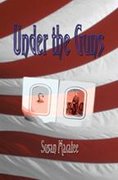
Another real-life heroine I based my fictional heroine, Cassidy Stuart, on in my novel, Under the Guns, was Louisa May Alcott, author of Little Women. Although my fictional character didn't aspire to be a writer, like Alcott, she was raised in a middle-class family in the North and longed to break the conventions of the ideal of Victorian womanhood. Like Alcott, Cassidy became a nurse volunteer during the Civil War. Louisa May Alcott was born in Germantown, Pennsylvania on November 29, 1832. While she was still young her family relocated to Boston, Massachusetts. She obtained most of her education from her father, who was a teacher. The family later moved to Concord where author and friend, Ralph Waldo Emerson, helped them set up residence. http://xroads.virginia.edu/~Hyper/ALCOTT/ABOUTLA.html Louisa received guidance from him as well as Theodore Parker and was also instructed by Henry David Thoreau. She began writing at an early age and penned her first book by age sixteen. Louisa also helped her family make ends meet by taking in sewing, and working as a teacher and domestic servant. She tried acting at age seventeen, but preferred to write plays, rather than perform in them. At age 30, she entered the nursing sevice at the Union Hospital in Georgetown in 1862. While there, she contracted typhoid fever. She recovered, but suffered the effects of mercury poisoning the rest of her life. At the time calomel (a drug laden with mercury) was used by doctors as a cure for typhoid. While in Washington, Louisa wrote Hospital Sketches, published in 1863, followed by Moods in 1864. She next produced the novel, Little Women, published September 30, 1868. She based the book on her own experience growing up. The book sold more than 2,000 copies. She next wrote a second volume that sold more than 13,000 copies. Sources: In Hospital and Camp by Harold Elk Straubing, Stockpole Books 1993 ISBN 0-8117-1631-7 http://www.louisamayalcott.org/louisamaytext.html http://www.womenwriters.net/domesticgoddess/lma.htm http://en.wikipedia.org/wiki/Louisa_May_Alcott
Wednesday, May 31, 2006
What Victorian Gents Wore - Part III
Coats Most Victorian gentlemen owned four different types of coat to fit every occasion. These consisted of the business coat, frock coat, dress coat and overcoat. The business suit, otherwise known as the sack suit, would be considered leisure wear for a gentleman, but farmers, laborers or cowboys would wear sack suits for dress occasions, such as church. The sack coat was large and baggy in the 1850s, then became more fitted through the 1860s and beyond. This garment was popular with working class men because it was affordable. http://www.lahacal.org/gentleman/sack.html The frock coat could be single or double breasted, usually black, and longer than the sack, coming to just above the knee. The frock coat was worn with contrasting pants and a top hat, although in the South and West low crowned hats were often worn instead. http://www.lahacal.org/gentleman/frock.html Vests were worn with the frock coat. In the 1860s, colorful vests of Chinese silk were worn. After that, black, white or gray vests became the norm. http://www.lahacal.org/gentleman/vest.html For evening wear, gentlemen wore a black tail coat, white bow tie, black or white vest, black trousers and a heavily starched white shirt. http://www.lahacal.org/gentleman/evening.html In harsh winter weather, a greatcoat was a necessity. This was a full-length overcoat made of wool in dark or drab colors. The coat had an attached single or double cape over the shoulders. Men also wore raincoats made of oilcloth and water-proofed wool; capes worn as formal wear by the well-to-do; and shawls, which for men were plain, functional garments. Lincoln kept his shawl with him all the time. Fur coats made from Buffalo or other animal hides were worn in coldest weather by those who could afford them. Sweaters were popular with farmers, homesteaders, and immigrants. These were knitted at home from wool. http://www.shasta.com/suesgoodco/newcivilians/gents/mensovercoats.htm More links: http://www.shasta.com/suesgoodco/newcivilians/gents/menscoats.htm http://www.lahacal.org/gentleman/attire.html http://www.lahacal.org/gentleman/morning.html
Tuesday, May 23, 2006
Telltale Embroidery
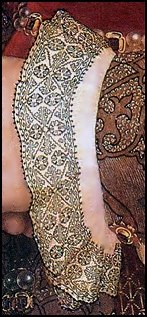
Telltale Embroidery
Embroidery experienced a revival (along with anything else Elizabethan) during Victoria’s reign. Authors writing about characters in the 19th Century, therefore, can utilize embroidery detail in their characters’ costumes to help set the backdrop for whether the fashions are current or older.
A delightfully presented article supplies a number of good resources on embroidery, in general, and blackwork, in particular: http://www.prettyimpressivestuff.com/blackwork.htm
Blackwork embroidery, for example, was re-popularized in the 19th C, and its original rules of application no longer applied. Embroidery had become rather freeform. Originally, blackwork consisted of black threads cross-stitched onto natural linen along cuffs and other visible places. The once-sumptuary embroidery form may be described in its original styles with heraldic elements and Arabic geometrics, or, it may be useful to show characters with the then-trendy picturesque scenery in blackwork. Some modern re-enactors and artisans have revived the embroidery form in stylized scenery. Black and white threads together became common, along with whitework and even goldwork (commonly noted in ecclesiastical attire), and many other styles.
A number of terms were well in use in relation to embroidery, such as the coining of the term “Spanish work” when referring to blackwork embroidery. Catherine of Aragon is often credited with popularizing its form when she took numerous blackwork-embroidered dresses with her to England from Spain. The running Holbein stitch got its name when informal portraits were done by new artists such as Hans Holbein simply for the sake of recording new items made for the wardrobes of the members of the court. By Victorian times, embroidery of many forms often emulated and even surpassed its historical roots and in reflection of the increasing freedoms of the times, the rules of embroidery were often broken in creative designs.
Kristin-Marie
Thursday, May 11, 2006
What Victorian Gents Wore - Part II
Victorian Menswear Trousers of the mid-nineteenth century Men's trousers of the mid-nineteenth century weren't much different from men's pants today, with the exception of zippers. Pants were full in the leg, baggy in the seat, and touched the tops of the feet. They were cut snugly at the waist, so braces (suspenders) weren't needed to keep them up. The waistband was split in the back and a string or lace was inserted to hold the gap. This way the waistband could be adjusted to fit. Pants were constructed of wool, homespun, jeancloth (which was wool & cotton or cotton twill), or linen. Wool was preferred in black, brown, gray or tan. Only fancy trousers might come in plaids, stripes or designs. Wealthy gentlemen may have worn linen pants in summer. Braces (or suspenders) were used to hold up working men's pants. These were made of canvas, leather or other fashion items. They all had leather tabs at the ends with buttonholes that attached to buttons on the waistband of the pants. Buckles on the front of the braces could be adjusted for height. Belts were not worn during this period to hold up pants, although soldiers wore leather belts over their coats as part of their uniforms. Links: http://www.shasta.com/suesgoodco/newcivilians/gents/mentrousers.htm http://www.gentlemansemporium.com/store/trousers.php
Wednesday, May 03, 2006
Birth control in the Victorian Era
When we think of the Victorian period, we probably don’t consider birth control. Surely this was not a part of Victorian life, right? Wrong. It became increasingly important as we moved from an agricultural society, where the children were a blessing, to a technological society, where children were more of a burden. While there were various forms of birth control the one that appeared to be used most by married woman was douching.
Douching had several benefits. First, of all it was legal through the entire period. While the Comstock laws made pretty much anything related to reproduction “obscene” and could therefore not be transported through the mail, douching was considered by most doctors as an important part of women’s health. Secondly, the more acceptable method of method of birth control, withdrawal, depended upon the male and his willingness to practice it, whereas douching put the control in the hands of the wife, who, after all, paid the most for the outcome.
In the years before the Comstock laws douching was openly marketed as a way to prevent conception. Syringes could be bought early in the century from physicians and peddlers. By mid-century they could be bought through the mail. While some women used plain water in an attempt to avoid conception, others used readily available spermicides such as vinegar and baking soda. By mid century they could buy pre-made solutions that claimed to be more effective, using substances as carbolic acid (ow!), tannin and salicylic acid. Information on how to douche and other methods of birth control were available early in the century in pamphlets and books by several different authors, most notably Fruits of Philosophy by Charles Knowlton.
Of course this method of birth control was not highly effective by current standards. We expect rates of 85-99%. Douching could not come anywhere close to these standards, but it did work better than nothing at all, and was widely practiced. Most married women would expect, and want, children from their marriage--just not one every year which is what this method of birth control prevented.
For purposes of writing, this is useful information if you’re writing about a married woman. Most of my books, however, are about single men and single women, and so in my next blog I’ll discuss the sort of birth control more likely to be used by that section of the population.
Douching had several benefits. First, of all it was legal through the entire period. While the Comstock laws made pretty much anything related to reproduction “obscene” and could therefore not be transported through the mail, douching was considered by most doctors as an important part of women’s health. Secondly, the more acceptable method of method of birth control, withdrawal, depended upon the male and his willingness to practice it, whereas douching put the control in the hands of the wife, who, after all, paid the most for the outcome.
In the years before the Comstock laws douching was openly marketed as a way to prevent conception. Syringes could be bought early in the century from physicians and peddlers. By mid-century they could be bought through the mail. While some women used plain water in an attempt to avoid conception, others used readily available spermicides such as vinegar and baking soda. By mid century they could buy pre-made solutions that claimed to be more effective, using substances as carbolic acid (ow!), tannin and salicylic acid. Information on how to douche and other methods of birth control were available early in the century in pamphlets and books by several different authors, most notably Fruits of Philosophy by Charles Knowlton.
Of course this method of birth control was not highly effective by current standards. We expect rates of 85-99%. Douching could not come anywhere close to these standards, but it did work better than nothing at all, and was widely practiced. Most married women would expect, and want, children from their marriage--just not one every year which is what this method of birth control prevented.
For purposes of writing, this is useful information if you’re writing about a married woman. Most of my books, however, are about single men and single women, and so in my next blog I’ll discuss the sort of birth control more likely to be used by that section of the population.
What Victorian Gents Wore - Part I
Victorian Menswear Shirts & Undergarments of the mid-nineteenth century What men wore in the mid-nineteenth century wasn't that much different from what men wear today. Shirts were cut full in both the body and sleeves. All shirts were loose fitting with collars. Dress shirts buttoned down the front, while work and non-dress shirts were pullovers. A placket with four buttons down the front of the shirt allowed the man to fit the shirt over his head. The materials used for shirts were wool, flannel, cotton, muslin and linen. Dress shirts came in white only, while work and non-dress shirts could be white, plaid, striped or calico. Undershirts were generally worn beneath shirts. They consisted of wool or cotton and sometimes old shirts served as undershirts. Drawers were worn beneath trousers. These were full-length, constructed of wool or cotton and had a fly front opening and closed with a button at the waist. A one-piece Union Suit was worn in extremely cold weather. These buttoned up the front, had a fly front opening and drop down panel on the seat ( A good example of this is the scene in "Back to the Future III" where Michael J. Fox is practicing his draw in front of a full-length mirror.) Some links with photos: http://www.lahacal.org/gentleman/shirt.html http://www.fcsutler.com/fcclotaccess.asp http://www.gentlemansemporium.com/store/shirts.php http://www.shasta.com/suesgoodco/newcivilians/gents/menshirts.htm
Friday, April 21, 2006
Flamenco Guitars and Gypsy Troupes Part I
Victorians found the sonorous notes of guitars and their accompanying wailing love songs to be especially endearing during moonlit forays or on starry nights.
Music was evolving both on and off the Continent (Europe), like everything else during the Victorian Era. International sentiments were mixing into America’s melting pot, including in the realms of musical entertainment. The telegraph and shipping line innovations were making the world smaller. Europe’s popular music was quickly available in burgeoning America.
Back in Europe, the Iberians were evolving the guitar and spanning the gap between Gypsy fairground antics and Royal courtroom entertainment. Flamenco, in particular, was coming out of its Primordial-egg state and even reached one of its golden eras during the late Victorian era. With the increasing demand for the guitar in global markets, its popularity increased quickly with its availability. During Victoria’s reign, Flamenco was incorporating multi-cultural elements and was even becoming a preferred dance form.
In Europe, Valencian-aristocracy (descended from the Kingdom of Navarre) were especially taking an interest in the commonplace entertainments of Gypsies and their musical collusion with the Arabic and Jewish communities amongst Mediterranean port cities. To be frank, the said aristocracy began showing up in formal black ball gowns and attire to partake in the wild festivities the Gypsies made available to the public. Although the Valencian ladies dressed formally in silks, their full-skirts were unsuported with wires or cage-like structures for such wild nights on the arms of their "dons." The flamenco was the in-thing, and its popularity was already hitting the current and former Spanish colonies and territories, all the way up to the royal courts of Mexico, as well as in Europe. The guitar, of course, was heavily in use at such locales and was being competitively mastered, as the Iberians had a history of driving musical-technique innovations -- the wilder, the better.
The guitar’s acknowledged Gypsy roots also helped increase its popularity among the masses across the Atlantic as Gypsy bands migrated. The Gypsy bands were appearing regularly at fairgrounds -- part of the reason that guitar music became synonymous with the musical forms that moved Westward to entertain settlers and business moguls, alike. After all, what would a campfire have been without the five-string?
Guitar music had reached the echelons of royal-court entertainment during the Renaissance and in the Victorian era guitarists were mastering it with renewed vigor as the Wild, Wild West re-popularized it. With the addition of new strings, not to mention its new shape -- that of a woman’s torso, the guitar became embedded in every level of society. A nicely translated term paper from Spain posted on the Internet details a few of the key innovators along with timelines of the evolution of the guitar and its roots in Spain.
http://www.linguatics.com/guitar.htm
The popular instrument was invented in Spain. It was a legacy from the Arabs after the Islamic-Moorish invasion in Europe. When Crusade-era Spanish Kingdoms re-conquered the Iberian Peninsula during the Middle Ages, their Aristocracy immediately incorporated the Arabic forms of arts and entertainment, including lute music. Authors of Victorian literature can get a feeling of the Victorian guitar music from modern performers such as Loreena McKennitt.
http://www.wbr.com/mckennitt/bookofsecrets/cmp/secrets.html
Renaissance-era creativity then incorporated the instruments, including the Arabic stringed instruments, into everyday entertainment. About as amusing as playing chess or engaging other parlor entertainment to the later Victorians who became well accomplished at both.
The Victorian era saw many new businesses arise, and musical instruments are not to be overlooked since they comprised the largest part of available entertainment as the West was won. In Spain, prominent name-brands were already synonymous with the increasingly esteemed guitar and commanded hefty price tags. As Americans increased their wealth, they also increased their imports of pricey European luxury items and the rising name-brands. Let’s face it: the incorporation of guitars into Society’s classical soirees also had a hand in the guitar moving Westward. Variations on classic sonatas and the like from the Victorian era are still popular and available today.
http://www.amazon.com/gp/product/B00000258U/102-8664115-8936126?n=5174
Moveable guitar chord-patterns, however, weren’t in play quite yet, and wouldn’t be until around the beginning of the Edwardian era, but a clever author can always allude to whatever musical innovations their heroic characters can improvise. Strumming and picking were well in play. Add into the equation the percussion instruments of those guitar-aficionados, the traveling bands of Gypsies, and you can understand why on-looking crowds went wild and tossed coins in their requests for more of the mostly Iberian-derived, innovative music.
Cowboy crooners singing to coyote moons around campfires come close to comparing to the traditional songs of unrequited love and broken hearts that the Gypsies brought with them from the Iberian Peninsula when they made a showing in America.
Music was evolving both on and off the Continent (Europe), like everything else during the Victorian Era. International sentiments were mixing into America’s melting pot, including in the realms of musical entertainment. The telegraph and shipping line innovations were making the world smaller. Europe’s popular music was quickly available in burgeoning America.
Back in Europe, the Iberians were evolving the guitar and spanning the gap between Gypsy fairground antics and Royal courtroom entertainment. Flamenco, in particular, was coming out of its Primordial-egg state and even reached one of its golden eras during the late Victorian era. With the increasing demand for the guitar in global markets, its popularity increased quickly with its availability. During Victoria’s reign, Flamenco was incorporating multi-cultural elements and was even becoming a preferred dance form.
In Europe, Valencian-aristocracy (descended from the Kingdom of Navarre) were especially taking an interest in the commonplace entertainments of Gypsies and their musical collusion with the Arabic and Jewish communities amongst Mediterranean port cities. To be frank, the said aristocracy began showing up in formal black ball gowns and attire to partake in the wild festivities the Gypsies made available to the public. Although the Valencian ladies dressed formally in silks, their full-skirts were unsuported with wires or cage-like structures for such wild nights on the arms of their "dons." The flamenco was the in-thing, and its popularity was already hitting the current and former Spanish colonies and territories, all the way up to the royal courts of Mexico, as well as in Europe. The guitar, of course, was heavily in use at such locales and was being competitively mastered, as the Iberians had a history of driving musical-technique innovations -- the wilder, the better.
The guitar’s acknowledged Gypsy roots also helped increase its popularity among the masses across the Atlantic as Gypsy bands migrated. The Gypsy bands were appearing regularly at fairgrounds -- part of the reason that guitar music became synonymous with the musical forms that moved Westward to entertain settlers and business moguls, alike. After all, what would a campfire have been without the five-string?
Guitar music had reached the echelons of royal-court entertainment during the Renaissance and in the Victorian era guitarists were mastering it with renewed vigor as the Wild, Wild West re-popularized it. With the addition of new strings, not to mention its new shape -- that of a woman’s torso, the guitar became embedded in every level of society. A nicely translated term paper from Spain posted on the Internet details a few of the key innovators along with timelines of the evolution of the guitar and its roots in Spain.
http://www.linguatics.com/guitar.htm
The popular instrument was invented in Spain. It was a legacy from the Arabs after the Islamic-Moorish invasion in Europe. When Crusade-era Spanish Kingdoms re-conquered the Iberian Peninsula during the Middle Ages, their Aristocracy immediately incorporated the Arabic forms of arts and entertainment, including lute music. Authors of Victorian literature can get a feeling of the Victorian guitar music from modern performers such as Loreena McKennitt.
http://www.wbr.com/mckennitt/bookofsecrets/cmp/secrets.html
Renaissance-era creativity then incorporated the instruments, including the Arabic stringed instruments, into everyday entertainment. About as amusing as playing chess or engaging other parlor entertainment to the later Victorians who became well accomplished at both.
The Victorian era saw many new businesses arise, and musical instruments are not to be overlooked since they comprised the largest part of available entertainment as the West was won. In Spain, prominent name-brands were already synonymous with the increasingly esteemed guitar and commanded hefty price tags. As Americans increased their wealth, they also increased their imports of pricey European luxury items and the rising name-brands. Let’s face it: the incorporation of guitars into Society’s classical soirees also had a hand in the guitar moving Westward. Variations on classic sonatas and the like from the Victorian era are still popular and available today.
http://www.amazon.com/gp/product/B00000258U/102-8664115-8936126?n=5174
Moveable guitar chord-patterns, however, weren’t in play quite yet, and wouldn’t be until around the beginning of the Edwardian era, but a clever author can always allude to whatever musical innovations their heroic characters can improvise. Strumming and picking were well in play. Add into the equation the percussion instruments of those guitar-aficionados, the traveling bands of Gypsies, and you can understand why on-looking crowds went wild and tossed coins in their requests for more of the mostly Iberian-derived, innovative music.
Cowboy crooners singing to coyote moons around campfires come close to comparing to the traditional songs of unrequited love and broken hearts that the Gypsies brought with them from the Iberian Peninsula when they made a showing in America.
Wednesday, April 19, 2006
Mary Walker, M.D.
I researched Dr. Mary Walker years ago and used her along with a few other Victorian women whose stories I admired as a composite for my fictional young heroine in my young adult novel, UNDER THE GUNS. Mary Walker grew up in rural Oswego, New York and graduated from Syracuse Medical College in 1855. Her parents raised her to regard corsets as an unhealthy form of dress. Later in life she adopted a style of reform dress, a short, fitted knee-length dress with bloomers worn beneath the skirt. She believed crinolines, petticoats and yards of long skirts to be dangerous and unsanitary. She married young, but refused to assume her husband's last name. He was also a doctor who she'd met while in medical school. They started a joint medical practice that lasted thirteen years as did the marriage. When the Civil War began, she volunteered as an army surgeon, but because she was female, she was only allowed to serve as a nurse. However, the nursing duties she performed were actually those of an assistant surgeon. Although she was the first female surgeon in the United States Army, she served as an unpaid volunteer. She made her own army uniform, which consisted of a knee-length fitted dress, designed to look like a Federal Army frockcoat. Under this she wore trousers. This outfit caused her much ridicule. While serving in enemy territory, she often crossed over the lines to lend assistance to civilians. She also reported anything she learned of military value to her superiors, causing her to be labeled a spy. She was captured while in Rebel territory and taken as a prisoner-of-war. She spent four months in Richmond, Virginia's Castle Thunder. She was released in a prisoner exchange and took great pride in the fact that she, being a woman and only five foot tall was exchanged for a six foot tall Confederate major. After the war, she received the Congressional Medal of Honor. No other woman before her had received that honor. It was rescinded in 1917 because Congress revised their standards to only award the medal to those in "actual combat with the enemy". Mary refused to give it back and wore it proudly until she died two years later. Now that's a heroine! Links: http://www.gamepuppet.com/civilwar/women/w8-walker.htm http://www.mishalov.com/Dr._Mary_Walker.html http://www.mnwelldir.org/docs/history/biographies/mary_walker.htm For a more in-depth account of the life of Mary Edwards Walker, M.D. read: Yankee Women: Gender Battles in the Civil War by Elizabeth D. Leonard W. W. Norton & Company ISBN 0-393-31372-7
Thursday, April 13, 2006
VICTORIAN FASTLANE: Part 1, The Tycoons


WELCOME to a new series on the Tycoons,
the fascinating men who created today's corporate world. Their heyday matched Victoria's reign almost exactly - although some say their age ended when the Titanic sank in 1912.
The Tycoons created the industrial system that gave the United States the most powerful and dynamic economy in the world. Masters of organization, they were visionaries and risk takers who thought and acted on a grand scale.
The fortunes of today's billionaires pale in comparison to the wealth of these men. As a percentage of the US economy, no other American fortune - not even Bill Gates' or the late Sam Walton's - would even come close to John D. Rockefeller's.
In the coming weeks I'll post articles on seven of these larger-than-life Victorian Americans. From different backgrounds, their lives were varied, exciting and colorful. I hope to offer some insight into each man.
Part 2: John Jacob Astor (1763-1848) The first millionaire in the US, he made his fortune in fur trading (establishing Astoria while he was at it) and real estate. We'll cover not only the founder of the dynasty, but John Jacob Astor IV (1864-1912) the richest millionaire to go down on the Titanic.
Part 3: Andrew Carnegie (1835-1919) This steel magnate founded what became US Steel and then founded libraries all over this country. He loved his native Scotland and built a Victorian mansion there in the ruins of an old castle - thereby giving the world (and Madonna and Guy Ritchie) the famed Skibo Castle - the most romantic wedding site imaginable.
Part 4: Henry Clay Frick (1849-1919) This American industrialist was
considered ruthlessly anti-union. His partnership with Carnegie, in what became US Steel, is chronicled in the book, MEET YOU IN HELL. During the strike at the Homestead Steel Mill, Carneigie played golf in Scotland while Frisk toiled in the mine office. An anarchist broke in and shot Frisk twice in the neck and stabbed him several times with a poisoned dirk. He received medical attention in his office and finished the work day.
Part 5: Jay Gould (1836-1892) He was a soft-spoken man, called the DARK GENIUS OF WALL STREET. He made a fortune in northeastern railroads and was able to buy out Vanderbilt's shares in the Erie Canal. He controlled Western Union, New York's elevated rails and dabbled in gold futures. His reputation suffered when he posted bond for Boss Tweed.
Part 6: John Pierpont Morgan (1837-1919) Unlike the others, J. P. Morgan was born into wealth. He attended fine schools in Boston and, at 20, he graduated from a German University. The most famous tycoon in his day, his name is still linked with American finance and banking. Well respected, he worked to keep the financial world afloat. He once kept the US economy from sinking in a Great Panic by convincing millionaire friends and foes to agree to underwrite the government for a time. He financed the work of Thomas Edison and made the use of electricity a practical reality.
Part 7: John D. Rockefeller (1839-1937) When he died at 98, he was worth $1.4 billion in 1937 dollars.
For many years (the good old days) he virtually controlled the US oil supply. His Standard Oil Company was renamed ESSO in the 20th century and updated to Exxon. Today it's Exxon-Mobil.
By 1905, his worth was $240 million, and in that same year he gave away $13.6 million. Five years later, he gave Standard Oil stock worth $50 million to start the Rockefeller Foundation. As he grew older, he worked as hard giving away money as he'd worked acquiring it.
Part 8: Cornelius Vanderbilt (1794-1877) He created the first fortune topping $100 million, but he was a ruthless, unpleasant, ill-educated man who never learned to read and could only spell words phonetically. Born on Staten Island, he borrowed a $100 when he was 16 to buy a small boat, and then hired himself out as a ferry sevice to New York City. He acquired the name Commodore when he got into the steamship business. He started buying railroad stock and soon revolutionized the railroad industry. He was coarse, profane, tobacco stained and snubbed by polite society. Amazingly, the name Vanderbilt has a very genteel ring today.
Watch for upcoming episodes featuring your favorite Tycoons in the VICTORIAN FASTLANE!
SOURCES:
THE HOUSE OF MORGAN
An American Banking Dynasty and the Rise of Modern Finance.
By Alan Chernow
THE TYCOONS
How Andrew Carnegie, John D. Rockefeller, Jay Gould and J. P. Morgan Invented the American Super Economy.
By Charles R. Morris
DARK GENIUS OF WALL STREET
The Misunderstood Life of Jay Gould, King of the Robber Barons.
By Edward J. Renehan, Jr.
MEET YOU IN HELL
Andrew Carnegie, Henry Clay Frick, and the Bitter Partnership That Transformed America.
By Les Standiford
CITY JOURNAL:
The Robber Barons' Bum Rap
By Maury Klein, Winter 1995
Subscribe to:
Posts (Atom)